Clearing The Smoke About Marijuana Use During Pregnancy

By Sonia Alvarado, Senior Teratogen Information Specialist, MotherToBaby CA

Unless you don’t own a television and never listen to the radio, you know that marijuana has been in the news a lot lately and for marijuana users who have had to smoke in illegally, it appears societal attitudes about pot smoking may be changing. Twenty states have laws legalizing some form of marijuana use. Two states, Colorado and Washington, have legalized its recreational use. In an interview, the NFL Commissioner seemed to leave open the possibility that medicinal use could be considered for NFL players if there was scientific evidence that it was helpful to treat injuries and pain. Even President Obama has said that he doesn’t believe marijuana is any more dangerous than alcohol. Marijuana is currently listed as a Schedule I drug. Other Schedule I drugs include heroin, lysergic acid diethylamide (LSD), 3,4-methylenedioxymethamphetamine (ecstasy).

What The Research Shows Us

According to studies, pregnant women who use illicit substances are more likely to use marijuana compared to other drugs. This is often due to the belief that marijuana is less harmful to the developing embryo and fetus, compared to other drugs such as cocaine or heroin.

Marijuana is Cannabis. The delta-9-tetrahydrocannabinol (THC) in the Cannabis plant produces the psychoactive effect or “high.” Marijuana can be smoked in a joint, inhaled through a bong or vaporizer, eaten in food and teas/beverages, used in tinctures, and topical balms. Smoking and ingestion exposes the user to THC, producing the high. When smoked in a joint, the user is exposed to carbon monoxide from the burning of the leaf as well as tar, which can stay behind in the lungs.

Marijuana use during pregnancy has been studied since the 1960’s. Like all studies, there are weaknesses that have been pointed out. For example, asking women about past drug use may not be the most accurate way to make a connection between the dose of the drug and the adverse effects because the women may have forgotten. Also asking women to volunteer information about drug use, which they may fear disclosing even in a confidential setting, may make it difficult to know how frequently pregnant women use drugs overall. Still, a number of experts have reviewed hundreds of reports in humans and animals. At least to this point, the studies do not support an association between marijuana smoking and birth defects. One large study of 12,825 interviews done after delivery, did not find a statistical association between marijuana use and birth defects.

However, the studies also show that marijuana is not risk free. Studies have reported associations between marijuana smoking and growth restriction and lower birth weight, particularly in women who keep smoking through delivery or late in pregnancy. An Australian study of almost 420,000 live births reported a higher risk for neonatal intensive care admission for newborns exposed prenatally to pot. Also, there are reports of abnormal responses or behaviors in the newborn period and this suggests a toxicity or withdrawal. The symptoms include exaggerated and prolonged startle reflexes (sleep cycle disturbances with high-pitched crying.) In a Brazilian study, exposed newborns were “more irritable and less responsive to calming, cried more during the examination, and exhibited more jitteriness and startles than the non-exposed neonates.” Pregnant women who smoke daily and/or through delivery, have a higher risk for complications in their pregnancy compared to women who quit in the first trimester.

Researchers have attempted to assess the long-term effects of prenatal marijuana exposure. Studies of 3, 10 and 14-year old prenatally exposed children suggest that the prenatal exposure to high doses of marijuana may make it harder for children to learn and may affect their emotions (increased aggression) and increase depression symptoms. Studies are needed to assess which prenatally exposed children are most at risk. Its important to note that the children in these studies often have had prenatal exposure to other drugs as well, struggles with poverty and other life challenges, making it difficult to know that the findings are due to a single drug exposure.

So Where Does Marijuana Rank Compared To Other Drugs?

Alcohol: Specific to use during pregnancy, marijuana is not alcohol. Alcohol is still the drug with the highest risk and the widest range of birth defects, including physical, mental and behavioral. Alcohol is a drug with the highest use throughout the world, easy legal access, and social acceptance.

Cocaine: Cocaine, by comparison, is associated with a small risk for birth defects, and a higher risk for admission to newborn intensive care for withdrawal and toxicity. Additionally, cocaine is associated with prenatal growth retardation, lower birth weight, shorter length, and smaller head circumference. Studies suggest the effects on height extend into childhood.

Heroin: Heroin has not been associated with an increased risk for birth defects, however, is associated with a higher risk for withdrawal and admission to newborn intensive care and sudden infant death syndrome.

Bottomline: Snuff Out Smoking It

Clearly, marijuana use in pregnancy is not preferable, nor less risky, compared to most other drugs when a side-by-side comparison is made. Changing societal attitudes doesn’t change the fact that the developing embryo (and fetus) is dependent on the mother for oxygen, nutrients and a balance of hormones, chemicals and other substances to grow normally. Disrupting the normal fetal environment, through the introduction of marijuana or other recreational drugs, puts the pregnancy at risk in the short-term and possibly the long term as well.

Sonia

Sonia Alvarado is a bilingual (Spanish/English) Senior Teratogen Information Specialist with MotherToBaby California, a non-profit that aims to educate women about medications and more during pregnancy and breastfeeding. Along with answering women’s and health professionals’ questions regarding exposures during pregnancy/breastfeeding via MotherToBaby’s toll-free hotline, email and private chat counseling service, she’s provided educational talks regarding pregnancy health in community clinics and high schools over the past decade.

MotherToBaby is a service of the international Organization of Teratology Information Specialists (OTIS), a suggested resource by many agencies including the Centers for Disease Control and Prevention (CDC). If you have questions about beauty products, medications or other exposures, call MotherToBaby toll-FREE at 866-626-6847 or visit MotherToBaby.org to browse a library of fact sheets and find your nearest affiliate.

Clearing The Smoke About Marijuana Use During Pregnancy

The use of vaping continues to increase, including women who are pregnant or planning a pregnancy. Here at MotherToBaby we review the newest studies and gather current information to answer the question, “What do we know about vaping and pregnancy?” For the purpose of this blog, I am going to focus on nicotine vaping.

What are ENDS (vapes)?

Electronic nicotine delivery systems (ENDS) describe a variety of products including:

  • Vaporizers
  • Vape pens
  • Hookah pens
  • Tank systems
  • Mods
  • Electronic cigarettes (e-cigarettes)

For ease, we will call them all vapes for the rest of the blog.

Vapes were originally developed as an alternative to cigarette smoking. Inside they include a battery, a heating device and liquid with many ingredients. These devices are also used to vape other substances, like cannabis. Vapes work by heating a liquid to create a mist (vapor) that a person inhales into their lungs.

The liquid can contain:

  • Various flavors
  • Nicotine
  • Tetrahydrocannabinol (THC)
  • Cannabidiol (CBD) oils
  • Propylene glycol and glycerol
  • Volatile organic compounds (VOCs)
  • Contamination such as heavy metals

There is no standard liquid or heating process so knowing what is in the vape can be difficult.

Vapes can contain nicotine that is comparable to the amount in regular cigarettes. Nicotine crosses the placenta, enters the breastmilk, and reaches the developing baby. Some vape products that are marketed as free of nicotine are found to contain nicotine. While vape products may have less toxins than cigarettes, there is still exposure to nicotine and other toxic chemicals, which can increase the chances of pregnancy-related problems.

Studies have now shown that vaping can increase risks to pregnancy like cigarette smoking. This includes increased chances of:

  • Miscarriage
  • Preterm delivery (birth before week 37)
  • Low birth weight (weighing less than 5 pounds, 8 ounces [2500 grams] at birth)
  • Gestational hypertension (high blood pressure during pregnancy)

Compared to cigarette smoking, vaping did not show lower risks to a pregnancy and dual use showed the highest risks.

Is vaping a safer alternative than cigarette smoking in pregnancy?

Vape products came on the market in the U.S. in 2007, and their popularity grew quickly. One of the reasons they became so popular was the belief that they were a safer alternative to cigarettes and could help smokers quit or reduce the number of cigarettes they smoke. Heavy cigarette smoking during pregnancy can increase the chances of:

  • Miscarriage
  • Cleft lip and/or palate (an opening in the upper lip or the roof of the mouth)
  • Preterm delivery (birth before week 37)
  • Low birth weight (weighing less than 5 pounds, 8 ounces [2500 grams] at birth)
  • Sudden infant death syndrome (SIDS)
  • Problems with getting pregnant (infertility)
  • Ectopic pregnancy (when a fertilized egg implants and grows outside the uterus)
  • Placenta previa (placenta blocks the birth canal)
  • Placental abruption (placenta breaks away from the uterine wall early)

Cigarette smoking can also have an impact on your baby’s health after birth. Smoking has been associated with a higher chance of asthma, childhood obesity, and behavioral problems. See our factsheet on cigarette smoking here.

While pregnancy is a big motivation for women to quit smoking, quitting can be hard. This leads pregnant women to find an alternative that might make the quitting process easier like vaping. The Food and Drug Administration (FDA) does not recommend vaping to help people quit smoking. The use of vape products among non-pregnant patients found no evidence that they help in the effort to quit cigarette smoking.  In fact, 2 out of 3 people who use vapes continue smoking cigarettes as well (known as “dual use”).

Vaping is not a safer alternative to cigarette smoking in pregnancy.

Health experts recommend that pregnant women avoid all smoking including vaping. Any pregnant woman who is quitting smoking should talk with their health care provider to discuss a plan that is suitable to them. You can also contact resources such as the National Quitline Network (1-800-QUIT NOW) for additional support. You can find more resources to help you quit smoking here.  See our factsheet on vaping here.

Quitting is best for you and your baby so go ahead and clear the air!


Clearing The Smoke About Marijuana Use During Pregnancy

In this session, Christina Chambers, PhD, MPH, a perinatal epidemiologist from UC San Diego and Principal Investigator of MotherToBaby Pregnancy Studies, reviews what is known and what still requires further study on the use of alcohol, cannabis and other substances by breastfeeding women, and how this translates to clinical practice. Participants should leave this session with a better understanding of the potential effects of substance use on infant growth and development, how knowledge gaps in this area are being addressed, and how to translate current knowledge into clinical situations in midwife practice.

Participants will gain a clearer understanding of the potential short- and long-term impacts of maternal substance use on infants and learn how ongoing research is addressing current knowledge gaps. The session will also focus on translating this evidence into practical clinical guidance, including strategies for counseling breastfeeding women, supporting informed decision-making, and integrating risk assessment into midwifery care.

This webinar is designed to enhance the knowledge and clinical skills of midwives and other healthcare providers involved in maternal-child health.

Continuing Education (CE) credits are available for ACNM members and non-members who view this session via the ACNM Online Learning Center.


Clearing The Smoke About Marijuana Use During Pregnancy

By Lorrie Harris-Sagaribay, MPH, Teratogen Information Specialist and
Coordinator, MotherToBaby North Carolina

Back in the early 1970s, pregnant women and their health care providers didn’t talk about alcohol and drugs in pregnancy. Birth defects caused by alcohol? Unheard of! Then, along came two pediatric specialists at the University of Washington who changed everything: Drs. David W. Smith and Kenneth Lyons Jones noticed that a group of babies who had been exposed to high amounts of alcohol during pregnancy were all born with a similar pattern of unusual facial features and developmental delay. Their astute observations, along with further research and collaboration, led them to coin the term Fetal Alcohol Syndrome (FAS) in 1973.

The discovery that alcohol was a teratogen (an exposure that can cause birth defects) fueled the research on other exposures and opened up a world of questions. What about other drugs? What about medications? In order to share findings from the limited but ongoing research, Dr. Jones established the first teratogen information service in 1979, housed in a small apartment in San Diego and run by a dedicated staff of three. This service was the beginning of what would later become MotherToBaby.

Fast forward to June 2017, when experts from MotherToBaby and other teratogen information services around the world gathered in Denver, Colorado for the 30th Annual Meeting of the Organization of Teratology Information Specialists (OTIS). There, dozens of experts presented the latest research on exposures during pregnancy. Speakers summarized what we’ve learned, pointed out what we still don’t know, and suggested priorities for future research. Here are a few highlights from the meeting:

Prescription Opioids
At one time, opiates were peddled as remedies for fatigue, menstrual cramps, and even teething in children (search Mrs. Winslow’s Soothing Syrup as an example). Now, more than a century later, we are in the middle of an epidemic of substance use disorders from opioid pain relievers. And according to a 2014 study, more than 14% of pregnant women in the U.S. are prescribed opioids at least once during pregnancy for reasons such as back pain and migraines. Pregnant women who develop opioid use disorders (either before or during the pregnancy) are encouraged to undergo maintenance therapy such as methadone treatment, which is less risky to the baby and more likely to result in successful recovery than sudden withdrawal would be.

Infants with ongoing exposure to opioids during pregnancy can experience withdrawal symptoms at birth, commonly called neonatal abstinence syndrome (NAS). Like Fetal Alcohol Syndrome, NAS was first described in the literature in the 1970s, by Dr. Loretta Finnegan. The syndrome has gotten renewed attention during the current opioid epidemic as providers and researchers consider the best ways to prevent and manage NAS. Studies have shown that hospitalized infants with NAS have better outcomes–less severe symptoms, less need for medication, and shorter hospital stays–when they are breastfed, even if the mothers are still on opioid maintenance therapy. But some health care providers hesitate to encourage breastfeeding in these cases out of concern about baby’s ongoing exposure to the mother’s medication through the milk. Continued funding can help address these concerns by developing consistent standards of care for infants with NAS. If you are using opioids for any reason, be sure to talk to your health care provider as soon as you find out you are pregnant. Together, you can work on a plan for the best possible care for you and baby during and after the pregnancy.

Cocaine
To study the effects of cocaine in pregnancy, researchers have followed a group of young adults, now in their early 20s, since they were born. About half the group was exposed to cocaine before birth. Early on, the researchers observed that those with cocaine exposure had challenges with attention and remembering what they saw when compared to the children who had not been exposed to cocaine. In older years, exposed children had more difficulty with language skills, more behavior problems at school and at home, reported more substance use and risk-taking behavior, and had more difficulty with everyday skills such as staying organized, thinking ahead, and controlling their own behavior. Some dropped out of school. Interestingly, having a positive home environment seemed to help with some, but not all, of these challenges. For example, children in foster or adoptive homes had better language and reasoning skills than children who still lived with their birth mothers who used cocaine, but there was no difference in their behaviors. As the study continues, researchers hope to learn more about how prenatal cocaine exposure affects these individuals into adulthood.

E-cigarettes
E-cigarettes are marketed and often seen as a “safer” option to cigarettes. In fact, the most common users are current and former cigarette smokers who are using e-cigarettes to replace or reduce the number of cigarettes they smoke. In a study of over 1,300 pregnant women, those using e-cigarettes reported doing so because they felt they were less harmful than cigarettes, or to help with smoking cessation. They also preferred the sweeter flavors, and thought they were even less harmful than the tobacco-flavored liquids.

E-cigarettes don’t expose users to the combustion by-products of traditional cigarettes, but even those labeled “nicotine-free” do contain nicotine, and vaporization creates its own potentially harmful by-products. Since e-cigarettes are liquid-filled and can be smoked longer, it’s more difficult to monitor actual exposure to nicotine than it is with traditional cigarettes. Plus, because e-cigarettes are not regulated by the FDA, there is no way of knowing exactly what they contain and what your pregnancy is exposed to when you use them.

Past studies have observed that prenatal exposure to nicotine affects baby’s brain development and increases the chance of later behavior problems and depression in adolescence. It even predicts baby’s own cigarette use in his/her teen years. And recent studies have shown that those adolescents who use cigarettes are more likely to also use e-cigarettes as teens and adults than their peers who don’t use cigarettes. We will learn more about the possible long-term effects of prenatal e-cigarette use as the first generation of children who were exposed to them in pregnancy gets older.

Marijuana
Marijuana is the most common “illicit” drug used in pregnancy. Some health care providers in Colorado, where marijuana is now legal, are seeing more pregnant women who believe that using it is not harmful and might even be beneficial. For example, pregnant women in one survey reported using marijuana to help manage depression or anxiety, help with pain, or ease nausea and vomiting, among other reasons. Without crucial data about exactly how marijuana might be harmful to a pregnancy, some health care providers are hesitant to talk to women about it, even if they know they are using it in pregnancy.

There is little doubt that marijuana can be harmful in pregnancy: THC crosses the placenta and, even in very early pregnancy, can affect the cells that form the baby’s brain. But studies on its effects on overall brain development and pregnancy outcomes have had mixed results so far, and they face challenges such as co-exposures (women using other substances along with marijuana) and, in some cases, relying on self-reporting to know how much of the drug a pregnancy is exposed to (this can skew the data if users do not accurately reveal how much and how often they use.) As researchers forge ahead to provide better answers, the best advice is still to avoid marijuana altogether in pregnancy.

Alcohol
Since those early years, we have discovered that the facial features and developmental delay often seen with FAS are not the only possible effects of prenatal exposure to alcohol. In some children, subtle changes to the brain might not be noticed until the child is older and begins to struggle with learning and behavior problems that can follow them into adulthood. This range of possible effects has been more recently named Fetal Alcohol Spectrum Disorder (FASD). According to Dr. Jones, FASD affects about 2% of babies born in the U.S. each year–more common than autism–despite the fact that it is 100% preventable.

Looking ahead.
The decades ahead require not only continued research, but also increased awareness of what we already know. To that end, each September we observe FASD Awareness Month. MotherToBaby is happy to answer your questions about alcohol and other exposures in pregnancy—in fact, check out our brief YouTube video here. Together, we can continue the work towards the best possible outcomes for future generations.

Lorrie Harris-Sagaribay, MPH is the Coordinator of MotherToBaby North Carolina and a bilingual Teratogen Information Specialist. After working with midwives as a community health educator with the Peace Corps in Honduras, she earned her Master of Public Health at the University of North Carolina at Chapel Hill. She has worked in the field of maternal and child health for over 25 years.

About MotherToBaby

MotherToBaby is a service of the Organization of Teratology Information Specialists (OTIS), suggested resources by many agencies including the Centers for Disease Control and Prevention (CDC). If you have questions about exposures during pregnancy and breastfeeding, please call MotherToBaby toll-FREE at 866-626-6847 or try out MotherToBaby’s new text information service by texting questions to (855) 999-3525. You can also visit MotherToBaby.org to browse a library of fact sheets about dozens of viruses, medications, vaccines, alcohol, diseases, or other exposures during pregnancy and breastfeeding or connect with all of our resources by downloading the new MotherToBaby free app, available on Android and iOS markets.

References:

Bateman BT et al. Patterns of Opioid Utilization in Pregnancy in a Large Cohort of Commercial Insurance Beneficiaries in the United States. Anesthes 2014;120(5):1216-1224.

McQueen K and Murphy-Oikonen J. Neonatal Abstinence Syndrome. N Engl J Med 2016; 375:2468-2479.

Presented at the (joint) Annual Meetings of OTIS (Organization of Teratogen Information Specialists), DNTS (Developmental Neurotoxicology Society), RSA (Research Society on Alcoholism) and the Teratology Society in Denver, Colorado on June 25-27, 2017:

  • From the FAS to OTIS – A Long Strange Trip. Buzz Chernoff, California Environmental Protection Agency (Retired).
  • The Opioid Epidemic and Impact of Prenatal Exposure on Child Development. Lynn Singer, Case Western Reserve University.
  • Project Newborn: What We Have Learned from 20 Years of Research on Prenatal Cocaine Exposure. Sonia Minnes, Case Western Reserve University.
  • Epigenetic Changes Induced by Prenatal Nicotine and Cocaine Exposure. Pradeep Bhide, Florida State University.
  • Effects of Prenatal Nicotine Exposure on Adolescent Dopamine Systems. Frances Leslie, University of California at Irvine School of Medicine.
  • Electronic Cigarette Use in Pregnancy: Patient and Provider Perspectives. Katrina Mark, University of Maryland School of Medicine.
  • Pathways from Prenatal Tobacco Exposure to Electronic Cigarette Use. Natacha M. DeGenna, University of Pittsburgh School of Medicine.
  • Perceptions and Use of Electronic Cigarettes during Pregnancy: Implications for Infant Outcomes. Laura Stroud, Brown Medical School.
  • Pathways from Prenatal Exposures to Tobacco and Cannabis to Adult Electronic Cigarette Use. Natacha De Genna, University of Pittsburgh Medical School.
  • Counseling Women about Prenatal Marijuana Use: Weeding through the Data. Torri D. Metz, University of Colorado-Denver.
  • Introduction: Marijuana and Child Development Symposium. Diana Dow-Edwards, SUNY/Downstate Medical Center.

Clearing The Smoke About Marijuana Use During Pregnancy

Multi-lingual health educational materials on exposures during pregnancy and breastfeeding

MotherToBaby is proud to offer a variety of free resources in multiple languages to help you stay informed about exposures during pregnancy and breastfeeding. We are the nation’s most trusted source of evidence-based information based on evidence. We provide important resources on medications, health conditions, chemicals, and other exposures for families and healthcare professionals. Our goal is to make sure expecting and new mothers have reliable information, so they can make good choices for their health and their babies’ health.

Our resources are available not only on our bilingual (English and Spanish) website but also in several other languages. We know how important it is for all mothers to have clear and accurate information, no matter what language they speak.

Below is a list of our materials in different languages. These resources are easy to read and cover some of the most common questions about exposures during pregnancy and breastfeeding, such as:

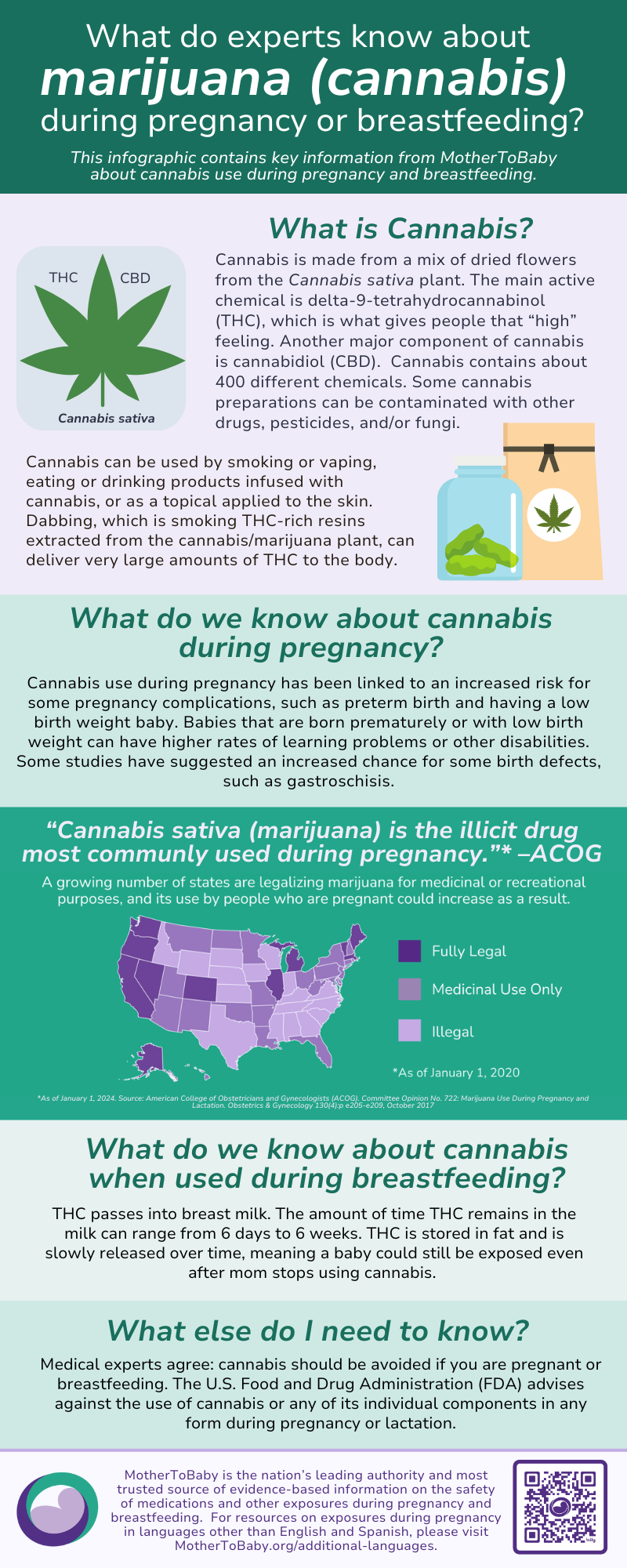
  1. Cannabis/Marijuana: Information about the effects of cannabis use during pregnancy and breastfeeding.
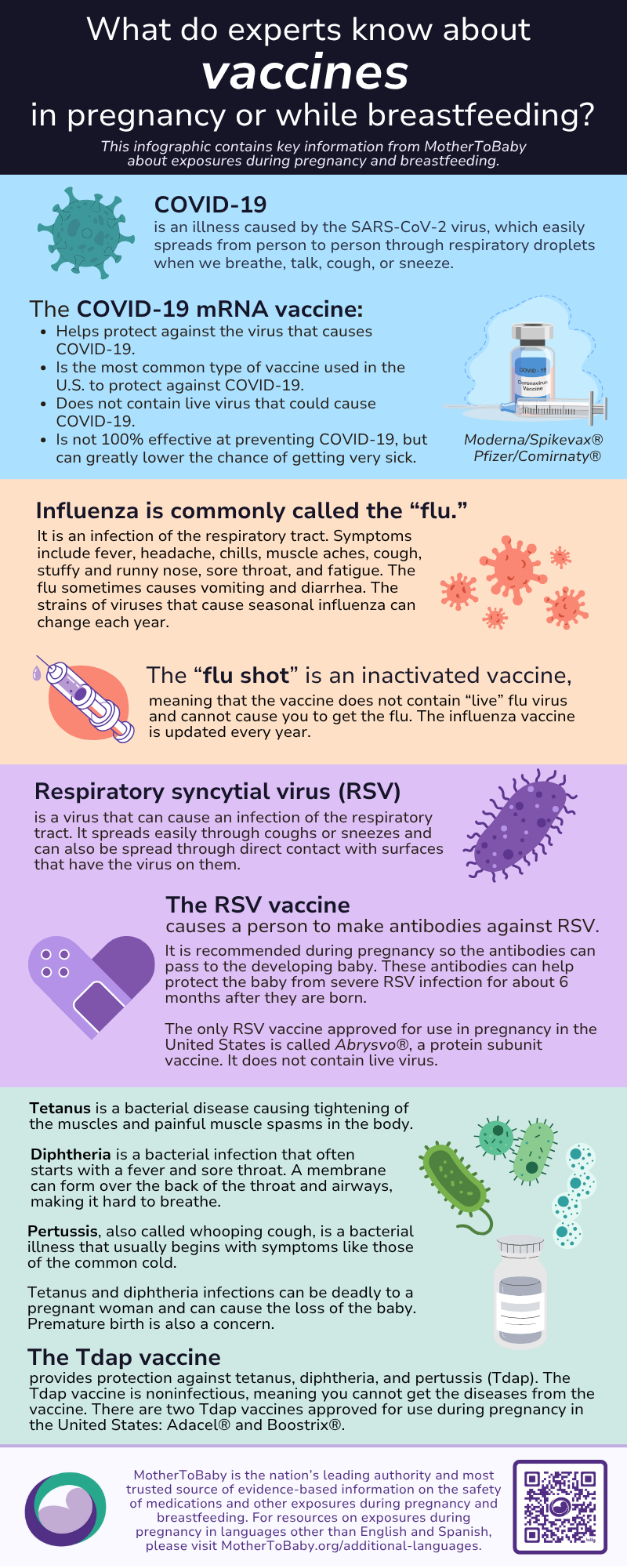
  2. Vaccines: Information on preventable diseases and getting vaccines during pregnancy and breastfeeding.
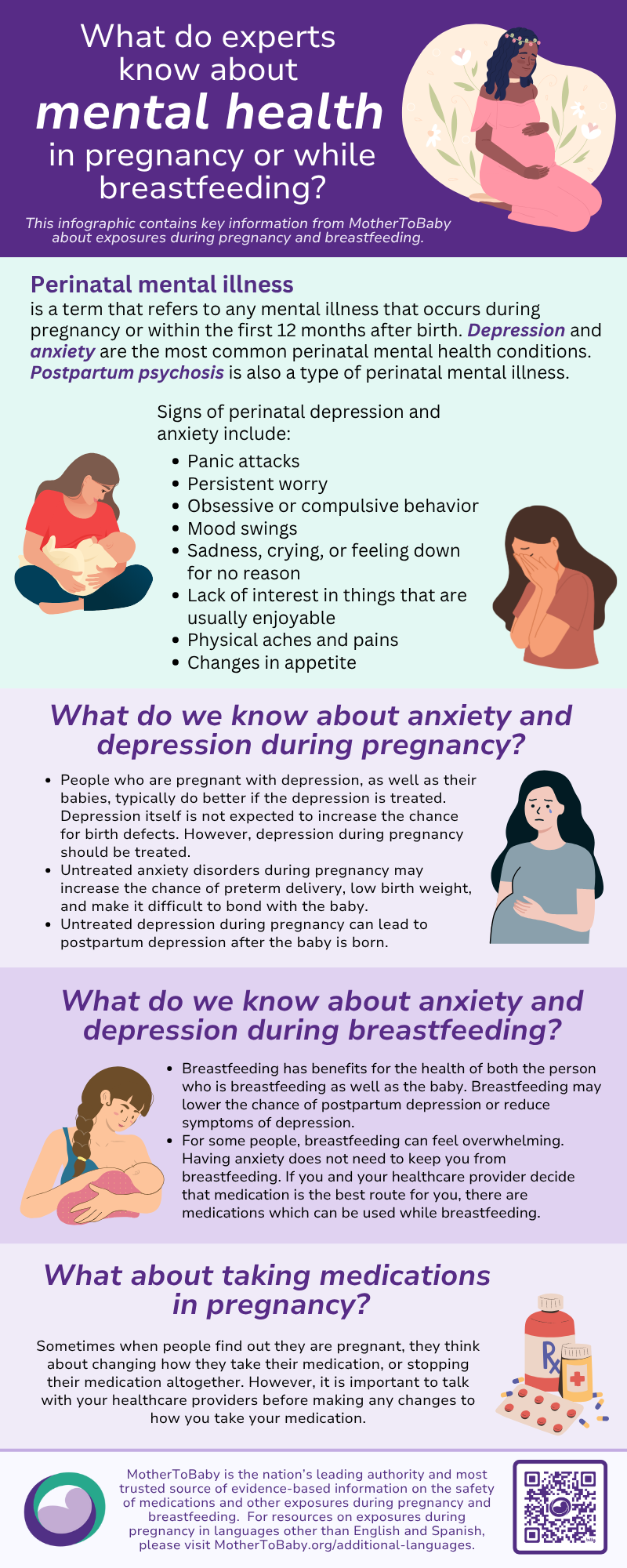
  3. Mental Health: Information about mental health and treatments during pregnancy and breastfeeding.

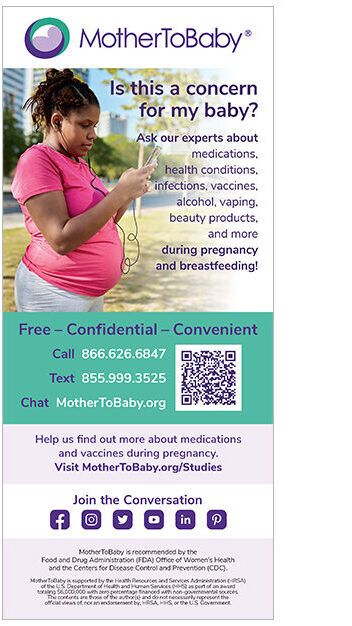
To learn more about our program, you can check out the MotherToBaby Rack Card. This card provides detailed information about our exposure information counseling service and observational pregnancy studies. It’s a great starting point to understand the full range of services and support we offer.

All the resources listed below are available for free download. If you prefer a printed version of any material, you can request one while supplies last by contacting us at MTBorder@health.ucsd.edu.

Besides these multi-lingual resources, we also have additional print and digital materials in English and Spanish on our Request Materials page.

We are dedicated to providing high-quality information to help mothers and families during this important time. By offering materials in many languages, we aim to reach and support even more people. Thank you for choosing MotherToBaby for trusted information on exposures during pregnancy and breastfeeding. We are here to help you make informed decisions for a healthy pregnancy and beyond. Please explore the resources below and contact us if you need more help or have any questions.

MotherToBaby Rack Card


Spanish flag (Spanish) | View | Download PDF


United States flag  (English) | View | Download PDF


Arabic flag  (Arabic) | View | Download PDF


Pashto flag (Pashto) | View | Download PDF


Somali flag (Somali) | View | Download PDF


Thank you for becoming our partner in pregnancy and breastfeeding health. Please let us know how we can better serve and educate your community at experts@mothertobaby.org.