Travel During Pregnancy: Clinical Guidance for Providers

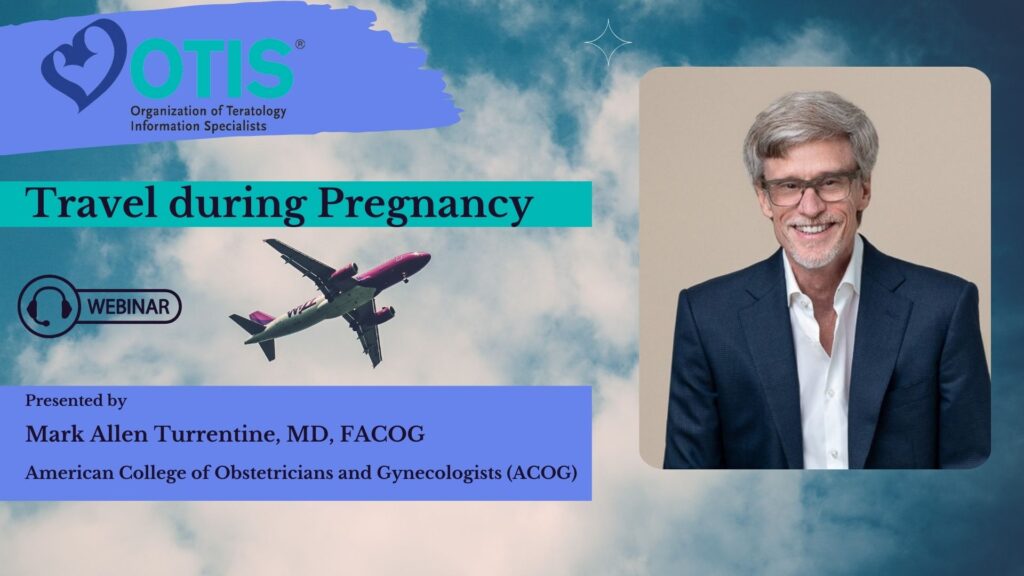
This free webinar features Mark Allen Turrentine, MD, FACOG, a nationally recognized OB-GYN from Texas Children’s Hospital and the Baylor College of Medicine, who also serves as Chair of the American College of Obstetricians and Gynecologists (ACOG) Committee on Practice Bulletins. Dr. Turrentine has authored numerous clinical guidelines, including COVID-19 Vaccination Considerations for Obstetric-Gynecologic Care, and is widely respected for his leadership in advancing evidence-based care for pregnant individuals.

In this provider-focused session, Dr. Turrentine offers clear, practical guidance on how to counsel patients about travel during pregnancy. He reviews current evidence on maternal and fetal health considerations, risks associated with air and long-distance travel, and key factors clinicians should weigh when advising patients. The discussion also highlights special concerns, such as travel during later stages of pregnancy, access to medical care while away from home, and how underlying health conditions may influence recommendations.

Designed specifically for obstetric and gynecologic providers, this webinar equips participants with research-based insights and real-world strategies to support informed decision-making. Attendees will gain confidence in guiding patients through complex travel-related questions, ensuring advice is consistent, up-to-date, and tailored to each individual’s circumstances.


Travel During Pregnancy: Clinical Guidance for Providers

About MotherToBaby California

Confidential information about medications and other exposures in pregnancy and breastfeeding is just one click away – contact our experts by phone, email or chat!

MotherToBaby California is a trusted source of evidence-based information on the safety of medications and other exposures during pregnancy and while breastfeeding. We specialize in answering questions about the safety/risk of exposures, such as medications, vaccines, chemicals, herbal products, substances of abuse, maternal health conditions and much more, during pregnancy or breastfeeding. Our bilingual information service (English and Spanish) is available by chat, phone, and email at no cost to moms, health professional, and the public.

MotherToBaby California specialists answer questions for California residents. Generous funds provided by the Health Resources and Services Administration (HRSA) also allow us to assist residents of Alaska, Hawaii, Idaho, Montana, Nevada, Oregon, Washington, and the US Territories of American Samoa, Guam, the Northern Mariana Islands, Puerto Rico, and the US Virgin Islands. 

MotherToBaby California is housed at the University of California San Diego’s Center for Better Beginnings, located in the Department of Pediatrics. Our goal is to improve the health of all moms and babies!


Contact Us

Ask an Expert

Phone | 866.626.6847 toll free
Chat | Click the Live Chat window in the bottom corner of your screen
Email | Send an email using our online form

Join Our Newsletter | Sign up for our newsletter to stay current on the latest information on exposures during pregnancy and breastfeeding.


Administrative Inquiries
Kelly Kao
858.246.1740
kkao@health.ucsd.edu

Media Requests
858.246.1740
betterbeginnings@health.ucsd.edu

Connect on Social Media


Meet Our Team

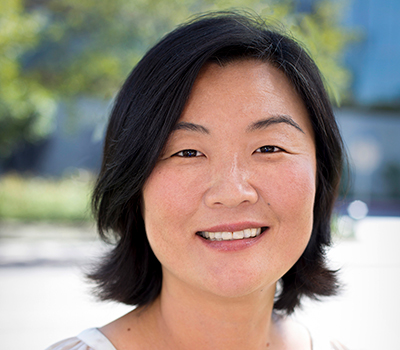
Christina D. Chambers, PhD, MPH, Program Director

Christina D. Chambers, PhD, MPH is the Program Director of MotherToBaby California. She is a world-renowned perinatal epidemiologist at the Center for Better Beginnings and a Professor of Pediatrics and Family and Preventive Medicine at the University of California San Diego. Her interests are in the areas of birth defects and other pregnancy outcomes, with a special focus on exposures that can cause birth defects (known as “teratogens”). Dr. Chambers has a very active research program on (1) the prevention of alcohol-related birth defects and (2) the safety in pregnancy of several medications and vaccines.

Kenneth Lyons Jones, MD, Medical Director

Kenneth Lyons Jones, MD, is the Medical Director of MotherToBaby California. He is a pediatrician specializing in the area of genetics and dysmorphology (the study of birth defects). Dr. Jones is Chief of the Division of Dysmorphology and Teratology and Distinguished Professor of Pediatrics at the University of California San Diego. He is well-known in the field of birth defects, and is considered the father of Fetal Alcohol Syndrome (FAS) as he was one of two doctors at the University of Washington who first identified FAS in the United States in 1973. He has authored over 400 publications in scientific journals and is the author of Smith’s Recognizable Patterns of Human Malformation, the esteemed medical reference book on both environmental and genetically caused birth defects.

Kelly Kao, Program Manager

Kelly Kao is the Program Manager at MotherToBaby California. She has been with MotherToBaby California since 1993. She obtained her Bachelor’s degree in Sociology at the University of California, San Diego with minors in Biology and Spanish Literature. She became interested in prenatal environmental exposures that cause birth defects and long-term developmental effects when she took a Sociology of Law course that examined the death penalty case of a man who was diagnosed with Fetal Alcohol Syndrome (FAS). She actively demonstrates her dedication to educating the community about prenatal environmental exposures through her outreach activities, lectures, and research projects.

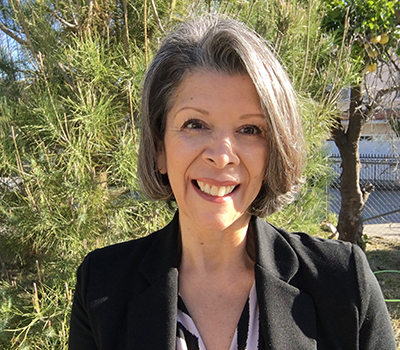
Sonia Alvarado, Teratogen Information Specialist, Bilingual – Spanish/English

Sonia Alvarado is a bilingual (Spanish/English) information specialist with MotherToBaby California. Along with answering women’s and health professionals’ questions regarding exposures during pregnancy and breastfeeding via phone, email, and live chat, she provides educational talks in the community regarding pregnancy health and supports the activities to promote MotherToBaby’s services. In addition, Sonia has authored several MotherToBaby Blogs and has translated content into Spanish. She has also served in leadership and member roles for several OTIS Committees, including the Education Committee, Abstract Committee and Marketing and Website Committees.

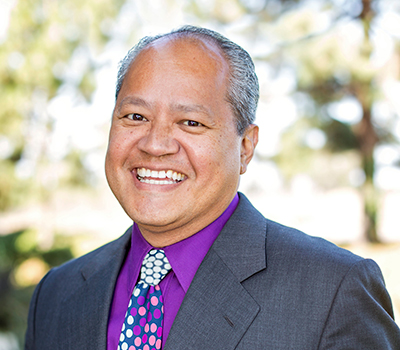
Robert Felix, Senior Teratogen Information Specialist

Robert Felix is a senior information specialist based at MotherToBaby California. He also serves as Stakeholder Liaison for the OTIS National Office, where he cultivates new partnerships with healthcare providers/administrators and a number of national programs for under-served populations. He attends and participates at national conferences such as the Association of Maternal & Child Health Programs (AMCHP), National Healthy Start, National WIC, Postpartum Support International, Primary Care Association and March of Dimes to strengthen OTIS’ community engagement. Robert has also served as President, Secretary, and Member-At-Large of OTIS’s Board of Directors.

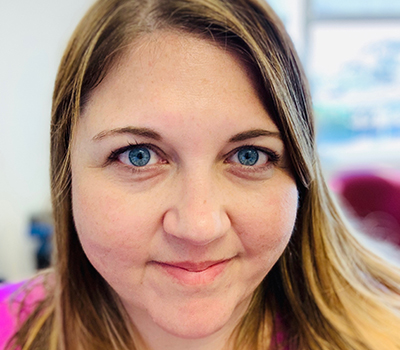
Angela Messer, Teratogen Information Specialist

Angela Messer, MA, is an information specialist with MotherToBaby California. She earned her undergraduate degree in psychology from Chapman University and her graduate degree from Kansas State University in academic advising/counseling. Angela has been with MotherToBaby since 2009, with experience in both research and counseling. She appreciates the opportunity to speak with pregnant and breastfeeding women and healthcare professionals regarding exposures and medications, and holds a special interest in stress and anxiety in pregnancy and breastfeeding.

Kirstie Perrotta, Teratogen Information Specialist

Kirstie Perrotta, MPH, is an information specialist at MotherToBaby California, where she provides counseling by phone and chat. She received her Masters in Public Health (MPH) from the University of San Francisco, and has worked in the field of reproductive health for over 8 years. Kirstie currently serves as a member of the MotherToBaby Zika Task Force and also provides leadership around our COVID-19 response. Her interests include vaccines, infectious disease, and mental health during pregnancy.


Get Patient Education Materials & Provider Resources

We offer free patient education materials and provider resources about our information service and pregnancy studies. Request our printed tools for more informed decisions about exposures during pregnancy and breastfeeding.


Education & Training Opportunities

MotherToBaby California specialists are available to give educational talks to the general public and to employees of health service organizations, WIC clinics, or other programs on the topic of exposures during pregnancy and breastfeeding or on MotherToBaby’s services and research studies.

We also provides opportunities for volunteers and internships for undergraduate and graduate students. These include anyone interested in working in pregnancy or a related health sciences field including those studying pharmacology, public health, social work, genetic counseling, and more.

To learn more about training or education opportunities, please contact Kelly Kao at kkao@health.ucsd.edu.


Connect with Our Local Partners

211 San Diego

211 San Diego’s mission is to serve as a nexus to bring the community (organizations) together to help people efficiently access appropriate services, and provide vital data and trend information for proactive community planning.

Visit Website

American Academy of Pediatrics California Chapter 3

The American Academy of Pediatrics is an international organization with headquarters in Elk Grove Village, Illinois. In the United States there are 10 geographical areas designated as districts, which represent one or more states. California’s Chapter 3 includes Imperial and San Diego counties.

Visit Website

California Black Infant Health Program

The Black Infant Health Program uses a group-based approach with complementary client-centered one-on-one case management to help women develop life skills, learn strategies for reducing stress, and build social support. BIH clients participate in weekly group sessions (10 prenatal and 10 postpartum) designed to help them access their own strengths and set health-promoting goals for themselves and their babies. The BIH Program is located in 15 local health jurisdictions where more than three quarters of African-American live births occur in California.

Visit Website

California WIC Association

California WIC Association provides nutrition, free supplemental foods, and nutrition information to low-income women, infants, and children up to the age of 5.

Visit Website

Comprehensive Perinatal Services Program

The Comprehensive Perinatal Services Program (CPSP) provides a wide range of culturally competent services to Medi-Cal pregnant women, from conception through 60 days postpartum. In addition to standard obstetric services, women receive enhanced services in the areas of nutrition, psychosocial and health education.

Visit Website

Live Well San Diego

Live Well San Diego involves partner organizations in all sectors – from government, to business, to schools, to faith-based and community organizations – through a shared purpose.  Working together allows for planning and implementation of innovative and creative projects to bring the Live Well San Diego’s vision of a region that is Building Better Health, Living Safely and Thriving to life.

Visit Website

March of Dimes

The mission of the March of Dimes is to improve the health of babies by preventing birth defects, premature birth and infant mortality. The March of Dimes provides information and resources on pregnancy and infant health to pregnant women and perinatal health professionals. The March of Dimes supports research aimed at preventing birth defects, premature birth and infant mortality.

Visit Website

March of Dimes California Chamber Program Services Committee

The State Program Services Committee (SPSC) leads the development and implementation of the March of Dimes California Chapter’s strategic program plan for our mission activities. The SPSC also identifies perinatal needs and evidence-based interventions to improve the health outcomes for moms and babies in California. The SPSC maximizes the impact and visibility of the chapter in our communities, participates in the review and approval of March of Dimes community grants, and assists in monitoring and allocating the program budget.

Visit Website

Mother’s Nutritional Center

Mother’s Nutritional Center (MNC) specializes in eWIC shopping geared towards a fast & easy grocery shopping experience. If you’re new to eWIC, it can be confusing & frustrating. They do most of the shopping for you and help you get what you need behind the counter, which limits mistakes in locating & picking the approved products. MNC is located throughout Southern California and is committed to bringing families healthy & nutritious food. 

Visit Website

Planned Parenthood

Planned Parenthood provides clinical services, sexual health education, advocacy, information, and resources to millions of women, men, and young people worldwide.

Visit Website

TrueCare

TrueCare is a non-profit community health center that offers adult medicine, pediatrics, behavioral health, chiropractic, dental, WIC, and application assistance services. Our mission is to improve the health status of our diverse communities by providing quality healthcare that is comprehensive, affordable, and culturally sensitive. TrueCare also host bi-monthly drive-thru food distributions in Oceanside and San Marcos. No registration is required for the food distributions and it is free to the community. For more information on all services offered, including food resources, please call (760) 736 – 6767 or visit truecare.org.

Visit Website

Ask Our Experts

Call, text, chat, or email for a free personalized risk assessment on exposures in pregnancy and breastfeeding.


Travel During Pregnancy: Clinical Guidance for Providers

I can’t begin to describe how organized I was during the holiday season when I was pregnant with my first child. Since I was pretty far along (5 months), I wanted to make sure each gift was chosen way ahead of time, I knew how long it would take me to get the food trimmings just right and whether I should emphasize red or green in my decorating scheme. All of this had to be done before that “pregnancy brain” I had heard so much about set-in. Little did I know, the most important items on my holiday to-do list weren’t sitting on store shelves or mixed in with the tinsel and mistletoe.

Years later, as a teratogen information specialist for MotherToBaby, I realized some of the best gifts for a healthy pregnancy didn’t come with ribbons and bows, but from awareness and education! For example, did you know the holiday buffet table could include foods that could potentially cause harm to a developing baby? Or, if not careful, decorating could put a pregnant woman in a dangerous situation? Today I encourage pregnant women to master must-know safety tips long before putting together must-have gift lists this season. Here are a few of my tips:

Tip 1. Importance of Getting Vaccinated

It is recommended that pregnant women have a flu vaccine in every pregnancy and be current on Tdap vaccine and Covid 19 vaccines.  Women who are 32-36 weeks pregnant are currently eligible for the RSV vaccine https://mothertobaby.org/fact-sheets/rsv-vaccine/. This vaccine can pass protection to the developing baby, helping lower the chance of severe RSV infection once the baby is born.  

Not only should a pregnant woman be up-to-date on vaccines, but anyone older than 6 months of age who will be around a newborn should be vaccinated.

Tip 2. Choose Wisely at the Buffet Table

Drinks like eggnog and spiced cider may contain alcohol https://mothertobaby.org/fact-sheets/alcohol-pregnancy. If you’re not sure what’s s in a beverage, ask the host. Also, avoid soft cheeses made from unpasteurized milk, as they may contain bacteria that can cause a serious illness for a developing baby called Listeria https://mothertobaby.org/fact-sheets/listeriosis-pregnancy, as well as increased risk of miscarriage, uterine infection, or premature labor. Meats like cocktail franks and pâté can also contain bacteria. Meats need to be thoroughly cooked so that bacteria are killed.

Tip 3. CMV (cytomegalovirus) May Be Lurking

CMV is a common virus that often has no symptoms. If a pregnant woman gets CMV https://mothertobaby.org/fact-sheets/cytomegalovirus-cmv-pregnancy, the baby could be at increased risk for hearing loss, developmental delays, or birth defects. To prevent infection, pregnant women should wash hands after changing diapers, feeding children, wiping children’s noses, or handling children’s toys. Also, avoid sharing food, eating utensils, toothbrushes, and pacifiers with children.

Tip 4. Holiday Decoration Safety

Some artificial trees, strings of lights, and ornaments may contain lead. Use gloves or wash hands after handling decorations to reduce exposure. Because of changes in their center of gravity, pregnant women should stay off ladders and let others decorate the hard-to-reach places.

Tip 5. Manage Anxiety and Depression

Having a ‘happy holiday’ can mean lots of stress, especially when pregnant.  Anxiety https://mothertobaby.org/fact-sheets/anxiety-fact to have that perfect holiday is real. Depression https://mothertobaby.org/fact-sheets/depression-pregnancy can be triggered this time of year as well.  Don’t hesitate to ask for help if you are feeling overwhelmed with all the gift giving and holiday activities.  Stay in-touch with your healthcare providers because…. help is available!

I hope these tips are helpful. While my son did end up turning out to be just fine, I think I would have caused myself less stress and worry had I known these tips during my pregnancy. If you have questions, don’t hesitate to reach out to MotherToBaby by phone, text, chat or email.

On behalf of all of us at MotherToBaby, here’s to wishing you a happy and healthy holiday!


Travel During Pregnancy: Clinical Guidance for Providers

Dr. Emily Caffrey, a certified health physicist with the Health Physics Society, joins host Christ Stallman, CGC to talk about different types of radiation and their potential effects on a pregnancy.

Links Mentioned in This Episode:

Health Physics Society’s Ask The Experts

https://HPS.org


Ep. 76 Transcript

 You’re listening to the MotherToBaby podcast, medications and more during pregnancy and breastfeeding. Ask the experts with your host, genetic counselor and mom of four, Chris Stallman.

This episode contains evidence based information that’s current as of the day recorded and may change as more data becomes available. To get the very latest information about this topic or other topics in pregnancy and breastfeeding, please contact a mother to baby specialist at 866 626 6847 by text at 855 999 3525 or through our website at mothertobaby.org.

Welcome to another episode of the mother to baby podcast. My name is Chris Stallman, and I’m a genetic counselor, a mom of four, and a teratogen information specialist. So what that means is that I talk to people, so patients, family members, healthcare providers, the general public, about exposures that can happen before pregnancy, during pregnancy, while breastfeeding, and in cases of adoption.

Thank you And an exposure can be anything. So it could be a medication you take. It could be a vaccine. It could be a hair treatment. And in some cases it could be in the place where you work. Today we’re going to talk about a very specific exposure, radiation. And we have a very special guest to talk with us today.

Dr. Emily Caffrey is the program director and an assistant professor for the master’s in health physics program at the University of Alabama at Birmingham. She is also a certified health physicist that specializes in calculating radiation doses from environmental sources of radiation. Dr. Caffrey, welcome to the show.

Thanks for having me. Excited to be here. Great. So let’s get started today. We’re going to talk about radiation. Can you tell us a little bit about what radiation is and how people are exposed to it? Yeah, absolutely. Um, you know, radiation is just a form of energy. So there’s two types of radiation. There’s non ionizing radiation and ionizing radiation.

So non ionizing radiation are lights, microwaves, your cell phone emits non ionizing radiation, things like that. There’s also ionizing radiation, and that type of radiation is a little bit higher energy, um, that makes charged particles. Um, and that’s the kind of radiation you get when you’re talking about a CT scan or an x ray, something like that.

Um, that’s ionizing radiation. Uh, and I, and I just want to point out that radiation is all around us. It was present when life first evolved on Earth. It was present when dinosaurs lived. It’s still present today. Uh, we live in a radioactive world, and I think a lot of people don’t know that. So I’d like to start with, radiation’s all around you, and it has been your whole life.

Um, natural radiation comes from space, and it comes from living things that are in the Earth. The Earth’s crust is radioactive. You may, if you live in a place that has high radon, um, you may have heard of radon coming from Earth up into your basement. That’s a really common source of exposure. Um, and our human bodies and cells have adapted over time to respond to and repair the small amounts of damage you might get from these low levels of ionizing radiation.

So some of the more common forms of radiation, like you described, light, microwaves, CTs, would that also include mammograms and would that increase risks to a pregnancy? Yeah, that doesn’t include mammograms. The mammogram is again a low energy type of x ray that’s used to image the breast tissue to look for cancer usually.

Um, and You know, just like all other types of, of diagnostic imaging procedures, and I think we’ll talk a little bit more about this as we get into it, um, you really aren’t at risk when you have a low, a low, a diagnostic imaging procedure, those are very low doses, your, your pregnancy is not at risk, the unborn child, not at risk from those types of exposures.

And I’m really glad that we can talk about that and hear about that again, because it is the kind of thing, you know, if. certainly if you need it in pregnancy, it’s a good idea to get your cancer screenings. Absolutely. Dr. Caffrey, can you tell us a little bit about the Health Physics Society? Yeah. And I like to tell people like health physics is a profession you’ve never heard of, but the health physics society is the professional society for health, which are radiation protection professionals.

So we are the profession that is devoted to the safe use of radiation. Um, so anywhere radiation is used, whether that’s a hospital, a nuclear power plant, um, the government and military installations, um, there’s gonna be a health physicist, a radiation safety officer, someone there making sure that the people and the environment are safe from that ionizing radiation.

So you may not see us, but we are there making sure that we’re following regulations and keeping people safe. When you mentioned earlier that radiation comes from space, I got to say, I love hearing that. I think that that’s such a cool and exciting thing. So let’s talk about cosmic ionizing radiation. So what is that specifically?

And does that increase risks to a pregnancy? Yeah, it’s space is always fun, right? And we’re talking about sending astronauts to Mars and things, right? Radiation. So, you know, one component of your natural radiation dose that you get just by living here on Earth is from outer space, and that’s called cosmic radiation.

Um, so particles and electromagnetic magnetic waves from outer space, um, come and hit and impact Earth. So you may have heard of solar flares and things like that. And the sun flings off all these charged particles. So those come and hit Earth. Now, Earth is actually pretty well protected. We have this magnetic field that’s around Earth that deflects a lot of those particles.

Think of it as like a shield around Earth. And then our atmosphere, like a literal atmosphere above us, also protects us from a lot of that radiation, but not all of it. So some of that radiation is going to come in and actually get into Earth, like where you and I are sitting here right now. Um, and, and, and, There’s more at the north and south poles and as you go higher in elevation because at the north and south pole the magnetic field that protects us is weaker and at higher altitudes you’re just physically closer to the radiation coming from space.

So if you’re, um, your background radiation dose, if you’re at the North Pole or if you’re standing on top of a 14 year in Colorado is going to be higher than me sitting here in my office in Huntsville, Alabama, which is basically at sea level, right? So it’s just a small difference, but it does change a little bit.

Um, but you know, cosmic radiation contributes Um, about 5 percent of our average total background dose. So that’s a very low, low number. You and I just living on Earth, which is radioactive, get about 3 millisieverts per year. And a millisievert is just a unit of radiation, uh, dose that we, that we use to count, you know, when we’re talking about radiation doses, that’s just a number we, a unit that we use.

Um, so you and I get about 3 millisieverts per year, and about 5 percent of that 3 millisieverts is from cosmic space radiation. Um, and I, and I want to add to that background radiation doses are too low to increase your risk of pregnancy or cause any harm to your unborn child. We are not worried about background radiation doses or doses that are lower, um, in, in than, especially not background, but lower than three is definitely not a concern.

And we’ll talk a little bit more about what levels you might want to start thinking about, about, you know, where, at what levels you might want to be concerned, but definitely not at background levels. Great. Okay. So thinking about space occupation, what’s out there? What about radiation exposure for someone who’s working as a flight attendant?

I got to tell you, I got this question for the very first time, maybe six or seven years ago. And until then, it never even occurred to me. I was like, yeah, of course, there’s radiation in the atmosphere. So I’m going to stop talking and let you give us this answer. Yeah, and I’m really glad you asked that question because we hear this concern a lot, both from flight attendants, pregnant women that travel for work a lot, uh, pilots, right?

We hear this question a lot. And I think people, uh, I certainly didn’t before I got into this field, didn’t think about flight attendants being, uh, people that are exposed to COVID. More than average, right? Um, but when you fly up high, especially people that fly transcontinental flights that go over those poles where you have a higher radiation dose, they get a higher radiation dose in the background.

They actually, in some cases, get higher radiation doses than workers at nuclear power plants, but higher does not mean there’s a problem. So let’s back up for just a second. Um, so the amount of exposure that you get from flying is significantly lower than, um, The exposure needed to cause any harmful effects to your, to your unborn child or to you, the pregnant, pregnant person, rightly, that we’re not concerned.

Um, and just to give you some context, right, we talked about 3 millisieverts as our background radiation dose. Um, the radiation dose needed to cause harmful effects is roughly, and again, there’s a lot of research on this that’s ongoing all the time as we improve our models, but we’re talking roughly 100 millisieverts.

Um, and again, millisieverts just being a unit of radiation dose, so 3. Is your background radiation dose, and 100 is what we’re talking about for harmful effects. Um, and then to talk a little bit more specifically about flight, so how much radiation do you get in a flight? Well, your radiation exposure during a commercial flight is about 0.

01 millisieverts per hour of flying time. So to get to 100 then right? That means you need if you do some quick division. That means you need about 10, 000 hours during your pregnancy to reach the amount of radiation that might be harmful. I don’t think anyone is even flight attendants, right? You’re not flying in 10, 000 hours.

You really aren’t quite safe from as a as a flight attendant or a pilot or even just someone that travels a lot while you’re pregnant. That’s it’s not of concern. Excellent. And I’m so glad that you mentioned, you know, it could be higher than 100. wherever we start out. But that alone doesn’t necessarily mean that there is a problem.

We have to have more information. We have to have all the pieces and that’s so important for all exposures. But again, certainly for one like this, where you may not have known or you may not have remembered, it’s like, oh, there’s radiation all around us. Oh, wait, it also depends on how much we’re being exposed to.

Now, for my favorite thing to ask all of the guests on the show, when I get the opportunity, what is the most interesting question about radiation and pregnancy that you or the Health Physics Society has received? Yeah. And I’m, and again, this is a great question. We get hundreds of questions from pregnant women and thousands of questions from the general public.

Yeah. Um, and you know, it’s kind of, I didn’t pick something like when I was thinking about this, I didn’t pick something light hearted because this, this particular question that I’m going to throw is one that has stuck with me and it’s the one I that just reminds me of why talking to people and using my knowledge to explain why things are okay or not okay or what you need to be concerned about and what you shouldn’t be concerned about is so important.

Um, and so about, about a year ago, we had a woman right in, um, an Italian woman and she had had a diagnostic x ray of her pelvis before she knew she was pregnant. And her, her gynecologist told her the pregnancy was probably more risky because of the x ray. And she specifically asked us if she should terminate her pregnancy.

And under Italian law, you know, that was very time sensitive because she only had a week to make such a like, insanely impactful life decision. Um, and so I was so glad that she found us because I just want to be really clear here. The answer to that question is absolutely not. A diagnostic x ray, even to the pelvis, um, is not going to cause any harm to your unborn child.

And just the relief that we were able to provide, um, that, that soon to be first time mom was just like overwhelming. She wrote back to us, um, several times over the course of, you over the course of her pregnancy just to check in and she told us she sent us an email saying that her son was born happy and healthy and she was just so grateful and so relieved because she didn’t know right and and so being able to offer that service and being able to help people understand and make massive decisions is just really amazing.

Uh, it gives me the warmth, like, that is amazing. I am not only so glad that the society exists and that folks like yourself are out there giving this information. I’m so glad they found you. I’m so glad that, you know, it seemed like a good outcome for them. That’s wonderful and so important. And it is one of those things where, you know, you don’t know what you don’t know.

The good news is in a lot of cases, there are people, um, again, like you and the health physics society that are out there assisting with some of this information that isn’t as commonly available. So thank you so much. What a great story. So Emily, if someone has a question specific for the health physics society, so radiation.

Or even, you know, concerns in the pre pregnancy or after pregnancy planning stage. How did they get to your organization to find this information? Yeah, thanks for asking that. Um, so you can find us at hps. org, hps. org. That’s the website of the Health Physics Society. And you’ll see a little Ask the Experts button.

And you just click that button and you’ll see our webpage. Um, there’s a webpage specifically for pregnancy and radiation. And on that web page are a couple of videos that the Health Society has produced. There are fact sheets about radiation and pregnancy. There are Q& A’s from, uh, not only some, some basic Q& A’s that we have written, but also, um, some stories that other people have, other questions that people have written in with.

We, we anonymize them, of course, and we post some of those to our website. And we cover everything from, um, background radiation, to pregnancy and flying, to what if I need a medical procedure, to I’m a lactating mom that’s breastfeeding, you know, and I have to have this nuclear medicine procedure, you know, if, am I okay, what should I do?

Um, I think the medical industry does a good job of providing information, but I think people sometimes still want, you’re still overwhelmed, right? When you, you have a child and you are doing something in the medical realm, like those are two very overwhelming things. In and of themselves. And so when you have another question that didn’t get answered, please reach out to us and we’re always happy to help.

That’s awesome. And we are going to put information for the Health Physics Society in the show notes. Something else, um, that I was just thinking of, I, you know, talk to people all day. That’s my job. But if I forget to ask my doctor or healthcare provider something, or if I’m traveling or busy, I might not always have the opportunity to connect with them, and I will say that sometimes I turn to Google.

So it’s great to know where they can find this information. Providers are wonderful. They give good information. Sometimes I do not have it in me to wait 30 minutes on the phone. You know, life is busy. So it’s great to know that we can find this information online as well. Dr. Caffrey, before I let you go for this episode, um, cause I would love to have you come back and talk more about radiation.

Is there a final thought that you would like to leave our audience with? Yeah, I think, you know, I think the thing I want to emphasize is that radiation can be scary. You can’t see it. You can’t feel it. You don’t know it’s there. Like anything you can’t see and you don’t know is there. Can be scary, but I just I want to emphasize that our bodies evolved in this radioactive world.

They have repair mechanisms for low doses. And we know from population studies from epidemiological studies. That the amount of radiation used in these diagnostic procedures, so x ray scans, mammograms. Um, even to the pelvis area are just not are way too small to cause harm to your unborn child. So you don’t need to worry about those types of procedures.

You know, and if you are concerned or you had a specific procedure or you had a nuclear medicine procedure, you know, those are things that experts can talk to you about and counsel you through, um, to make sure that you’re getting up to date information. And it’s so important to remember to ask those questions because diagnostic procedures can prevent a lot of issues that are harmful to your baby, right?

And, or could be harmful to your, to your unborn child and, or yourself, right? As the pregnant woman, like, um, There are actual harms that can be done by not having a CT scan when it’s clinically indicated, and the radiation dose should, should be something that you think about, um, and, and be aware of and educated about, but it should not stop you from getting a diagnostic procedure that could potentially save your life or your unborn child’s life.

So radiation’s scary, but we, um, myself, the Health Physics Society, and all of my topic editors and experts are here to help. Hps. org or through the mother’s baby website, there are links, um, and you can find us online and we are, please reach out. We are happy to help. Absolutely. And thank you. Thank you for the reminder that, you know, these procedures, MRIs, CTs, and so forth are not done lightly.

They are done because someone needs it, especially during pregnancy and you, you probably do need it. So please feel free to contact. The health physics society or mother to baby with any questions that you have. Dr. Caffrey, it was my pleasure to speak with you today. Thank you so much for being on the show, giving us all this great information, and we hope to have you back in the future.

Thank you so much for having me. It’s been a pleasure. And that’s going to do it for this episode of the mother to baby podcast. Be sure to hit that subscribe button. So that way you never miss a new episode and you can go back and listen or relisten to some of those older episodes as well. You can find us on iTunes, Spotify, Audible, or however you like to listen to podcasts.

And if you want to be on the podcast, or if you have an idea for the show, we would love to hear from you. Please feel free to email us at contactusatmothertobaby. org. And Mother 2 Baby is here to answer your questions about exposures before and during pregnancy while breastfeeding, or if you have questions about exposures and adoption, you can reach us by phone at 866 626 6847.

Buy text at 855 999 3525. You can visit us on our website, mothertobaby. org. And there you can chat with an information specialist. You can look at our many blogs, information pages, our hundreds of fact sheets that are available free in English and in Spanish. And you can also listen to our podcast. Or, find out how you can participate in our pregnancy studies.

If you would like to support the MotherToBaby podcast, as well as all of the ways we get critical pregnancy and breastfeeding health information to you at home, we have a new way to do just that. Encircle is our new monthly giving society that helps ensure we can continue to provide our services at no cost.

Join the community today and encircle parents and babies in health. Members will be recognized on the podcast and website. Visit mothertobaby.org/donate today. Until next time, remember, MotherToBaby is here for you. Take care. MotherToBaby is a service of the nonprofit organization of Teratology Information Specialists and supported by the Health Resources and Service Administration of the U.S. Department of Health and Human Services. It’s made possible through generous donations from listeners like you. To learn more about MotherToBaby, please visit mothertobaby. org.

Travel During Pregnancy: Clinical Guidance for Providers

For breastfeeding people living in rural areas, it is often difficult to find appropriate breastfeeding and lactation resources as they can be few and far between. According to the Centers for Disease Control and Prevention (CDC), infants in rural areas are less likely to ever breastfeed than infants living in urban areas.

Emma, a new mother to a baby boy, lives in a rural area where the nearest town with a healthcare facility is over an hour away. Even by phone, it was difficult to reach her provider’s office. She was determined to provide the best for her son, including breastfeeding; however, she was concerned about managing her post-partum anxiety and depression. She wasn’t sure where to find out if her medications were something she could take while breastfeeding – which made her more anxious! Emma faced some common challenges living in a rural area:

  • Travel Barriers – Emma struggled with general breastfeeding and medications concerns, all while managing the demands of a newborn; traveling long distances for an appointment was not only exhausting, but also not ideal.

  • Limited Local Support – Emma’s town had no specialized breastfeeding support services. The nearest support group was a two-hour drive away, making it difficult for Emma to access help when she needed it most.

  • Limited Resources – Finding reliable information about breastfeeding was another challenge. Emma felt isolated and unsure where to turn for accurate information.

One day, while searching for answers online and discovering mixed information about the medications she wanted to start, Emma discovered MotherToBaby. Intrigued by our expert support that was available remotely and promptly, she explored our fact sheets, blogs, and podcasts that cover a range of breastfeeding topics. After reviewing our website, she was delighted to see our live chat service!

During our conversation, we addressed Emma’s concerns about breastfeeding while on her medications to treat her post-partum anxiety and depression. We were also able to discuss the recommendations for vaccines while breastfeeding (like the updated COVID-19 and influenza vaccines. We also answered her questions about cold medications, referring her to our specialized blog. She was very relieved to connect with someone so quickly and receive accurate information on the spot.

The flexibility of MotherToBaby’s online services was also a game-changer for Emma. She was now able to access information at times that suited her schedule, as she also could use our text, email, or phone service. This was particularly important for Emma, since her days were unpredictable and often included late-night feedings and other unexpected moments!

MotherToBaby referred Emma to online lactation resources and support groups. Engaging with other breastfeeding parents and experts on an online platform can provide her with emotional support and encouragement. Sharing experiences and hearing from others who faced similar challenges can also help Emma feel less alone and more empowered in her breastfeeding journey. Engaging with the online community and support can provide Emma with a sense of connection and support that was missing in her rural area, which can help her more easily navigate the ups and downs of breastfeeding.

Mental health support was also very important to Emma because she lacked this in her daily life. Resources like Post-Partum Support International (PSI) and the National Maternal Mental Health Hotline are now tools Emma has to support her along the way.

With evidence-based information about her medications and referrals to the appropriate resources, Emma felt much more reassured about treating her anxiety and depression while breastfeeding. She felt more knowledgeable and prepared to continue taking care of herself and her newborn. The convenience of online support and education alleviated much of the stress she had been feeling. She could now focus more on bonding with her baby, knowing she can turn to MotherToBaby should she have more questions or concerns about medications or exposures while breastfeeding.

References:

https://www.ruralhealthinfo.org/toolkits/maternal-health/2/breastfeeding

https://www.cdc.gov/breastfeeding/data/facts.html