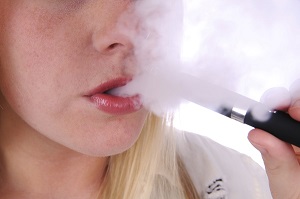
Vaping During Pregnancy: Lesser of Two Evils or Wolf in Sheep’s Clothing?

teratology logo

Birth Defects Insights
a blog by our partners at the Teratology Society

By John Rogers, PhD, Teratology Society Past President

“County May Restrict Vaping,”Vaping Burns Hole In Dad’s LUNGS After E-Cigarette Spits Molten Nicotine Into His Throat,” and, perhaps one of the most disturbing, “Lab Tests Reveal Popular E-Cigarette Liquids Contain Harmful Chemicals.” These are just a few of the many headlines associated with vaping, otherwise known as electronic cigarette, or e-cigarette, use. Electronic cigarettes are also called electronic nicotine delivery systems (ENDS), the most descriptive term and the one I will use here. Why do I bring this up? Because, as a biologist and developmental toxicologist by profession, the risks associated with smoking and ENDS use is a professional interest. ENDS are here, they’re trending and they’re not going away anytime soon. So what does this mean for future generations? Particularly the ones growing in the wombs of many women exposed to the vaping culture? I’m calling on all scientists to take a closer look at the topic…first at the trends…

Where there’s smoke, there’s vaping.
Despite the disturbing headlines, vaping is on the rise. A 2013 study conducted by the Centers for Disease Control and Prevention (CDC) and Georgia iStock_vaping_300pxState University, found that from 2010 to 2013, awareness of ENDS grew to 80% and use of them more than doubled among U.S. adults. What may be equally, if not more disturbing is the early indication coming out of small studies that many pregnant women may escape to vape because of a presumption that ENDS are safer for the fetus than traditional smoking. Their rising use raises a lot of questions, but with few answers yet.

What we do know is that ENDS are unregulated.
ENDS are currently unregulated and highly variable in what they deliver in their vapor, including levels of nicotine. Heavy metals such as tin, chromium and nickel have been found in aerosols from some ENDS, along with propylene glycol, glycerol, and flavorings. While e-cigarettes are being marketed as an aid to smoking cessation, none has been approved by the FDA for this use. The U.S. Preventive Services Task Force (USPSTF)3 has concluded that nicotine replacement products (e.g., nicotine patch) and other pharmaceuticals for smoking cessation (varenicline and bupropion) have not been adequately tested for safety and efficacy during pregnancy, and the USPSTF and The American College of Obstetricians and Gynecologists4 recommend that clinicians offer pregnancy-tailored smoking cessation counseling for smokers.

Research is lacking on using ENDS during pregnancy, but we know a lot about nicotine.
As nicotine delivery devices, ENDS deliver a known human developmental toxicant that targets, at least, the developing brain and lungs. The dose of nicotine delivered during vaping is not well known and likely highly variable. Considering dose and potency, nicotine is probably the most toxic of tobacco smoke constituents for the developing conceptus. Delivered doses of solvents, flavorings and contaminants are poorly understood. While ENDS aerosols contain far fewer chemicals than tobacco smoke, there are no comparative studies showing that they are safer for pregnancy.

How does the availability of ENDS affect decisions about smoking during pregnancy?
All other things being equal, if a pregnant woman cannot quit smoking during pregnancy, e-cigarettes might be a safer (but not safe) substitute. But all other things are not equal. Does having the ENDS option reduce the rate of smoking cessation, which is the desired outcome, or is it a step in the right direction? Further, most women smokers at least reduce the number of cigarettes per day during pregnancy, which may result in less nicotine exposure than switching to ENDS. But the most insidious effect of ENDS on pregnancy may originate years earlier; the sharp rise in use by previously non-smoking teens will result in increased nicotine addiction inevitably extending into pregnancy for many. So the number of exposed pregnancies may show a sharp rise in the future due to today’s successful marketing of ENDS to adolescents.

With so many questions and not many answers, clearly it’s time to kick this issue in the “butt,” examine it closely, and light the way for healthier pregnancies and society in general.

Scientists interested or are already involved in research related to topics mentioned in this blog are encouraged to join the Teratology Society, the premier source for cutting-edge research and authoritative information related to birth defects and developmentally-mediated disorders. Members include those specializing in cell and molecular biology, developmental biology and toxicology, reproduction and endocrinology, epidemiology, nutritional biochemistry, and genetics, as well as the clinical disciplines of prenatal medicine, pediatrics, obstetrics, neonatology, medical genetics, and teratogen risk counseling. In addition, it publishes the scientific journal, Birth Defects Research. Learn more at www.Teratology.org.

Find the Teratology Society on Linkedin: http://www.Linkedin.com/company/teratology-society and on Facebook: http://www.Facebook.com/teratologysociety

About The Author
John M. Rogers, PhD, has been a Teratology Society member since 1982 and is a past president. He is director of the Toxicity Assessment Division at the United States Environmental Protection Agency. His areas of expertise include developmental biology and toxicology, embryo/fetal physiology, epigenetics, maternal-fetal interactions, mechanisms of teratogenesis, maternal nutrition, and the developmental origins of health and disease.

References
Brian A. King, Roshni Patel, Kimberly Nguyen, and Shanta R. Dube. “Trends in Awareness and Use of Electronic Cigarettes among U.S. Adults, 2010-2013.” Nicotine & Tobacco Research. First published online September 19, 2014, doi:10.1093/ntr/ntu191

Mark, Katrina S. MD; et al. “Knowledge, Attitudes, and Practice of Electronic Cigarette Use Among Pregnant Women.” Journal of Addiction Medicine: July/August 2015 – Volume 9 – Issue 4 – p 266–272

Counseling and interventions to prevent tobacco use and tobacco-caused disease in adults and pregnant women: U.S. Preventive Services Task Force reaffirmation recommendation statement Ann Intern Med 2009; 150:551-555

American College of Obstetricians and Gynecologists. Smoking cessation during pregnancy. Committee Opinion No. 471, November 2010, Reaffirmed 2015.


Vaping During Pregnancy: Lesser of Two Evils or Wolf in Sheep’s Clothing?

January 7, 2014 – Experts Call Mass Media Misrepresentation Of Recent Alcohol-Related Studies ‘Harmful’.

Brentwood, TN – “Children Of Mothers Who Drink Alcohol During Pregnancy ‘Better Behaved,’” and “Pour It Up Pregs,” coupled with images of smiling pregnant women sharing in a wine toast, are just some of the messages flooding news headlines in recent days following publicity of a study aimed at examining the behavioral outcomes of children whose mothers consumed alcohol during pregnancy. Fetal Alcohol Syndrome (FAS) experts call the vast majority of the media’s misinterpretation of the studies potentially “harmful.”

“It’s deeply concerning,” said Kenneth Lyons Jones, MD, who is president of MotherToBaby, a service of the international non-profit Organization of Teratology Information Specialists (OTIS), professor of pediatrics at the University of California, San Diego, and considered the world’s leading expert on FAS, as well as other areas of birth defects research. The research causing such concern among experts, like Jones, over misinterpretation, is a series of studies out of the University of Copenhagen. “The take-home message of this study should in no way be to encourage drinking in pregnancy as a means to better mental health for children.”

Janni Niclasen, a psychologist, surveyed approximately 37,000 Danish women who reported on drinking habits during pregnancy. The study results showed that women who drank as much as one glass of wine per week had children with better emotional and behavioral outcomes by age seven compared to children of mothers who claimed to not drink at all. However, the author also points out that mothers who reported drinking tended to be more educated and have other potentially healthier characteristics overall. In addition, the author points out that the timing of the alcohol exposure during the surveyed pregnancies, which can play an important role in how the fetus is affected, was ignored.

“Even the author points out the significant limitations of her study, the problem is how the findings are being interpreted in the mass media,” said Christina Chambers, PhD, MotherToBaby epidemiologist and professor of pediatrics at the UC San Diego. “The study does not show that drinking caused mothers to have children with fewer behavioral concerns — rather that mothers who reported drinking were very different from mothers who did not in multiple ways. These differences in family and home environment, along with the way that alcohol exposure and child health were measured, could easily mask any associations with low level alcohol.”

Chambers also points out how the study used a maternally reported measure of mental health in the children. “The children were not formally tested, so the measures of mental health might not be so objective,” she said. “For example, mothers who admitted to drinking more might have been less likely to report problems in their children.”

According to Jones and Chambers, the study only further illustrates the ongoing conclusion that a “safe” amount of alcohol that any individual woman can drink during pregnancy has simply not been established.

Julie Pollock, vice president of the Southern CA chapter of the National Organization on Fetal Alcohol Syndrome (NOFAS) couldn’t agree more. “When I read the way this study was being reported in the media, I wanted to scream,” she said. Pollock’s son, whose birth mother drank alcohol during pregnancy, was found mentally incompetent to stand trial after he was accused of killing his friend when he was just 10 years old. “Don’t buy into the hype. Those of us who live the reality of drinking while pregnant know the truth.  There is no safe amount of alcohol to an unborn child.  Please don’t look for an excuse to continue a behavior that is wrong.”

MotherToBaby is a one-stop-shop for evidence-based free counseling available to women and the general public. All North Americans can be connected with MotherToBaby experts and receive individualized risk assessments regarding alcohol, medications and other exposures during pregnancy and breastfeeding through the toll-free, bilingual (English/Spanish) counseling service (866) 626-6847 or online at MotherToBaby.org.

Media Contact: Nicole Chavez, 858-246-1745, nchavez@mothertobaby.org. Interviews in Spanish can also be arranged.


Vaping During Pregnancy: Lesser of Two Evils or Wolf in Sheep’s Clothing?

As a teratogen information specialist, I provide the most up-to-date information about exposures during pregnancy, breastfeeding, before pregnancy or in cases of adoption. Over the years, I have been asked questions about hair dye, heroin, and lots of things in between. I never thought I would be getting questions from multiple people about tear gas and pepper spray exposure during pregnancy. But here we are.

Protests happening in many cities in the United States right now are resulting in some exposure to riot control agents such as tear gas and pepper spray. Even if women who know they are pregnant do not participate in a protest, about 50% of pregnancies in the US are unplanned. This means some women who are participating in the protests may not even know they are pregnant at the time of exposure.

Common protest-related exposures that we have been asked about include:

Tear Gas

There are multiple chemicals in tear gas. It can cause tearing of the eyes, irritation of mucous membranes, cough, difficulty breathing and irritation to the skin. A common chemical in tear gas is called 2-chlorobenzalmalononitrile (also called o-chlorobenzylidene malononitrile or CS for short).

In every pregnancy, a woman starts out with a 3-5% chance of having a baby with a birth defect. This is called her background risk. Based on the very limited information we have, exposure to CS gas is not expected to increase the chance of birth defects over the background risk. A report looking at CS exposure found no major increases in miscarriages, stillbirths, or birth defects.

Pepper Spray

The active ingredient in pepper spray is capsaicin, a chemical that comes from chili peppers. Effects from pepper spray exposure can include irritation of the eyes, skin, and mucous membranes, coughing, and trouble breathing or speaking. Like tear gas, there is very limited information on the use of capsaicin in pregnancy and from what we do know, it is not expected to increase the chance of birth defects over the background risk. Please see our fact sheet on capsaicin for more information.

The Centers for Disease Control and Prevention (CDC) has more information on riot control agents such as tear gas and pepper spray, as well as tips on how you can protect yourself and what to do if you are exposed.

Trauma

Trauma can be caused by physical injury, such as being hit (by a hand or fist or by objects such as a baton or a rubber bullet) or falling. Trauma can also be psychological, which can stem from violence or from mental/emotional stress. There are individual reports of babies born with and without birth defects following trauma. Pregnancy outcomes may differ based on the type of trauma experienced and based on the severity of the trauma. Our fact sheet on trauma has more information.

Stress

For most of us, stress is a part of “normal” life. However, the world is anything but normal right now. While it is unlikely that stress alone will increase the chance of birth defects, being under a lot of stress over time can affect your health and well-being. Stress can increase the chance for developing conditions such as high blood pressure or depression. If you already have medical problems, stress may make them worse. If stress is causing you to have any medical problems, it’s suggested that you talk to your healthcare provider. More information about stress during pregnancy and breastfeeding can be found in our fact sheet.

COVID-19

As crowds gather, it’s important to practice social distancing and other safety techniques to prevent the spread of COVID-19. Please visit our MotherToBaby Fact Sheet on COVID-19 in pregnancy for recent information.

Of course, it’s suggested for women who are pregnant to minimize these exposures as much as possible. However, sometimes it’s unavoidable. Just know that even during these troubled times, if you have questions for us at MotherToBaby, we are here to answer them as best we can.

We’re all in this together. Please be safe out there.


Vaping During Pregnancy: Lesser of Two Evils or Wolf in Sheep’s Clothing?

Managing ADHD during pregnancy can feel overwhelming—especially when juggling appointments, medications, mood changes, and everyday life. In this episode of The MotherToBaby Podcast, genetic counselor and teratogen information specialist Chris Stallman, CGC sits down with returning guest Dr. Christy Pratt, a pharmacist at Kaiser Permanente Colorado, for an in-depth, practical conversation about ADHD in pregnancy and breastfeeding.


Together, they discuss:

  • How ADHD symptoms can shift during pregnancy
  • What to consider when deciding whether to continue stimulant or non-stimulant medications
  • How co-occurring conditions like anxiety or depression affect treatment decisions
  • Why risk–benefit conversations are essential—and individualized
  • Non-medication strategies and organization tools that actually help
  • How healthcare providers can better support pregnant patients with ADHD
  • What Dr. Pratt wishes more people understood about ADHD as a real, physiological condition
  • Dr. Pratt also shares insights from her innovative program at Kaiser Permanente, where newly pregnant patients receive personalized risk–benefit consultations about their medications.
  • Whether you’re pregnant, planning a pregnancy, supporting someone with ADHD, or working in maternal-child health, this episode offers validation, clarity, and evidence-based guidance—always centered on achieving the best outcomes for both parent and baby.

Key takeaway: “We need a healthy mama to grow a healthy baby.” —Dr. Christy Pratt

For more evidence-based information about exposures during pregnancy and breastfeeding, visit MotherToBaby.org.


Vaping During Pregnancy: Lesser of Two Evils or Wolf in Sheep’s Clothing?

Pertussis, commonly known as whooping cough, is a highly contagious respiratory illness caused by the bacteria Bordetella Pertussis. It spreads through droplets in the air when someone coughs or sneezes.

For adults, pertussis can feel like a bad cold with a lingering cough. But for babies, especially those under 1 year old, it can be much more serious. If a baby who is not fully vaccinated gets whooping cough, about 1 in 3 will need to be hospitalized. Complications can include:

  • Pneumonia
  • Pauses in breathing (apnea)
  • Seizures
  • In rare cases, death

The good news? There is an effective way to help protect your baby before they are born.

What Is the Tdap Vaccine?

The Tdap vaccine protects against:

  • Tetanus
  • Diphtheria
  • Pertussis (whooping cough)

The Centers for Disease Control and Prevention (CDC) recommends that pregnant women receive the Tdap vaccine during each pregnancy, ideally between 27 and 36 weeks.

When you receive the Tdap vaccine during pregnancy, your body makes protective antibodies. These antibodies cross the placenta and help protect babies after birth.

This protection:

  • Starts right away after birth.
  • Lasts for the first two months of a child’s life.
  • Helps bridge the gap until the baby can get their own vaccine.

Newborns are at highest risk for severe pertussis, and they are too young to be fully vaccinated. Getting the Tdap vaccine during pregnancy is the best way to reduce the risk of whooping cough in the baby.

Has the Tdap vaccine been studied for use in pregnancy?

Studies looking at thousands of pregnant women who received the Tdap vaccine have not found increased risks for birth defects, preterm delivery, or other pregnancy complications.

Research on the Tdap vaccine and other recommended vaccines in pregnancy, like the flu vaccine, has been reassuring for both pregnant women and their babies.

MotherToBaby continues to study vaccines in pregnancy to provide up-to-date, evidence-based information to families and healthcare providers. Learn more about how you can help here.

The Bottom Line

Getting the Tdap vaccine during pregnancy is the very best way to protect a newborn from whooping cough during their most vulnerable months. If you are pregnant or planning a pregnancy and have questions about vaccines, talk with your healthcare provider. You can also contact MotherToBaby for free and confidential information based on the latest research.

Originally published 8/5/14, Updated 3/6/26.