Natural Disasters

When Nature’s Fury Strikes

Disclaimer: This page houses important information and resources pertaining to natural disasters during pregnancy and while breastfeeding, including links to our evidence-based Fact Sheets. However, the resources here should not replace the care and advice of a medical professional.

Being pregnant or breastfeeding an infant can be a challenge under normal conditions, but doing it when your world is in disarray because of a natural disaster can feel overwhelming. No matter the form of chaos you’re dealing with – from hurricanes to wildfires, floods to tornados, earthquakes to volcanic explosions – there’s a good chance you’re going to have questions about how natural disasters could affect your pregnancy or your breastfed baby. That’s where we can help!

Specific exposure concerns may change depending on the type of disaster you’re facing and could be environmental in nature, such as concerns about air quality, drinking water contamination, mold from flooding, and how to safely clean your home if it’s still standing. There is also the emotional and physical toll that a natural disaster can have on you, from anxiety and stress to sleep deprivation and disrupted health care.

While an emergency can be devastating for any affected population, women who are pregnant and postpartum require additional considerations given the unique physical and psychosocial needs associated with pregnancy in both non-emergency and emergency scenarios.

— U.S. Department of Health and Human Services Maternal-Child Emergency Planning Toolkit

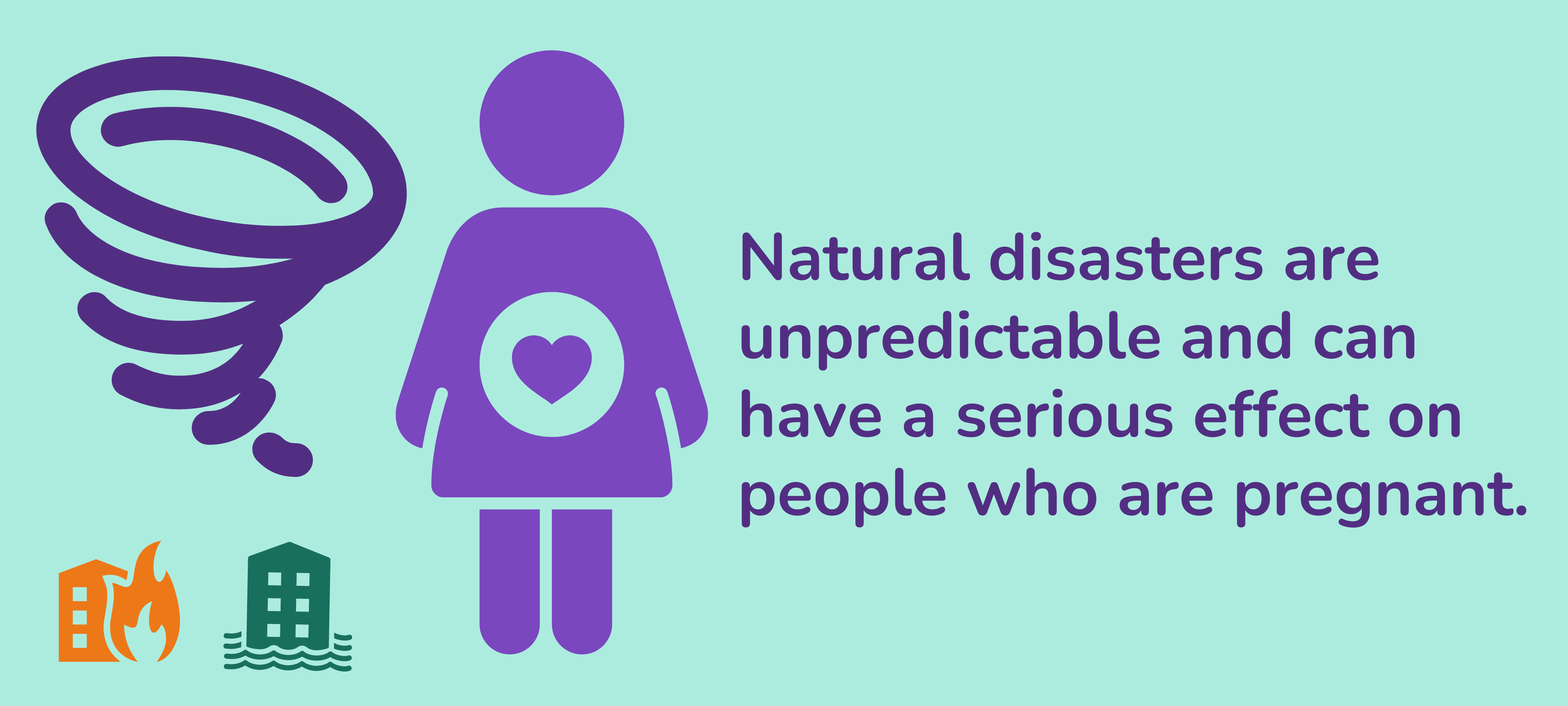
Natural Disasters Infographic 0624

Reference: National Library of Medicine

If you live in an area that is prone to natural disasters, regardless of whether you are pregnant or breastfeeding it is always best to be prepared for the worst. Actions you can ahead of time that may help reduce your stress when disaster strikes include:

  • Developing an emergency action plan for your family.
  • Preparing an emergency kit that includes at least a 3-day supply of food, water, and critical items like medications, items needed for baby (e.g., diapers, clothing, formula if bottle feeding), items needed for pets, etc.
  • Signing up with your local emergency management agency for any emergency alert apps or systems they operate (e.g., text alerts).
  • Keeping copies of important documents in a waterproof packet with your emergency kit (e.g., driver’s license, insurance cards, birth certificates, passports, etc.).

Visit Ready.gov for information on specific types of disasters and emergencies as well as information on making a plan and preparing for disasters.

Please see our library of resources below on natural disasters during pregnancy and breastfeeding.

External Resources

Partners


Natural Disasters

Preparing to hit the road, cruise, or fly the friendly skies when you’re pregnant or breastfeeding

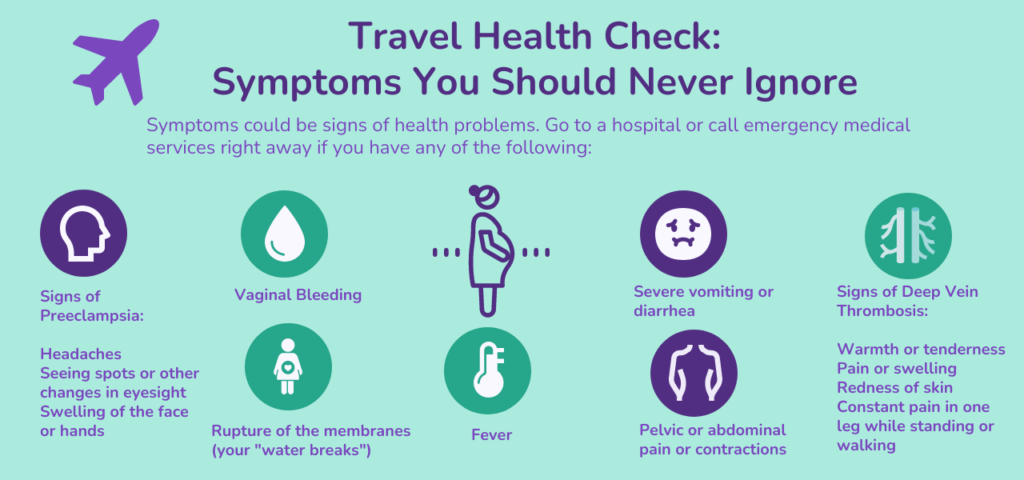
Disclaimer: This page houses important information and resources pertaining to travel-related illnesses and vaccines during pregnancy and while breastfeeding, including links to our evidence-based Fact Sheets. However, the resources here should not replace the care and advice of a medical professional.

Maybe you and your significant other are planning a baby moon or a family vacation. Or maybe work is sending you to far-flung regions for a meeting. Regardless of the reason for your upcoming travel, if you are pregnant or breastfeeding, there are certain travel-related illness that you need to be aware of – and in some cases, there are certain immunizations that you should discuss with your healthcare provider before you head out of town.

“Pregnant travelers can generally travel safely with appropriate preparation. But they should avoid some destinations, including those with risk of Zika and malaria.”

— Centers for Disease Control and Prevention

Travel-related illnesses can vary widely depending on where you’re headed. Higher elevations may cause altitude sickness. Contaminated food or drink may cause traveler’s diarrhea, or even more serious food-borne illness. Insect bites in various parts of the world could expose you to things like malaria, Zika virus, dengue, Lyme disease, chikungunya, or oropouche virus. And don’t forget all of the infectious diseases you can be exposed to as you encounter others throughout your travel, such as seasonal influenza, the common cold, and the ever-present Covid-19, as well as newer viral outbreaks like Mpox and the Marburg virus.

So what’s a pregnant or breastfeeding traveler to do? The best advice we can give you is to talk to your healthcare provider about where you’re going. They’ll be able to look up any travel-related health alerts for your destination and, based on the time of the year that you’ll be traveling and your medical history, they can advise you on the best ways to keep you and your baby safe. Give them as much advance notice as you can; they may recommend one or more immunizations to prevent certain illnesses, and you’ll want to make sure there is adequate time before you travel to receive all doses of the vaccine and for the vaccine and for the vaccine to become maximally effective.

Reference: American College of Obstetricians & Gynecologists 

If you’re breastfeeding, your healthcare provider and your baby’s pediatrician can also advise you on how to safely breastfeed while traveling. If you’re going to be traveling without your baby and need to think about how to pump, store, and transport your milk, the Centers for Disease Control and Prevention has some great tips.

Our experts are always available to answer questions you may have about specific travel-related exposures and how they could affect you pregnancy or your breastfed baby. You can also visit our library of resources below.

External Resources

Partners


Natural Disasters

Understanding JIA from Preconception to Motherhood

Disclaimer: This page houses important information and resources pertaining to juvenile idiopathic arthritis during pregnancy and while breastfeeding, including links to our evidence-based Fact Sheets. However, the resources here should not replace the care and advice of a medical professional.

Reference: Oberle EJ et al., 2014

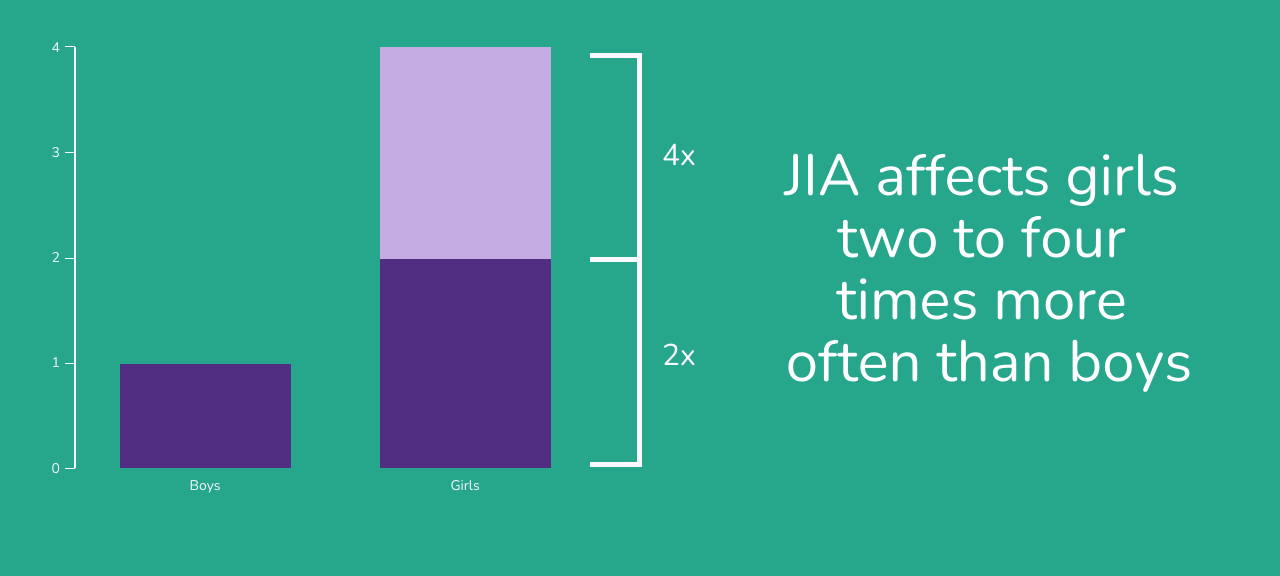
Juvenile idiopathic arthritis (JIA) is the most common type of arthritis that is diagnosed in childhood before age 16. It is an autoimmune condition that can cause pain and inflammation in the joints, including but not limited to hands, wrists, elbows, knees, and ankles. There is no cure for JIA, so people who are diagnosed in childhood will continue to have it into adulthood and their reproductive years. Also known as juvenile rheumatoid arthritis (JRA), JIA affects about 1 in 1,000 people in the United States.

Studies of [people] with JIA have suggested an increased risk of pregnancy complications and adverse outcomes, such as instrumental delivery, preterm birth, small for gestational age birth, and congenital malformations. However, the reasons for these complications remain unclear, and may be caused by the disease itself, the activity state of the disease and/or its treatment.

Drechsel et al. Rheumatology 2020 Mar 1;59(3):603-612.

Please see our library of resources below on JIA during pregnancy and breastfeeding.

External Resources

Partners


Natural Disasters

This sheet is about having depression in a pregnancy or while breastfeeding. This information is based on published research studies. It should not take the place of medical care and advice from your healthcare provider. 

What is depression? 

Depression is a serious medical illness. There are different types of depression, such as major depression, persistent depressive disorder, perinatal depression, seasonal affective disorder, and depression with symptoms of psychosis. Pregnancy can trigger the development of depression in some women (perinatal depression). This may be due to changes in hormone levels during pregnancy and the stress that comes with this major life event. 

Depression can change how someone feels, thinks, and acts. The most common symptoms of depression are strong feelings of sadness and not being able to feel pleasure or happiness. Other symptoms can include anxiety, irritability, trouble concentrating, feeling very tired (fatigue), and thoughts of death or self-harm. Physical symptoms of depression can include increased heart rate, appetite changes, stomach pain, and headaches. Treatment for depression can include counseling, psychotherapy, and / or medications. 

I think I have depression and I am pregnant. What should I do?  

Contact your healthcare provider as soon as possible. If you are in crisis (you feel you may hurt yourself, your pregnancy, or someone else) and need help, call or text 988 and/or seek emergency medical care at once. You are not alone in what you are experiencing, and there is help available. 

Healthcare and mental health providers can work with you to create a plan for the health of you and your baby. Also, share your feelings with people you trust (such as your partner, family, friends, or others) so you can receive support. Research suggests that social support is associated with less severe perinatal depressive symptoms. 

The National Maternal Mental Health Hotline (NMMHH) is also available for help at 1-833-TLC-MAMA (1-833-852-6262). It is free, confidential, and available 24/7 in English and Spanish. For more resources and support services, please visit our mental health resource page at: https://mothertobaby.org/pregnancy-breastfeeding-exposures/mental-health/ 

I have depression. What should I talk about with my healthcare team before I get pregnant? 

It is important to talk to your healthcare team (including your obstetrician and mental health specialist) about plans for treating your condition before and during pregnancy, during delivery, and after delivery. If possible, talk with your healthcare team before getting pregnant. If your pregnancy is unplanned, contact your healthcare providers as soon as you find out you are pregnant.  

Things to talk about with your healthcare team include: 

  • Ways to monitor your pregnancy and depression symptoms. 
  • Any medications or vitamins you should take during pregnancy.  
  • Any other questions or concerns you have. 

I have depression. Can it make it harder for me to get pregnant? 

Some studies suggest having depression might make it harder to get pregnant. 

Does having depression increase the chance of miscarriage? 

Miscarriage is common and can occur in any pregnancy for many different reasons. Some studies have reported a higher chance of miscarriage when depression is untreated or poorly treated in pregnancy. 

Does having depression increase the chance of birth defects? 

Birth defects can happen in any pregnancy for different reasons. Out of all babies born each year, about 3 out of 100 (3%) will have a birth defect. We look at research studies to try to understand if an exposure, like depression, might increase the chance of birth defects in a pregnancy. 

Depression itself is not expected to increase the chance for birth defects above the background risk. However, depression during pregnancy should be treated. Many antidepressant medications have been studied during pregnancy and have not been linked to a higher chance of birth defects. For questions about specific medications and pregnancy, talk with your healthcare provider or a MotherToBaby specialist. 

Does having depression increase the chance of other pregnancy-related problems? 

Some studies have reported a higher chance for preterm delivery (birth before week 37), low birth weight (weighing less than 5 pounds, 8 ounces [2,500 grams] at birth), babies who are smaller than expected, high blood pressure, and preeclampsia when depression is left untreated in pregnancy. Preeclampsia is a pregnancy-related disorder, which can lead to preterm delivery and complications for the woman who is pregnant and for the baby.  

Pregnant women with depression sometimes notice changes in sleep and eating patterns. Studies suggest they may also have a higher chance of gestational diabetes. Additionally, women diagnosed with depression around the time of birth are at an increased risk of death, particularly within the first year after diagnosis, with suicide being a leading cause.  

Does having depression in pregnancy affect future behavior or learning for the child? 

Some studies have shown that untreated or poorly treated depression in pregnancy might negatively affect a child’s behavior or development.  

I feel nervous about taking my medication for depression during my pregnancy. But my healthcare provider said that not treating my depression could be worse for my baby and me. Is this true?  

Studies have found that women who are pregnant with depression typically have better outcomes for themselves and their babies if they are getting effective treatment compared to having untreated depression. 

Stopping your medication could lead to a return of your symptoms of depression (relapse). One study found that women who stopped their medications for major depression had a 5 times greater risk of relapse during pregnancy compared to those who stayed on their medications. Restarting the antidepressant medication lowered the chance of a relapse, but it did not completely prevent the relapse in all cases. A relapse of depression during pregnancy could increase the risk of pregnancy complications. 

It is important to talk with your healthcare providers before making any changes to how you take your medication. Your healthcare providers can talk with you about the benefits of treating your condition and the risks of untreated illness during pregnancy. Consider your personal feelings, the severity of your symptoms, any past hospitalizations, how quickly symptoms have returned in the past if you have ever gone off medication, and how quickly you respond when you restart medications.  

If you decide to stop your medication, your healthcare provider may suggest that you slowly lower your dose before you stop completely. This is to help prevent possible withdrawal symptoms that some people experience when they suddenly stop taking antidepressants. 

What about other treatments (besides medication) for depression during and after my pregnancy?  

Other evidence-based treatments for perinatal depression include talk therapy (psychotherapy/counseling) and support groups such as the National Maternal Mental Health Hotline and Postpartum Support International (PSI). 

Most herbal remedies, supplements, and other nontraditional therapies have not been studied enough to know if they work and/or increase risks to a pregnancy. Because of this, it’s important to talk with your obstetric and mental health providers before using them. You can learn more from the MotherToBaby fact sheet on herbal supplements https://mothertobaby.org/fact-sheets/herbal-products-pregnancy/ or contact MotherToBaby to speak with a specialist about specific treatments and the research on their use during pregnancy. 

I feel so sad and have so little energy that I am having trouble going to my prenatal care appointments. Can this affect my baby?  

Regular prenatal appointments can help improve outcomes for you and your baby. It is common for people with depression to not feel motivated or not to have the energy to participate in parts of their day-to-day life, including going to appointments. Studies have found that women with mental health conditions, including depression, go to less than half of their prenatal care appointments. Studies have shown higher rates of preterm births among women who did not have appropriate prenatal care. 

Do women with depression during pregnancy have a higher chance of having postpartum depression or mood disorders?  

One of the most serious effects of not treating depression during pregnancy is the increased chance of a postpartum mood disorder, including postpartum depression (PPD). PPD is depression following childbirth. About 1 in 10 (10%) to 2 in 10 (20%) women experience PPD. Several studies have shown a higher chance for developing PPD in women who were depressed during their pregnancy. Having PPD might make it harder to take care of yourself, your baby, and to bond with your baby 

Breastfeeding while I have depression: 

Breastfeeding has benefits for the health of both the woman who is breastfeeding and the baby. Studies have found that women with depression during pregnancy tend to breastfeed their babies for a shorter time. Breastfeeding might help lower the chance of postpartum depression or reduce symptoms of depression. 

It is common for women with depression to find breastfeeding to be challenging. Women who want to breastfeed can look for support from people such as family, friends, their healthcare providers, or a lactation consultant. You can contact a MotherToBaby specialist to talk about medications you might be taking while breastfeeding. Your mental health is important. Ask for help if you have any concerns. Be sure to talk to your healthcare provider about all your breastfeeding questions. 

If a man has depression, can it affect fertility or increase the chance of birth defects? 

Depression and anxiety in men have been shown to lower semen volume and sperm density. This could make it harder to conceive a pregnancy. Anyone who has symptoms of depression should seek appropriate care. In general, exposures that men have are unlikely to increase the risks to a pregnancy. For more information, please see the MotherToBaby fact sheet Paternal Exposures at https://mothertobaby.org/fact-sheets/paternal-exposures-pregnancy/ 

Please click here for references.  


Natural Disasters

This sheet is about having diabetes in a pregnancy or while breastfeeding. This information is based on published research. It should not take the place of medical care and advice from your healthcare provider. 

What is diabetes? 

Diabetes is a medical condition in which the body either does not make enough insulin or cannot use insulin correctly. Insulin is a hormone that helps sugar (glucose) move from the bloodstream into the cells of the body, giving the cells energy to function. When glucose cannot enter the cells, it builds up in the blood (high blood sugar, or hyperglycemia). Higher than normal blood sugar levels can lead to damage of the blood vessels, nerves, and organs like the eyes and kidneys.  

Is there more than one type of diabetes?

There are different types of diabetes. This sheet is about type 1 and type 2 diabetes.  

  • Type 1 diabetes is a condition where the body does not make enough insulin or might not make any insulin at all. People with Type 1 diabetes need insulin injections and close monitoring to control their blood sugar levels.  
  • Type 2 diabetes is a condition where the body does not produce enough insulin or the insulin the body does make is not able to work well. Some people with type 2 diabetes can manage their condition with exercise and changes to their diet. Others may need insulin or other medications. 

I have diabetes. What should I talk about with my healthcare team before I get pregnant? 

Planning your pregnancy and having well-controlled blood sugar levels before getting pregnant increases the chances of a healthy baby. Make an appointment with your healthcare providers before becoming pregnant to talk about the best treatment plan to keep your blood glucose levels well-controlled before and during pregnancy. The treatment plan might include medications, a personalized diet, and exercise. During this visit, your healthcare provider can also talk about other ways to prepare for pregnancy, such as taking a prenatal vitamin and/or folic acid. If you are already pregnant, make an appointment with your healthcare providers as soon as possible to go over the best pregnancy plan for you and the baby. 

Your healthcare provider might order a hemoglobin A1c (HbA1c) blood test to look at glucose levels in your blood over the past 2 to 3 months. Ideally, HbA1c levels should be within the normal range before pregnancy. Some healthcare providers will recommend blood glucose testing at home during pregnancy to check sugar levels more often during pregnancy.   

Well-controlled glucose levels are levels in the range that works best for a person. Uncontrolled or poorly-controlled glucose levels mean blood sugar levels are too high, even if the condition is being treated. What are considered well-controlled, poorly-controlled, or uncontrolled glucose levels can vary from person to person. According to the American Diabetes Association, ideal blood glucose levels for people with pre-existing type 1 diabetes or type 2 diabetes who become pregnant are:  

  • HbA1c below 6% 
  • Fasting glucose below 95 mg/dL (5.3 mmol/L) and 
  • Glucose 1 hour after eating below 140 mg/dL (7.8 mmol/L) or 
  • Glucose 2 hours after eating below 120 mg/dL (6.7 mmol/L) 

However, because every person and every pregnancy are different, it is important to work with your healthcare team to determine what your own blood glucose goals are and how to meet them during pregnancy.  

I take medication for diabetes. Should I stop if I find out I am pregnant? 

Sometimes when people find out they are pregnant, they think about changing how they take their medication, or stopping their medication altogether. However, it is important to talk with your healthcare providers before making any changes to how you take your medication. Untreated diabetes increases risks to a pregnancy. Your healthcare providers can talk with you about the benefits of treating your condition and the risks of untreated illness during pregnancy. You can contact a MotherToBaby specialist to learn more about your specific medication(s) in pregnancy and/or breastfeeding. 

I have diabetes. Can it make it harder for me to get pregnant? 

Having diabetes can make it harder to get pregnant. Different factors that can be related to diabetes, such as having obesity, being underweight, having diabetes-related complications, and/or having conditions such as polycystic ovary syndrome (PCOS) can also affect a woman’s ability to get pregnant. Having good blood sugar control and a healthy body weight may help with conception. For more information on obesity, please see the MotherToBaby fact sheet: https://mothertobaby.org/fact-sheets/obesity-pregnancy/.    

Does having diabetes increase the chance of miscarriage? 

Miscarriage is common and can occur in any pregnancy for many different reasons. Women with type 1 or type 2 diabetes whose glucose levels are not well-controlled have an increased chance of miscarriage.  

Does having diabetes increase the chance of birth defects? 

Birth defects can happen in any pregnancy for different reasons. Out of all babies born each year, about 3 out of 100 (3%) will have a birth defect. We look at research studies to try to understand if an exposure, like diabetes, might increase the chance of birth defects in a pregnancy.  

Most babies born to women with type 1 or type 2 diabetes do not have birth defects. However, having high glucose levels during the first trimester of pregnancy increases the chance of birth defects. The chance is thought to be highest when HbA1c levels are at or above 8% or the average blood glucose is >180 mg/dL. As HbA1C levels go above 8%, the chance of birth defects continues to increase. When blood glucose levels are not well-controlled in pregnancy, the chance for a baby to be born with birth defects is about 6% to 10% (about 1 in 16 to 1 in 10). With extremely poorly controlled levels in the first trimester, there may be up to a 20% (1 in 5) chance for birth defects. These can include birth defects of the spinal cord (such as spina bifida), heart, skeleton, urinary, reproductive, and digestive systems.   

Would having diabetes increase the chance of other pregnancy related problems? 

When glucose levels are not well-controlled during pregnancy, there is a higher chance of stillbirth, preeclampsia (high blood pressure and problems with organs, such as the kidneys), too much amniotic fluid around the baby (polyhydramnios), and preterm delivery (delivery before week 37). At birth, the baby can have trouble breathing, low blood sugar (hypoglycemia), and jaundice (yellowing of the skin and the whites of the eyes). 

In addition, having poorly-controlled diabetes increases the chance of having large babies (macrosomia), some weighing over 10 pounds. In some cases when ultrasound shows macrosomia, the healthcare provider might discuss the option of delivery by C-section rather than by vaginal delivery, in order to reduce the chance of injuries to the mother and the baby. There is also a chance for the baby to be smaller than expected when blood glucose levels are not well-controlled. This is because some babies might not get the nutrition they need to grow well before birth. Chances for growth issues in the baby (being bigger or smaller) go down when blood sugar levels are in the normal range in pregnancy.  

People with type 1 or type 2 diabetes who also have other medical issues like high blood pressure or obesity have a higher chance for pregnancy complications. 

Does having diabetes in pregnancy cause long-term problems or affect future behavior or learning for the child?   

Infants born to women with diabetes have higher chances of childhood obesity and developing diabetes later in life. These outcomes are thought to be influenced by both genetics and blood sugar levels during pregnancy. Some studies suggest that poorly-controlled diabetes during pregnancy could affect development of the central nervous system (CNS) in the fetus. If this happens, it could increase the chance of problems with learning, behavior, and development for the child later in life, However, data from these studies are limited. 

What kinds of tests are recommended during pregnancy for people with diabetes? 

Your healthcare providers will follow you and your developing baby’s health closely during the pregnancy. They will talk with you about the screenings that are recommended to help monitor your diabetes and pregnancy. Some might include:  

  • Blood tests and ultrasounds to screen for certain birth defects such as spina bifida.  
  • Ultrasounds to look at growth of the baby, the placenta, and the fluid around the baby. Women who have type 1 or type 2 diabetes may need to have more prenatal ultrasounds than women without diabetes.  
  • Glucose level monitoring throughout pregnancy.  
  • Nonstress tests in the third trimester to monitor the baby and amniotic fluid levels. 
  • Eye exam before pregnancy and in the first trimester. People with diabetes may develop an eye problem called retinopathy, which can lead to vision problems. People with poorly-controlled diabetes may find that this condition worsens during pregnancy.  

Breastfeeding while I have diabetes:

Having diabetes is not considered a reason to discourage breastfeeding. Keeping glucose levels well-controlled is important when breastfeeding. Some research has found that high glucose levels in the mother’s blood can overflow into the breast milk as sugar. This could cause hypoglycemia (low blood sugar levels) in the infant.  

Having diabetes might slow down the production of breast milk. Insulin is necessary for milk production, which may partly explain why some women with diabetes are slower to produce milk.  

Insulin is a normal part of breast milk. Insulin taken as medication does not enter the breast milk in large amounts, and is not expected to cause problems for the breastfed baby. Some oral (swallowed) medications used to treat diabetes might enter the breast milk. If you take an oral medication for diabetes and suspect the baby has any symptoms such as jitteriness (a sign of low blood sugar), contact the child’s healthcare provider. You can also contact a MotherToBaby specialist to learn more about your specific medication(s) during breastfeeding. Be sure to talk to your healthcare provider about all of your breastfeeding questions.  

Will breastfeeding affect my blood sugar levels? 

Breastfeeding can lower blood sugar in women with diabetes. Some women need less insulin to treat their diabetes if they are breastfeeding. Your healthcare team can talk with you about how often to monitor your blood sugar and work with you to adjust your medications dose, if needed. Be sure to talk to your healthcare provider about all of your breastfeeding questions.  

If a man has diabetes, can it affect fertility or increase the chance of birth defects?  

Having diabetes can decrease the number and motility (movement) of sperm and affect ejaculation in some men. This could cause problems with a man’s fertility (ability to get a woman pregnant). However, a study looking at couples undergoing fertility treatment compared almost 1,000 couples in which the male partner had diabetes to other couples in which the man did not have diabetes. The study found no differences between pregnancy rates and live births between the groups. There is no evidence to suggest that a man having diabetes would increase the chance of birth defects in a pregnancy. Some research suggests that children born to fathers who have diabetes have a higher chance of developing diabetes or other metabolic disorders (conditions in which the body has trouble processing and using energy and nutrients) later in life. For more information, please see the MotherToBaby fact sheet Paternal Exposures at https://mothertobaby.org/fact-sheets/paternal-exposures-pregnancy/.  

Please click here for references.