Moldy Milk: How to Avoid Breastmilk Contamination When Pumping

We have all heard that breastfeeding is the best way to feed your baby because you can bond with your child and give them the best nutrients and immunity for lifelong health. Besides that, breastfeeding helps moms stay healthy by getting you back to pre-pregnancy weight faster, preventing breast and ovarian cancer, and ensuring heart health. However, sometimes putting baby on the breast is easier said than done – not all moms can breastfeed in the traditional sense of holding your baby to the breast at all times. Moms may not be available if they need to return to work, care for other children, or if their baby stays in the hospital or Neonatal Intensive Care Unit (NICU) after birth.

Enter breast pumps.

Breast pumps have been used for centuries to help moms extract breastmilk to be given later to their baby. There are different pumps to choose from, including manual, battery powered and electric pumps. The best pump for getting milk out are double-electric hospital-grade pumps.
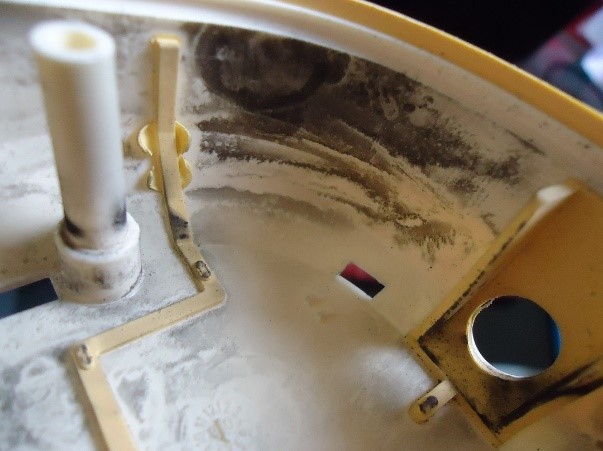
Open system breast pumps may grow mold over time and cannot be completely sterilized.

The type of pump you use also matters in terms of potential contamination (i.e., when foreign material can pass into the milk). What matters the most is whether a pump uses an “open” or “closed” system. A “closed” system breast pump has a physical barrier between the parts that touch your breastmilk (flanges, bottles, valves), and the tubing and pump motor (called the “backflow protector”). This keeps your milk sectioned off from the body of the pump. The parts that can easily be cleaned and sterilized are separate from the parts that cannot be cleaned and sterilized, like the interior of the pump motor. This is why hospital grade breast pumps are safe for multiple users – because they have this barrier.

The type of pump you use also matters in terms of potential contamination (i.e., when foreign material can pass into the milk). What matters the most is whether a pump uses an “open” or “closed” system. A “closed” system breast pump has a physical barrier between the parts that touch your breastmilk (flanges, bottles, valves), and the tubing and pump motor (called the “backflow protector”). This keeps your milk sectioned off from the body of the pump. The parts that can easily be cleaned and sterilized are separate from the parts that cannot be cleaned and sterilized, like the interior of the pump motor. This is why hospital grade breast pumps are safe for multiple users – because they have this barrier.

“Open” system breast pumps do not have barriers between the parts that touch your breastmilk and the tubing and pump motor. Because of this, moisture from pumping can enter the tubing and motor. Since mold flourishes in dark, moist places, the open system has a greater risk for mold growth. This means that impossible-to-clean places like the interior of a breast pump motor are very inviting to mold. The most common places to find mold in a breast pump are the tubing, the areas and valves that connect bottles to flanges, and the insides of pumps which have been stored for a long time in a moist basement.

How can I keep mold out of my breast pump and breastmilk?

Prevention of household mold may help prevent mold on your breast pump equipment. Also, a good breast pump should have a protective barrier between the flange (the funnel-shaped part that comes into contact with your breast) and the connected tubing. Pumps without this feature carry extra risk for milk and moisture to get into the tubes and create a breeding ground for mold.
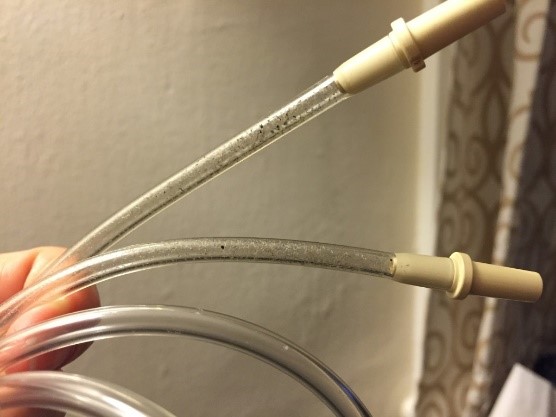
Mold growing in the breast pump tubing.

All breast pump parts that come in contact with breastmilk should be cleaned and fully dried after each use. This includes flanges, bottles, valves and breast shields. You can eliminate possible contaminants by washing them with liquid dishwashing soap and warm water. Rinse each piece thoroughly with hot water for 10-15 seconds. Place the pieces neatly on a clean paper towel or on a clean drying rack and allow them to air dry. A dishwasher with a drying cycle can also be used. Avoid using cloth towels to dry your pump parts because they can carry germs and bacteria that are harmful to your breastmilk and your baby.

It is not necessary to clean breast pump tubing unless it comes in contact with breast milk. If you wash your tubing, make sure you hang it to air dry before attaching it to your breast pump. If small water drops (condensation) appear in the tubing after you have pumped, attach the tubes to the pump before you attach your flanges/bottles and turn the pump on for a few minutes until the tubing is dry.

What if I find mold in my breast milk?

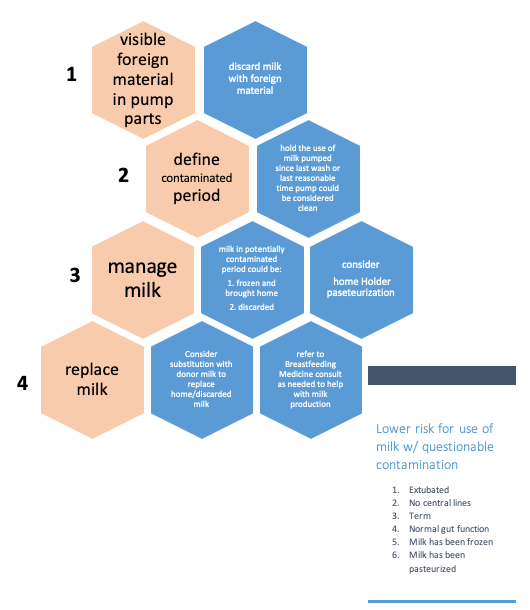
At MotherToBaby UR Medicine, we have developed an algorithm (set of rules) to help people manage breastmilk that is potentially contaminated. It is meant to be used in hospitals for sick children, but can be useful for you and your health care provider. Most full-term, healthy, and older infants do not need the precautions outlined below. If you find foreign material in your breastmilk or pump parts, contact your baby’s pediatrician to get advice on what to do.

If your baby is sick or premature, consider sharing the information below with your baby’s provider if you find mold in your breastmilk or pump parts. It is meant to be followed in order from step 1, which includes discarding any milk with foreign material in it (like mold.) Step 2 can help to determine when any other expressed milk may have been affected. For instance, if you know you washed your pump 4 days ago and found the material today, any milk you pumped in the past 4 days could have been contaminated. Contaminated milk could be frozen, which is likely to kill most bacteria and many fungi, or it could be pasteurized using home pasteurization (Step 3). You also need to think about what should be fed to your baby in the meantime: do you have older, stored milk? Do you need donor milk? If you need to use formula, should it be “hypoallergenic?” (Step 4). These are good conversations to have with your baby’s doctor. If you don’t have enough breastmilk, some communities will have breastfeeding medicine specialty providers or lactation consultants who can help mothers with milk supply concerns. You can search for these providers online by clicking here.

Algorithm for decision-making when pump parts are found to contain foreign material (potential bacteria or fungus). The box at the lower right reminds providers which babies are at lowest risk from drinking milk that has any foreign material in it.

Last, we want to leave you with words of encouragement because we know breastfeeding isn’t easy. It’s downright hard for most. Having that said, please know that resources like MotherToBaby are here for you and just by reading this blog, you’re taking steps to ensure your milk is pumped and stored safely. You’re doing a great job and we can be certain your baby appreciates all you do.

Rogelio Perez D’Gregorio, MD, MS is an Assistant Director of MotherToBaby UR Medicine and Assistant Professor of Obstetrics and Gynecology at the University of Rochester.

Other blog contributions were made by:

Casey Rosen-Carole, MD, MPH, MSEd, FABM, IBCLC is Medical Director of Lactation Services and Programs, Assistant Professor of Pediatrics and OBGYN, and a Consultant for the Lactation Study Center and MotherToBaby URMedicine

Ruth A Lawrence, MD, DD (Hon) FABM, FAAP is Distinguished Alumna Professor Pediatrics and Obstetrics/Gynecology, Northumberland Trust Chair in Pediatrics, UR School of Medicine and Dentistry. Co-Director of the Finger Lakes Children’s Environmental Health Center.

REFERENCES:

Ameda. Is there mold in your breast pump equipment?

Centers or Disease Control and Prevention. Facts about Stachybotrys chartarum and Other Molds.

Eglash A, Liliana Simon L, et al. (2017). ABM Clinical Protocol #8: Human Milk Storage Information for Home Use for Full-Term Infants, Revised 2017. Breastfeed Med.;12(7):390-395.

FDA. U.S. Food and Drugs Administration. Breast pumps.

Hygela Health. Closed System Breast Pumps vs. Open System Breast Pumps.

Jennai L. Moms ABC. How to clean breast pup tubing mold.

La Leche League International. Pumping Milk.

Labiner-Wolfe J, Sara B. Fein SB, Katherine R. Shealy KR, et al. (2008). Prevalence of Breast Milk Expression and Associated Factors. Pediatrics 2008;122:S63–S68.

Magoha H, Kimanya M, De Meulenaer B, et al. (2014). Association between aflatoxin M1 exposure through breast milk and growth impairment in infants from Northern Tanzania. World Mycotoxin Journal. 7(3):277-284.

Spectra. Mould in your Breast Pump Tubing?

Stöppler MC. What is mold?

Walker M. (2012). Pumps and pumping protocols. Clinics in Human Lactation 10. Hale Publishing L.P.



Moldy Milk: How to Avoid Breastmilk Contamination When Pumping

By Nevena Krstić, Genetic Counselor, MotherToBaby Florida

When I was 17 weeks pregnant, my husband and I got in a car accident. The guy going in the opposite direction swerved into our lane and hit our car head on. Airbags deployed. The car was totaled.

Moments after the impact happened, I remember looking over at my husband to see that he was ok, unbuckling my seat belt which had left burn marks all over my pregnant belly, getting out of the car, and lying down on the sidewalk. And, as the adrenaline slowly went down, the immense fear overtook my whole body. I was alive, but what will happen to the baby?

The doctors scheduled me for an ultrasound. I was so nervous to get the ultrasound; the anxiety was almost unbearable. Ultrasounds are supposed to be fun, right? They always look so fun on TV. The couples are either joyously smiling or shedding happy tears as the doctor shows them images of their baby. Most of the time it is when they find out if they are having a boy or a girl. That is how I imagined my ultrasounds too. I was looking forward to the experience I imagined. I was not looking forward to the experience I was facing. I was dreading my ultrasound.

Thankfully the baby was alive and appeared to be developing as expected. The accident did not appear to have harmed the baby directly. However, it did cause a small tear in my placenta causing it to bleed. The tear was small, but if it got bigger it could cause real problems including miscarriage. And the doctors had no way of predicting what would happen or when. All they could offer me was more ultrasounds.

What is the Purpose of an Ultrasound?

Ultrasounds are medical tests. They are mainly used as either a routine scan at around 18-22 weeks of pregnancy to look at the baby’s developing body or the anatomy. This scan is therefore often referred to as the “anatomy scan.” Ultrasounds are also used to look at the baby when there is a suspected problem or if there is a specific concern, such as bleeding during pregnancy, elevated risk on some routine blood testing, use of medication, or, as in my case, car accidents.

What Can Ultrasound Tell Me about My Baby?

Doctors are able to find out a lot of medical information during ultrasound. Ultrasound, also called sonogram, is a type of medical imaging that uses high-frequency sound waves to produce images which help doctors examine the baby’s anatomy from head to toe, including images of the baby’s brain, heart, spine, kidneys, and other organs.

Most women who have this ultrasound done will have a normal anatomy scan and are reassured that their baby is developing as expected. For some women, however, the ultrasound will show a change in the baby’s size, the shape, size, or function of one of his/her organs, the amount of amniotic fluid around the baby, or changes to the placenta itself. A baby may be diagnosed with a specific birth defect (like a heart defect or a spine defect) on an anatomy scan. Some of these birth defects can be very serious. We know that every pregnancy has a 3-5% chance of having a birth defect. The ultrasound may also show a finding that may raise concern for another pregnancy complication, and more ultrasounds or testing may be recommended.

Ultrasound, however, is not perfect. Ultrasound is good at ruling out problems, but is not perfect at finding every birth defect before baby is born. Therefore, a normal anatomy ultrasound does not guarantee that the baby won’t have a birth defect or a complication. Sometimes the ultrasound may raise concern that there is a birth defect or complication when there really is not one seen on follow-up tests or after birth. There is no test that can be done before baby is born that can guarantee a perfectly healthy baby.

Are Ultrasounds Safe?

Typically, women will have two ultrasounds in pregnancy, one in the first trimester to confirm the pregnancy, and one anatomy scan in the second trimester. Some women, however, may need to have ultrasounds more often, especially if there are complications in pregnancy.

For me, in order to track the bleeding in my placenta and the growth of my baby, the doctors did one ultrasound every month of pregnancy… And every month I would walk into the ultrasound room filled with angst and anticipation of bad news. Thankfully bad news never came, the placental tear did not get bigger, and baby continued to grow. And by the last couple of ultrasounds, dare I say, I even looked forward to seeing my baby’s squished little face. But it did make me wonder if exposing my baby to so many ultrasounds was safe?

All things considered, ultrasounds are generally ok. However, just like with every medical procedure, ultrasounds should only be performed if medically necessary and recommended by the doctor to avoid exposing baby to heat produced by the sound waves of ultrasound. Therefore, while moms-to-be may be tempted to get that 3D or 4D ultrasound, or buy your own fetal home monitor (and believe me I was), it may be best to avoid these additional ultrasounds and stick to the ones recommended by the doctor.

I went on to deliver a healthy baby girl, who is now a mobile little one-year-old. I thank my lucky stars for her every day. But in my pregnancy with her I realized a very important thing that I want to share. Ultrasounds can be fun and joyous events. For most pregnant moms they will be fun. They will reassure them that their babies are healthy and developing and may confirm for them the sex of the baby. Having that said, we should not take for granted that ultrasounds are very powerful medical tests that have the ability to tell moms a lot more information about the health of their baby. So supporting anxious moms as they enter their ultrasound appointments is key.

Nevena Krstić is a certified genetic counselor based in Tampa, Florida. She currently works for MotherToBaby Florida, which is housed at the University of South Florida Health in the Department of Obstetrics and Gynecology.

About MotherToBaby 

MotherToBabyis a service of the Organization of Teratology Information Specialists (OTIS), suggested resources by many agencies including the Centers for Disease Control and Prevention (CDC). If you have questions about exposures during pregnancy and breastfeeding, please call MotherToBaby toll-FREE at 866-626-6847 or try out MotherToBaby’s new text information service by texting questions to (855) 999-3525. You can also visit MotherToBaby.org to browse a library of fact sheets about dozens of viruses, medications, vaccines, alcohol, diseases, or other exposures during pregnancy and breastfeeding or connect with all of our resources by downloading the new MotherToBaby free app, available on Android and iOS markets. Also, make sure to subscribe to The MotherToBaby Podcast available on iTunes, Google Play Music, Spotify and podcatchers everywhere.


Moldy Milk: How to Avoid Breastmilk Contamination When Pumping

By Mark B. Roth, MotherToBaby New York

As a teratogen information specialist, I receive questions about all sorts of chemicals or substances someone can be exposed to. We often get questions about the bazillions of cleaning products out there. Bleach, powdered cleaners and spray cleaners, degreasers, oven cleaners, disinfectants – there are so many different cleaning products and looking at the ingredients list (if there even is one) can be overwhelming. All those unpronounceable words! Sodium hypochlorite, declamine oxide, sodium hydroxide, sulfonate, dipropylene glycol butoxy ether, etc., etc. etc.!!!

If you are reading this, it’s probably because you want to decrease the chance of any problems for the baby while you are pregnant or breastfeeding. You might be looking for information about which cleaning products are okay to use or to be around while you are pregnant or nursing. I have been told so often by my callers how difficult it is to find reliable information. And that is true, even for the experts. There are a few challenges we all have to contend with.

One of the biggest challenges is that many chemicals simply have not been studied in pregnant women. Some ingredients found in cleaning products have been studied in pregnant animals, mainly mice and rats. When such substances are given to animals, the amount (or the dose) they are given is much higher than what a human would be exposed to. And, often it is given in a way that isn’t even close to how a human would usually be exposed. For example, chemicals are often force fed to the animal, even if it is an ingredient typically used in a skin cream. So, basically even if there is research, it’s often not helpful or especially meaningful. How can you know what’s okay to use?

There’s an important and very old principle in studying whether a substance is harmful to a person, and that is “the dose makes the poison.” Basically, this means that the risk with any exposure, including cleaning products, depends on how much gets into your blood. How do chemical or substances reach the blood? They can be injected directly into the bloodstream, swallowed, inhaled (breathed in), or possibly absorbed through the skin. Unless you are drinking your household cleaner, the actual exposure to your developing baby is likely to be quite low! Generally, inhalation won’t allow for much absorption of these kinds of compounds into your blood. When they do get into your blood from inhaling them, they typically don’t reach the developing baby or get into your breastmilk in any meaningful quantity.

Now, these products can have some pretty offensive odors, even with the addition of artificial fragrance like ‘lemon fresh’, ‘summer rain’, and ‘spring flowers’. (And there can be such a thing as too much – sometimes when I go into a bathroom where air freshener has been sprayed, I say to myself “I would rather just smell the poop!”) But back to our subject… If a product has an irritating smell, you may think it’s very irritating for the baby, too. But, your sense of smell is not a good measure of the amount of a chemical that the baby is actually being exposed to. In fact, many women develop a heightened sensitivity to smells during pregnancy. This motivates you to get yourself to a more comfortable environment and reduce exposure. But it also can make you feel uneasy when you can’t seem to get away from the smell. Your nose doesn’t always know! If you start feeling dizzy, light headed, confused, or have breathing difficulties while around the cleaning product, these symptoms could mean you had a higher level of exposure. Even with these symptoms, there are no confirmed risks to pregnancy or breastfeeding with exposure to many of the compounds in common cleaning products.

I mentioned the possible absorption of substances through the skin (topical or dermal exposure). When it comes to absorption of cleaning products, your skin is a surprisingly good barrier and prevents many substances from getting into your blood. If skin has been soaking for a while, or there’s a scrape or open cut, that may allow a little more absorption. Just like with inhalation, these compounds are not likely to reach the developing baby or breastmilk in any meaningful quantity. However, skin irritation can occur and it’s not a bad idea to wear gloves when working with some cleaning products, especially if it’s going to be for extended periods of time. It’s important for you to maintain your comfort.

We all know that accidents happen, and that is true of accidents with household cleaners, too. You can reduce the chance of these accidents by not drinking or eating while working with cleaning products. Be sure to thoroughly rinse any utensils or dishes that come into contact with the cleaners. Using gloves or safety glasses can help protect your skin and eyes in case of accidental spills. And, of course, opening a window or turning on an exhaust fan (if you have one) can help reduce the lingering smell.

I mentioned a list of pretty confusing cleaning ingredients at the beginning of this blog and I am quite certain that most of you would fall asleep by the end of this post if I talked about every single one of them. But there are a few common ingredients that are worth reviewing.

Bleach is a common cleaner that most of us have used at one point or another. The active ingredient is sodium hypochlorite, a form of chlorine. Chlorine and chlorinated disinfectants have not been shown to increase the risk of birth defects.

Benzalkonium chloride is another disinfectant that is found in many cleaning products. It is also an ingredient in throat lozenges, diaper rash creams, cosmetics, and vaginal spermicides. Although there are no studies specifically looking at the risks of benzalkonium chloride use in human pregnancy, there also are no reports indicating an increased risk. Again, given how common this ingredient is, having no reports is reassuring.

Finally, there are also many cleaners which contain ammonia. Typical use of cleaners containing ammonia is also not expected to increase risks to the baby. Because it has a very strong smell, most people can’t stand being around high levels of ammonia without getting pretty sick. Like many cleaners, as mentioned above, a strong odor doesn’t necessarily mean a risk to the baby even if you have symptoms like a strong burning sensation in your nose or throat, skin irritation, or you get dizzy, But, if you lose consciousness, that could be a concern as it limits the amount of oxygen reaching the baby.  It’s good to pay attention to your comfort level.

There are so many different products and ingredients. There’s not room enough to discuss them all here. But if you have any questions about a cleaning product or an ingredient in a product, don’t hesitate to contact an expert at MotherToBaby!

Mark Roth, BA, is a teratogen information specialist and co-director for the Pregnancy Risk Network, MotherToBaby New York. He has been with the program since 2006. He is a former member of the OTIS Board of Directors and serves as Research Coordinator for MotherToBaby New York. Mark has provided teratology lectures at Arcadia University’s Genetic Counseling Training Program and educates medical providers and the public about teratology through lectures, participation in state and national conferences, and one on one conversations. He enjoys pronouncing generic names of drugs.

About MotherToBaby 

MotherToBabyis a service of the Organization of Teratology Information Specialists (OTIS), suggested resources by many agencies including the Centers for Disease Control and Prevention (CDC). If you have questions about exposures during pregnancy and breastfeeding, please call MotherToBaby toll-FREE at 866-626-6847 or try out MotherToBaby’s new text information service by texting questions to (855) 999-3525. You can also visit MotherToBaby.org to browse a library of fact sheets about dozens of viruses, medications, vaccines, alcohol, diseases, or other exposures during pregnancy and breastfeeding or connect with all of our resources by downloading the new MotherToBaby free app, available on Android and iOS markets. Also, make sure to subscribe to The MotherToBaby Podcast available on iTunes, Google Play Music, Spotify and podcatchers everywhere.


Moldy Milk: How to Avoid Breastmilk Contamination When Pumping

A Special Edition Baby Blog in Partnership with SafetyNEST®

By Chris Stallman, Certified Genetic Counselor at MotherToBaby Arizona and host of  The MotherToBaby Podcast

As a teratogen information specialist, one of the questions I frequently get asked is “can this product be harmful to me or my pregnancy?” What a perfect time to address this question during June’s National Safety Month, which aims to raise awareness about reducing the leading causes of unintentional injury in the home! What is the answer to that common safety question? Usually yes, a product can be harmful to you or your pregnancy. But before you throw out everything in your house and live in a bubble for nine months, let me explain…

Anything can be toxic if too much is ingested or absorbed into the body – even water. What matters is the dose – how much of something you are exposed to. For example, in a healthy person, drinking 8-10 glasses of water a day would not be expected to cause water toxicity. However, drinking 8-10 gallons can be dangerous. Again – all in the dose.

There may be beauty products you use before pregnancy that may not be recommended for use during pregnancy. We’ll look at a few common products below:

Retinoids

When it comes to treating acne outside of pregnancy, there are many options. Vitamin A (retinol) and vitamin A derivatives (such as retinoic acid and isotretinoin) are often referred to as “retinoids”, and can be found in some acne treatment products. It’s well-known that the drug Accutane® (a pill taken by mouth that contains isotretinoin) can cause birth defects in pregnancy, but it’s less clear if topical retinoids (like gels or creams) have the same effects. When applied on the skin, usually much less of the medication makes it into the bloodstream. This means less of the medication would make it across the placenta to the fetus. However, even though the risk with topical use is different than when taking a pill, women who are pregnant, planning to become pregnant, or breast-feeding should discuss this with their healthcare provider.

Salicylic acid

This relative of aspirin can be found in some beauty products, including cleansers and toners.  Low dose aspirin (less than 81 mg/day), taken by mouth, has been well studied in pregnancy and does not appear to increase the chance of birth defects or other pregnancy complications. When applied on the skin, the amount of salicylic acid that enters the body would be much less than when a woman takes low dose aspirin. The amount that can be absorbed depends on the health of the skin, the levels (dose) of active ingredients, the area exposed (how much skin comes in contact with the product) and how often you use it. It’s important to use as directed by the product label or by your healthcare provider. When used as directed, it is unlikely that topical salicylic acid would pose any risk to a developing baby. Too much of this ingredient can cause symptoms such as nausea, vomiting, dizziness, headache, problems with breathing, abnormal heart rhythm or coma, and can be fatal.

Hair dye

In general, when used as recommended, the amount of dye that is absorbed by the healthy skin of the scalp is small and is not expected to cause problems in a pregnancy. However hair products made outside of the US might have dangerous substances or contaminants such as heavy metals, including lead, cadmium, nickel, arsenic or mercury. So it may be best to avoid beauty products made in other countries. Gloves should be worn to protect the skin on your hands, although this does not protect the scalp, neck, forehead, ears, and eyelids. If a temporary dye gets into your eyes, minor irritation is expected. For semi-permanent and permanent dyes, effects on the eyes can be more serious, which is why it is recommended that these products are not to be used to dye eyebrows or eyelashes. If eaten (ingested), effects can be minor irritation of the mouth, nausea, vomiting, allergic reactions, and possibly chemical burns. It’s best to keep these (and all) products out of the reach of children, and to wash any areas of the skin where dye was present.

So, can beauty products be used in pregnancy? Absolutely, depending on the specific ingredients, how much you use, and how often you use it. When in doubt, ask a professional.

If you suspect you had a toxic exposure to a product, call Poison Control at 1-800-222-1222. If you have questions about everyday exposures during pregnancy or breastfeeding, call MotherToBaby at 1-866-626-6847.

Chris Stallman is a certified genetic counselor based in Tucson, Arizona and proud mother of three. She is the new host of The MotherToBaby Podcast, a show answering moms’ questions with evidence-based answers about exposures during pregnancy and breastfeeding. Listen to the episode on beauty products in pregnancy and breastfeeding on iTunes, Google Play Music or Spotify. She currently works for The University of Arizona as a Teratogen Information Specialist at MotherToBaby Arizona, formerly known as the Arizona Pregnancy Riskline. Her counseling experience includes prenatal and cardiac genetics. She has also served as MotherToBaby’s Education Committee Co-chair.

About MotherToBaby 

MotherToBabyis a service of the Organization of Teratology Information Specialists (OTIS), suggested resources by many agencies including the Centers for Disease Control and Prevention (CDC). If you have questions about exposures during pregnancy and breastfeeding, please call MotherToBaby toll-FREE at 866-626-6847 or try out MotherToBaby’s new text information service by texting questions to (855) 999-3525. You can also visit MotherToBaby.org to browse a library of fact sheets about dozens of viruses, medications, vaccines, alcohol, diseases, or other exposures during pregnancy and breastfeeding or connect with all of our resources by downloading the new MotherToBaby free app, available on Android and iOS markets. Also, make sure to subscribe to The MotherToBaby Podcast available on iTunes, Google Play Music, Spotify and podcatchers everywhere.


Moldy Milk: How to Avoid Breastmilk Contamination When Pumping

By Lauren Kozlowski, MSW, MPH, MotherToBaby Georgia

“I didn’t even know I should ask my OB about that!” It’s a reaction I hear almost daily as a teratogen information specialist (a fancy way of saying I’ve been trained in evaluating and communicating risks of exposures, like medications, during pregnancy). This particular caller’s reaction was like so many women going into their first appointment after finding out they were pregnant – she really didn’t know how to be her own best advocate. I don’t blame her by any stretch. How are women supposed to just know this? What questions should they be asking? Why should they be asking them? I thought, not only did I want to help her, but all of the pregnant women out there, to have a positive, empowering experience once they’ve found their pregnancy care provider team.

The Importance of the HCP Match

Finding the right health care provider (HCP) for you is essential because doctors, physician’s assistants, nurse practitioners, and midwives are people just like you and me. They come with a wide range of personalities and styles of care. Sometimes they will match your own and sometimes they won’t. You want to be sure that the people that you entrust with your health and your baby’s health are going to help you make the right decisions about your care. Plus it is worth thinking about how you can reduce any stress you may have about sitting down with the person who will care for you and be a source of support during your pregnancy. In this blog I’d like to suggest some ways that you can plan for the most successful experience during pregnancy with your HCP. In this case, success means finding a provider who listens to you, makes you feel comfortable and discusses all of your concerns and options openly and respectfully.

Getting the Most Out of Your Appointments

The good news is there are some ways to empower yourself in these situations and be more likely to get what you need! Below I have a list of some ways you can get the most out of appointments with your pregnancy care provider:

  1. You should be able to ask your provider anything you’d like to know about their experience and philosophy around pregnancy and child birth. You can even ask to make a non-clinical appointment to sit down with her or him and discuss this if you’d like to.
  2. Be prepared for a short visit with the provider at regular appointments throughout your pregnancy. Write down your most important questions and make sure to ask them first.
  3. If you’d like to research some topics before your HCP visit, choose your sources wisely. The internet is full of a lot of misinformation, but there are reputable organizations from whom you can get evidence-based information about pregnancy. Just a few examples include the American College of Obstetricians and Gynecologists (ACOG, the professional society for HCPs specializing in women’s health); the Centers for Disease Control and Prevention (CDC); the Food and Drug Administration (FDA); and our own service, MotherToBaby. Pull information from your sources and bring it with you to your appointment to drive your conversation with your HCP.
  4. Bring a trusted family member or friend who can bring up anything you forget to – or that can step into the conversation to help make sure you are being heard correctly. This is particularly important at the first visit or when you are worried about something.
  5. If you routinely take any medications, bring them up as soon as you find out you are pregnant (and when possible, even before you become pregnant); this will allow you and your HCP to talk about whether there are any alternative medications or therapies better suited for pregnancy and/or breastfeeding. And remember that our specialists at MotherToBaby are available to provide you with up-to-date information on the safety/risk during pregnancy and breastfeeding of any medications you may be taking.
  6. If you see a specialist for other medical conditions (such as asthma, diabetes, arthritis, lupus, psoriasis, etc.), tell your OB provider who you are seeing and authorize them to communicate with one another about your care. When you are living with a chronic health condition, connecting your pregnancy care provider with your other health providers is important to ensure your disease is well-managed throughout your pregnancy and when you are breastfeeding.
  7. Even if they don’t ask about it, tell your HCP about your use of alcohol, tobacco, or any recreational drugs (like marijuana, heroin, meth, etc.). Some of these substances can affect your pregnancy or your baby’s development, so it’s important for you and your HCP to talk about it even if you are just an occasional user. Recreational drugs are another type of exposure where MotherToBaby experts can provide you with confidential, up-to-date information on the safety/risk of use during pregnancy and breastfeeding. Importantly, talk to your HCP if you need help quitting any of these substances; there are ways to treat substance use disorders during pregnancy. You also have a chance of being screened for substances at birth – meaning they may test both you and your baby at the hospital. Being prepared for this is important so you know what to expect.
  8. Ask questions about the hospital at which you will be delivering. Do they have any specific policies or practices you would want to know about in advance? Your HCP will be connected to a specific hospital(s); if you do not want to deliver at that hospital and your insurance allows for other options, you may need to find another prenatal care provider. It is best to ask these questions before you become pregnant or as soon as you start your prenatal care visits.
  9. If for any reason you do not feel like your HCP listens to you or is able to create a welcoming, safe environment, change providers! If it’s a requirement of your insurance, get a list of providers in your network. Then ask friends or family if they have someone they’d recommend. You can further whittle down your list by other things that may be important to you, such as a male vs. female provider or office location. Pregnancy is such an important time in a woman’s life, so it’s critical that you are under the care of a health provider that you trust. Depending on where you live and what insurance you have, it may not be possible to find another provider – but if you are able and want to, the sooner you do so in your pregnancy the better. You deserve to feel comfortable and cared for!

A lot of these tips apply to any type of HCP, but pregnancy is a perfect time to flex your self-advocacy muscles and find the provider that is best suited for you. You and baby deserve wonderful and respectful care, and the reality is that sometimes it takes a bit of seeing what’s out there to find the right fit. Finding the right HCP can feel a lot like dating, but don’t be discouraged! If you don’t like the care you are getting, move on to another HCP – with so many exceptional ones out there you can find the best match for you and your pregnancy.

Although not specific to a pregnancy visit, ACOG also offers some tips to help you make the most out of your health care visit: https://www.acog.org/Patients/FAQs/Making-the-Most-of-Your-Health-Care-Visit

If you want to read more about advocating for yourself as a patient, some other resources are below:

Your Best Birth: Providers, Plans and Being Proactive

https://bloomlife.com/wp-content/uploads/2018/11/Best-Birth-Bloomlife-ebook-1.pdf

At the end this includes a great acronym BRAIN (Benefits, Risks, Alternatives, Intuition, Do Nothing) that can be used whenever you are making decisions or have questions about receiving medical care.

A Doctor’s Guide: How To Be A Patient Advocacy Rockstar (For You or a Loved One)

https://www.acsh.org/news/2018/06/21/doctors-guide-how-be-patient-advocacy-rock-star-you-or-loved-one-13106

Health Care Self-Advocacy: Be the Squeaky Wheel

https://www.care2.com/causes/health-care-self-advocacy-be-the-squeaky-wheel.html

The Complete Guide to Becoming Your Own Medical Advocate

https://betterhumans.coach.me/the-complete-guide-to-becoming-your-own-medical-advocate-ddc658a10a57

Lauren Kozlowski, MSW, MPH is serving as the Program Coordinator for MotherToBaby Georgia. She graduated from Boston University with both a Masters of Social Work and a Masters of Public Health. She has experience working with families in both an educational setting, as well as in housing and health, allowing her to recognize the multiple factors contributing to the ability of women and children to thrive. She enjoys living in Atlanta and exploring what the city has to offer.

About MotherToBaby

MotherToBabyis a service of the Organization of Teratology Information Specialists (OTIS), suggested resources by many agencies including the Centers for Disease Control and Prevention (CDC). If you have questions about exposures during pregnancy and breastfeeding, please call MotherToBaby toll-FREE at 866-626-6847 or try out MotherToBaby’s new text information service by texting questions to (855) 999-3525. You can also visit MotherToBaby.org to browse a library of fact sheets about dozens of viruses, medications, vaccines, alcohol, diseases, or other exposures during pregnancy and breastfeeding or connect with all of our resources by downloading the new MotherToBaby free app, available on Android and iOS markets.