Spicing Up Your Life during Pregnancy and Breastfeeding: Are Spices and Herbs Ok?

Being pregnant can be stressful enough without worrying all the time about things like “can I bake with poppy seeds?” Or “can I drink tea with peppermint?” Recently I had a caller tell me that “it seems like every time I turn around, there is something else that either I should not cook with or drink in a tea during pregnancy. What about when I am breastfeeding? Help!” As a specialist who answers questions about exposures during pregnancy and breastfeeding, I hear these kinds of questions all the time.

Spices vs. Herbs

Let’s explore some of the spices and herbs that are not recommended for frequent use during pregnancy and breastfeeding. Many of these items can be used in different ways, such as in baking, to flavor candy, as spices in foods, toppings on salads, or as part of herbal teas. To clarify, the difference between a spice and an herb is that herbs have to have a green leafy part and are mainly used for flavoring. They are also used as a garnish in cooking or salads. Spices, on the other hand, come from a variety of things such as dried roots, nuts, dried fruits and vegetables, or even from bark. Some spices are used for flavoring, while others are used as food preservatives or to give food color. If you use these herbs and spices once in a while as flavoring in your food and drinks, that is OK. The concern is when you consume these items every day or most days.

Poppy Seeds

Poppy seeds come from the poppy plant and are often used in foods such as bagels, pastries, cakes, and salad dressings. The seeds are washed and processed before use and eating small amounts now and then as part of a food dish or baked item is not known to be a risk during pregnancy or breastfeeding. However, the outer surface of the poppy seed does contain small amounts of morphine and other opiates such as codeine. When poppy seeds are used to make tea, the drugs can seep into the water when the seeds are soaked. Poppy seed tea should be avoided during pregnancy and breastfeeding for this reason.

Nutmeg

Who hasn’t had nutmeg floating on top of a latte or a cup of hot apple cider on a cold day in the winter? Nutmeg is a ground spice that comes from the seed of a dark-leaved evergreen tree. Nutmeg is also used in many different baked goods and with vegetables, specifically going well with squash dishes. Eating a little nutmeg as a spice in food does not have a known increased risk during pregnancy or breastfeeding. But high levels of nutmeg can also be used as a recreational drug as it contains myristicin, which has mind altering hallucinogenic effects. The myristicin isolated from nutmeg oil can be used to produce synthetic amphetamines. Also, in the past, nutmeg was used in folk medicine to induce abortion. Because of this, high level exposure should be avoided in pregnancy and breastfeeding.

Peppermint

Peppermint use is a common question during pregnancy and breastfeeding. Peppermint is a popular herb used as flavoring in candy, chewing gum, desserts, and tea. Peppermint oil is also made from the leaves of the peppermint plant. The oil is widely used topically on the skin to treat headaches, muscle, and joint aches and pain, and in aromatherapy to treat coughs and colds. Peppermint oil can also be diluted with water and sprinkled around your house as an insect repellent too. So is this popular herbal product a risk during pregnancy? High levels of peppermint exposure during pregnancy can be a risk since it can relax the muscles of the uterus and increase the risk for miscarriage. For that reason, frequent use of peppermint oil on your skin (see our blog on essential oils) or drinking lots of peppermint tea is not advised during pregnancy.

Rosemary

One of my favorite herbs is rosemary! It is easy to grow and widely used as a seasoning in soups, salads, vegetable dishes, and with chicken and fish. Rosemary grows as a large evergreen shrub. The small evergreen “needles” are used in cooking, while the oil is used in folk medicine for digestive problems and to treat headaches. The concern comes when ingesting large amounts of rosemary, which can stimulate menstruation and increase the risk for miscarriage. Due to this reason, using rosemary for medicinal reasons or frequently on your skin is not advised during pregnancy. Rosemary also contains camphor. When taken orally in high amounts, camphor can act as a poison.

Garlic

Lastly, I want to talk about garlic, a favorite for many people. Is it an herb or a spice? Even though garlic is widely used as both an herb and a spice, it is really a root vegetable. I still want to include it in this blog due to its widespread use as a spice. Garlic is popular in pasta dishes, in garlic butter and on garlic toast, and in many dishes such as stews and soups! Additionally, garlic is high in vitamins B6 and C and is also high in calcium, so it’s often taken as an oral supplement. Yet taking high levels of garlic can increase the risk for bleeding as garlic contains alliin, which acts as a blood thinner in our bodies. During pregnancy, this can lead to an increased risk for miscarriage. Avoiding high levels of garlic during pregnancy is advised. Even topical use of garlic on your skin is not advised as it can cause dermatitis and burns. When breastfeeding, eating garlic can change the taste of the milk and babies may not like it. Garlic use can also increase the chance for gas and colic in some babies.

Hopefully this blog has helped you make heads and tails out of using/eating/drinking these spices and herbs during pregnancy and breastfeeding. In general, with many spices and herbs, using a little bit to flavor your food usually does not have any known increased risks during pregnancy or breastfeeding. However, using the product in a tea or as an oral supplement is often not advised. We have a helpful fact sheet on herbal supplements that explains how little pregnancy safety data there is on most herbal supplements. Plus, these products are not regulated by the Food and Drug Administration (FDA) for safe use during pregnancy and breastfeeding. Any time you have questions or concerns about using spices and herbs during pregnancy, please contact us! One of our specialists will be happy to help you.
Spicing Up Your Life during Pregnancy and Breastfeeding: Are Spices and Herbs Ok?

Holiday festivities sometimes include eating foods and drinks that might not be part of our everyday diet. During pregnancy and breastfeeding, we need to give a little more thought to what we should eat and drink. “Is it ok for the baby?” often goes through our minds during these times. As a teratogen information specialist at MotherToBaby who answers a lot of the questions we get via our texting service (855-999-3525), these types of questions ramp up during this time of year! So, here’s some insight…

Popular Holiday Food & Drinks

Eggnog & Other Holiday Beverages

Eggnog seems to be a part of many holiday parties. Always be sure to check if the eggnog is homemade or not. Does it contain raw eggs, which can carry bacteria such as salmonella? If the eggnog was commercially made and packaged, then usually the eggs have been pasteurized, and the product may even have been heated prior to packaging. Also, always remember to check if the eggnog contains a little “holiday cheer” (i.e., alcohol) or not. It is common to add rum to eggnog, and we want to avoid alcohol when pregnant or breastfeeding (see our Alcohol Fact Sheet for more info). Other common holiday beverages include mulled wine, wassail, hot buttered rum, and of course wine and champagne. All of these contain alcohol as well, so it is best to avoid them and just stick with mocktails and non-alcoholic punch.

Smoked Salmon & Fruit

“Smoked salmon tastes wonderful on crackers with cream cheese! But is it ok during pregnancy?” one woman texted me. Here’s what I told her. Smoked salmon is still considered raw fish as it is cured rather than cooked, so should be avoided during pregnancy due to the risk of foodborne illnesses. If the salmon has been heated to steaming, any concern for bacteria has been reduced. See our Fact Sheet on Eating Raw, Undercooked, or Cold Meats and Seafood for more info. Sometimes you will find foods that contain meats that have been dried, such as beef jerky. Although beef jerky is high in salt, there are not any other known risks to eating this tasty food during pregnancy.

“What about a fruit plate containing papaya and pineapple? Are there some worries about eating those fruits during pregnancy?” another texter wrote. Both fruits do contain enzymes that have been thought to induce labor. Papaya contains papain, while pineapple contains bromelain. Yet when eaten at normal levels (not daily!), these delicious fruits have not been shown to have any negative effect on a pregnancy. Of course, we hope the fruit has been well-washed before cutting and serving!

Eggplant Parmesan

“When the main dish is served, can we enjoy the amazing eggplant parmesan? Or what about eggplant ratatouille?” Eggplant is low in calories and high in fiber. Do avoid eating it raw, but cooked eggplant can be an occasional part of your diet. The concern is that eggplant is part of the Nightshade family and contains alkaloids in the leaves and tubers that can be toxic. But eating the fruit alone has not been shown to have any risks during pregnancy, especially when cooked.

Tiramisu

“Will rounding out our holiday meal with a delicious dessert such as tiramisu need to wait until after pregnancy and breastfeeding?” Traditional tiramisu contains two forms of alcohol, both Marsala wine and rum. Plus, liberal amounts of caffeine in the form of coffee and espresso. We have already mentioned that alcohol should be avoided if pregnant or breastfeeding, but what about the caffeine? Low to moderate levels of caffeine use (200 to 300 mg per day) has not been shown to increase any risks during pregnancy. See our Caffeine Fact Sheet for more info.

Who knew that holiday menus could need extra thought and consideration during pregnancy and breastfeeding?! Plus, with the added stress of COVID-19 this year, and the warnings to avoid large gatherings, you may have even more questions now than ever. Hopefully, this information will equip you to sit back, relax, and enjoy the festivities!


Spicing Up Your Life during Pregnancy and Breastfeeding: Are Spices and Herbs Ok?

If you are researching prenatal vitamins, we are guessing that you might be considering a pregnancy, or you just found out that you are pregnant. How exciting! We’re also guessing that you have some questions. Pregnancy does that to a woman: it makes us start questioning the safety of everything that we used to take for granted. At MotherToBaby, we answer many types of questions about exposures during pregnancy and breastfeeding. But hands down, the most common question I’m asked about involves prenatal vitamins.

Many women ask me what brand of prenatal vitamins they should take or if the brand they are currently using is the right choice. With so many different prenatal vitamins available over-the-counter and by prescription, this is a very good question. We applaud you for doing your research. You are going to be a great Mom.

Prenatal Vitamin Tips

Before delving too much further, some basic tips. The 1st tip: We recommend that you discuss your prenatal vitamin options with your healthcare provider, since she or he will know you and your health care needs the best. As mentioned, this will review prenatal vitamins for healthy women. Some women may have medical concerns that require a different nutrient intake.

The 2nd tip that I always mention is that it may be easier and cheaper (depending on your healthcare insurance plan) to simply ask for a prescription for prenatal vitamins from your healthcare provider.

3rd tip: Do not buy a prenatal vitamin that contains herbal ingredients. Herbal products have not been well studied for use during pregnancy and breastfeeding. They are not regulated by the U.S. Food and Drug Administration (FDA) and there are no standard recommended amounts to take. In addition, purity of herbals found in over-the-counter products can be of concern. For more information on why herbals should be avoided, please see our MotherToBaby fact sheet on Herbal Products.

Prenatal vitamins are made up of vitamins and minerals. A healthy diet is the best way to get the vitamins and minerals that your body needs. But even if we eat a healthy diet, we might fall short on some nutrients during pregnancy. Prenatal vitamins help fill in the gaps and increased needs for vitamins and minerals during a pregnancy.

There are Dietary Reference Intakes (DRI) to help people know how much of each vitamin or mineral they should aim to get each day.

Some vitamins and minerals also have a recommended Tolerable Upper Intake Level (UL). The UL is designed to help us know the maximum recommended daily intake for a typical healthy person.

DRIs and ULs are there to help guide us in getting enough of a good thing but also to keep us from getting too much of a good thing.

As mentioned, vitamins should not be the only source of our nutrients. Therefore, your vitamin does not need to contain 100% of the DRI. Remember to take into account all sources of the vitamin or mineral when adding up your daily intake. This means including food sources as well as any other supplements you might take. DRI values can change by age, gender, and pregnancy and breastfeeding status. If you have a medical condition, talk to your healthcare providers/dieticians for your specific dietary needs.

Research on taking vitamins and mineral supplements at levels that are higher than the DRI and UL during pregnancy are limited. Because of the lack of information about taking high levels of vitamins and minerals in a pregnancy, it is generally recommended that pregnant women do not exceed the DRI unless your healthcare provider has prescribed it for the medical management of a specific deficiency or medical condition.

Now, we come to the main question: What are the basic vitamins / minerals generally suggested for prenatal vitamins for healthy women, and how much of each vitamin and mineral do women need for pregnancy?

Vitamins and Minerals

For pregnant women 19 years old and older, the first 5 vitamins/minerals listed below are the basic supplements from which healthy pregnant women might benefit. The DRI and UL for pregnancy are listed. Not all items have an UL.

  • Iron: DRI: 27 mg. UL: 45 mg.
  • Calcium: DRI: 1,000mg. UL: 2,500mg.Supplements should have at least 250 mg, but all women should be getting at least 1,000 mg per day of elemental calcium.
  • Folic Acid (Folate): DRI: 600 mcg (0.6 mg) to 800 mcg (0.8 mg).At least 400 mcg (0.4 mg) should be in your prenatal vitamin.
  • All women who could become pregnant should be getting enough folic acid / folate, even if they are not currently planning on a pregnancy.
  • Iodine: DRI: 220 mcg to 290 mcg. UL: 1,100 mcg.At least 150 mcg should be in your prenatal vitamin.
  • Vitamin D (calciferol): DRI: at least 15 mcg (600 IU). UL 100 mcg (4,000 IU).

In addition to the above suggested supplements for prenatal vitamins, pregnant women should make sure they are getting enough of the vitamins / minerals listed below. If they cannot manage this with diet, then a supplement might help.

  • Vitamin A: DRI 770 mcg. UL 3,000 mcg.
    • Vitamin A is found in two primary forms: plant-based carotenes (beta-carotene) and animal-based retinoids (retinol, retinal, retinoic acid, retinyl palmitate, and retinyl acetate).
    • Look for vitamin A that is from beta-carotene. Beta-carotene is less likely to build up toxic levels in the body than with retinoids. In addition, high levels of retinoids (retinol, retinal, retinoic acid, retinyl palmitate, and retinyl acetate) have been linked to an increased chance for birth defects.
  • B Vitamins
    • There are eight B vitamins:
  1. Vitamin B1 / thiamine: DRI: 1.4 mg
  2. Vitamin B2 / riboflavin: DRI: 1.4 mg
  3. Vitamin B3 / niacin: DRI: 18 mg
  4. Vitamin B5 / pantothenic acid: 6 mg
  5. Vitamin B6 / pyridoxine: DRI 1.9 mg
  6. Vitamin B7 / biotin: DRI: 30 mcg
  7. Vitamin B9 / folic acid (already mentioned above)
  8. Vitamin B12 / cobalamin: DRI: 2.6 mcg
  • These are a group of water-soluble vitamins, which means that your body will not store them. Therefore, it would be unlikely to reach a toxic level in the body. If you and your healthcare provider feel that you are unable to meet your DRI of the B vitamins through diet, then you should look for a prenatal vitamin that includes them. All prenatal vitamins should include at least folic acid (Vitamin B9), which I mentioned earlier as an essential vitamin for pregnancy.
  • DHA/ Omega-3 Fatty Acids: There is no clearly defined DRI, but in 2000 it was suggested that pregnant women should aim for 300 mg/day. The best way to get these is to include fish in your diet. MotherToBaby has a blog on eating fish in pregnancy. The FDA also has a guide on which fish are the best options to eat in pregnancy by breaking the fish into categories of Best Choices, Good Choices, and Choices to Avoid. The guide can be found here. However, if you do not get enough in your diet, your healthcare provider might suggest including a supplement for DHA during your pregnancy.
  • Vitamin E: DRI: 15 mg. UL: 1,000 mg.
  • Vitamin C: DRI: 85 mg. UL: 2,000 mg
  • Zinc: DRI. 11 mg. UL: 40 mg.

It is recommended to start taking prenatal vitamins before you try to become pregnant; at a minimum, take folic acid daily. If you are already pregnant, start as soon as you learn about your pregnancy.

Again, if you have a medical condition (including but not limited to diabetes, celiac disease, eating disorders, substance misuse, malabsorption, irritable bowel, inflammable bowel, or history of bariatric surgery), talk with your healthcare providers about your specific nutritional needs.

Now that you are an expert in reading your prenatal vitamin label, you can tackle (with the advice of your health provider) selecting the one that is best for you. MotherToBaby is always available to answer questions about all exposures during pregnancy and breastfeeding. Pregnancy will bring wonder-filled moments for you and your family. MotherToBaby is here to help you and your healthcare providers to make it as stress-free as possible with up-to-date information on medications and more.

Selected References:

  • ACOG Nutrition During Pregnancy FAQ001. 2018.
  • ACOG Committee on Obstetric Practice. ACOG Committee Opinion No. 495: Vitamin D: Screening and supplementation during pregnancy. Obstet Gynecol 2011; 118:197. Reaffirmed 2019.
  • Becker DV, et al. 2006. Iodine supplementation for pregnancy and lactation—United States and Canada: recommendations of the American Thyroid Association. Thyroid; 16:949–951.
  • 2018. National Report on Biochemical Indicators of Diet and Nutrition in the U.S. Population. Center for Disease Control and Prevention.
  • Council on Environmental Health. 2014. Iodine deficiency, pollutant chemicals, and the thyroid: new information on an old problem. Pediatrics 133: 1163-1166.
  • 2005. Dietary Supplement Labeling Guide: Appendix C.Food and Drug Administration.
  • Glinoer D. 2007. The importance of iodine nutrition during pregnancy. Publ Health Nutr; 10:1542–1546.
  • Institute of Medicine (US) Food and Nutrition Board. 1998. Dietary Reference Intakes: A Risk Assessment Model for Establishing Upper Intake Levels for Nutrients. Washington (DC): National Academies Press (US).
  • Natural Medicines Database. Available at naturalmedicines.com
  • NIH: Nutrient Recommendations: Dietary Reference Intakes (DRI).
  • Obican SG, et al. 2012. Teratology public affairs committee position paper: Iodine deficiency in pregnancy. Birth Defects Res A Clin Mol Teratol; 94(9):677-82.
  • Segal K, et al. 2018. Recommending Prenatal Vitamins: A Pharmacist’s Guide.
  • The National Academies of Sciences, Engineering, and Medicine. Dietary Reference Intakes Tables and Application.
  • Trumbo P, et al. 2001. Dietary reference intakes: vitamin A, vitamin K, arsenic, boron, chromium, copper, iodine, iron, manganese, molybdenum, nickel, silicon, vanadium, and zinc. J Am Diet Assoc 101:294-301.

Spicing Up Your Life during Pregnancy and Breastfeeding: Are Spices and Herbs Ok?

Kombucha: fizzy, fermented, and full of probiotics. Some people drink kombucha for its fun effervescence and wide range of fruity flavors. Others, for its alleged health benefits ranging from improved digestion to lowered blood sugar. The increasing popularity of kombucha has not surprisingly led to an increased number of inquiries to MotherToBaby about the safety of drinking it during pregnancy. Carly, a recent visitor to our online chat service, explained that she had been drinking kombucha for years, but now that she was trying to get pregnant was it okay to keep drinking it? Great question! I’ll share here what I talked about with Carly.

But first, what is kombucha? Kombucha is a sweetened green or black tea fermented with a symbiotic colony of bacteria and yeast, otherwise known as a SCOBY. Symbiotic means that the bacteria and yeast work together in balance. If you’ve never seen a scoby, let me give you a visual: a pale, rubbery, gelatinous disk vaguely resembling some sort of extraterrestrial organ. Not something most people would find appetizing from the get-go! But once the scoby is added to sweetened tea and left to ferment for a period of weeks, the result is a tangy, bubbly beverage that is slightly alcoholic, which brings me to the first consideration I discussed with Carly about drinking kombucha in pregnancy.

Kombucha and Pregnancy

Alcohol

Kombucha contains alcohol as a natural by-product of the fermentation process. In the United States, beverages containing 0.5% or more alcohol by volume (ABV) are required to have a label that includes a health warning for pregnant women. Varieties with lower alcohol content (less than 0.5 % ABV) are not required to have the label. Nevertheless, the non-labeled varieties still contain alcohol. For non-pregnant women, these small amounts of alcohol do not have a known risk; but in pregnancy, the advice of major medical organizations is to avoid alcohol altogether. Especially since the alcohol content of kombucha is not always clear-cut.

Most of the time, the manufacturing process can stabilize kombucha after it is bottled. However, kombucha has been pulled from shelves in the past after it was discovered that fermentation in the bottle did not stop, increasing the alcohol content above the amount that would require the pregnancy-warning label. And determining the alcohol content of homebrewed kombucha is difficult. Homebrews can reach as high as 3% or more depending on the type of yeast used in the scoby, how long and at what temperature the tea ferments, and other factors.

The best way to avoid unnecessary alcohol exposure in pregnancy is to not drink kombucha for those 9 months. And what about during breastfeeding? If you do enjoy an “alcohol-free” kombucha from time to time, the small amount of alcohol it might contain is unlikely to have a negative effect on your infant. Yet waiting a couple of hours after drinking the kombucha before nursing again will allow time for your body to metabolize the alcohol from your blood and breast milk.

Bacteria

Another concern about drinking kombucha in pregnancy is the possibility of bacterial contamination. Using proper sterile techniques can reduce harmful bacteria in the product, but the best way to eliminate any bacteria that might grow during the long fermentation process is to pasteurize the beverage with a quick heat treatment before bottling. Kombucha purists may argue that pasteurization destroys the probiotics responsible for the health benefits that kombucha may provide. However, unpasteurized products are not recommended in pregnancy due to an increased chance of foodborne bacteria such as listeria and salmonella, which can cause pregnancy complications. Unpasteurized products to avoid include certain milk and dairy products, and yes, fermented foods and beverages such as kombucha.

Homemade fermented foods carry an even greater risk of growing foodborne bacteria since the sterilization methods used at commercial facilities are not available in one’s own kitchen. So when it comes to fermented products in pregnancy, store-bought selections that are pasteurized are the safest way to go. This means avoiding “raw” or unpasteurized kombucha, as well as homebrewed varieties.

Caffeine

A final consideration I discussed with Carly was caffeine. The general recommendation in pregnancy is to limit caffeine to about 200 milligrams (mg) per day. The caffeine content of kombucha can vary based on the type of tea used to brew it, and may fall somewhere in the 15-130 mg range. When calculating how much caffeine you’re taking in, consider all potential sources including coffee, tea, soft drinks, and chocolate. The MotherToBaby fact sheet on caffeine lists the amounts found in some common products, and can be helpful for tallying up your daily intake (be sure to also check your product labels). For example, if you already drink a cup or two of regular coffee in the morning, a bottle of kombucha might put you over the recommended amount of caffeine for the day.

If breastfeeding, keep in mind that caffeine passes into the breast milk and can cause some babies to be irritable or have trouble sleeping. While you might not need to avoid caffeine altogether while breastfeeding, limiting the amount you take in can up the chances of a good night’s sleep for both you and baby.

In the end, Carly decided that foregoing her beloved brew for the duration of her future pregnancy would be in the best interest of her developing baby. In the meantime, she’ll opt instead for water to stay well-hydrated, and for carbonated fruit spritzers and juices when she gets a craving for the uplifting fizz that kombucha provides. Cheers to that, Carly!


Spicing Up Your Life during Pregnancy and Breastfeeding: Are Spices and Herbs Ok?

We have all heard that breastfeeding is the best way to feed your baby because you can bond with your child and give them the best nutrients and immunity for lifelong health. Besides that, breastfeeding helps moms stay healthy by getting you back to pre-pregnancy weight faster, preventing breast and ovarian cancer, and ensuring heart health. However, sometimes putting baby on the breast is easier said than done – not all moms can breastfeed in the traditional sense of holding your baby to the breast at all times. Moms may not be available if they need to return to work, care for other children, or if their baby stays in the hospital or Neonatal Intensive Care Unit (NICU) after birth.

Enter breast pumps.

Breast pumps have been used for centuries to help moms extract breastmilk to be given later to their baby. There are different pumps to choose from, including manual, battery powered and electric pumps. The best pump for getting milk out are double-electric hospital-grade pumps.

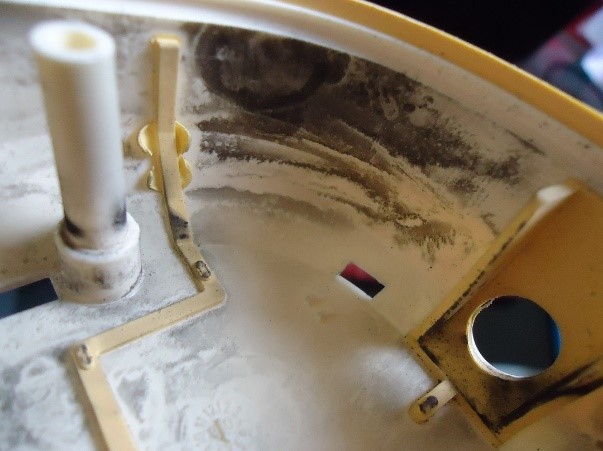
Open system breast pumps may grow mold over time and cannot be completely sterilized.

The type of pump you use also matters in terms of potential contamination (i.e., when foreign material can pass into the milk). What matters the most is whether a pump uses an “open” or “closed” system. A “closed” system breast pump has a physical barrier between the parts that touch your breastmilk (flanges, bottles, valves), and the tubing and pump motor (called the “backflow protector”). This keeps your milk sectioned off from the body of the pump. The parts that can easily be cleaned and sterilized are separate from the parts that cannot be cleaned and sterilized, like the interior of the pump motor. This is why hospital grade breast pumps are safe for multiple users – because they have this barrier.

The type of pump you use also matters in terms of potential contamination (i.e., when foreign material can pass into the milk). What matters the most is whether a pump uses an “open” or “closed” system. A “closed” system breast pump has a physical barrier between the parts that touch your breastmilk (flanges, bottles, valves), and the tubing and pump motor (called the “backflow protector”). This keeps your milk sectioned off from the body of the pump. The parts that can easily be cleaned and sterilized are separate from the parts that cannot be cleaned and sterilized, like the interior of the pump motor. This is why hospital grade breast pumps are safe for multiple users – because they have this barrier.

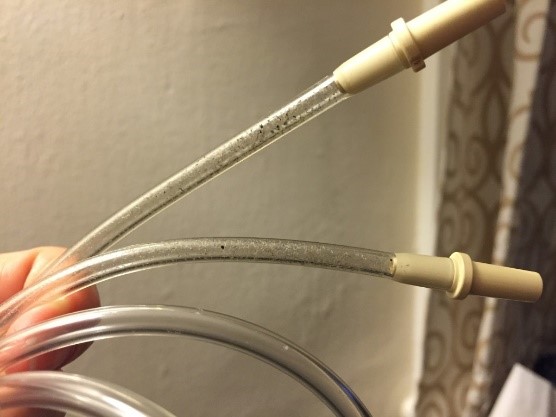
“Open” system breast pumps do not have barriers between the parts that touch your breastmilk and the tubing and pump motor. Because of this, moisture from pumping can enter the tubing and motor. Since mold flourishes in dark, moist places, the open system has a greater risk for mold growth. This means that impossible-to-clean places like the interior of a breast pump motor are very inviting to mold. The most common places to find mold in a breast pump are the tubing, the areas and valves that connect bottles to flanges, and the insides of pumps which have been stored for a long time in a moist basement.

How can I keep mold out of my breast pump and breastmilk?

Prevention of household mold may help prevent mold on your breast pump equipment. Also, a good breast pump should have a protective barrier between the flange (the funnel-shaped part that comes into contact with your breast) and the connected tubing. Pumps without this feature carry extra risk for milk and moisture to get into the tubes and create a breeding ground for mold.

Mold growing in the breast pump tubing.

All breast pump parts that come in contact with breastmilk should be cleaned and fully dried after each use. This includes flanges, bottles, valves and breast shields. You can eliminate possible contaminants by washing them with liquid dishwashing soap and warm water. Rinse each piece thoroughly with hot water for 10-15 seconds. Place the pieces neatly on a clean paper towel or on a clean drying rack and allow them to air dry. A dishwasher with a drying cycle can also be used. Avoid using cloth towels to dry your pump parts because they can carry germs and bacteria that are harmful to your breastmilk and your baby.

It is not necessary to clean breast pump tubing unless it comes in contact with breast milk. If you wash your tubing, make sure you hang it to air dry before attaching it to your breast pump. If small water drops (condensation) appear in the tubing after you have pumped, attach the tubes to the pump before you attach your flanges/bottles and turn the pump on for a few minutes until the tubing is dry.

What if I find mold in my breast milk?

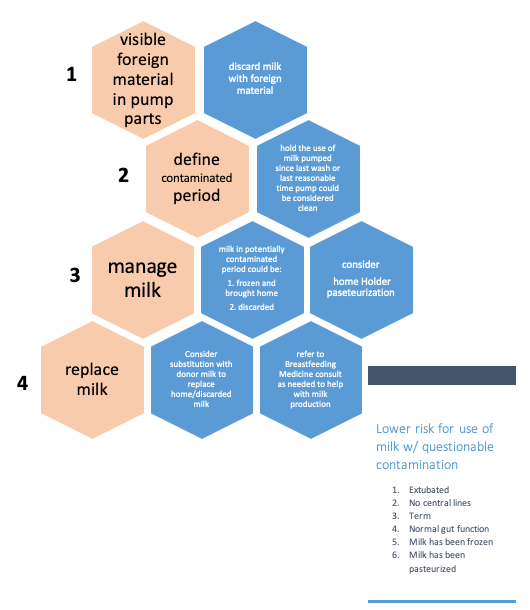
At MotherToBaby UR Medicine, we have developed an algorithm (set of rules) to help people manage breastmilk that is potentially contaminated. It is meant to be used in hospitals for sick children, but can be useful for you and your health care provider. Most full-term, healthy, and older infants do not need the precautions outlined below. If you find foreign material in your breastmilk or pump parts, contact your baby’s pediatrician to get advice on what to do.

If your baby is sick or premature, consider sharing the information below with your baby’s provider if you find mold in your breastmilk or pump parts. It is meant to be followed in order from step 1, which includes discarding any milk with foreign material in it (like mold.) Step 2 can help to determine when any other expressed milk may have been affected. For instance, if you know you washed your pump 4 days ago and found the material today, any milk you pumped in the past 4 days could have been contaminated. Contaminated milk could be frozen, which is likely to kill most bacteria and many fungi, or it could be pasteurized using home pasteurization (Step 3). You also need to think about what should be fed to your baby in the meantime: do you have older, stored milk? Do you need donor milk? If you need to use formula, should it be “hypoallergenic?” (Step 4). These are good conversations to have with your baby’s doctor. If you don’t have enough breastmilk, some communities will have breastfeeding medicine specialty providers or lactation consultants who can help mothers with milk supply concerns. You can search for these providers online by clicking here.

Algorithm for decision-making when pump parts are found to contain foreign material (potential bacteria or fungus). The box at the lower right reminds providers which babies are at lowest risk from drinking milk that has any foreign material in it.

Last, we want to leave you with words of encouragement because we know breastfeeding isn’t easy. It’s downright hard for most. Having that said, please know that resources like MotherToBaby are here for you and just by reading this blog, you’re taking steps to ensure your milk is pumped and stored safely. You’re doing a great job and we can be certain your baby appreciates all you do.

Rogelio Perez D’Gregorio, MD, MS is an Assistant Director of MotherToBaby UR Medicine and Assistant Professor of Obstetrics and Gynecology at the University of Rochester.

Other blog contributions were made by:

Casey Rosen-Carole, MD, MPH, MSEd, FABM, IBCLC is Medical Director of Lactation Services and Programs, Assistant Professor of Pediatrics and OBGYN, and a Consultant for the Lactation Study Center and MotherToBaby URMedicine

Ruth A Lawrence, MD, DD (Hon) FABM, FAAP is Distinguished Alumna Professor Pediatrics and Obstetrics/Gynecology, Northumberland Trust Chair in Pediatrics, UR School of Medicine and Dentistry. Co-Director of the Finger Lakes Children’s Environmental Health Center.

REFERENCES:

Ameda. Is there mold in your breast pump equipment?

Centers or Disease Control and Prevention. Facts about Stachybotrys chartarum and Other Molds.

Eglash A, Liliana Simon L, et al. (2017). ABM Clinical Protocol #8: Human Milk Storage Information for Home Use for Full-Term Infants, Revised 2017. Breastfeed Med.;12(7):390-395.

FDA. U.S. Food and Drugs Administration. Breast pumps.

Hygela Health. Closed System Breast Pumps vs. Open System Breast Pumps.

Jennai L. Moms ABC. How to clean breast pup tubing mold.

La Leche League International. Pumping Milk.

Labiner-Wolfe J, Sara B. Fein SB, Katherine R. Shealy KR, et al. (2008). Prevalence of Breast Milk Expression and Associated Factors. Pediatrics 2008;122:S63–S68.

Magoha H, Kimanya M, De Meulenaer B, et al. (2014). Association between aflatoxin M1 exposure through breast milk and growth impairment in infants from Northern Tanzania. World Mycotoxin Journal. 7(3):277-284.

Spectra. Mould in your Breast Pump Tubing?

Stöppler MC. What is mold?

Walker M. (2012). Pumps and pumping protocols. Clinics in Human Lactation 10. Hale Publishing L.P.