
“Spread Prevention, Not the Infection” during Pregnancy

By MotherToBaby’s Kirstie Perrotta, MPH, Lorrie Harris-Sagaribay, MPH, Robert Felix and Susan Sherman of the Organization of Teratology Information Specialists (OTIS) Zika Task Force

***This blog has been archived. For more up-to-date information, please visit: 

Zika Virus Fact Sheet

Listeria Fact Sheet

Toxoplasmosis Fact Sheet

Syphilis Fact Sheet

CMV Fact Sheet

——————————————————————————–

“It’s 2018! I didn’t even know you could get syphilis nowadays!” Yes, I mentioned the stats about syphilis and other infections that can affect pregnancy to the caller who had contacted me through our free MotherToBaby helpline. I thought, this is a great time to educate her as well as others about a variety of infections. Some infections, like Zika, seem to make headlines every week, while others tend to be discussed much less frequently. January is National Birth Defects Prevention Month, and this year’s focus is on infection prevention.

In keeping with the theme Prevent to Protect: Prevent Infections for Baby’s Protection, read on to learn more about the top five preventable infectious diseases that we get questions about here at MotherToBaby, and what you can do to prevent exposure during pregnancy.

#1: Zika Virus
One of our most common Zika questions comes from couples who have just returned home after a tropical vacation: How long do we need to wait to get pregnant after returning from a country with Zika, and what should we do in the meantime to minimize risk? Can we be tested?

Many countries continue to see active transmission of Zika virus from infected mosquitoes. If a woman is infected with Zika during pregnancy, it can increase the risk of microcephaly (small head and brain) and other severe brain defects. It may also cause eye defects, hearing loss, seizures, and problems with the joints and limb movement. That’s why it’s so important for couples who are planning a pregnancy to make sure the virus is completely out of their bodies before they attempt to conceive.

So, how long do couples need to wait? The Centers for Disease Control and Prevention (CDC) recommends that women who travel to a country with Zika wait at least two months before attempting to get pregnant. If a male partner travels, the CDC recommends waiting six months. Some callers ask, “Why so long? We’re ready to get pregnant now!” Although the virus is expected to leave most people’s blood in about two weeks, this could vary depending on a number of factors including their own immunity. The CDC considers 2 months to be a long enough wait time for women. As for men? Zika has been found in the semen for up to 6 months after a man is first infected. The six-month wait time ensures that men do not pass the virus to their partners during intercourse if it is still present in their semen.

Practicing safe sex is important during these wait times! Since Zika can spread through sexual contact, using condoms or dental dams is recommended every time a couple has intercourse. Don’t want to use protection? 100% abstinence is another option. These safe sex precautions significantly reduce the risk of transferring the virus from one partner to another during these important wait times.

Couples who want to get pregnant right away will often ask, “Instead of waiting, isn’t there a way my doctor can just test me for the virus?” Unfortunately, the answer to that question is not so simple. The CDC does not recommend testing as a way to know if it’s “safe” to get pregnant. For one reason, the virus could have already left your blood, but could still be hanging out in other areas of the body (like semen). In this case, you could get a negative blood test result, but still have the virus. Second, no test is 100% accurate. There’s always a chance that your result could be a false negative, especially if you are tested too soon or too late after returning home from a country with Zika.

So, the bottom line? It’s a waiting game. Couples should follow the CDC’s official recommendations to make sure their pregnancy has the healthiest start possible. Still have questions or concerns about Zika? Check out Zika Central on MotherToBaby.org or call us at 866-626-6847 to speak with a specialist who can assess your specific exposure.

#2 Listeria
I just ate unpasteurized cheese and I’m worried I have Listeria. What symptoms should I watch for? Do I need to be tested?

Eating unpasteurized cheese does put you at risk for a Listeria infection (called listeriosis). So during your pregnancy it’s important to avoid unpasteurized cheeses and other foods made with unpasteurized milk. The US Food and Drug Administration has developed additional food safety guidelines specific to pregnancy.

While listeriosis has not been found to cause birth defects, it can increase the risk for miscarriage, preterm delivery, and still birth. It also increases the risk of infection in newborns which can result in very serious long-term complications for baby.

Not everyone who is infected with Listeria will have symptoms, but some will have mild to severe symptoms that appear a few days or even weeks after eating contaminated food. Symptoms of a Listeria infection to watch for may include: diarrhea, fever, muscle aches, joint pain, headache, backache, chills, sore throat, swollen glands, and sensitivity to light.

Since not everyone has symptoms, it is important to be tested if you think you might have listeriosis. Your health care provider can order a simple blood test to confirm a Listeria infection. Treatment will reduce the risks of infection for you and your baby.

#3: Toxoplasmosis
I didn’t find out I was pregnant until 12 weeks, and I’ve been changing my cat’s litter box this whole time. Am I at risk for toxoplasmosis?

Toxoplasmosis infection is caused by the parasite Toxoplasma gondii. You can get it from handling cat feces or soil, or eating undercooked, infected meat that contains the parasite. Eating raw eggs or drinking unpasteurized milk are also possible sources.

Most adults with toxoplasmosis don’t have symptoms, but some have symptoms similar to the flu or mononucleosis, with swelling of the lymph nodes, fever, headache or muscle pain. In most cases, once a person gets toxoplasmosis, they cannot get it again. If a woman has an active toxoplasmosis infection during pregnancy, it can pass to the developing baby (called congenital toxoplasmosis infection). Not every infected baby will have problems, but the infection could cause a variety of developmental problems for the infant.

Up to 85% of pregnant women in the U.S. are at risk for toxoplasmosis infection. Generally, women who have recently acquired a cat or care for an outdoor cat may be at an increased risk for toxoplasmosis. Ask yourself: Have you ever been diagnosed with toxoplasmosis? How long have you had your cat? Is your cat indoor only, outdoor only, or both? Do you feed the cat raw meat? Talk to your healthcare provider if you have concerns and want to learn more about a blood test that can determine if you have ever had toxoplasmosis.

To avoid future infection, here are some precautions you can take: (1) wash your hands carefully after handling raw meat fruit, vegetables, and soil; (2) do not touch cat feces, or else wear gloves and immediately wash your hands afterwards if you must change the cat litter; (3) wash all fruits and vegetables; peeling fruits and vegetables can also help reduce risk of exposure; (4) cook meat until it is no longer pink and the juices run clear; and (5) do not feed your cat raw meat.

#4 Syphilis
I just found out I have syphilis and my doctor recommended medication to treat it, but I’m worried the medication will hurt the baby. What should I do?

Syphilis is a sexually transmitted infection (STI) caused by bacteria that can be treated and cured with antibiotics. Learning that you have syphilis when you are pregnant is frightening, but the earlier you treat the infection, the better the outcome for you and your baby.

The syphilis bacteria can spread to the baby during pregnancy (called congenital syphilis or CS). CS can cause stillbirth, prematurity, or other pregnancy problems, including birth defects of the bones, the brain and other body systems. If you are diagnosed with syphilis during pregnancy, be sure to talk with your baby’s pediatrician since a baby might develop symptoms of CS even after being born.

The medications that are used to treat syphilis have been around for many years and are well studied. While there is always the possibility of side effects with any medication, the antibiotics used to treat syphilis during pregnancy are very well tolerated by most women.

The MotherToBaby website contains fact sheets on many of the medications doctors prescribe during pregnancy. If you still have concerns about the medication your doctor has prescribed to treat your syphilis, you can review the fact sheet and contact a MotherToBaby specialist at 866-626-6847.

#5 CMV (Cytomegalovirus)
I’m pregnant, and my 3-year-old came home from daycare with symptoms of CMV. Should I be worried? What can I do to prevent getting CMV from her?

CMV is a common virus that spreads through urine, saliva and other body fluids. In pregnancy, CMV can pass from mom to the developing baby (called congenital CMV infection). This could happen if you already had CMV before you got pregnant or if you got a new strain of CMV from your daughter, but it might be more likely to happen if you get a first-time CMV infection from your daughter while you’re pregnant.

Reassuringly, most babies born with congenital CMV infection don’t get sick or have health problems. But about 1 out of every 5 babies with congenital CMV infection has health problems at birth or complications that develop later in childhood. These include developmental disability, vision problems, and hearing loss, even in babies with no signs of congenital CMV infection at birth.

So, how can you prevent getting CMV from your daughter? There is no surefire way to guarantee that you won’t get it, but the best prevention is the easiest one: wash your hands often. Especially after any contact with your daughter’s urine or saliva. Kissing her on the cheek or the top of the head instead of the mouth or the hands is another way to prevent contact with her saliva. And if you are still concerned, talk to your health care provider about blood tests to detect a current or past CMV infection. For more information, check out our Baby Blog about this topic.

If you have more questions about infections during pregnancy, contact a MotherToBaby expert by phone, email, text message or chat. During National Birth Defects Prevention Month and every day, moms-to-be have the opportunity to #prevent2protect, ensuring the healthiest start to life for their new additions!

About MotherToBaby
MotherToBaby is a service of the Organization of Teratology Information Specialists (OTIS), suggested resources by many agencies including the Centers for Disease Control and Prevention (CDC). If you have questions about exposures during pregnancy and breastfeeding, please call MotherToBaby toll-FREE at 866-626-6847 or try out MotherToBaby’s new text information service by texting questions to (855) 999-3525. You can also visit MotherToBaby.org to browse a library of fact sheets about dozens of viruses, medications, vaccines, alcohol, diseases, or other exposures during pregnancy and breastfeeding or connect with all of our resources by downloading the new MotherToBaby free app, available on Android and iOS markets.

“Spread Prevention, Not the Infection” during Pregnancy

By MotherToBaby, a service of the Organization of Teratology Information Specialists (OTIS)

Why should pregnant women care about influenza? Isn’t Zika a bigger deal?

The second you get pregnant, the advice starts coming in from everyone. No eating unpasteurized cheese (Listeria!), don’t change the cat litter (Toxoplasmosis!), and definitely don’t travel to South America (Zika!). While these are all valid concerns, influenza tends to get forgotten, and dismissed as “just the flu.” The Influenza virus may not make sensational headlines, but it’s a serious problem every year, and pregnant women are especially vulnerable to this infection.

In 2009/2010, the United States (U.S.) experienced a flu pandemic. The flu hit the public hard, and many pregnant women were hospitalized. The U.S. saw higher rates of admission to intensive care units for pregnant women, and 109 pregnant women died from confirmed or suspected flu infection. In comparison, Zika virus, which received much media attention and continues to be a source of great concern for many pregnant women, rarely results in hospitalization and has not resulted in any maternal deaths.

5 Quick Flu Facts:

  1. The flu is a risk year-round, and is not limited to a particular area of the country.
  2. Changes with the immune system, heart, and lungs put pregnant women at an increased risk of developing serious complications from the flu, such as respiratory distress. Pregnant women who get the flu are also much more likely to be hospitalized, and can even die from influenza complications.
  3. Fever is a common flu symptom. Research shows that an untreated high fever early in pregnancy can result in an increased risk for a certain class of birth defects known as neural tube defects (spina bifida is one example).
  4. Being very sick from the flu can increase the risk of pregnancy complications such as miscarriage and preterm delivery.
  5. For pregnant women looking to ensure the healthiest start to life for their little one, influenza is an important infection to be aware of, and to try to prevent.

Is it too late to get a flu shot? It’s January, isn’t flu season over?

It’s never too late to get a flu shot! Flu season can start as early as October, and runs as late as May some years. However, research shows that the highest number of flu cases each year usually occurs in February. While vaccine effectiveness can vary from season to season, the flu vaccine is thought to reduce the risk of illness by about 50% to 60% when the flu viruses that end up circulating in the community closely match the viruses included in that year’s vaccine. Even during years when the flu vaccine is not a good match, it is still thought to provide some protection against the flu. If you haven’t received this year’s flu vaccine yet, talk to your health care provider as soon as possible.

10 Quick Flu Vaccine Facts:

  1. The best way to avoid getting the flu virus is to receive the flu vaccine.
  2. Women who are planning a pregnancy and women who are currently pregnant are strongly encouraged to get the seasonal flu shot as early as possible during the flu season.
  3. There is no known risk from getting the flu shot during pregnancy. The seasonal flu shot is an inactivated virus vaccine, which means that it won’t cause you to get sick with the flu.
  4. Pregnant women are asked to avoid the live attenuated flu vaccine (also called the nasal spray vaccine) as it contains a tiny amount of weakened live virus.
  5. There is no trimester during pregnancy when the flu shot has to be avoided.
  6. Studies of thousands of women who have received the flu shot just before or during pregnancy have found no increased risk for birth defects.
  7. Studies have found that when pregnant women get the flu shot, their baby is born with protection against the flu for anywhere from 2 to 6 months after birth.
  8. Most women who receive the flu shot will not experience any problems.
  9. A small number of individuals who receive the flu vaccine may experience soreness/redness/swelling at the injection site, headache, fever, nausea and/or muscle aches. Reassuringly, these symptoms are usually mild and go away on their own within a few days.
  10. Anyone with a severe, life-threatening allergy to any of the vaccine ingredients should talk with their health care provider before getting the flu vaccine.

Is there anything else I can do to avoid the flu?

In addition to getting vaccinated, healthy habits can further reduce your risk of getting the flu. Avoid close contact with other individuals who are sick. If you’re caring for someone with the flu (like a partner or a child), make sure to clean and disinfect common surfaces that may be contaminated with germs. Wash your hands frequently with soap and water. Cover your mouth and nose while coughing or sneezing, and practice good health habits like staying well hydrated and eating nutritious food.

If you develop symptoms of the flu, you should contact your health care provider as soon as possible. When indicated, antiviral medications may be prescribed (ideally within 48 hours) to lessen flu symptoms and reduce the risk of serious illness.

MotherToBaby is a suggested resource by many federal agencies including the Centers for Disease Control and Prevention (CDC), the Food and Drug Administration’s (FDA) Office of Women’s Health, and HRSA, and provides the most up-to-date information. More than 100,000 women and their health care providers seek information about birth defects prevention from MotherToBaby every year. Additionally, MotherToBaby conducts observational research studies in order to contribute more information to the published literature about a variety of exposures. To be connected with a MotherToBaby expert, please call (866) 626-6847, text questions to (855) 999-3525 (standard messaging rates might apply) or visit www.MotherToBaby.org.

REFERENCES:

Flu Shot Effectiveness: https://www.cdc.gov/flu/about/qa/vaccineeffect.htm
Flu Prevention: https://www.cdc.gov/flu/protect/habits.htm
Peaks In February: https://www.cdc.gov/flu/about/season/flu-season.htm
MTB Flu Shot Fact Sheet: https://mothertobaby.org/fact-sheets/seasonal-influenza-vaccine-flu-shot-pregnancy/
MTB Flu Fact Sheet: https://mothertobaby.org/fact-sheets/seasonal-influenza-the-flu-pregnancy/
MTB Antiviral Fact Sheet: https://mothertobaby.org/fact-sheets/antiviral-medications-treatprevent-influenza-the-flu-pregnancy/
Flu Shot Side Effects: https://www.cdc.gov/flu/protect/vaccine/general.htm
Flu Shot Protects Baby: https://www.cdc.gov/features/pregnancyandflu/index.html
CDC Illness/Death Stats: https://www.cdc.gov/flu/about/disease/burden.htm
https://immunizationforwomen.org/uploads/Pregnancy_Related_Mortality_Resulting_From%206.pdf


“Spread Prevention, Not the Infection” during Pregnancy

By Kristen Hutchinson Spytek, National CMV Foundation President

C-M-V. Three letters that keep me up at night and shake me to the core. Three letters that have managed to routinely shatter my expectations, body slam my optimism, expose my vulnerability, alter my perspective and even now, force me to recalibrate daily. My daughter, Evelyn Grace, was born on March 12, 2013 at 36 weeks with congenital cytomegalovirus. Or CMV.

Evelyn was my first pregnancy; I was thirty-one years old. My husband and I had been married for five years, and together since college, and we were ready. Emotionally, fiscally and socially ready.

The beginning of my pregnancy was largely uneventful. My husband and I talked with anticipation about the future, shared names we liked, vetoed ones we didn’t, and spent many evenings dreaming about who he or she would become. We agreed that most importantly, we wanted to raise a kind, compassionate human being that positively contributed to society. Easy right? I met with my OB at all required appointments, avoided all of the “things” like sushi, soft cheese, alcohol, etc., and at the mid-point anatomy scan, my husband and I were ready to learn whether we were expecting a boy or a girl. We wanted the tech to write it down in an envelope so we could open it together, privately, when we were ready.

After 45 minutes, the Maternal-Fetal Medicine specialist came into the room and started explaining something about an echogenic bowel. What? My heart rate accelerated and I held my breath. His lips were moving but I literally could not decipher the words. What did this mean? Should we be concerned? Is this a genetic issue? Will my baby be ok? The truth was, it could be something, or it could be nothing.

My pregnancy progressed and after several tests and consultations with specialists in pediatric cardiology, pediatric neurology, genetic counseling, and social work, we still did not have a realistic view of what we were dealing with. We were terrified. We remained hopeful for a healthy baby but the remainder of our pregnancy was clouded with fear of the unknown.

My daughter was breech and after five weeks of extensive monitoring of both me and the baby, my maternal fetal medicine physician made the call to move up my C-section due to low amniotic fluid. My husband and I practically skipped to the hospital that Tuesday afternoon. We couldn’t wait to hold our baby girl in our arms.

The surgery was fast and cold and clinical. I snuck a peak at Evelyn, all three beautiful pounds and 14 ounces, before they whisked her off to the NICU. But even then I did not have a real sense for the gravity of the situation. It was not until the neonatologist uttered the letters “CMV” did I truly realize the weight. Even though I understood very little about CMV, I knew that Evelyn was going to have special considerations. We were devastated for our daughter. The hopes and dreams we had shared for her, and the things we once believed to be big issues or milestones, now seemed trivial and small in comparison. We were in mourning for our “atypical” daughter and for what we wished we had known that may have potentially improved her prognosis. What should we have done differently? What questions should we have asked?

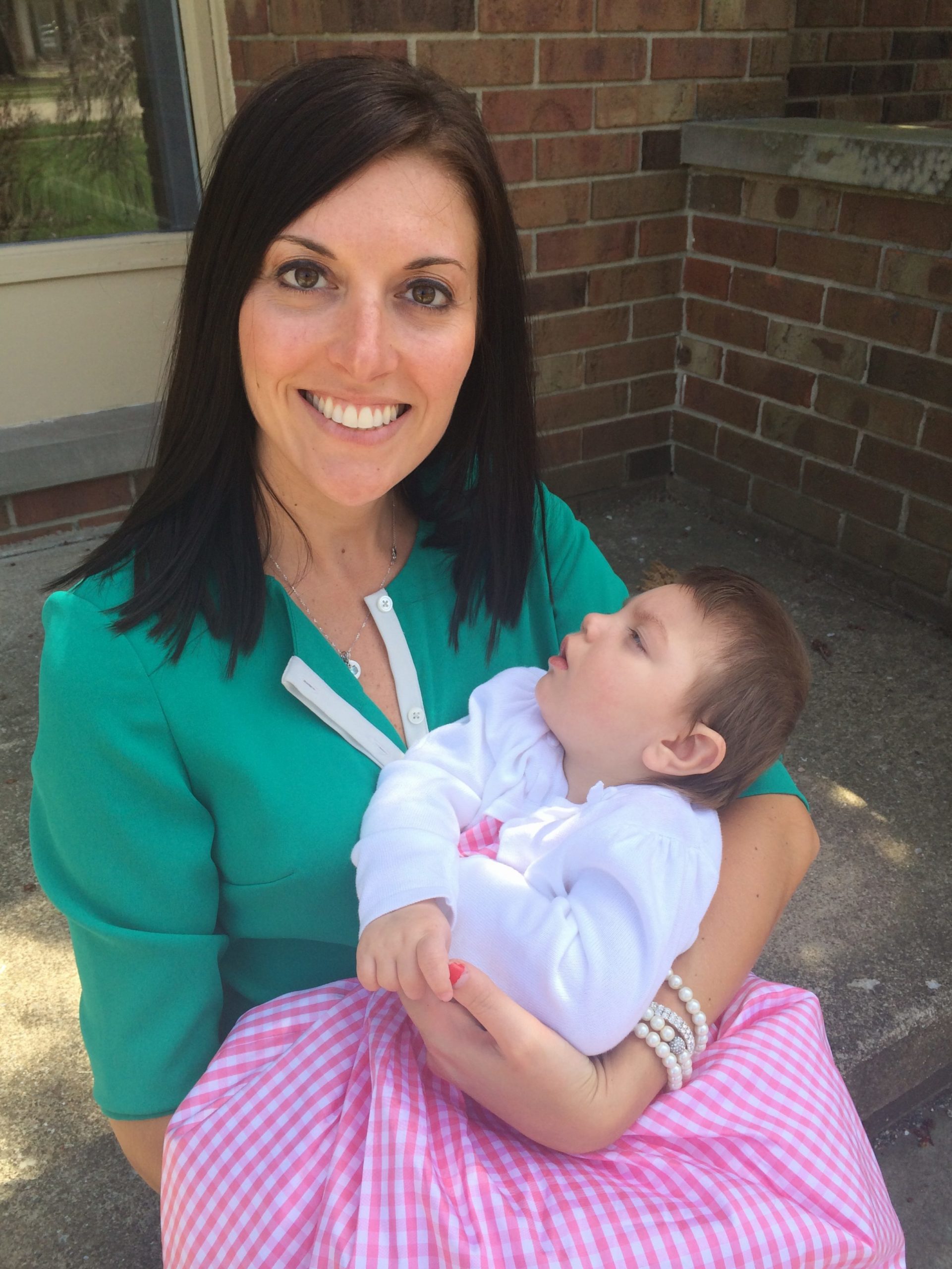
I experienced a primary (first-time) infection, likely during my first or second trimester. Evelyn (pictured right) was severely affected by CMV, receiving weekly early intervention services and private sessions in occupational, physical and speech therapies, in addition to countless specialist appointments. She couldn’t do much independently but she had a smile that lit up the room, a laugh that was beyond infectious, and a determination that continues to motivate every cell in my being. She gave my husband and I twenty-one months of unconditional, unequivocal love. Tragically, we lost Evelyn in December 2014 due to complications from a surgery, three weeks before our son, Jack, was born. It was an impossible time. I don’t remember much from the weeks that followed but at some point, my adrenaline kicked in while my heart exploded in my chest, and through my tears, I knew my daughter’s journey was going to help change the outcome for future babies. Her legacy will positively contribute to society.

There is an overwhelming amount of scary information bombarding pregnant women every single day. Information overload is real, yet simple dialogue between a patient and her caregiver (e.g. midwife, doula, OB, maternal fetal medicine specialist, primary care physician, etc.) is extremely important and sometimes, it’s the patient who has to lead the conversation. I only wish I had known more or had time to effectively plan before Evelyn arrived. I felt overwhelmed and ill-prepared.

Only 9% of women have heard about CMV according to a 2016 HealthStyles™ Survey, yet it’s more common than Down Syndrome, Fetal Alcohol Syndrome, Fifth Disease, Spina Bifida, Sudden Infant Death Syndrome (SIDS), and Toxoplasmosis. Absorb that for a minute. It is an often symptomless virus, or may present as a cold or flu, and only causes harm when a pregnant woman passes it through the placenta to the baby in utero (or in a person with a weakened immune system). More than half of the adult population has been infected with CMV before the age of 40, and once it’s in a person’s body, it stays there for life.

How do we successfully educate pregnant women about the risks associated with this virus, if hardly anyone has heard about it?

My best advice is to take control of your health! Have you ever been infected with CMV? If you’re thinking about becoming pregnant, ask your doctor for an IgG vs. IgM antibody test to understand if you’ve had CMV in the past, and whether or not you currently have an active infection. Already pregnant? No worries, ask for it anyway. It’s a simple blood test and is covered by most insurances. Professionals’ advice and recommendations will vary depending on the results and where you are in your pregnancy.

June is CMV Awareness Month. Our mission is to educate women of childbearing age about congenital CMV, with the goal of eliminating congenital CMV for the next generation. Whether you’re pregnant with your first or you’ve been down this road a few times, know this:

  • CMV is common. Congenital CMV is the most common viral infection that infants are born with in the United States — totaling 30,000+ babies each year, with 5,000+ suffering from permanent disabilities.
  • CMV is serious. Congenital CMV is the leading cause of non-genetic childhood hearing loss. Complications from congenital CMV results in up to 400 deaths yearly.
  • CMV is preventable. Pregnant women who have toddlers, or work with young children, are at the highest risk of acquiring CMV. The virus is typically spread through urine, blood, mucus, tears, semen or saliva, and there are simple behavior modifications that will help reduce this risk:
    • Do not share food, utensils, drinks or straws
    • Avoid contact with saliva when kissing a child
    • Do not put a child’s pacifier or toothbrush in your mouth
    • Wash your hands thoroughly, especially after changing a diaper

Please take a deep breath, practice the above prevention methods, and report any sign of illness to your midwife or doctor. If you are screened for CMV while pregnant, and the result is a positive active infection, your medical professional can do an amniocentesis to see if congenital CMV has spread through the placenta to the unborn baby. And if it has, interventions and therapies may be recommended.

CMV. Know Your Risk. Protect Your Family.

Kristen Hutchinson Spytek is the President of the National CMV Foundation. She has an M.A. in Global Marketing Communications & Advertising from Emerson College and a B.A. in Communication Studies from the University of Michigan. Kristen resides in Tampa, FL with her husband John, and sons Jack (2) and Thomas (4 mo).”

The National CMV Foundation is a non-profit organization dedicated to promoting awareness, providing access to resources and sharing prevention information to eliminate congenital CMV. Learn more at www.nationalcmv.org.


“Spread Prevention, Not the Infection” during Pregnancy

By Robert Felix, MotherToBaby Past President

I’ll never forget the panic in her voice. “The web said, ‘stay away from cats when you’re pregnant because your baby can be mentally retarded!” It was the first thing this soon-to-be mom could get out the second I picked up the phone. “It is true? I got rid of my cat immediately because I was so worried and I feel terrible about it,” she breathlessly explained. As a teratogen information specialist (someone trained to answer questions about exposures during pregnancy and breastfeeding), I knew her concern was shared by many. She was worried about something called “toxoplasmosis,” and after calling her doctor’s office, a nurse she spoke with didn’t say much or educate her about the infection. The nurse just reaffirmed that by getting rid of her cat, she had done “the right thing.” She was beyond frustrated. Not to mention, she missed her family’s feline!

After hearing her frustration, I asked her some basic questions relative to the cat.
• How long has she had the cat?
• Was the cat only indoor, outdoor, or both?
• Did she feed the cat any raw meat?
• Who changed the cat litter?
• Did she do any gardening?

Based on what she described, there was nothing to indicate that she was at an increased risk. “But I’m sure I’ve harmed my baby,” she said anxiously. So, I broke down the basics about toxoplasmosis. January is Birth Defects Prevention Month, what better time to revisit facts about infection?

Toxoplasmosis infections can occur by eating undercooked, infected meat, or handling soil or cat feces that contain the parasite. Toxoplasmosis is an infection caused by the parasite Toxoplasma gondii. Although most adults have no symptoms, swelling of the lymph nodes, fever, headache or muscle pain may be seen. In most cases, once a person gets toxoplasmosis, he/she cannot get it again. About 85% of pregnant women in the United States are at risk for toxoplasmosis infection.

Women who have recently gotten a cat or have outdoor cats, eat undercooked meat, garden, or who have had a recent mononucleosis-type illness are at increased risk. In Europe where far more undercooked meat is eaten, there is a higher prevalence of toxoplasmosis. Toxoplasma gondii can be found in raw or undercooked meat, raw eggs and unpasteurized milk. Cats that eat raw meat or rodents can become infected, and the parasite lives in the cat’s feces for two weeks. Toxoplasma gondii eggs can live in cat feces buried in soil up to 18 months.

To avoid infection:
• Cook meat until it is no longer pink and the juices run clear.
• Wear gloves while gardening.
• Wash all fruits and vegetables.
• Wash hands carefully after handling raw meat fruit, vegetables, and soil.
• As for furry friends… Pregnancy’s not the time to be on litter box duty, but is a good time to get your partner to do it for you!
• Also, don’t feed cats raw meat.

Taking simple precautions to avoid infection during pregnancy will keep you healthy and keep kitty from landing in a homeless shelter. In addition, it’s very important for women to get prenatal care, talk to their healthcare providers, eat healthy and take their prenatal vitamins (including folic acid) during pregnancy. Remember, #Prevent 2Protect.

Robert Felix is a teratogen information specialist at MotherToBaby California, a non-profit affiliate of the international Organization of Teratology Information Specialists (OTIS). Robert is the past president of MotherToBaby and is based at UC San Diego’s Center for Better Beginnings.

MotherToBaby is a service of OTIS, a suggested resource by many agencies including the Centers for Disease Control and Prevention (CDC). If you have questions about toxoplasmosis, please visit our toxoplasmosis fact sheet, call MotherToBaby toll-FREE at 866-626-6847 or try out MotherToBaby’s new text information service by texting questions to (855) 999-3525. You can also visit MotherToBaby.org to browse a library of fact sheets about dozens of viruses, medications, vaccines, alcohol, diseases, or other exposures during pregnancy and breastfeeding.


“Spread Prevention, Not the Infection” during Pregnancy

By Heidi S. Neuburger, MS, MA, Indiana University Audiologist

It was a busy day in the audiology clinic, but my 10AM patient made me pause. I reviewed the medical records for this adorable 2 1/2 year old. His mother, a daycare provider, had contracted cytomegalovirus (CMV) early in her pregnancy. Unfortunately, there is nothing unusual about this. You can get CMV by contact with bodily fluids from a person who carries the virus. If mommy is caring for toddlers, either at home or in her place of work, she is at very high risk for coming into contact with diapers, runny noses, table tops and toys that may be infected with the virus. As many as 38% of toddlers who go to day care may have CMV, and they can pass it to other children, their families, or care givers.

The symptoms of CMV can be mild, or there may not even be any at all. Symptoms can include a little sore throat, fever, swollen glands and fatigue for a few days. But when mommy catches CMV during a pregnancy, there can be serious consequences to the baby in the womb. Congenital CMV infection occurs in 1 out every 100 to 150 babies that are born to mothers with CMV, although only about 1 in 5 of these kids will have long term health problems. (CDC.org)

In this case, the medical record showed that my patient did indeed test positive for the CMV virus at birth. The virus crossed the placenta, from mother to the developing fetus, causing the infection. But to the relief of all, in spite of a positive diagnosis of the presence of the virus in the baby at birth, there did not appear to be symptoms other than a little jaundice, which returned to normal within a couple of weeks. The family breathed a sigh of relief. Yet – here they were. The toddler (now 32 months old) was not talking at all. In fact, he was lagging farther and farther behind his peers developmentally.

After 40 minutes in the sound booth with this little boy I was able to confirm that he had a severe hearing loss in both ears. The fact that he had passed his newborn hearing screen suggested that the hearing loss had been getting worse over time. And a hearing loss of this degree surely had something to do with his delayed language development, and other possible developmental delays.

What can we learn from this challenging outcome? What could have been done?
For October’s National Audiology Awareness and Protect Your Hearing Month, I thought it was particularly timely to focus on the lesson learned from this little boy’s situation. More often than not, when a baby is exposed to CMV in the womb, especially early in the pregnancy, there will not be birth defects. In fact most babies will be born without symptoms or obvious defects. In one study (Naing et al, 2015) 18% of children born positive for CMV were without symptoms at birth, but later had a delayed onset of hearing loss. I would have liked to have seen a heightened level of suspicion that hearing loss may emerge with this child, because of his congenital CMV diagnosis. It may not be possible to stop the onset or worsening of this hearing loss, but repeat testing of his hearing every 4 to 6 months would have gone a long way toward early identification of the hearing loss, and earlier intervention with hearing aids and speech/language therapy.

Hearing loss is just one of the potential effects of CMV infection during pregnancy. To learn more about the broader range of effects, how to test for CMV, and how you can prevent infection, visit the CMV and Pregnancy fact sheet: https://mothertobaby.org/fact-sheets/cytomegalovirus-cmv-pregnancy/. And remember: a MotherToBaby expert is just an email, text message, live chat, or phone call away!

Heidi S. Neuburger, MS, MA, works as an infant laboratory coordinator as part of the technical staff at Indiana University’s Department of Otolaryngology-Head & Neck Surgery. She was program coordinator of MotherToBaby’s Indiana affiliate from 2014 – 2016.

MotherToBaby is a service of OTIS, a suggested resource by many agencies including the Centers for Disease Control and Prevention (CDC). If you have questions about viruses, alcohol, medications, vaccines, diseases, or other exposures, call MotherToBaby toll-FREE at 866-626-6847 or try out MotherToBaby’s new text information service by texting questions to (855) 999-3525. You can also visit MotherToBaby.org to browse a library of fact sheets, email an expert or chat live.