RhoGAM and Rh Negative Moms: A Life-Saving Match

Having worked as a Teratogen Information Specialist at MotherToBaby for close to 10 years, I have become well versed in the different exposures people commonly ask about. Allergy medications in the spring, sunscreen and bug spray in the summer, and cough and cold medications all winter long. So, when I logged onto our live chat service at mothertobaby.org on a Tuesday morning, I was surprised to see a question that doesn’t come up very often. Natalie, pregnant with her first child, asked: “I’m 24 weeks pregnant and my midwife says I need a RhoGAM shot at my next appointment. What could happen to the baby if I do not get this shot?”

Blood Type Basics

Blood type is hereditary, which means it is passed down from your parents. There are 8 common blood types: A+, A-, B+, B-, O+, O-, AB+, and AB-. If your blood type ends in a minus sign (like A- or O-), you are Rh negative. If it ends in a plus sign (like A+ or B+), you are Rh positive. Most people in the United States are Rh positive, but about 15 out of every 100 people (15%) are Rh negative. A blood test early in pregnancy will tell you your blood type.

What is Rh Incompatibility?

During pregnancy, if a woman who is Rh negative is pregnant with a fetus that is Rh positive, a condition called Rh incompatibility can happen. Rh incompatibility becomes an issue if any of the Rh positive red blood cells from the fetus get into the mom’s Rh negative bloodstream. This is most likely to occur during a miscarriage, certain prenatal tests (like amniocentesis or CVS), a fall, labor and delivery, or if the placenta separates from the wall of the uterus. When this happens, the mom’s immune system might treat the fetus’ red blood cells as something that shouldn’t be in the body (like an infection) and start making antibodies against them. In most cases, these antibodies will not negatively affect the current pregnancy, but they might affect future pregnancies.

When Antibodies Attack

Once the mom’s body makes anti-Rh antibodies, they stay in her system for life. If she becomes pregnant again with another Rh positive fetus, the antibodies can cross the placenta and attack the fetus’ red blood cells. This can lead to a condition called hemolytic disease of the fetus and newborn (HDFN). Without enough red blood cells, the fetus cannot carry enough oxygen during development and complications such as jaundice (yellowing of skin and eyes), hemolytic anemic (low red blood cell count), hydrops fetalis (fluid buildup in the baby), high bilirubin levels, kernicterus (brain damage from the bilirubin), and even death can occur.

RhoGAM to the Rescue

Fortunately, there is a way to lower the chance of HDFN: The RhoGAM shot. Typically given around 28 weeks of pregnancy (and again within 72 hours of birth if the baby is confirmed to be Rh positive), RhoGAM is an antibody that helps stop the Rh negative mom from making antibodies that could attack a future fetus’ red blood cells and cause HDFN. Before RhoGAM was available, thousands of babies died from the condition every year. Nowadays, the chance of HDFN is less than 0.1% when the shot is given, making RhoGAM a remarkable intervention.

Protecting Your Future Babies

After sharing this information with Natalie, I summarized our conversation with a quick recap. Since she is Rh negative, her midwife was recommending a RhoGAM shot at 28 weeks to prevent the development of antibodies that could negatively affect a future pregnancy. An increased risk for miscarriage or birth defects is not expected since the shot is given later in pregnancy and Natalie is past the “critical period” for those outcomes to occur. Pregnancy complications, like preterm delivery and low birth weight, have not been reported in the available studies examining the use of RhoGAM in pregnancy. Natalie felt reassured after receiving this information and decided to proceed with the RhoGAM shot at her next midwife appointment.

If you have questions about the RhoGAM shot or any other exposures in pregnancy, please feel free to reach out to MotherToBaby by phone, chat, text, or email to receive evidence-based information that can help you make an informed decision.

References:

  • Bowman J. Thirty-five years of Rh prophylaxis. Transfusion. 2003;43(12):1661-1666. doi:10.1111/j.0041-1132.2003.00632.x

RhoGAM and Rh Negative Moms: A Life-Saving Match

Understanding Critical Periods in Pregnancy

Kendra, newly pregnant at approximately 7 weeks along, contacted MotherToBaby late one afternoon with a question that had been causing her a lot of anxiety. Norovirus was running rampant in her home, and she was feeling extremely nauseous. Having found relief with it before, she explained that she had taken a single dose of Zofran (ondansetron) early that morning. She was certain this drug was ok to take during pregnancy, but after searching online, she became concerned. Kendra shared that she had read conflicting information about whether Zofran increased the risks for birth defects; with some studies showing an increased chance of heart defect and cleft palate, and other studies showing no increased risk. Feeling confused, Kendra reached out to MotherToBaby with her question to receive personalized information.

On the call, I first explained that birth defects can happen in any pregnancy for different reasons. Out of all babies born each year, about 3 out of 100 (3%) will have a birth defect. Pregnancy problems (like miscarriage) can also happen in any pregnancy. Sometimes, exposures like medications, drugs, alcohol, and infections can increase the chance for birth defects or pregnancy complications. However, for an exposure to cause a problem, it generally has to happen during the “critical period” when a body part is forming.

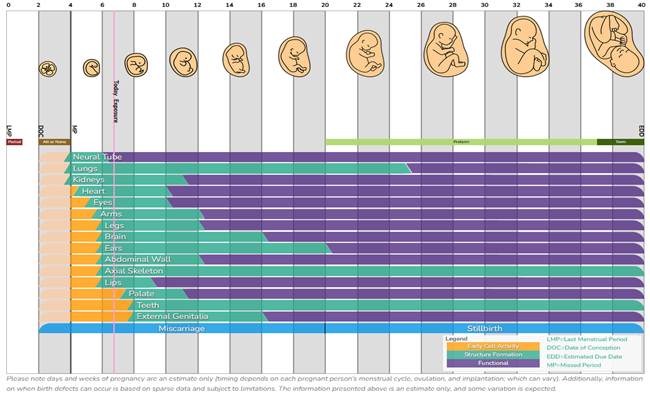
To help Kendra understand more about possible risk from her Zofran exposure, I used MotherToBaby’s new and interactive critical periods of pregnancy tool! This helpful pregnancy calculator and chart shows when different parts of a baby’s body form during pregnancy and when birth defects or pregnancy complications might happen. By entering the first day of your last menstrual period (LMP) or estimated due date (EDD), the calculator can estimate how far along you are today. Individuals who have questions about exposures in pregnancy can then go on to enter the specific date(s) when the exposure (such as medication use or alcohol consumption) occurred, and the chart will show the body parts that are developing during that time.

After entering the first day of Kendra’s last period, the interactive tool confirmed she was 6 weeks and 5 days pregnant. I then entered her Zofran exposure using today’s date, which resulted in a pink line popping up on the chart. Following this line down the chart, I could see all of the different body parts that were currently forming. I explained to Kendra that when she took the Zofran, the palate (roof of the mouth) had not yet started to form, meaning that the medication use was unlikely to increase the chance of cleft palate in the baby. The chart also helped me see that the baby’s heart was currently developing. I shared this with Kendra, but also reminded her that the latest research shows there is thought to be a less than 1% chance of heart defects from exposure to Zofran; meaning there is a more than 99% chance the heart will not be affected by her medication use. In other words, even when an exposure of concern takes place during the critical period, not every baby will be affected by that birth defect. 

New Critical Periods of Pregnancy Interactive Tool

For Kendra, being able to understand which specific body parts were forming when she took the Zofran and whether she actually needed to be concerned helped decrease her anxiety significantly. Knowing that the heart was currently forming, she decided to reach out to her healthcare provider to discuss alternative treatment options for her nausea.  I was happy to have helped answer Kendra’s question using this visual tool and look forward to being able to use it again in the future when pregnant women have questions about the timing of their exposure.

Remember that our team is always available to help review any exposures you have had and provide a personalized risk assessment. Don’t hesitate to contact MotherToBaby by phone, chat, text, or email!


RhoGAM and Rh Negative Moms: A Life-Saving Match

You may have heard recently that the Food and Drug Administration (FDA) has banned Federal Food, Drug, and Cosmetic Act (FD&C) Red No. 3. In this blog, we will review details about the ban, including why it was enacted, and the timeline for removing FD&C Red No. 3 from products. Our goal is to equip you with information to help make informed decisions. Be sure to check back, as we’ll continue updating this post with the latest developments.

All food dyes, called color additives, must be approved for use by the FDA before manufacturers can use them. Color additives can be synthetic (lab made) or naturally derived from plants, animals and minerals. Manufacturers submit information about safety and manufacturing to the FDA in order to receive approval.

What is Red No. 3?

FD&C Red No. 3., also found on food labels as Red 3 or Red No. 3, is a synthetic food dye that gives foods and drinks a bright, cherry-red color.  Red No. 3 can be found in some cake icing, candies, and other food items. Red No. 3 is also used in some oral medications and supplements.

Red No. 3 is a complicated formula for those of us not in the food manufacturing business. Specifically, the FDA reports that the color additive FD&C No. 3 is monohydrate of 9-6-hydroxy-2,4,5,7-tetraiodo-3H-xanthen-3-one, disodium salt, with smaller amounts of lower imdinated fluoresceins.

Why is Red No. 3 being banned?

Red No. 3 food dye is being banned because studies found that at high doses, the dye caused cancer in male laboratory rats. Studies in other animals or in humans did not show an increased chance for cancer.

The way that the food dye causes cancer in laboratory rats involves a mechanism not present in humans, so it is not known if this could also be a risk for humans.

Has Red No. 3 been associated with birth defects or problems with breastfeeding?

Studies have not been done to research this.

When is the ban taking effect?

On January. 15, 2025, the FDA announced that Red No. 3 will be banned from all products, including medications and foods. However, this ban allows manufacturers time to phase out the use of Red No. 3. Manufacturers who use Red No. 3 in food will have until January  15, 2027 to remove it from their products. Manufacturers of oral medications and supplements will have until January 18, 2028 to remove it.

Is FD&C Red No. 3 used in cosmetics or topical medications?

Red No. 3 has not been allowed in cosmetics, or topical medications, by the FDA since at least 1990.

How can I confirm if my food has Red No. 3?

To learn if your food has Red No. 3, look at nutrition facts on the product’s label. The nutrition facts label lists calories and serving size, as well as other information. Below the nutrition facts, you will find an ingredients list. Ingredients are listed in order of those found in highest amounts to those found in smallest amounts in the product. For example, if the first ingredient is water, this means that most of the product is water, and each ingredient listed after that is found in the product in smaller amounts.

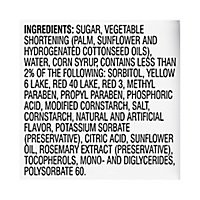
Here is a sample of a products’ ingredients. Red No.3 is listed as less than 2% of the product.

You can learn more from the FDA announcement here: FDA Consumer Announcement

FDA Red No 3

FDA Red No 3 composition

FDA Color Additives for Consumers


RhoGAM and Rh Negative Moms: A Life-Saving Match

By Kirstie Perrotta, MPH, MotherToBaby California

Cara and her husband Mark were contacting MotherToBaby for the first time. “Our adoption counselor just called – we have been matched with a potential birth mom this morning and she’s due next Friday!” Cara blurted out excitedly. “The counselor said you would be able to tell us about the baby’s exposure to heroin and Klonopin. I don’t know how much she used, or when she stopped. We need to make a decision today.”

As a Teratogen Information Specialist, I often receive calls from parents who are in all stages of the adoption process. The adoption journey can be an emotional rollercoaster, as Cara was experiencing. Here at MotherToBaby, we’re happy to help and it’s not uncommon for us to hear from potential parents who need to make a quick decision. We always let the prospective parents know that it’s important to learn about any exposures that may have happened during the birth mom’s pregnancy to best understand what a future with this child might look like. Bottom line: We want adoptive parents to feel as prepared and informed as possible.

So, what should a potential adoptive mom or dad ask about when making this important decision?

Alcohol

When asking about prenatal exposures, be sure to ask about alcohol use. Alcohol can be one of the most worrisome and scary exposures. That’s because when a woman drinks alcohol while pregnant, it has the ability to affect the baby’s brain, which is developing throughout the entire pregnancy.

Children exposed to alcohol during pregnancy are at risk for something called fetal alcohol spectrum disorders (FASD). FASD is a spectrum of disorders ranging from very severe effects (such as low IQ and small head) to more minor effects (such as attention issues and poor judgment). While FASD is a lifelong diagnosis, we know that early interventions have the potential to significantly improve outcomes for these children. If you notice that your child is starting to struggle in school, or having behavior issues, will you have the time and resources to get them the extra help they may need? It’s a question you want to ask yourself as you consider adopting a child that might have special needs. Finding a specialist in your community that is familiar with treating FASD is a great place to start if you find yourself in this situation.

Recreational Drugs

Heroin, cocaine, marijuana, and methamphetamine are exposures that we unfortunately hear about all too often. While some women continue to abuse drugs up until delivery, other birth moms are motivated to quit when they learn they are pregnant. The most important information you can try to gather about this type of exposure is HOW MUCH and HOW OFTEN did the birth mom use the drug. Was it a one-time occurrence early in pregnancy, or an addiction she struggled with the entire nine months? These details can help the specialist you speak with best assess the situation. Using these types of recreational drugs during pregnancy can increase the risk for birth defects, pregnancy complications, and learning problems. See MotherToBaby’s fact sheets for more information.

Methadone and Buprenorphine

Methadone and buprenorphine are two prescription medications that are commonly used to treat addiction to opioids such as heroin, codeine, and hydrocodone. Methadone works by changing how the brain and nervous system respond to pain. It also lessens the painful symptoms of opioid withdrawal and blocks the euphoric effects of opioid drugs. To get methadone, a person has to visit a clinic every day. Buprenorphine works a bit differently and is called a “partial agonist.” This means that it partially creates a feeling of euphoria, but to a lesser degree than a narcotic like heroin. Buprenorphine is available by prescription only.

For many women, there are benefits to staying on a maintenance therapy like methadone or buprenorphine during pregnancy. Most importantly, it helps prevent relapse for women who have a history of abusing opioids. We also know that the women are getting a controlled dose of the medication every day from a healthcare provider. Lastly, women who remain on methadone or buprenorphine throughout pregnancy are less likely to have some of the health issues that traditional drug users may experience, such as a risk for infectious disease (like hepatitis C or HIV) from sharing dirty needles.

While these medications are generally preferred over continued drug abuse, there are still some risks associated with their use during pregnancy. If the birth mom you are considering reports exposure to methadone or buprenorphine, please contact us directly to learn more.

Cigarette Smoking

Cigarette smoking often goes hand in hand with alcohol and drug use. Again, knowing how much and how often the birth mom was smoking is the most helpful information you can have. Many times when a woman finds out she is pregnant she is able to either stop smoking completely, or cut down to just a few cigarettes per day, greatly reducing any possible risks to the baby.

Many studies have associated heavy cigarette smoking during pregnancy with an increased risk for preterm birth (delivery before 37 weeks). A baby born too early has a higher chance for health problems and may need to stay in the neonatal intensive care unit (NICU). If the birth mom you are considering is a heavy cigarette smoker, it’s important to think about how you would handle a baby that may need to spend some extra time in the hospital. For some moms and dads who are matched with a baby in a different state, this may present some logistical challenges. A couple of questions to ask yourself: will you be able to temporarily relocate to the city where the baby is born, and spend some extra time there if the baby does requires a longer hospital stay of a few weeks or more?

Prescription Medication

If a birth mom is taking a prescription medication, the most important thing to try to find out is whether she is taking it as directed, or possibly abusing it. There are many medical conditions that need to be managed during pregnancy – asthma, anxiety, depression, diabetes, and nausea to name just a few. If the birth mom is taking the medication as directed, there’s a good chance we have studies looking at typical use of the medication during pregnancy, and any possible risks to the baby may be small. If a woman is abusing the medication there is likely not as much data, so we have less understanding of how the pregnancy may be affected.

Genetic Predisposition

It’s also important to consider the reason a birth mom needs to take a specific medication. If the woman is prescribed a bipolar medication, for example, her medical history should be something to think about. Many health conditions have a genetic component, meaning that the baby you may adopt has the potential to inherit this condition. If the child does develop a genetic condition like bipolar disorder or schizophrenia, is this something you think that you (and your partner) could take on?

While this question is slightly outside our area of expertise, it’s an important one to consider, and speaking with a genetic counselor to better understand any potential risk is a good idea.

Prenatal Care

Getting early and regular prenatal care improves the chances of a healthy pregnancy. Women who see a doctor or midwife routinely may be more motivated to stop unhealthy behaviors (such as drug use and cigarette smoking) and start healthy behaviors (like taking a daily prenatal vitamin with folic acid). Women who have access to prenatal care are also less likely to experience pregnancy complications caused by health conditions they might have (such as high blood pressure and diabetes).

While this information may not be readily available to you, there are certain situations where we know that the birth mom is more likely to be receiving prenatal care: women who are in jail or women who are in rehabilitation programs.

Ultrasounds are another aspect of prenatal care that can be helpful to know about. Typically, during a normal healthy pregnancy, women will receive what is called a fetal anatomy scan right around 20 weeks. This is a detailed ultrasound that is taking a look at all of baby’s organs (heart, kidneys, bladder, sex organs, brain, etc.) to make sure they developed properly. Measurements will also be taken to make sure the baby is growing as expected. While ultrasounds are not 100% diagnostic (meaning they can’t pick up every possible problem) a normal ultrasound does provide some reassurance. Ultrasounds are especially helpful if the birth mom was using a drug or medication that is associated with a higher risk for birth defects.

Has the Baby Already Been Born?

If the baby has already been born when you get the call, we have a lot more information to work with! First off, we know whether the baby was born early and we know the baby’s weight. If baby was born full term (after 37 weeks) and at a healthy weight, the likelihood of them having to stay in the NICU is much lower. A physical exam can also help rule out any major birth defects.

Lastly, we can look for something called neonatal abstinence syndrome (commonly called withdrawal). Withdrawal is an issue that can occur in some babies exposed to drugs like heroin or methamphetamine, or prescription medications like antidepressants or methadone later in pregnancy. While the specifics can vary depending on the exposure, symptoms typically develop soon after birth and in some cases can last for weeks. If a baby experiences withdrawal, they may need to spend some time in the NICU getting medication and extra care.

Making an Informed Choice

Wow, that sure is a lot to think about, right? The purpose of this blog is not to overwhelm you, but to inform you! We know first-hand that many adoptive moms and dads-to-be are provided with very few details about the birth mom and her possible exposures. We want to arm you with the questions to ask! In many cases you can gather some of the information discussed above from conversations with the adoption agency or the birth mom, medical records, or once the baby is born. The more information you have to share with experts like us, the better, so ask as many questions as you can! After all, this is one of the biggest decisions you will make in life, and it’s important to be as informed as possible.

After spending some time learning about the effects of heroin and Klonopin, Cara and Mark felt that they had a good understanding of the potential issues associated with these exposures, and decided to move forward with the adoption. The good news for this couple (and all adoptive parents-to-be!) is that multiple studies have shown that babies that are raised in loving and stable adoptive homes do much better than children that remain with a birth mom who is continuing to abuse drugs or alcohol. Cara called back three months later to thank us for all the information we had provided. She shared that her baby boy was home and thriving, and they were so happy to have made an informed decision.

As you move forward in the adoption process, don’t forget that Teratogen Information Specialists at MotherToBaby are available to review any specific adoptive scenarios you are presented with, at no cost to you. Don’t hesitate to give us a call at 866-626-6847 or chat with an expert today to get your questions answered!


RhoGAM and Rh Negative Moms: A Life-Saving Match

by Sarah Obican, MD, MotherToBaby President

Though I wish I didn’t remember the day well, I do. I was a maternal fetal medicine fellow in NYC and I was sitting with my two beautiful co-fellows. When I say my co-fellows were beautiful, I mean that inside and out. We were an odd pairing of three musketeers. Young, bright, professional women, training to take care of women with high-risk pregnancies… and all three of us were pregnant. It was completely unplanned and highly unusual for all three of us to conceive, all within a few short weeks of each other. But there we were one day, sitting at our desks, talking about our individual research projects and occasionally interjecting in each other’s conversations with excitement about our future babies. I loved my two colleagues so much, and I was so excited to imagine that we would follow each other’s careers and see our children grow up, all similar in age.

In the middle of this conversation, something made me just get up and say to them “I’ll be right back!” I still don’t know what made me do it. I had a feeling hard to describe, but it made me walk over to our ultrasound unit and ask my sonographer colleague to please do an ultrasound.

I was on the examining table within minutes. But her silence after she put the probe down on my ultrasound gooped-up belly felt like an eternity. Another sonographer came into the room. I knew. That’s when the world went dark.

Now, I am physician and I cannot explain this. For a few moments, quite literally, the bright NYC day, the room, the people in the room, went completely dark. I couldn’t see. I didn’t lose consciousness, but I couldn’t see.  In my career, I sadly had to care for countless women who went through a miscarriage and in that darkness, I wondered if they had experienced the same. A few moments later I was back in the ultrasound room, now with an overcoming wave of sadness which made me wish I was in the numbing darkness again.

The American College of Obstetricians and Gynecologists estimates that 26% of all pregnancies end in a miscarriage and a significant proportion of those are in already clinically recognized pregnancies (when the pregnant woman already knows she is pregnant).

Miscarriage vs. Abortion

The words miscarriage and abortion are often used interchangeably. For example, a missed abortion in the world of obstetrics means that pregnancy stopped naturally and that there is no heartbeat or if early enough in the pregnancy, that there is no continuation of fetal growth or development. These pregnancies can pass naturally with bleeding or can be aided by a physician by giving medication of performing a procedure. During this time, there is a lot in terms of discussion of possible contributing factors including abnormal genetics and counseling on recurrence for the next pregnancy. It’s a tough, sensitive time for patients. I know it from both sides.

Ectopic Pregnancy

Sometimes desired pregnancies present themselves as ectopic pregnancies. An ectopic pregnancy is when an already fertilized egg implants and begins to grow outside of the uterus in an area that cannot adequately support the pregnancy. Most of the ectopic pregnancies (>90%) occur in the fallopian tube, but no matter where the pregnancy implants, it can be life threatening for the pregnant woman. This is because the location in which the ectopic pregnancy has implanted cannot grow, expand and adequately support the pregnancy nutritionally and can result in the structure rupturing and causing internal bleeding. While all miscarriages can feel devastating, an ectopic pregnancy is an emergency that requires immediate treatment by a physician. Depending on the size and development of the ectopic pregnancy and the patient’s symptoms, the ectopic pregnancy can be treated with medication or by surgery. This too gives a great sense of loss for patients because often these pregnancies were highly desired.

It is important to note that being treated for a miscarriage or an ectopic pregnancy either by the use of medications or surgery is not considered a termination. As a high-risk obstetrician, I know that providing great medical care for a miscarriage, an ectopic pregnancy or providing access to desired abortion care is essential for the pregnant woman’s health and safety.

Shedding Light on the Darkness

With my personal journey of years of infertility and in vitro fertilizations, there are not many positives from that sunny day in NYC. However, that personal darkness shed light on all of what my patients in similar situations had to go through. I talk about my history openly, if asked. When appropriate, I share with my patients about my loss and about infertility. I am reminded by my patients that we have to speak more about these human experiences. To normalize them, to not feel alone.  As for the experience of that day, I am thankful for that knowledge and when I have to be the first to tell my patient that she just had a pregnancy loss, I get close to her and I hope that my words, my actions and my demeanor show them what I am thinking inside…. I see you and I’ve got you.

References/Resources

https://www.acog.org/advocacy/abortion-is-essential

https://www.acog.org/advocacy/facts-are-important/understanding-ectopic-pregnancy

https://www.ncbi.nlm.nih.gov/books/NBK532992/#:~:text=The%20American%20College%20of%20Obstetricians%20and%20Gynecologists%20%28ACOG%29,early%20pregnancy%20loss%20occurs%20in%20the%20first%20trimester