COVID-19

What You Need to Know About COVID-19 and COVID-19 Vaccines

Disclaimer: This page houses important COVID-19 information. Resources pertain to COVID-19 and COVID-19 vaccines during pregnancy and while breastfeeding, including links to our evidence-based Fact Sheets. However, the resources here should not replace the care and advice of a medical professional.

COVID-19 is a respiratory illness caused by the SARS-CoV-2 virus. Studies show that women who are pregnant and get COVID-19 have a higher chance of becoming very sick than women who are not pregnant. Having a COVID-19 infection in pregnancy also increases the chances of certain pregnancy complications. Major medical organizations recommend that women who are planning pregnancy, currently pregnant, recently pregnant, and/or breastfeeding stay up to date with the latest COVID-19 vaccine. Studies that have included thousands of women who were vaccinated during pregnancy do not find a higher chance of miscarriage, birth defects, or pregnancy complications. Lactation studies have found that the vaccine does not cause problems for breastfeeding infants. Staying up to date with COVID-19 vaccines is the best way to protect yourself against COVID-19.

Join Our COVID-19 Study

MotherToBaby is currently conducting a study looking at Paxlovid used to treat COVID-19 in pregnancy. If you’re pregnant, have or had a known COVID-19 infection during pregnancy, and you are or were being treated with Paxlovid, please consider enrolling into our observational study to give parents-to-be better answers about COVID-19 and the medications used to treat it during pregnancy. You will not be asked to take or change any medications, and you can participate from the comfort of your home. For more information, download our study flyer for participants (English & Spanish) or for healthcare providers.

Please see our library of COVID-19 information resources below on exposures and vaccines during pregnancy and breastfeeding.

External Resources

External Resources for Healthcare Providers

Partners


COVID-19

When Pesky Allergies from Pollens or Pet Dander Cause Problems

Disclaimer: This page houses important information and resources pertaining to allergies during pregnancy and while breastfeeding, including links to our evidence-based Fact Sheets. However, the resources here should not replace the care and advice of a medical professional.

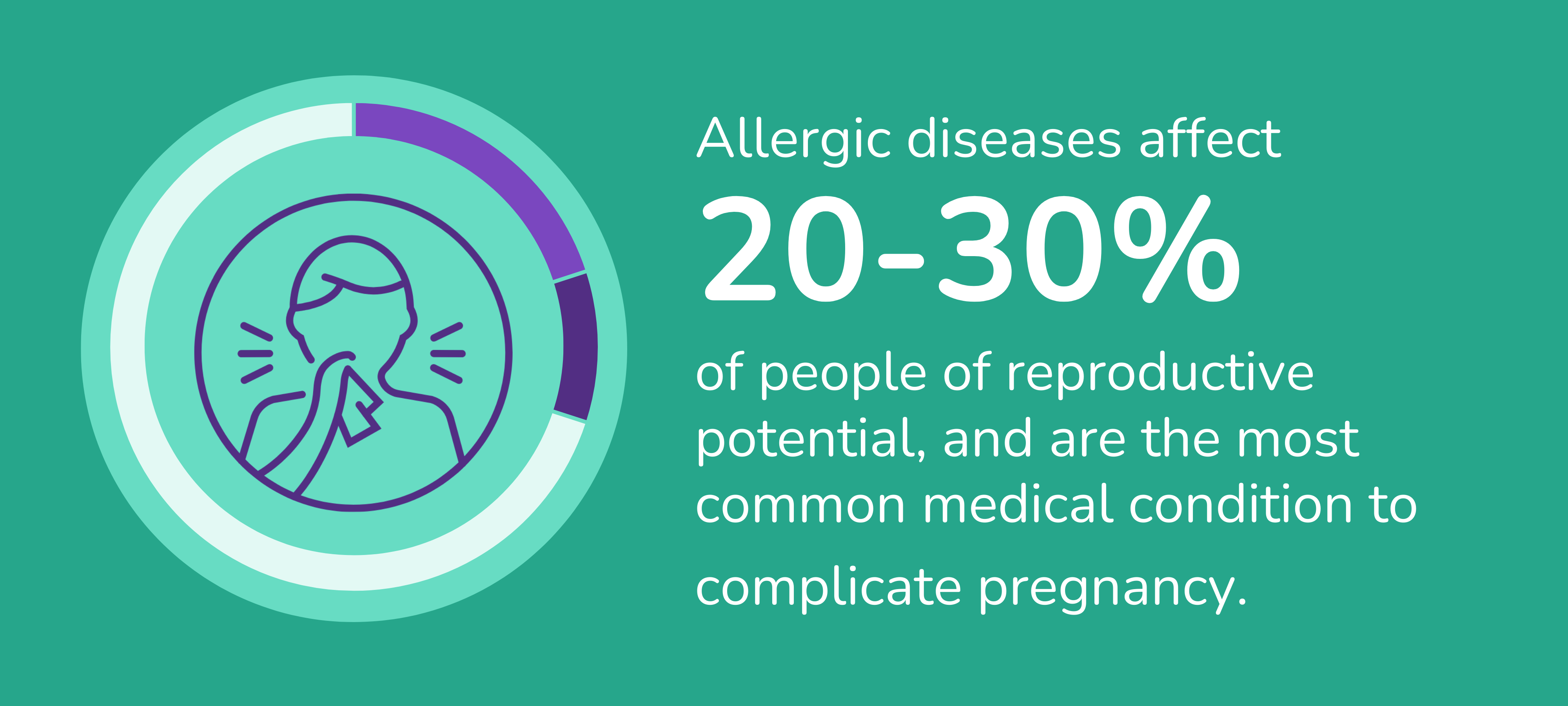
Ah, spring, summer, and fall – beautiful seasons to be enjoyed in much of the world, but they can also be miserable if you are an allergy sufferer! Unfortunately, pollens, mold spores, and even the dander from our family fur babies can bring on pesky symptoms like sneezing, runny nose, and red, itchy eyes. Luckily, there are a plethora of prescription and over-the-counter medication options to treat allergy symptoms. But what should you do if you are pregnant or breastfeeding?

An allergist/immunologist can tell you which asthma and allergy medications are the safest and most effective to take throughout pregnancy. Make an appointment with an allergist soon after you discover you are pregnant to develop or review your personal treatment plan and to give you peace of mind.

American Academy of Allergy, Asthma, and Immunology.

There are non-medication options that may alleviate allergy suffering, such as avoiding the outdoors during certain times of day, wearing a face mask to prevent inhaling allergens, using high quality air filters in your home, rinsing your sinuses with a saline nose spray, or washing Fido on a weekly basis to reduce allergy-causing dander. But when your symptoms don’t respond to these efforts, talk to your healthcare provider about the best treatment options and check out our resources if you’re looking for information about a specific active ingredient.

Last, people with asthma need to be particularly careful as the same allergens that cause allergy symptoms may also cause asthma symptoms – and uncontrolled asthma has been linked with poorer pregnancy outcomes, like preterm birth (delivery before you reach 37 weeks), pregnancy loss, and low birth weight. See our Asthma page for more information and resources.

Reference: Gilbert et al. Drug Saf. 2005;28(8):707-19.

Please see our library of resources below on allergies during pregnancy and breastfeeding.

External Resources

Partners


COVID-19

Preparing to hit the road, cruise, or fly the friendly skies when you’re pregnant or breastfeeding

Disclaimer: This page houses important information and resources pertaining to travel-related illnesses and vaccines during pregnancy and while breastfeeding, including links to our evidence-based Fact Sheets. However, the resources here should not replace the care and advice of a medical professional.

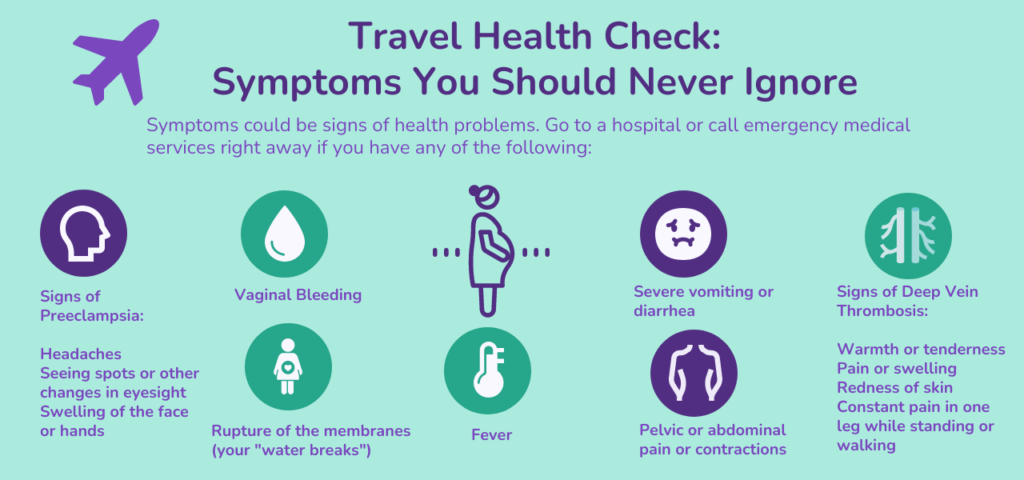
Maybe you and your significant other are planning a baby moon or a family vacation. Or maybe work is sending you to far-flung regions for a meeting. Regardless of the reason for your upcoming travel, if you are pregnant or breastfeeding, there are certain travel-related illness that you need to be aware of – and in some cases, there are certain immunizations that you should discuss with your healthcare provider before you head out of town.

“Pregnant travelers can generally travel safely with appropriate preparation. But they should avoid some destinations, including those with risk of Zika and malaria.”

— Centers for Disease Control and Prevention

Travel-related illnesses can vary widely depending on where you’re headed. Higher elevations may cause altitude sickness. Contaminated food or drink may cause traveler’s diarrhea, or even more serious food-borne illness. Insect bites in various parts of the world could expose you to things like malaria, Zika virus, dengue, Lyme disease, chikungunya, or oropouche virus. And don’t forget all of the infectious diseases you can be exposed to as you encounter others throughout your travel, such as seasonal influenza, the common cold, and the ever-present Covid-19, as well as newer viral outbreaks like Mpox and the Marburg virus.

So what’s a pregnant or breastfeeding traveler to do? The best advice we can give you is to talk to your healthcare provider about where you’re going. They’ll be able to look up any travel-related health alerts for your destination and, based on the time of the year that you’ll be traveling and your medical history, they can advise you on the best ways to keep you and your baby safe. Give them as much advance notice as you can; they may recommend one or more immunizations to prevent certain illnesses, and you’ll want to make sure there is adequate time before you travel to receive all doses of the vaccine and for the vaccine and for the vaccine to become maximally effective.

Reference: American College of Obstetricians & Gynecologists 

If you’re breastfeeding, your healthcare provider and your baby’s pediatrician can also advise you on how to safely breastfeed while traveling. If you’re going to be traveling without your baby and need to think about how to pump, store, and transport your milk, the Centers for Disease Control and Prevention has some great tips.

Our experts are always available to answer questions you may have about specific travel-related exposures and how they could affect you pregnancy or your breastfed baby. You can also visit our library of resources below.

External Resources

Partners


COVID-19

This sheet is about having a COVID-19 infection in pregnancy and while breastfeeding. This information is based on available published research studies. It should not take the place of medical care and advice from your healthcare provider.

What is COVID-19?

COVID-19 (Coronavirus Disease 2019) is an illness caused by a virus called SARS-CoV-2. The virus spreads mostly by close person-to-person contact. When an infected person breathes, talks, coughs, or sneezes, the virus can spread to others who are nearby.

The most common symptoms of COVID-19 include fever, cough, and shortness of breath. Other symptoms might include chills, muscle or body aches, headache, sore throat, new loss of taste or smell, runny nose, nausea or vomiting, and diarrhea. Some people have only mild symptoms or no symptoms at all (are asymptomatic), but they could still spread the virus to other people.

Women who are pregnant or were recently pregnant have a higher chance of getting very sick if they get COVID-19. Studies have shown higher chances of hospitalization, admission to the intensive care unit (ICU), and death from COVID-19 during pregnancy.

How can I help prevent getting COVID-19?

Staying up to date with recommended COVID-19 vaccines is the best way to protect yourself and others from COVID-19. MotherToBaby has fact sheets about COVID-19 vaccines at https://mothertobaby.org/fact-sheets/covid-19-mrna/ and https://mothertobaby.org/fact-sheets/covid-19-protein-subunit-vaccine/.

Other ways to help protect yourself and others include wearing a mask in public, avoiding large indoor gatherings, avoiding contact with people who might have COVID-19, and washing your hands often. The Centers for Disease Control and Prevention (CDC) has information about prevention at https://www.cdc.gov/covid/prevention/index.html.

What should I do if I get sick with COVID-19 while I am pregnant?

If you are pregnant and have symptoms of COVID-19 or test positive for COVID-19, be sure to tell your healthcare team. Your healthcare provider might recommend an antiviral medication to help lower the chance of getting very sick. Antiviral medications work best if taken early in the course of the illness. MotherToBaby has a fact sheet about one kind of antiviral medication used for COVID-19 at https://mothertobaby.org/fact-sheets/nirmatrelvir-ritonavir-paxlovid/. You can also talk to your healthcare provider about the best way to treat symptoms such as fever (see the section of this fact sheet about birth defects and fever for more information). While you are sick, stay home and avoid close contact with others to help prevent passing the virus to other people.

I have COVID-19. Can it make it harder for me to get pregnant?

It is not known if having COVID-19 can make it harder to get pregnant.

Does having COVID-19 increase the chance of miscarriage?

Miscarriage is common and can occur in any pregnancy for many different reasons. Studies on COVID-19 infections in pregnancy have not suggested a higher chance of miscarriage compared to the general population.

Does having COVID-19 increase the chance of birth defects?

Birth defects can happen in any pregnancy for different reasons. Out of all babies born each year, about 3 out of 100 (3%) will have a birth defect. We look at research studies to try to understand if an exposure, like COVID-19, might increase the chance of birth defects in a pregnancy. Some studies have observed higher rates of some kinds of birth defects in infants born to women with a COVID-19 infection in pregnancy. Other studies have not found a higher chance of birth defects. Overall, the research does not find a clear link between COVID-19 and any specific birth defect or pattern of birth defects.

Fever is a possible symptom of COVID-19. A high fever in the first trimester can increase the chance of certain birth defects. Acetaminophen has been recommended to reduce fever in pregnancy. If you get sick with COVID-19 or any other illness and develop a fever, talk with your healthcare provider to confirm if taking acetaminophen is okay for you. For more information about fever and pregnancy, see the MotherToBaby fact sheet about hyperthermia at https://mothertobaby.org/fact-sheets/hyperthermia-pregnancy/.

Does having COVID-19 increase the chance of other pregnancy related problems?

Studies have shown that women who are pregnant or recently pregnant and get COVID-19 have higher chances of becoming very sick, being admitted to intensive care, and needing to be put on a ventilator (machine that helps you breathe). Some studies have also reported a higher chance of death. The chance of these outcomes can be higher among women who also have other underlying health conditions, such as obesity, pre-pregnancy diabetes, and/or chronic hypertension. Just as in the general population, pregnant women who are up to date on COVID-19 vaccines are less likely to get infected, and less likely to get severely ill, be hospitalized, or die from a COVID-19 infection.

Studies have reported higher chances of pregnancy-related problems following COVID-19 infection in pregnancy, including preterm delivery (birth before 37 weeks of pregnancy), stillbirth, preeclampsia (dangerously high blood pressure), blood clots, and the need for an emergency c-section. Some studies suggest the virus can infect the placenta (a condition called placentitis) or cause changes to the placenta, which can lead to problems with how well the placenta works to support the pregnancy and fetal growth and development. Having COVID-19 might also make it harder to manage other health conditions that are common in pregnancy, such as other infections or high blood pressure. Women who are up to date with COVID-19 vaccines in pregnancy are less likely to experience pregnancy complications from a COVID-19 infection than women who are not up to date.

Can the virus that causes COVID-19 pass to the fetus during pregnancy or at the time of delivery?

The virus can pass from a woman who is pregnant to the fetus during pregnancy, but this appears to be rare. The chance of the baby getting the virus during or soon after birth might be higher if the pregnant woman has an active infection at the time of delivery. Most infants who test positive soon after delivery have only mild or no symptoms and fully recover from the virus. Severe illness might be more likely in infants who are born preterm or have other health problems.

Does having COVID-19 in pregnancy affect future learning or behavior for the child?

Studies have looked at the development of children born to women who had COVID-19 in pregnancy. A few studies have reported a higher chance of issues related to motor (movement) skills and speech and language in children up to 2 ½ years of age. Other studies have found no differences in development, learning, or behavior up to 2 years of age. Since many factors can affect children’s development (such as their home and school environment and other possible exposures in pregnancy), it is not clear if having COVID-19 in pregnancy affects long-term development in children.

Breastfeeding while having COVID-19:

The virus that causes COVID-19 has not been found to pass into breast milk. There have not been any reported cases of infants getting COVID-19 through breast milk. Women are often encouraged to continue breastfeeding or providing breast milk even when they are sick with a virus, such as the flu.

Women who are breastfeeding while sick with COVID-19 can help prevent passing the virus to their babies by washing their hands frequently and wearing a mask while nursing. They can also consider pumping milk for someone else to feed their baby while they recover. CDC has information on COVID-19 and breastfeeding at https://www.cdc.gov/breastfeeding-special-circumstances/hcp/illnesses-conditions/covid-19.html. Be sure to talk to your healthcare provider about all your breastfeeding questions.

If a man has COVID-19, could it affect fertility or increase the chance of birth defects?

A COVID-19 infection can cause a temporary decrease in the number and motility (movement) of sperm in some men. These changes in sperm could affect fertility (ability to get a woman pregnant). In most cases, the sperm are expected to return to normal after full recovery from the infection. In general, exposures that men have are unlikely to increase risks to a pregnancy. For more information, please see the MotherToBaby fact sheet on Paternal Exposures at https://mothertobaby.org/fact-sheets/paternal-exposures-pregnancy/.

Please click here for references.


COVID-19

This sheet is about exposure to mRNA COVID-19 vaccines in pregnancy and while breastfeeding. This information is based on published research studies. It should not take the place of medical care and advice from your healthcare provider. 

What is COVID-19?

COVID-19 (Coronavirus Disease 2019) is an illness caused by a virus (called SARS-CoV-2). The virus spreads mostly by close person-to-person contact. When an infected person breathes, talks, coughs, or sneezes, the virus can spread to others who are nearby.  

Having a COVID-19 infection while pregnant increases the chance of severe illness and pregnancy complications. Studies have shown that women who are up to date with COVID-19 vaccines in pregnancy are less likely to get very sick or have pregnancy complications from a COVID-19 infection than those who are not up to date. For more information on COVID-19, please see the MotherToBaby fact sheet at https://mothertobaby.org/fact-sheets/covid-19/. 

What is an mRNA COVID-19 vaccine? 

A messenger RNA (mRNA) COVID-19 vaccine gives the cells instructions to help the body make specific proteins. These proteins are needed to make antibodies to protect against the COVID-19 virus. The mRNA COVID-19 vaccines do not contain live virus, and do not cause COVID-19. The mRNA COVID-19 vaccines approved for use in the United States are made by Moderna (Spikevax®, mNEXSPIKE®) and Pfizer-BioNTech (Comirnaty®). While no vaccine is 100% effective at preventing COVID-19, an mRNA vaccine can greatly lower the chance of getting very sick from the virus. 

Medical organizations including the American College of Nurse Midwives (ACNM), the American College of Obstetricians and Gynecologists (ACOG), and the Society for Maternal-Fetal Medicine (SMFM) recommend that women who are planning a pregnancy, pregnant, or recently pregnant stay up to date with the latest COVID-19 vaccine. An mRNA COVID-19 vaccine can be given at any time in pregnancy.  

For more information on the protein subunit COVID-19 vaccine, please see the MotherToBaby fact sheet at https://mothertobaby.org/fact-sheets/covid-19-protein-subunit-vaccine/ 

Does getting an mRNA COVID-19 vaccine make it harder to get pregnant?

Some women have reported changes in their menstrual cycle (period) after getting an mRNA COVID-19 vaccine, such as having a slightly longer or heavier period or starting their next period sooner than expected. Studies have found that if these changes happen, they are temporary and do not affect fertility (the ability to get pregnant).  

I just got a COVID-19 mRNA vaccine. How long do I need to wait before I get pregnant?

There is no recommendation to wait before trying to get pregnant after getting an mRNA COVID-19 vaccine. 

Does getting an mRNA COVID-19 vaccine increase the chance of miscarriage?

Miscarriage is common and can occur in any pregnancy for many different reasons. Multiple studies have found that getting an mRNA COVID-19 vaccine during pregnancy does not increase the chance of miscarriage.  

Does getting an mRNA COVID-19 vaccine increase the chance of birth defects?

Birth defects can happen in any pregnancy for different reasons. Out of all babies born every year, about 3 out of 100 (3%) will have a birth defect. We look at research studies to try to understand if an exposure, like an mRNA COVID-19 vaccine, might increase the chance of birth defects in pregnancy. Studies have found no increased chance of birth defects when an mRNA COVID-19 vaccine is given during the first trimester of pregnancy (when the many of the fetal organs are developing).  

Fever is a possible side effect of mRNA COVID-19 vaccines. A high fever in the first trimester can increase the chance of certain birth defects. Acetaminophen is usually recommended to reduce fever during pregnancy. For more information about fever and pregnancy, see the MotherToBaby fact sheet about fever/hyperthermia at https://mothertobaby.org/fact-sheets/hyperthermia-pregnancy/ 

Does getting an mRNA COVID-19 vaccine in pregnancy increase the chance of other pregnancy-related problems?

Studies have found no increased chance of pregnancy-related problems such as stillbirth, preterm delivery (birth before week 37) or low birth weight (weighing less than 5 pounds, 8 ounces [2500 grams] at birth when an mRNA COVID-19 vaccine is given any time during pregnancy. Studies have found no increased chance of newborn complications (low Apgar scores [a simple test to check a baby’s health shortly after birth]), stay in the neonatal intensive care unit (NICU), or death of newborns when an mRNA COVID-19 vaccine is given any time during pregnancy.  

COVID-19 virus can increase the chance of pregnancy complications, including preterm delivery. Some studies show that the chance for pregnancy complications is lower in vaccinated women compared to unvaccinated women. Studies also show that receiving an mRNA COVID-19 vaccine in pregnancy does not increase the chances of developing gestational diabetes or high blood pressure in pregnancy. 

Does getting an mRNA COVID-19 vaccine in pregnancy affect future behavior or learning for the child?

Based on what is known about how vaccines work in the body, getting an mRNA COVID-19 vaccine is not expected to increase the chances of behavior or learning problems for the child. A study of over 100 infants exposed to mRNA COVID-19 vaccines during pregnancy found no increased chance of developmental delays at 12 months of age.  

Does getting an mRNA COVID-19 vaccine during pregnancy protect the baby from the virus after delivery?

When a woman who is pregnant gets an mRNA COVID-19 vaccine, her body makes antibodies that can pass to the fetus. Research shows that more antibodies are passed through vaccination than through infection. Babies born to vaccinated mothers are better protected from COVID-19 and are less likely to be hospitalized with it after birth. 

Breastfeeding and mRNA COVID-19 vaccines:

Small studies have found that mRNA from a COVID-19 vaccine is unlikely to enter the breast milk. If any small amounts of vaccine ingredients did enter the breast milk, they would most likely be destroyed in the baby’s stomach. About 10% of women have reported changes in milk supply after getting a COVID-19 mRNA vaccine, but their supply returned to normal within a day or two. There is no recommendation to stop or delay breastfeeding or discard breast milk after getting an mRNA COVID-19 vaccine. 

Antibodies against the COVID-19 virus have been found in the breast milk of women who have been vaccinated with mRNA vaccines. Be sure to talk to your healthcare provider about all your breastfeeding questions.  

If a man gets an mRNA COVID-19 vaccine, could it affect his fertility or increase the chance of birth defects?  

Two studies found no differences in the amount of sperm made before and after getting an mRNA COVID-19 vaccine. Other studies of over 200 men found no difference in sperm count and motility (movement) before and after mRNA COVID-19 vaccination or compared to unvaccinated men. In general, exposures that fathers or sperm donors have are unlikely to increase risks to a pregnancy. For more information, please see the MotherToBaby fact sheet Paternal Exposures at https://mothertobaby.org/fact-sheets/paternal-exposures-pregnancy/. 

Please click here for references.