World Birth Defects Day March 3 Free Events

World Birth Defects Day is March 3 and MotherToBaby is a proud partner in two of the events scheduled for that day – the Facebook Live Event at 1p ET about the COVID-19 vaccine in pregnancy and breastfeeding featuring our own Sonja Rasmussen, MD, Lorrie Harris-Sagaribay, MPH, Kirstie Perrotta, MPH and our Past President Robert Felix. In addition, a #WorldBDDay Twitter chat is scheduled and, alongside the non-profit Family Voices, our Al Romeo, RN, PhD, will present a free webinar on lead exposure at 2p ET. We hope you’ll mark your calendar for all of the events scheduled for March 3 and support World Birth Defects Day by taking part! Here is the full rundown of the activities outlined by our partners at the International Clearinghouse on Birth Defects Surveillance and Research:

LIVE EVENTS on March 3rd

Time Event How to Participate
8 AM EST / 2PM CET WHO WBDD webinar via Zoom: Saving lives of babies with birth defects and improving their quality of life 1)      Registration details will be made available soon.
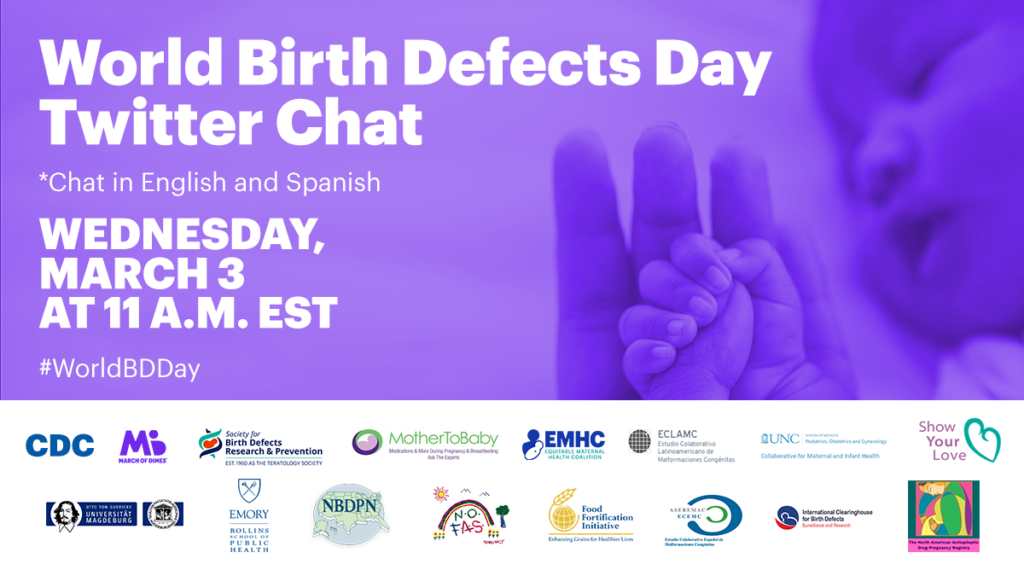
11 AM EST/8 AM PST #WorldBDDay Twitter Chat:Many birth defects. One voice 1)      Promote event with sample tweets and promotional graphic-EngSpan
2)      Prepare responses and participate live or schedule tweets (script)
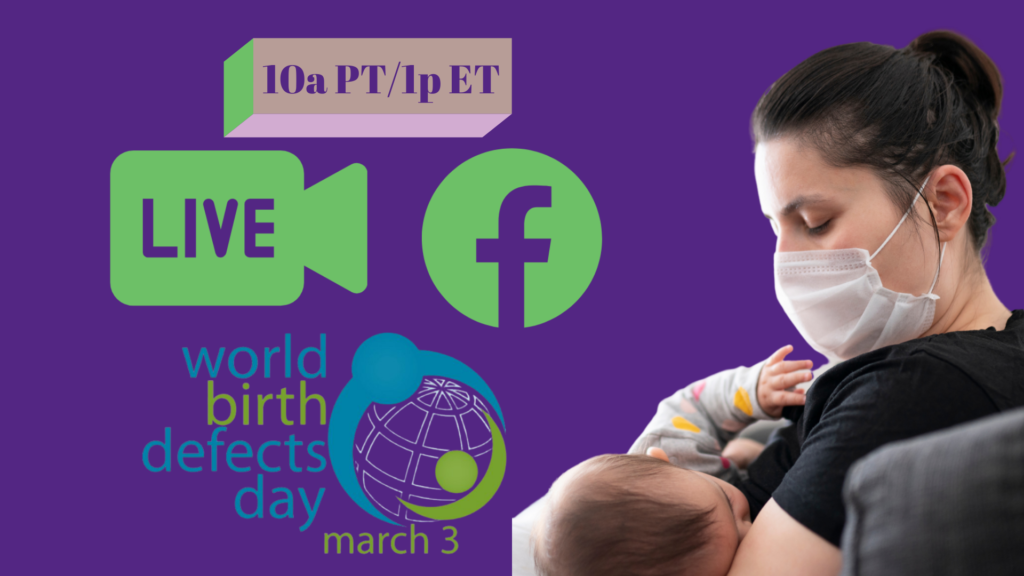
1PM EST/10AM PST    Facebook Live Event: COVID-19 Vaccine in Pregnancy & Breastfeeding Follow MotherToBaby on March 3 to take part and ask questions! https://fb.me/e/A2mTOEya
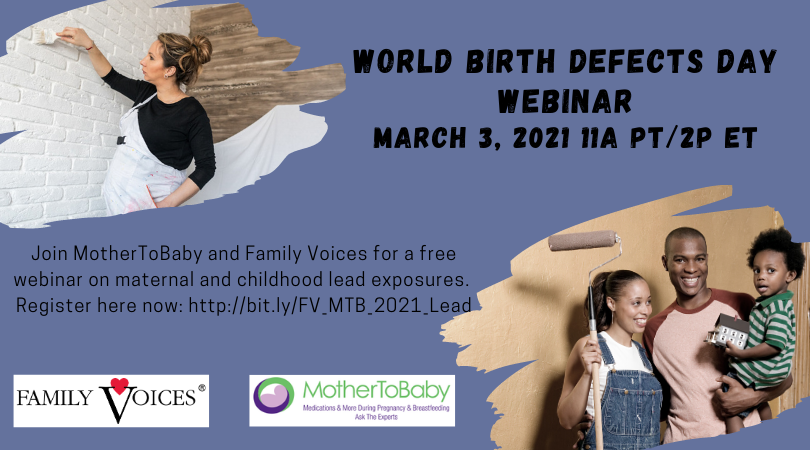
2PM EST/11AM PST Free webinar on lead exposure in pregnancy Register at: http://bit.ly/FV_MTB_2021_Lead

Event Descriptions

WHO World Birth Defects Day Webinar via Zoom

8:00AM EST / 2:00PM CET

All children have the right to a healthy start in life. Babies born with birth defects are particularly at risk of death and lifelong disability. Many birth defects can be prevented and treated. But, when a baby is born with a birth defect, receiving the right care as soon as possible gives them the best chance to life and helps them reach their maximum potential. There is a need for strengthening healthcare services to meet the needs of babies born with a birth defect, in particular in low-and-middle income countries of Asia and Africa, where the health care systems are the weakest and the burden of birth defects is the highest. To promote quality of care and universal health coverage for children with birth defects, we must bring to light the human rights perspective and the need for advocacy.

With this webinar, we would like to commemorate World Birth Defects Day to raise awareness about #ManyBirthdefects1Voice. Registration details will be shared soon.

#WORLDBDDAY Global Twitter Chat

On March 3rd at 11:00AM EST, 5:00PM CET, join us during the Twitter Chat as one voice to raise awareness about birth defects. To prepare, get the bilingual script and questions here.  Even if you cannot join us live, please schedule a tweet using #WorldBDDay at this time.
Facebook Live Event: COVID-19 Vaccine in Pregnancy & Breastfeeding

The event panel includes moderator Robert Felix, MD; and speakers Sonja Rasmussen, MD, Lorrie Harris-Sagaribay, MPH, and Kirstie Perrotta, MPH.

Follow MotherToBaby at https://fb.me/e/A2mTOEya
Lead Exposure Webinar

As parents or when planning to start a family, it’s important to know and understand how to achieve the best care and health for children, but where do you begin? Right at home! Houses, especially older ones, can be a source of lead exposure. Although lead-based paint hasn’t been sold since the late 70s, many older homes still have it. Learn about the available resources supporting families who are exposed to lead.  On World Birth Defects Day March 3, join the free webinar presented by MotherToBaby and Family Voices on the impact of lead exposures during pregnancy, infancy and in childhood. Register here now. 

World Birth Defects Day March 3 Free Events

Results from the Vedolizumab MotherToBaby Pregnancy Study

What the Study Found About Vedolizumab Use During Pregnancy.

COVID-19, Flu & RSV Vaccines

Have questions about protecting yourself from COVID-19, the flu, and RSV during pregnancy in this season? Our information specialists are here to help women and their providers navigate cold and flu season.

Visit Our Exposure Hubs

Exposures may impact your developing baby. Browse our most popular topics on the effects of medications, maternal health, substances, and other exposures. Our Exposure Resource Hubs will help you know if it is a concern for your baby.

Access Our Fact Sheets

Our quick and easy-to-read Fact Sheets answer frequently asked questions about 300+ maternal health conditions, medications, and other exposures during pregnancy and breastfeeding.

Discover Our Pregnancy Studies

Our observational studies examine the effects of medications and health conditions during pregnancy. Moms can help improve product safety information and shape the future of healthcare. The information we collect will help women and their healthcare providers make informed treatment decisions during pregnancy. With greater knowledge of the benefits and risks of medications, our community can thrive. Join the movement of moms helping other moms — discover how you can help today!

COVID-19 Updates

Our MotherToBaby experts have issued updates to our educational resources on COVID-19 during pregnancy and breastfeeding. Quickly find the essential information that you need.

What Can MotherToBaby Offer You?

Baby Blog News & Updates

Pregnancy Due Date Calculator

Find out your estimated due date by entering the first day of your last menstrual period and your average cycle length. Did You Know? Only 1 in 20 babies are born on their actual due date. A normal pregnancy often lasts between 38 to 42 weeks, which keeps most parents guessing right up until labor starts!


World Birth Defects Day March 3 Free Events

You may have heard that the Centers for Disease Control and Prevention (CDC) recently recommended a new vaccine for use in the third trimester of pregnancy. Known as AbrysvoTM, the vaccine helps protect newborns against severe cases of respiratory syncytial virus (RSV). RSV is the leading cause of infant hospitalization in the United States, with anywhere from 58,000-80,000 hospitalizations occurring each year among children younger than 5. Even more upsetting is that 100-300 children under age 5 die from RSV every year. With these statistics in mind, this new RSV vaccine is exciting news for infants and their families.

Ava, 24 weeks along with her first pregnancy, contacted the MotherToBaby live chat service early one morning with some questions about the new RSV vaccine. First, she wanted to understand how vaccinating a pregnant woman could provide protection for a baby. As a Teratogen Information Specialist, I was happy to answer this question for Ava. I started by explaining that when a person gets vaccinated, their body makes antibodies. These antibodies protect the body against the actual infection if a person is exposed to the virus or bacteria later in life. During pregnancy, the antibodies that a pregnant woman makes after being vaccinated can cross the placenta and pass to the developing baby, providing the newborn with some protection against the infection during the first few months of life.

I went on to explain that although the RSV vaccine is new, the idea of getting a vaccine during pregnancy to protect the baby (called “passive immunity”) has been around for some time. The Tdap vaccine, which protects against tetanus, diphtheria, and pertussis (whooping cough), has been recommended for use in pregnancy since 2011. Whooping cough is another infection that can be very serious for newborns, so having protection from birth as a result of maternal vaccination is ideal. The flu shot and COVID-19 vaccine can also pass antibodies to the developing baby during pregnancy. This is great news since newborns can’t get their own flu or COVID-19 shots until 6 months of age and need to rely on passive immunity in the meantime.

Next, Ava had a question about when she should get the RSV vaccine. She had plans to get her flu shot and Tdap vaccine at her next prenatal visit at 28 weeks. She wanted to know if she could get the RSV vaccine at the same time. Although these three vaccines (along with the updated COVID-19 vaccine) can all be given on the same day, the RSV vaccine should be given during a specific timeframe in order to pass as many antibodies as possible to the baby. Experts recommend that the RSV shot be given between 32 and 36 weeks of pregnancy. This allows enough time for RSV antibodies to pass to the baby before delivery.

With this recommendation in mind, Ava decided that her prenatal appointment at 32 weeks would be the perfect time to get the RSV vaccine. She had seen firsthand just how serious RSV can be when her 1-month-old niece was hospitalized with RSV last winter, so she didn’t want to take any chances with forgetting to get the RSV vaccine during her pregnancy.

Before we ended the chat, I mentioned to Ava that there is also a shot called nirsevimab (BeyfortusTM) that can be given directly to babies under 8 months of age. Also known as a monoclonal antibody, this shot is another way to protect infants against severe RSV disease. Most babies do not need nirsevimab if their mom received the RSV vaccine during pregnancy. I suggested Ava talk with her healthcare provider about the pros and cons of both options.

Although having to remember to get another vaccine in pregnancy can feel like just one more thing a pregnant woman needs to add to their never-ending to do list, the decision to vaccinate can prevent serious complications from RSV, and possibly even save the baby’s life. Here at MotherToBaby we are happy to go over the current recommendations for vaccines in pregnancy and answer any questions that you may have. Don’t hesitate to call, chat, text, or email with any questions about the RSV vaccine or other exposures during pregnancy. You can also check out our newest fact sheet about this vaccine here https://mothertobaby.org/fact-sheets/respiratory-syncytial-virus-rsv-vaccine-abrysvo/.  

References:

Centers for Disease Control and Prevention. 2023. RSV Vaccination for Pregnant Women. Available at: https://www.cdc.gov/vaccines/vpd/rsv/public/pregnancy.html

Centers for Disease Control and Prevention. 2023. RSV Surveillance & Research. Available at: https://www.cdc.gov/rsv/research/index.html


World Birth Defects Day March 3 Free Events

Did you know that 70% of pregnant women take at least one prescribed medication? And that 90% take any medication during pregnancy? How do you know if it is safe for a pregnant woman to take these medicines?

MotherToBaby Teratogen Information Specialists (TIS) are experts at answering questions about any possible increased risk of taking an over-the-counter (OTC) or prescribed medication, as well as any other exposures! A teratogen is something that can increase the risk for birth defects to the developing baby, and other problems such as a smaller baby or early delivery, when exposure occurs during pregnancy. Special intensive training is required to become a TIS, before we are able to answer the questions of healthcare providers, pregnant and lactating women, their relatives and partners, prospective adoptive parents, and the public. We get calls from people of all ages, teens up to older adults, even prospective grandparents. Teratogen specialists learn how to investigate the question, summarize the data, and then communicate it in a way that is easily understood. Every contact is a little different because each scenario is different, but that makes each day endlessly fascinating for those at MotherToBaby who respond to your inquires.

This work is different than the work of other healthcare providers such as a genetic counselor, midwife or obstetrician – we don’t generally delve into family history, and we don’t make direct recommendations. We try to be reassuring as we give you the most up-to-date exposure information. We consider the potential effects of taking AND not taking a medication, herbal supplement, or OTC drug. There are important considerations when someone is planning a pregnancy, facing a newly discovered pregnancy or an unanticipated pregnancy, dealing with worsening mental or physical health conditions, or with the sudden diagnosis of a birth defect or pregnancy loss.

We answer questions from prospective adoptive parents who may only have 36 hours to decide if they will accept a baby whose biological mom used heroin, methamphetamine or alcohol in pregnancy. We listen to pregnant callers worried about the substantial alcohol they drank or the marijuana they used before getting a positive pregnancy test. We also answer questions from people worried about Zika virus exposure on their honeymoons. And common questions these days involve the COVID-19 virus and the COVID vaccines and booster shoots given at any time in pregnancy or while breastfeeding.                                                  

Teratogen specialists also get calls about the potential consequences of pain medications for those who are pregnant and facing surgery such as a pre-op visit for a herniated disc – and are in excruciating pain. We have numerous conversations with lactating women who were advised to “pump and dump” after dental work or general anesthesia, or CT scans and we are able to discuss why this dated practice is usually unnecessary. Some women call repeatedly due to anxiety or simply because our TIS team has reliable expertise. We also answer breastfeeding questions about COVID-19 and the vaccines, prescriptions and OTC medications, or how much of a drug gets into breastmilk.  And we get questions from pregnant and postpartum individuals who are trying to avoid using inhalers or taking their anxiety/nausea/ADHD medications. We share the research and reassure them that some health conditions need to be treated with medications because it’s best for mom and baby. Some conversations are more sensitive – such as women with a history of multiple miscarriages, IVF, or other high-risk pregnancies who are trying to make only the best choices in a high-stakes stressful time. Sometimes there are tears, and that’s OK.

Often, we talk about the benefits to the individual of taking/using the medication or other product, versus any possible risks to the pregnancy or the baby. We tell them to consider the long view, that as a parent, you will be making “risk vs. benefit” decisions for nearly the next two decades for the child growing inside you. So, it’s important for you to make a choice now that gives you a good quality of life, and also to consider every aspect of the consequences for you both mentally and physically. In addition, it is in the important input of your partner and your healthcare providers.

It is a privilege to be part of the lives of all those who come to MotherToBaby for information. We are sensitive to different cultures, backgrounds, sexual orientation, and gender identification. We have 12 affiliate offices in the US and one in Canada. We provide information by phone, text, email, and live chat, and because we work across three times zones, we can respond quickly!

Affiliate offices are based in universities, academic medical centers, or health departments. Our multi-disciplinary team of Teratogen Information Specialists includes genetic counselors, nurses, doctors, and others with a master’s degree or Master of Public Health specifically. We also provide services in Spanish. We meet at least annually for training plus more often within our own institutions to discuss new publications and developments in the field.

Please spread the word. We welcome your inquiries!


World Birth Defects Day March 3 Free Events

Your Referral Improves Medication Safety Information in Pregnancy

Patient Education

Our easy-to-read Fact Sheets on exposures in pregnancy and breastfeeding are available in English and Spanish.