Travel During Pregnancy: Clinical Guidance for Providers

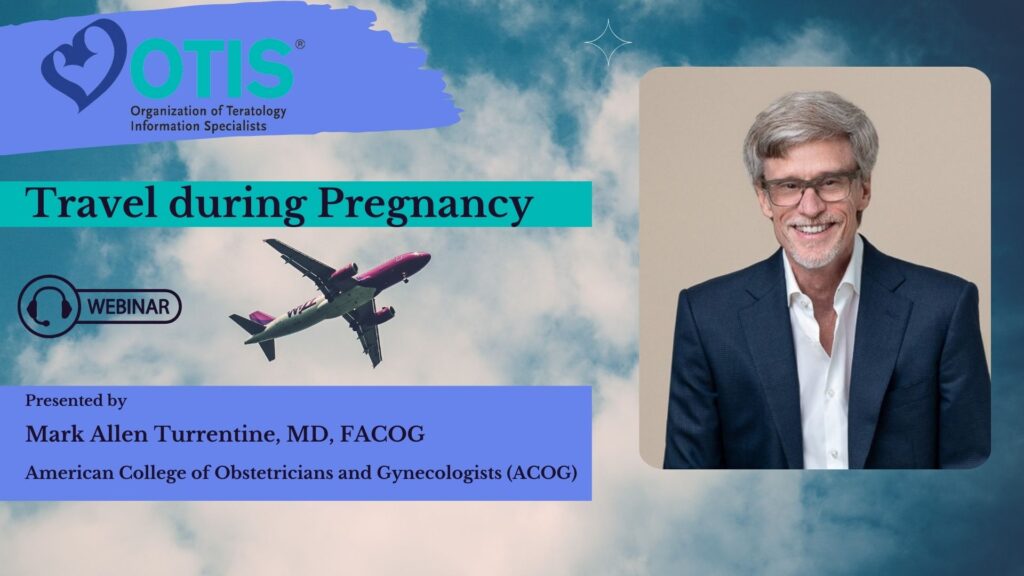
This free webinar features Mark Allen Turrentine, MD, FACOG, a nationally recognized OB-GYN from Texas Children’s Hospital and the Baylor College of Medicine, who also serves as Chair of the American College of Obstetricians and Gynecologists (ACOG) Committee on Practice Bulletins. Dr. Turrentine has authored numerous clinical guidelines, including COVID-19 Vaccination Considerations for Obstetric-Gynecologic Care, and is widely respected for his leadership in advancing evidence-based care for pregnant individuals.

In this provider-focused session, Dr. Turrentine offers clear, practical guidance on how to counsel patients about travel during pregnancy. He reviews current evidence on maternal and fetal health considerations, risks associated with air and long-distance travel, and key factors clinicians should weigh when advising patients. The discussion also highlights special concerns, such as travel during later stages of pregnancy, access to medical care while away from home, and how underlying health conditions may influence recommendations.

Designed specifically for obstetric and gynecologic providers, this webinar equips participants with research-based insights and real-world strategies to support informed decision-making. Attendees will gain confidence in guiding patients through complex travel-related questions, ensuring advice is consistent, up-to-date, and tailored to each individual’s circumstances.


Travel During Pregnancy: Clinical Guidance for Providers

About MotherToBaby California

Confidential information about medications and other exposures in pregnancy and breastfeeding is just one click away – contact our experts by phone, email or chat!

MotherToBaby California is a trusted source of evidence-based information on the safety of medications and other exposures during pregnancy and while breastfeeding. We specialize in answering questions about the safety/risk of exposures, such as medications, vaccines, chemicals, herbal products, substances of abuse, maternal health conditions and much more, during pregnancy or breastfeeding. Our bilingual information service (English and Spanish) is available by chat, phone, and email at no cost to moms, health professional, and the public.

MotherToBaby California specialists answer questions for California residents. Generous funds provided by the Health Resources and Services Administration (HRSA) also allow us to assist residents of Alaska, Hawaii, Idaho, Montana, Nevada, Oregon, Washington, and the US Territories of American Samoa, Guam, the Northern Mariana Islands, Puerto Rico, and the US Virgin Islands. 

MotherToBaby California is housed at the University of California San Diego’s Center for Better Beginnings, located in the Department of Pediatrics. Our goal is to improve the health of all moms and babies!


Contact Us

Ask an Expert

Phone | 866.626.6847 toll free
Chat | Click the Live Chat window in the bottom corner of your screen
Email | Send an email using our online form

Join Our Newsletter | Sign up for our newsletter to stay current on the latest information on exposures during pregnancy and breastfeeding.


Administrative Inquiries
Kelly Kao
858.246.1740
kkao@health.ucsd.edu

Media Requests
858.246.1740
betterbeginnings@health.ucsd.edu

Connect on Social Media


Meet Our Team

Christina D. Chambers, PhD, MPH, Program Director

Christina D. Chambers, PhD, MPH is the Program Director of MotherToBaby California. She is a world-renowned perinatal epidemiologist at the Center for Better Beginnings and a Professor of Pediatrics and Family and Preventive Medicine at the University of California San Diego. Her interests are in the areas of birth defects and other pregnancy outcomes, with a special focus on exposures that can cause birth defects (known as “teratogens”). Dr. Chambers has a very active research program on (1) the prevention of alcohol-related birth defects and (2) the safety in pregnancy of several medications and vaccines.

Kenneth Lyons Jones, MD, Medical Director

Kenneth Lyons Jones, MD, is the Medical Director of MotherToBaby California. He is a pediatrician specializing in the area of genetics and dysmorphology (the study of birth defects). Dr. Jones is Chief of the Division of Dysmorphology and Teratology and Distinguished Professor of Pediatrics at the University of California San Diego. He is well-known in the field of birth defects, and is considered the father of Fetal Alcohol Syndrome (FAS) as he was one of two doctors at the University of Washington who first identified FAS in the United States in 1973. He has authored over 400 publications in scientific journals and is the author of Smith’s Recognizable Patterns of Human Malformation, the esteemed medical reference book on both environmental and genetically caused birth defects.

Kelly Kao, Program Manager

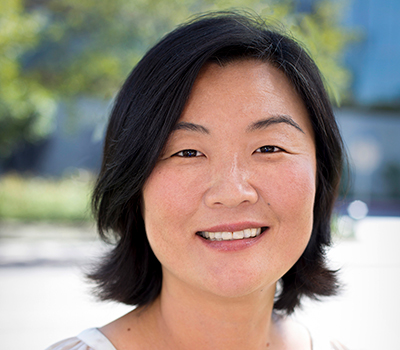
Kelly Kao is the Program Manager at MotherToBaby California. She has been with MotherToBaby California since 1993. She obtained her Bachelor’s degree in Sociology at the University of California, San Diego with minors in Biology and Spanish Literature. She became interested in prenatal environmental exposures that cause birth defects and long-term developmental effects when she took a Sociology of Law course that examined the death penalty case of a man who was diagnosed with Fetal Alcohol Syndrome (FAS). She actively demonstrates her dedication to educating the community about prenatal environmental exposures through her outreach activities, lectures, and research projects.

Sonia Alvarado, Teratogen Information Specialist, Bilingual – Spanish/English

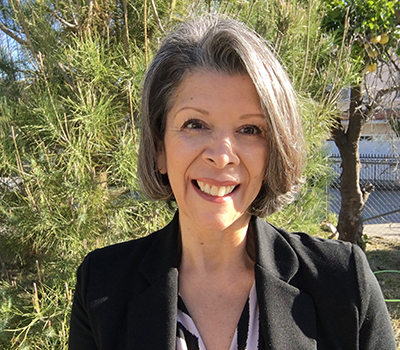
Sonia Alvarado is a bilingual (Spanish/English) information specialist with MotherToBaby California. Along with answering women’s and health professionals’ questions regarding exposures during pregnancy and breastfeeding via phone, email, and live chat, she provides educational talks in the community regarding pregnancy health and supports the activities to promote MotherToBaby’s services. In addition, Sonia has authored several MotherToBaby Blogs and has translated content into Spanish. She has also served in leadership and member roles for several OTIS Committees, including the Education Committee, Abstract Committee and Marketing and Website Committees.

Robert Felix, Senior Teratogen Information Specialist

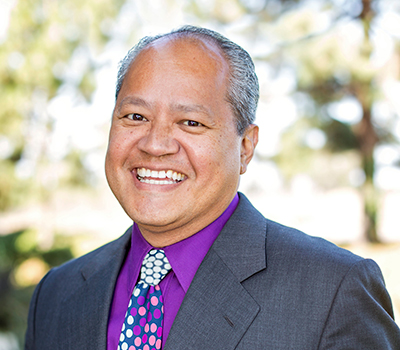
Robert Felix is a senior information specialist based at MotherToBaby California. He also serves as Stakeholder Liaison for the OTIS National Office, where he cultivates new partnerships with healthcare providers/administrators and a number of national programs for under-served populations. He attends and participates at national conferences such as the Association of Maternal & Child Health Programs (AMCHP), National Healthy Start, National WIC, Postpartum Support International, Primary Care Association and March of Dimes to strengthen OTIS’ community engagement. Robert has also served as President, Secretary, and Member-At-Large of OTIS’s Board of Directors.

Angela Messer, Teratogen Information Specialist

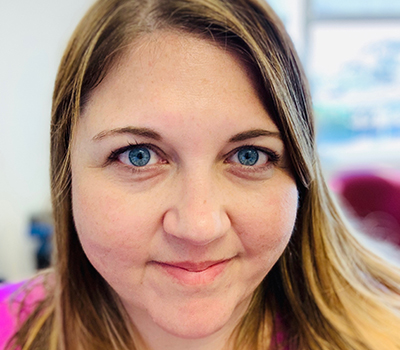
Angela Messer, MA, is an information specialist with MotherToBaby California. She earned her undergraduate degree in psychology from Chapman University and her graduate degree from Kansas State University in academic advising/counseling. Angela has been with MotherToBaby since 2009, with experience in both research and counseling. She appreciates the opportunity to speak with pregnant and breastfeeding women and healthcare professionals regarding exposures and medications, and holds a special interest in stress and anxiety in pregnancy and breastfeeding.

Kirstie Perrotta, Teratogen Information Specialist

Kirstie Perrotta, MPH, is an information specialist at MotherToBaby California, where she provides counseling by phone and chat. She received her Masters in Public Health (MPH) from the University of San Francisco, and has worked in the field of reproductive health for over 8 years. Kirstie currently serves as a member of the MotherToBaby Zika Task Force and also provides leadership around our COVID-19 response. Her interests include vaccines, infectious disease, and mental health during pregnancy.


Get Patient Education Materials & Provider Resources

We offer free patient education materials and provider resources about our information service and pregnancy studies. Request our printed tools for more informed decisions about exposures during pregnancy and breastfeeding.


Education & Training Opportunities

MotherToBaby California specialists are available to give educational talks to the general public and to employees of health service organizations, WIC clinics, or other programs on the topic of exposures during pregnancy and breastfeeding or on MotherToBaby’s services and research studies.

We also provides opportunities for volunteers and internships for undergraduate and graduate students. These include anyone interested in working in pregnancy or a related health sciences field including those studying pharmacology, public health, social work, genetic counseling, and more.

To learn more about training or education opportunities, please contact Kelly Kao at kkao@health.ucsd.edu.


Connect with Our Local Partners

211 San Diego

211 San Diego’s mission is to serve as a nexus to bring the community (organizations) together to help people efficiently access appropriate services, and provide vital data and trend information for proactive community planning.

Visit Website

American Academy of Pediatrics California Chapter 3

The American Academy of Pediatrics is an international organization with headquarters in Elk Grove Village, Illinois. In the United States there are 10 geographical areas designated as districts, which represent one or more states. California’s Chapter 3 includes Imperial and San Diego counties.

Visit Website

California Black Infant Health Program

The Black Infant Health Program uses a group-based approach with complementary client-centered one-on-one case management to help women develop life skills, learn strategies for reducing stress, and build social support. BIH clients participate in weekly group sessions (10 prenatal and 10 postpartum) designed to help them access their own strengths and set health-promoting goals for themselves and their babies. The BIH Program is located in 15 local health jurisdictions where more than three quarters of African-American live births occur in California.

Visit Website

California WIC Association

California WIC Association provides nutrition, free supplemental foods, and nutrition information to low-income women, infants, and children up to the age of 5.

Visit Website

Comprehensive Perinatal Services Program

The Comprehensive Perinatal Services Program (CPSP) provides a wide range of culturally competent services to Medi-Cal pregnant women, from conception through 60 days postpartum. In addition to standard obstetric services, women receive enhanced services in the areas of nutrition, psychosocial and health education.

Visit Website

Live Well San Diego

Live Well San Diego involves partner organizations in all sectors – from government, to business, to schools, to faith-based and community organizations – through a shared purpose.  Working together allows for planning and implementation of innovative and creative projects to bring the Live Well San Diego’s vision of a region that is Building Better Health, Living Safely and Thriving to life.

Visit Website

March of Dimes

The mission of the March of Dimes is to improve the health of babies by preventing birth defects, premature birth and infant mortality. The March of Dimes provides information and resources on pregnancy and infant health to pregnant women and perinatal health professionals. The March of Dimes supports research aimed at preventing birth defects, premature birth and infant mortality.

Visit Website

March of Dimes California Chamber Program Services Committee

The State Program Services Committee (SPSC) leads the development and implementation of the March of Dimes California Chapter’s strategic program plan for our mission activities. The SPSC also identifies perinatal needs and evidence-based interventions to improve the health outcomes for moms and babies in California. The SPSC maximizes the impact and visibility of the chapter in our communities, participates in the review and approval of March of Dimes community grants, and assists in monitoring and allocating the program budget.

Visit Website

Mother’s Nutritional Center

Mother’s Nutritional Center (MNC) specializes in eWIC shopping geared towards a fast & easy grocery shopping experience. If you’re new to eWIC, it can be confusing & frustrating. They do most of the shopping for you and help you get what you need behind the counter, which limits mistakes in locating & picking the approved products. MNC is located throughout Southern California and is committed to bringing families healthy & nutritious food. 

Visit Website

Planned Parenthood

Planned Parenthood provides clinical services, sexual health education, advocacy, information, and resources to millions of women, men, and young people worldwide.

Visit Website

TrueCare

TrueCare is a non-profit community health center that offers adult medicine, pediatrics, behavioral health, chiropractic, dental, WIC, and application assistance services. Our mission is to improve the health status of our diverse communities by providing quality healthcare that is comprehensive, affordable, and culturally sensitive. TrueCare also host bi-monthly drive-thru food distributions in Oceanside and San Marcos. No registration is required for the food distributions and it is free to the community. For more information on all services offered, including food resources, please call (760) 736 – 6767 or visit truecare.org.

Visit Website

Ask Our Experts

Call, text, chat, or email for a free personalized risk assessment on exposures in pregnancy and breastfeeding.


Travel During Pregnancy: Clinical Guidance for Providers

In this episode of the MotherToBaby Podcast, host and genetic counselor Chris Stallman welcomes Dr. Emily Caffrey, a certified health physicist at the Health Physics Society and the University of Alabama at Birmingham. Together, they dive into one of the most frequently asked topics: how radiation exposure may impact breastfeeding.

Dr. Caffrey explains the difference between ionizing and non-ionizing radiation, details how imaging procedures like X-rays, CT scans, and MRIs interact with the body, and addresses concerns around contrast agents and radioactive tracers. The episode also covers what breastfeeding women working around radiation should know, including practical safety tips and case-by-case considerations.

Key Takeaways:

  • Diagnostic imaging procedures do not make breast milk radioactive or require stopping breastfeeding
  • Some radioactive tracers or therapeutic treatments may require temporary or permanent changes to breastfeeding plans, depending on the specific agent and dose
  • Always inform your healthcare provider that you’re breastfeeding and ask questions about any upcoming procedures
  • Expert help is available—don’t rely on internet searches alone

Resources mentioned in this episode:

🎧 Subscribe to the podcast and never miss an episode!


Travel During Pregnancy: Clinical Guidance for Providers

By Al Romeo, RN, PhD, MotherToBaby Utah

If you are pregnant or breastfeeding, you might wonder if it is safe for you to go to the nail salon. After all, there are chemicals in nail treatments, and (let’s face it) nail salons often smell like they could be toxic! But are they?

What’s in nail treatments? And could they be harmful if I’m pregnant or nursing?
Common nail products include nail polish and types of acrylic nails including gels, liquids, and powders. There are a few ingredients that are commonly found in those products, including:

  • Dibutyl phthalate (DBP)
  • Toluene
  • Formaldehyde
  • Camphor
  • Paraffin
  • Methacrylic
  • Acetone
  • Acetonitrile

The names of those ingredients may sound scary, but let’s look at each of them.

Dibutyl phthalate (DBP) is used in nail polish to make the polish more flexible and less likely to crack or break. Small amounts have been found in humans. Those small amounts are not expected to cause increased chances of problems for the pregnancy or breastfed baby based on the available research.

Toluene is a solvent that is used to thin nail polish so it goes smooth after being painted on with a brush. Solvents are known to be harmful to the nervous system. Sniffing or huffing spray paint, glue, and gasoline can cause dizziness and fainting in addition to damaging brain cells. But when it comes to nail treatments, the amount of toluene that is absorbed through the skin or inhaled from applying nail polish to finger and toe nails is small and not expected to increase the chance of problems for your pregnancy or breastfed baby.

Formaldehyde is used to harden nail polish. Nail salons might also use formaldehyde to disinfect nail care tools. Some people may be allergic to formaldehyde, even in the small amounts found in nail polish. Women with those allergies should use nail care products without formaldehyde and ask about its use in nail salons. Our bodies make formaldehyde and it can be found in healthy foods, such as apples. Just as too much water or oxygen can be dangerous for our bodies, too much formaldehyde can be a problem. However, the amount in nail polish is small and the amount that would be absorbed through the skin, nails, and from the fumes is also very small. That small amount is not expected to cause problems for your pregnancy or breastfed baby.

Camphor is also used to make nail polish soft or flexible and give it a pleasant odor. Camphor is found in some pain-relieving products that are applied to the skin. The amount of camphor in nail polish is far less than in those pain-relieving creams. Based on the limited information available, the use of camphor on the skin has not increased risks for a pregnancy or breastfed babies.

Paraffin is a mineral oil used in cosmetics and ointments to soften the skin. It isn’t part of the nail polish or remover, but your hands or feet might soak in it as part of the manicure or pedicure. As an oil, it mainly stays on the skin and isn’t absorbed into the bloodstream. The small amount of paraffin that is expected to get absorbed into the skin is not expected to increase the chance of problems for your pregnancy or breastfed baby.

Methacrylate is a chemical in acrylic nails. Not much of the methacrylate is left after it reacts with other chemicals to form the acrylic nails. However, the small amount that is left in the acrylic nails could cause irritation, redness, and swelling in the tissues under and below the nails. The small amount of methacrylate that is expected to be absorbed by the skin or lungs from using acrylic nails is not expected to cause an increased chance of problems for your pregnancy or breastfed baby.

Acetone is a solvent used in nail polish removers. Acetone, when ingested, can cause problems in the body. The small amount of acetone that is expected to be absorbed by the skin or lungs when it is used to remove nail polish is small and not expected to cause an increased chance of problems for your pregnancy or breastfed baby. After using nail polish remover, you might want to wash your hands or feet to reduce the amount that is left on the skin that could be absorbed.

Acetonitrile is another solvent used for removing artificial nails. It is less commonly used in cosmetics than acetone. The small amounts that are expected to be absorbed through the skin, nails, or lungs are not expected to increase the chances of problems for your pregnancy or breastfed baby.

But what about the smell?
The smell in nail salons is caused by the chemicals in the various treatments they offer. If there is good air flow and plenty of fresh air, then it is not likely that much of the chemicals will get into the body by breathing the fumes. But if you have headaches, dizziness, or nausea while around nail care products, take a break and get some fresh air outside.

So what’s the take-away?
Go ahead, pamper yourself with pretty nails! Using these cosmetic products as part of routine nail treatments should not cause you any concern, as there are no known increased risks for your pregnancy or your breastfed baby.

If you have questions about exposures during pregnancy or breastfeeding, contact an expert at MotherToBaby. You can reach us by phone at 866-626-6847 or by text at 855-999-3525. You can also email or live chat with us by visiting https://MotherToBaby.org.

Alfred Romeo, RN, PhD, is a nurse and health educator. He has been with MotherToBaby for fifteen years, has served as the chair of various committees, and has served in many roles on the Board of the Organization of Teratology Information Specialists (OTIS)/ MotherToBaby. His experiences include working as a nurse in newborn intensive care units, training medical homes to improve services for children with special needs, and training young adults with disabilities in leadership and advocacy.

Travel During Pregnancy: Clinical Guidance for Providers

By Bethany Kotlar, MPH, Teratogen Information Specialist, MotherToBaby Georgia

Anyone who has been pregnant knows it’s no walk in the park. From the intense nausea, vomiting, and strange cravings of the first trimester, to all the aches and pains of the third trimester, carrying a baby can feel like a marathon! It’s no wonder pregnant women look high and low for any form of relief. Two questions we are asked frequently here at MotherToBaby are-“Can I get a massage?” and “Is acupuncture safe during pregnancy?”

Want a massage? Here’s the rub…

At 38 weeks pregnant, my feet hurt, my back hurt, sometimes it felt like even my hair hurt! All I wanted was someone to knead all my aches and pains away. I wanted a massage, so being a MotherToBaby information specialist, I set out to research massage during pregnancy. On the plus side, studies have shown that massage can benefit pregnant women. Massage during pregnancy not only helps with those aches and pains, it has also been shown to decrease stress, help ease symptoms of depression, and increase feelings of wellbeing. Sounds pretty good, right?

So, should you run out and book that massage right this second? Not too fast – there are a couple of things to keep in mind. The safety of massage in the first trimester hasn’t been studied well. Because of this, some massage therapists and medical professionals recommend avoiding massage during the first three months of pregnancy. If you do decide to get a massage in the first trimester, it’s better to choose a massage that doesn’t use heat (like a hot towel or hot stones), especially around the stomach area or lower back. This is because overheating during pregnancy can increase the risk of birth defects. See our fact sheet on hyperthermia for more information: https://mothertobaby.org/fact-sheets/hyperthermia-pregnancy/.

When getting a massage at any point in pregnancy, choose a massage therapist who is trained to work with pregnant women. These therapists will know to avoid pressure in certain areas and will also know which places can get especially sore when you’re carrying a baby. It’s also best to avoid massages that apply a lot of pressure, like deep tissue massages, since these haven’t been well studied. Finally, make sure your therapist knows whether you have any allergies to certain oils and that they are using products that are not known to increase risk during pregnancy.

If you’re getting a massage in late pregnancy, the massage therapist may offer to apply pressure to certain points on your body that are thought to bring on labor. Studies have not shown that this actually induces labor, but to be on the safe side it’s better to wait until you are at least 39 weeks pregnant to try.

What about acupuncture? A few points…

Acupuncture is a technique in which a trained practitioner inserts very small needles into certain points of the body. Stimulating these points is thought to help with pain, indigestion, infertility, and much more. Acupuncture is usually recommended to pregnant women to help with nausea and vomiting, and to relieve pain.

The available studies do not show an increased risk of birth defects or other pregnancy problems when pregnant women use acupuncture. The most common risk with acupuncture is to feel a little pain when the needles are placed. While the risk from acupuncture is low, studies also haven’t shown that acupuncture necessarily helps with nausea, vomiting, or pain during pregnancy.

If you do decide to get acupuncture during pregnancy, be sure to find a trained practitioner. You may want to find a practitioner with experience working with pregnant women as well. Make sure your practitioner is not re-using needles from other clients as this may increase the risk of certain infections. Like massage, there are a few acupuncture points that are thought to bring on labor. Studies haven’t shown that this will bring baby earlier, but it’s best to avoid these points unless you are at least 39 weeks pregnant.

As with any treatment, it’s best to talk to your healthcare provider before starting. Remember, we’re here to help too! If you have any questions about massage, acupuncture, or any other exposure during pregnancy, you can contact an expert at MotherToBaby by calling 866-626-6847, texting 855-999-3525, or by live chat or email at https://mothertobaby.org//a>.

Bethany Kotlar, MPH, is a teratology information specialist with MotherToBaby Georgia. She holds a Masters in Public Health specializing in Maternal and Child Health, and is a Certified Childbirth Educator. She enjoys exercising, traveling and Netflix.

About MotherToBaby

MotherToBaby is a service of the Organization of Teratology Information Specialists (OTIS), suggested resources by many agencies including the Centers for Disease Control and Prevention (CDC). If you have questions about exposures during pregnancy and breastfeeding, please call MotherToBaby toll-FREE at 866-626-6847 or try out MotherToBaby’s new text information service by texting questions to (855) 999-3525. You can also visit MotherToBaby.org to browse a library of fact sheets about dozens of viruses, medications, vaccines, alcohol, diseases, or other exposures during pregnancy and breastfeeding or connect with all of our resources by downloading the new MotherToBaby free app, available on Android and iOS markets.