‘FIRST OF ITS KIND’ SERVICE LAUNCHES TO SUPPORT DRUG LABELING COMPLIANCE RULE

OTIS Offers Relief for Pharma Companies under Pressure to Update Labels with Pregnancy and Lactation Info

BRENTWOOD, TN –“It’s the first service of its kind to aid pharmaceutical companies in this way,” described Stephen Braddock, MD, a St. Louis-based pediatrician and dysmorphologist in reference to a new endeavor offered by birth defects experts at the Organization of Teratology Information Specialists (OTIS). The unique offering aims to support the implementation of the FDA Pregnancy and Lactation Labeling Rule (PLLR) pharmaceutical companies now must adhere to, creating an urgent need for fetal and lactation risk summaries on thousands of medications.

The PLLR implementation requires the revision of product labeling for all drugs approved after June 2001. “Thousands of prescription medications fall under the PLLR timeline over the next five years, an overwhelming task for many companies,” added Dr. Braddock, who also serves as the OTIS president. OTIS, Inc. is a wholly owned Benefit Corporation established by the non-profit OTIS. “OTIS experts can step in to provide current reviews of existing data and comprehensive risk summaries pharmaceutical companies are under pressure to produce.”

Thorough literature reviews, synthesis and translation of the data are all part of the
OTIS communication process already, according to Melissa Tassinari, PhD, a retired Sr. Clinical Advisor for the US Food and Drug Administration and founding PLLR project leader. “OTIS has been communicating pregnancy and lactation risk exposure through its MotherToBaby helpline service for more than 30 years,” explained Dr. Tassinari. “Pharmaceutical companies can now take advantage of that established expertise to save an enormous amount of time.”

Christina Chambers, PhD, MPH, an epidemiologist and OTIS, Inc. board ad hoc advisor said the process for assistance will begin with a quote, which pharmaceutical companies can request via MotherToBaby.org/OTISInc or by emailing contactus@otispregnancy.org. The rest of the literature review process will be carried out painlessly, timely and accurately. “To develop OTIS, Inc. we were supported by an advisory board comprised of the world’s leading experts in the area of prenatal risk exposure with extensive backgrounds in academia, research, government and industry to ensure that the highest quality product possible will be delivered,” she said.

The full OTIS, Inc. Board includes:

  • Stephen R. Braddock, MD, OTIS President
  • Melissa S. Tassinari, PhD, retired Sr. Clinical Advisor, US Food and Drug Administration
  • Sarah G. Obican, MD, University of South Florida Morsani College of Medicine
  • Katherine L. Wisner, MD, MS, Northwestern University Feinberg School of Medicine
  • Christina D. Chambers, PhD, MPH, OTIS President-Elect, Ex-Officio Member

OTIS, Inc. Advisory Board members include:

  • Philip O. Anderson, Pharm D, Author of LactMed® database
  • Gerald G. Briggs, B Pharm, FCCP, Co-Author of Drugs in Pregnancy and Lactation
  • Cheryl S. Broussard, PhD, Centers for Disease Control and Prevention, NCBDDD
  • Alicia B. Forinash, Pharm D, FCCP, BCPS, BCACP, Co-Author of Drugs in Pregnancy and Lactation
  • Jan M. Friedman, MD, PhD, TERIS Principal Investigator
  • Janine E. Polifka, PhD, TERIS Project Director
  • Anthony R. Scialli, MD, Reprotox® Director

To read more about the product service offered by OTIS, Inc., please see its digital prospectus here.

More about OTIS

The Organization of Teratology Information Specialists (OTIS) is a professional scientific society made up of individuals engaged in assessing and evaluating risks to pregnancy and breastfeeding from environmental exposures. Members include, but are not limited to, specialists in the fields of: obstetrics and gynecology, pediatrics, genetics, dysmorphology, perinatal epidemiology, teratology, behavioral teratology, pharmacy, genetic counseling, nursing, midwifery, maternal and child health, public health, and includes experts that provide MotherToBaby services and researchers that conduct MotherToBaby Pregnancy Studies. MotherToBaby is a suggested resource by many federal agencies including the Centers for Disease Control and Prevention (CDC).
# # #
Media Contact: Nicole Chavez, 619-368-3259, nchavez@MotherToBaby.org.
‘FIRST OF ITS KIND’ SERVICE LAUNCHES TO SUPPORT DRUG LABELING COMPLIANCE RULE

MotherToBaby Launches Free App Connecting Moms with Experts in Real-time

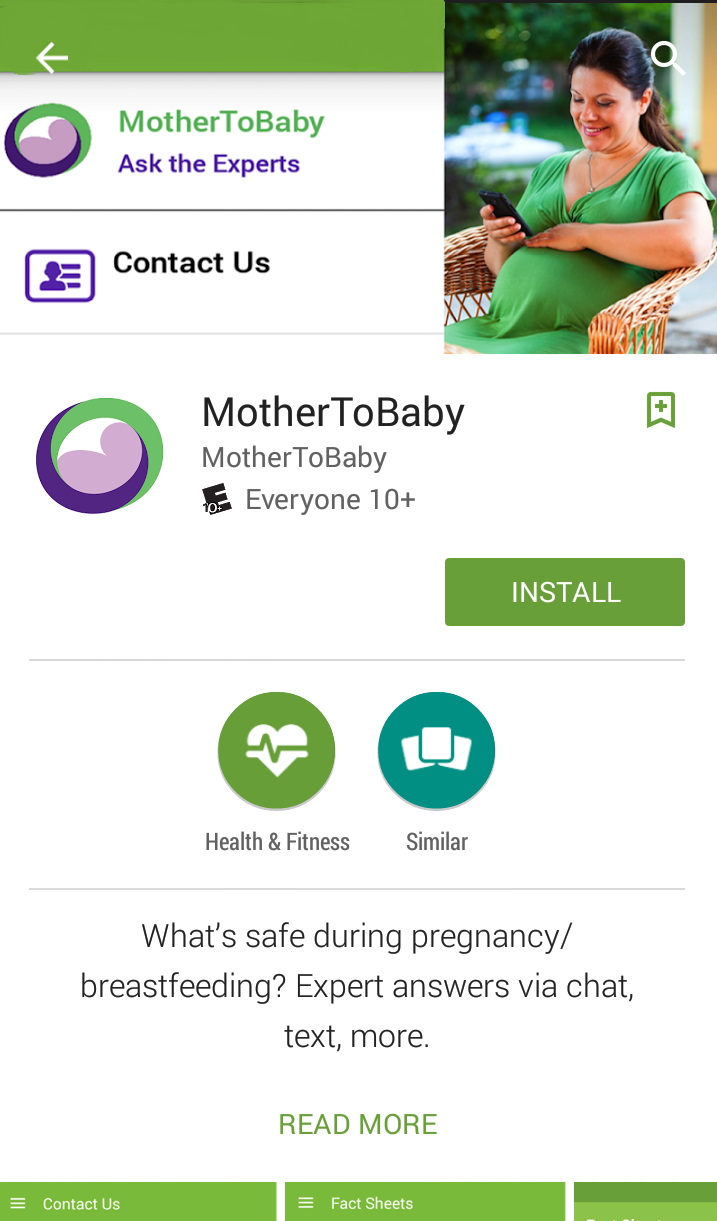
BRENTWOOD, TN – What if you could find out the potential effects of a medication during pregnancy by asking a real-life expert instead of unreliable “Dr. Google?” Now you can. In fact, there’s an app for that, according to MotherToBaby, a service of the international non-profit Organization of Teratology Information Specialists (OTIS). As January’s Birth Defects Prevention Month kicks off, MotherToBaby has launched a free, one-of-a-kind app to bring the most accurate, evidence-based information to pregnant and breastfeeding women.

“Information and research about the risks of medications, vaccines, chemicals or diseases during a woman’s pregnancy are constantly changing and can be confusing, or misrepresented in regular internet searches,” said Stephen Braddock, MD, MotherToBaby President who serves as the Director of Medical Genetics at Saint Louis University. “That’s where our new app comes in to help.”

The MotherToBaby app is available on the Android and iOS markets and features the non-profit’s renowned up-to-date library of fact sheets on more than 100 exposures during pregnancy and breastfeeding. Perhaps, its most unique feature is the app’s ability to link the public directly through live chat, email, text and phone with a teratogen information expert (someone who specializes in providing personalized information about the risks of birth defects) so a user can get answers to questions in real-time without ever leaving the app.

Jennifer Zellner, PhD, who is based at UC San Diego and directed the development of the app, hopes this innovative service will fit a need within the health care professional community too, especially when it becomes overloaded during emergency situations such as the Flint, Michigan water crisis and the Zika virus outbreak. “We recognize that health care providers have limited time in a managed care setting to research the questions they or their patients may have about how a particular exposure may affect a pregnancy, or a breastfeeding infant,” said Zellner. “With the MotherToBaby app, providers will now have this information quite literally at their fingertips.”

The app also features a way for a pregnant woman to easily contribute information to the research by sharing her pregnancy. “Including information about our MotherToBaby Pregnancy Studies program in the app is one more way of reaching women and letting them know about this incredible opportunity to make a difference in the lives of future pregnant women by participating in research,” explained Zellner.

More About MotherToBaby
MotherToBaby is a suggested resource by many agencies including the Centers for Disease Control and Prevention (CDC) and the Food and Drug Administration’s (FDA) Office of Women’s Health. More than 100,000 women and their health care providers seek information about birth defects prevention from MotherToBaby every year. MotherToBaby has been able to embark on new outreach efforts to reach underserved populations and launch new communication technologies through a cooperative agreement with the U.S. Health Resources and Services Administration, as well as through the generous donations made by the public. To learn more about MotherToBaby, the ways to contact its network of experts, or how to support its services, please visit www.MotherToBaby.org.

# # #
Media Contact: Nicole Chavez, 619-368-3259, nchavez@MotherToBaby.org. Interviews in Spanish can also be arranged.
# # #


‘FIRST OF ITS KIND’ SERVICE LAUNCHES TO SUPPORT DRUG LABELING COMPLIANCE RULE

Recognizing the People Who Help Our Community Thrive

At the Organization of Teratology Information Specialists (OTIS), we are grateful for the dedicated professionals who help advance our mission of providing trusted, science-based information. This page celebrates members who go above and beyond in their service, and honors those we have lost whose dedication left a lasting impact on our organization and the families we support.

Outstanding Member Recognition

Each Quarter, OTIS celebrates members who have been nominated by their peers for their exceptional teamwork, service, and commitment to the field of teratology. These members help strengthen our programs, support colleagues, and improve the quality of care we provide.

Below are our 2025 Outstanding Member honorees. Additional honorees will be added in December 2025

2025 Honorees

Angela Messer, MS

Angela is recognized for her energy, creativity, and strong support across multiple OTIS and MotherToBaby programs. She:

  • Coordinates MotherToBaby Fact Sheets, including updates, translations, and NLM submissions.
  • Oversees the MotherToBaby Chat service, including training, schedules, and troubleshooting.
  • Contributes actively to the Membership Committee and the Marketing & Website Committee.
  • Helps identify and support student presenters for OTIS Seminars.

Angela’s enthusiasm and problem-solving skills make her an incredible asset to our organization.

— From her nominator

Christianne (Chrissy) Senechal, MS

Chrissy is honored for her compassion, teamwork, and willingness to step into leadership when needed. She:

  • Helped manage MotherToBaby CT operations during a leadership absence while also completing a full-time genetic counseling graduate program.
  • Actively offers and requests support to ensure families receive timely, evidence-based information.
  • Communicates with warmth, empathy, and professionalism.

Chrissy’s positivity and commitment shine through in every interaction, and she is already an important part of the OTIS/MotherToBaby community.

— From her nominator

Lorrie Harris-Sagaribay, MPH

Lorrie is recognized for her leadership, thoughtfulness, and commitment to professional growth within the TIS community. She:

  • Approaches every counseling interaction with fairness, compassion, and respect for all perspectives.
  • Created and led a small counselor meeting to support learning and engagement.
  • Shares timely updates on emerging topics — such as COVID-19 and Zika — to keep specialists informed.

Lorrie inspired the idea for this recognition program. She is knowledgeable, kind, and consistently puts the needs of families first.

— From her nominator

Sharon Lavigne, MS, LCGC

Sharon’s leadership at MotherToBaby CT has strengthened connections across UConn Health and expanded access to evidence-based exposure counseling. She:

  • Built strong partnerships with reproductive health, genetics, occupational medicine, maternal mental health, and neurology services.
  • Uses her background as a genetic counselor to educate colleagues across New England and beyond about MotherToBaby’s services.
  • Teaches an online graduate course in embryology and teratology and helps train future genetic counselors, MFM fellows, and OB/GYN residents.
  • Supports patients navigating mental health concerns by connecting them to trusted local and national resources.
  • Leads culturally responsive outreach to Native American communities and helped develop tailored educational materials for tribal families.

Sharon’s dedication to education, collaboration, and culturally informed care is making a meaningful difference for families and providers.

— From her nominator

Sonia Alvarado

Sonia Alvarado is recognized for embracing every responsibility with remarkable enthusiasm and professionalism. She:

  • Supervises the MotherToBaby Chat operations, ensuring smooth workflow and high-quality services.
  • Proactively developing new educational tools that enhance health education efforts and improve the quality of information provided.
  • Consistently demonstrates dedication and a collaborative approach in her work, contributing positively to her team and the organization.

Sonia’s initiative, reliability, and collaborative spirit have made a meaningful impact on our team and the organization as a whole.

— From her nominator

Sura Alwan, MSc, PhD

Sura is recognized for consistently demonstrating a commitment to the highest good of our organization and those we serve. She:

  • Exhibited professionalism and thoughtfulness in providing an expert OTIS webinar on SSRIs and pregnancy during a critical time.
  • Recently founded a non-profit organization, the PEAR-Net Society, to provide an ongoing home for the TERIS database.
  • Takes on significant tasks of logistical planning for an upcoming OTIS annual meeting in her hometown of Vancouver.
  • Contributes time and valuable input on the OTIS board and multiple committees.

Sura is a brilliant researcher and engaging presenter, she also exudes a calm, friendly energy that puts her colleagues at ease and encourages collaboration. I’m grateful for the opportunity to work with and learn from Sura, and for her friendship.

— From her nominator

In Memoriam

Honoring Members We Have Lost

We remember OTIS members whose work and compassion helped shape our organization. Their contributions live on through the families, students, and colleagues they supported.

Vincent T. Armenti, MD, PhD

Dr. Vincent Armenti was a respected transplant surgeon and the founder of the National Transplantation Pregnancy Registry (NTPR). His work created essential guidance for transplant recipients planning their families and continues to influence clinical care today. Dr. Armenti’s scientific leadership and compassion remain an inspiration to the OTIS and MotherToBaby community.

Vincent welcomed me with kindness and treated me as an equal. I’ll always remember how gracious and encouraging he was.

— From his nominator

Gerald (Jerry) G. Briggs, BPharm, FCCP

Gerald G. Briggs was a nationally recognized clinical pharmacologist whose lifelong contributions significantly advanced the understanding of medication used during pregnancy and lactation. He co-authored Diseases, Complications and Drug Therapy in Obstetrics with Michael Nageotte and Drugs in Pregnancy and Lactation: A Reference Guide to Fetal and Neonatal Risk with Sumner Yaffe and Roger Freeman, Cragi Towers, Alicia Forinash and Carrie Brusseau to support health professionals in the safe treatment of pregnant women with chronic conditions. Recognizing that medication safety in pregnancy required stronger evidence base, he became deeply involved in research organizations including OTIS, ENTIS, and the Society for Birth Defects Research & Prevention. His legacy continues to guide the field, improve clinical practices, and enhance the health of women and children. 

During his tenure at LBMMC, Jerry published over 60 articles, chapters and periodical as well as two books. He received frequent inquires about the safety of medications used in pregnancy or during lactations. He realized then that there was a huge gap in the availability of safety data for pregnancy and breastfeeding exposures.

— From a written tribute


‘FIRST OF ITS KIND’ SERVICE LAUNCHES TO SUPPORT DRUG LABELING COMPLIANCE RULE

By Mark B. Roth, MotherToBaby New York

As a teratogen information specialist, I receive questions about all sorts of chemicals or substances someone can be exposed to. We often get questions about the bazillions of cleaning products out there. Bleach, powdered cleaners and spray cleaners, degreasers, oven cleaners, disinfectants – there are so many different cleaning products and looking at the ingredients list (if there even is one) can be overwhelming. All those unpronounceable words! Sodium hypochlorite, declamine oxide, sodium hydroxide, sulfonate, dipropylene glycol butoxy ether, etc., etc. etc.!!!

If you are reading this, it’s probably because you want to decrease the chance of any problems for the baby while you are pregnant or breastfeeding. You might be looking for information about which cleaning products are okay to use or to be around while you are pregnant or nursing. I have been told so often by my callers how difficult it is to find reliable information. And that is true, even for the experts. There are a few challenges we all have to contend with.

One of the biggest challenges is that many chemicals simply have not been studied in pregnant women. Some ingredients found in cleaning products have been studied in pregnant animals, mainly mice and rats. When such substances are given to animals, the amount (or the dose) they are given is much higher than what a human would be exposed to. And, often it is given in a way that isn’t even close to how a human would usually be exposed. For example, chemicals are often force fed to the animal, even if it is an ingredient typically used in a skin cream. So, basically even if there is research, it’s often not helpful or especially meaningful. How can you know what’s okay to use?

There’s an important and very old principle in studying whether a substance is harmful to a person, and that is “the dose makes the poison.” Basically, this means that the risk with any exposure, including cleaning products, depends on how much gets into your blood. How do chemical or substances reach the blood? They can be injected directly into the bloodstream, swallowed, inhaled (breathed in), or possibly absorbed through the skin. Unless you are drinking your household cleaner, the actual exposure to your developing baby is likely to be quite low! Generally, inhalation won’t allow for much absorption of these kinds of compounds into your blood. When they do get into your blood from inhaling them, they typically don’t reach the developing baby or get into your breastmilk in any meaningful quantity.

Now, these products can have some pretty offensive odors, even with the addition of artificial fragrance like ‘lemon fresh’, ‘summer rain’, and ‘spring flowers’. (And there can be such a thing as too much – sometimes when I go into a bathroom where air freshener has been sprayed, I say to myself “I would rather just smell the poop!”) But back to our subject… If a product has an irritating smell, you may think it’s very irritating for the baby, too. But, your sense of smell is not a good measure of the amount of a chemical that the baby is actually being exposed to. In fact, many women develop a heightened sensitivity to smells during pregnancy. This motivates you to get yourself to a more comfortable environment and reduce exposure. But it also can make you feel uneasy when you can’t seem to get away from the smell. Your nose doesn’t always know! If you start feeling dizzy, light headed, confused, or have breathing difficulties while around the cleaning product, these symptoms could mean you had a higher level of exposure. Even with these symptoms, there are no confirmed risks to pregnancy or breastfeeding with exposure to many of the compounds in common cleaning products.

I mentioned the possible absorption of substances through the skin (topical or dermal exposure). When it comes to absorption of cleaning products, your skin is a surprisingly good barrier and prevents many substances from getting into your blood. If skin has been soaking for a while, or there’s a scrape or open cut, that may allow a little more absorption. Just like with inhalation, these compounds are not likely to reach the developing baby or breastmilk in any meaningful quantity. However, skin irritation can occur and it’s not a bad idea to wear gloves when working with some cleaning products, especially if it’s going to be for extended periods of time. It’s important for you to maintain your comfort.

We all know that accidents happen, and that is true of accidents with household cleaners, too. You can reduce the chance of these accidents by not drinking or eating while working with cleaning products. Be sure to thoroughly rinse any utensils or dishes that come into contact with the cleaners. Using gloves or safety glasses can help protect your skin and eyes in case of accidental spills. And, of course, opening a window or turning on an exhaust fan (if you have one) can help reduce the lingering smell.

I mentioned a list of pretty confusing cleaning ingredients at the beginning of this blog and I am quite certain that most of you would fall asleep by the end of this post if I talked about every single one of them. But there are a few common ingredients that are worth reviewing.

Bleach is a common cleaner that most of us have used at one point or another. The active ingredient is sodium hypochlorite, a form of chlorine. Chlorine and chlorinated disinfectants have not been shown to increase the risk of birth defects.

Benzalkonium chloride is another disinfectant that is found in many cleaning products. It is also an ingredient in throat lozenges, diaper rash creams, cosmetics, and vaginal spermicides. Although there are no studies specifically looking at the risks of benzalkonium chloride use in human pregnancy, there also are no reports indicating an increased risk. Again, given how common this ingredient is, having no reports is reassuring.

Finally, there are also many cleaners which contain ammonia. Typical use of cleaners containing ammonia is also not expected to increase risks to the baby. Because it has a very strong smell, most people can’t stand being around high levels of ammonia without getting pretty sick. Like many cleaners, as mentioned above, a strong odor doesn’t necessarily mean a risk to the baby even if you have symptoms like a strong burning sensation in your nose or throat, skin irritation, or you get dizzy, But, if you lose consciousness, that could be a concern as it limits the amount of oxygen reaching the baby.  It’s good to pay attention to your comfort level.

There are so many different products and ingredients. There’s not room enough to discuss them all here. But if you have any questions about a cleaning product or an ingredient in a product, don’t hesitate to contact an expert at MotherToBaby!

Mark Roth, BA, is a teratogen information specialist and co-director for the Pregnancy Risk Network, MotherToBaby New York. He has been with the program since 2006. He is a former member of the OTIS Board of Directors and serves as Research Coordinator for MotherToBaby New York. Mark has provided teratology lectures at Arcadia University’s Genetic Counseling Training Program and educates medical providers and the public about teratology through lectures, participation in state and national conferences, and one on one conversations. He enjoys pronouncing generic names of drugs.

About MotherToBaby 

MotherToBabyis a service of the Organization of Teratology Information Specialists (OTIS), suggested resources by many agencies including the Centers for Disease Control and Prevention (CDC). If you have questions about exposures during pregnancy and breastfeeding, please call MotherToBaby toll-FREE at 866-626-6847 or try out MotherToBaby’s new text information service by texting questions to (855) 999-3525. You can also visit MotherToBaby.org to browse a library of fact sheets about dozens of viruses, medications, vaccines, alcohol, diseases, or other exposures during pregnancy and breastfeeding or connect with all of our resources by downloading the new MotherToBaby free app, available on Android and iOS markets. Also, make sure to subscribe to The MotherToBaby Podcast available on iTunes, Google Play Music, Spotify and podcatchers everywhere.


‘FIRST OF ITS KIND’ SERVICE LAUNCHES TO SUPPORT DRUG LABELING COMPLIANCE RULE

By Dr. Sarah Običan, OBGYN, MotherToBaby Florida

I feel really lucky. I have had the pleasure and privilege to live and work in some great cities and universities as an OBGYN. I spent my formidable residency years in Washington, DC and loved the diversity of my patients. Being that I was located in the heart of our nation’s capital, in one room I would deliver a princess of some far off nation, in the next, it’d be a dignitary from “the Hill.” But it wasn’t always rosy. Working in such a busy labor and delivery unit meant I would also take care of a 36-week pregnant mother who almost overdosed on cocaine and heroin. The experience was humbling and arguably taught me more about medicine and life than any other. My fellowship years at Columbia University I spent living in Harlem. I brought into the world my first son and delivered him into that beautiful and diverse community. It is a community that’s strong and steeped in history where every stroll on the city sidewalk is a moment from a great photo essay. It is also a community of struggles, hard lives, and injustice. It’s unfortunately a “perfect” setting for the drug market to make its mark.

Still nothing could have prepared me for my first job out of fellowship. I relocated to a great university center in Florida. With my training behind me, I was ready to tackle the hardest maternal and fetal diseases. If I’m being honest, though, my first week on the job was an eye-opener. Even with all my training, I was not ready for the sheer volume of patients suffering from opioid use and addiction.

I was seeing pregnant women with chronic opioid use almost every day. To say I was disheartened and scared for my patients would not give the feelings justice. I realized I needed to learn more. I studied the opioid crisis, read more on the subject than ever before, found physicians who were willing to treat pregnant women with opioid addiction and put them on my speed dial. I connected with a local treatment center and found the scarce resources in my new community. My new job was challenging but I wanted to somehow help the new community I serve and love.

So why should you care about all this?
Just like in the general population, opioid use during pregnancy is on a steep rise. Alarmingly, death rates from overdoses are up too. Babies are also suffering; neonatal abstinence syndrome (NAS – drug withdrawal in the baby after birth) happens in more than a third of the newborns born to mothers with chronic opioid use. These babies can experience poor feeding, sleeping, and irritability. Drug abuse during pregnancy also increases the risk of preterm birth (early delivery), decreased fetal growth, and fetal death. In just under 15 years, the rate of NAS-affected live births quadrupled, significantly increasing the emotional, medical and economic burden on society.

Moms with opioid addiction need our help.
Opioid abuse is lonely. Sooner or later, many of my patients feel isolated. They are scared and feel shunned from their community. They can be addicted with very little resources extended to them for their care. You don’t need to be a doctor to know that good prenatal care leads to healthier pregnancies. However, women who abuse opioids are much less likely to get appropriate prenatal care. These moms often suffer from anxiety and depression and may use substances along with opioids that have an impact on their pregnancy, such as alcohol and tobacco.

Hope.
For sure we are in an epidemic. We have heart wrenching clinical scenarios of mothers and their children, but we have some great stories too. Mothers who receive the support they need, babies born to healthier moms now capable to take care of their children. We have to fight for more resources in each of our communities, locally and nationally. It’s not enough to show burden of disease, but more important to enrich our communities with possibilities. That is all of our jobs, no matter if you are a doctor, mother or neighbor.

Dear Moms Struggling with Opioid Addiction,
Please know that I see you and I want to help.

Dear Healthcare Professional,
You may feel lonely, too, scared that you don’t know enough or that you don’t have the resources to find answers to appropriately help the patients you love. I’ve been there and I want to help.

It begins and ends with all of us.

Resources for Moms and Health Care Providers:

Sarah G. Običan, MD, is an OBGYN and Maternal Fetal Medicine specialist at the University of South Florida. She is the director of the new MotherToBaby Florida affiliate based in Tampa. She has particular research and clinical experience in teratology, fetal echocardiography and fetal therapy. She is the proud mom of two little boys.

About MotherToBaby
MotherToBaby is a service of the Organization of Teratology Information Specialists (OTIS), suggested resources by many agencies including the Centers for Disease Control and Prevention (CDC). If you have questions about exposures during pregnancy and breastfeeding, please call MotherToBaby toll-FREE at 866-626-6847 or try out MotherToBaby’s new text information service by texting questions to (855) 999-3525. You can also visit MotherToBaby.org to browse a library of fact sheets about dozens of viruses, medications, vaccines, alcohol, diseases, or other exposures during pregnancy and breastfeeding or connect with all of our resources by downloading the new MotherToBaby free app, available on Android and iOS markets.

References

Centers for Disease Control and Prevention. Opioid painkiller prescribing: where you live makes a difference. Available at: https://www.cdc.gov/vitalsigns/opioid-prescribing. Retrieved March 7, 2017.

Substance Abuse and Mental Health Services Administration. Drug Abuse Warning Network, 2011: national estimates of drug-related emergency department visits. HHS Publication No. (SMA) 13-4760, DAWN Series D-39. Rockville (MD): SAMHSA; 2013. Available at: https://www.samhsa.gov/data/sites/default/files/DAWN2k11ED/DAWN2k11ED/DAWN2k11ED.pdf.

National Center for Health Statistics. NCHS data on drug-poisoning deaths. NCHS Factsheet. Available at: https://www.cdc.gov/nchs/data/factsheets/factsheet_drug_poisoning.htm. Retrieved March 8, 2017

Desai RJ, Hernandez-Diaz S, Bateman BT, Huybrechts KF. Increase in prescription opioid use during pregnancy among Medicaid-enrolled women. Obstet Gynecol 2014;123:997–1002.

Jones HE, Finnegan LP, Kaltenbach K. Methadone and buprenorphine for the management of opioid dependence in pregnancy. Drugs 2012

The American College of Obstetricians and Gynecologists. Opioid Use and Opioid Use Disorder in Pregnancy. Committee Opinion Number 711, August 2017.

Patrick SW, Davis MM, Lehmann CU, Cooper WO. Increasing incidence and geographic distribution of neonatal abstinence syndrome: United States 2009 to 2012 [published erratum appears in J Perinatol 2015;35:667]. J Perinatol 2015;35:650–5.