CMV During Pregnancy and Hearing Loss: A Perspective from the Sound Booth

By Heidi S. Neuburger, MS, MA, Indiana University Audiologist

It was a busy day in the audiology clinic, but my 10AM patient made me pause. I reviewed the medical records for this adorable 2 1/2 year old. His mother, a daycare provider, had contracted cytomegalovirus (CMV) early in her pregnancy. Unfortunately, there is nothing unusual about this. You can get CMV by contact with bodily fluids from a person who carries the virus. If mommy is caring for toddlers, either at home or in her place of work, she is at very high risk for coming into contact with diapers, runny noses, table tops and toys that may be infected with the virus. As many as 38% of toddlers who go to day care may have CMV, and they can pass it to other children, their families, or care givers.

The symptoms of CMV can be mild, or there may not even be any at all. Symptoms can include a little sore throat, fever, swollen glands and fatigue for a few days. But when mommy catches CMV during a pregnancy, there can be serious consequences to the baby in the womb. Congenital CMV infection occurs in 1 out every 100 to 150 babies that are born to mothers with CMV, although only about 1 in 5 of these kids will have long term health problems. (CDC.org)

In this case, the medical record showed that my patient did indeed test positive for the CMV virus at birth. The virus crossed the placenta, from mother to the developing fetus, causing the infection. But to the relief of all, in spite of a positive diagnosis of the presence of the virus in the baby at birth, there did not appear to be symptoms other than a little jaundice, which returned to normal within a couple of weeks. The family breathed a sigh of relief. Yet – here they were. The toddler (now 32 months old) was not talking at all. In fact, he was lagging farther and farther behind his peers developmentally.

After 40 minutes in the sound booth with this little boy I was able to confirm that he had a severe hearing loss in both ears. The fact that he had passed his newborn hearing screen suggested that the hearing loss had been getting worse over time. And a hearing loss of this degree surely had something to do with his delayed language development, and other possible developmental delays.

What can we learn from this challenging outcome? What could have been done?
For October’s National Audiology Awareness and Protect Your Hearing Month, I thought it was particularly timely to focus on the lesson learned from this little boy’s situation. More often than not, when a baby is exposed to CMV in the womb, especially early in the pregnancy, there will not be birth defects. In fact most babies will be born without symptoms or obvious defects. In one study (Naing et al, 2015) 18% of children born positive for CMV were without symptoms at birth, but later had a delayed onset of hearing loss. I would have liked to have seen a heightened level of suspicion that hearing loss may emerge with this child, because of his congenital CMV diagnosis. It may not be possible to stop the onset or worsening of this hearing loss, but repeat testing of his hearing every 4 to 6 months would have gone a long way toward early identification of the hearing loss, and earlier intervention with hearing aids and speech/language therapy.

Hearing loss is just one of the potential effects of CMV infection during pregnancy. To learn more about the broader range of effects, how to test for CMV, and how you can prevent infection, visit the CMV and Pregnancy fact sheet: https://mothertobaby.org/fact-sheets/cytomegalovirus-cmv-pregnancy/. And remember: a MotherToBaby expert is just an email, text message, live chat, or phone call away!

Heidi S. Neuburger, MS, MA, works as an infant laboratory coordinator as part of the technical staff at Indiana University’s Department of Otolaryngology-Head & Neck Surgery. She was program coordinator of MotherToBaby’s Indiana affiliate from 2014 – 2016.

MotherToBaby is a service of OTIS, a suggested resource by many agencies including the Centers for Disease Control and Prevention (CDC). If you have questions about viruses, alcohol, medications, vaccines, diseases, or other exposures, call MotherToBaby toll-FREE at 866-626-6847 or try out MotherToBaby’s new text information service by texting questions to (855) 999-3525. You can also visit MotherToBaby.org to browse a library of fact sheets, email an expert or chat live.
CMV During Pregnancy and Hearing Loss: A Perspective from the Sound Booth

Stay In-the-Know

Our quarterly e-newsletter brings you the latest information, news, and resources from the experts at MotherToBaby. Sign up below to stay up-to-date on medications and other exposures during pregnancy and breastfeeding.


CMV During Pregnancy and Hearing Loss: A Perspective from the Sound Booth

Encircle Parents and Babies in Health.

MotherToBaby’s overarching goal is to enable informed decision making by effectively communicating evidence-based information about the effects of exposures during pregnancy or while breastfeeding, leading to a reduction in preventable birth defects and other adverse outcomes.  As the environment, medications, and health landscape is constantly changing, requests are on the rise.

How can we continue to provide our services free of cost?

We need your support!  It will take dedicated individuals to give a little each month to ensure we can continue to provide free, evidence-based information in an ever changing environment. It is imperative our services continue to be provided at no cost to combat health, social, and economic disparities seen in maternal health.

Join the Circle

Join our community of monthly donors to encircle parents and babies in health.  MotherToBaby will celebrate you and our community with a donor listing on our website, social media and a quarterly mention on our podcast.

Provide Impact

Your monthly donation to MotherToBaby multiplies the impact of your gift.

28 people donating $10 per month would provide assistance for 40 individuals with exposure related questions.

20 people donating $20 per month would provide one new fact sheet for an exposure and/or medication per month.

30 people donating $30 per month would provide 10 translated fact sheets per month.

Donors

Alfred N Romeo

Anna Taylor

Beth Kiernan

Elizabeth Wasternack

Kirstie Perrotta

Lorrie Harris-Sagaribay

Nevena Krstic

Your help is needed to provide evidence-based information to assist all that call upon MotherToBaby in their fertility, pregnancy, adoption and breastfeeding journeys.


CMV During Pregnancy and Hearing Loss: A Perspective from the Sound Booth

Sometimes we have anxiety about…well, having anxiety. Kristen contacted MotherToBaby and was asking about ways to manage her already extremely high anxiety around pregnancy and birth during the pandemic. Should I even try to get pregnant right now? How will I deal with my anxiety and stress if I do become pregnant? What if almost no one in my family can even come to the hospital when I go into labor? How can I deal with my anxiety during labor and birth? I could tell she had a tremendous amount on her mind.

It is completely normal to feel stressed and anxious, and Kristen is not alone. Many people, regardless of whether they are pregnant during the time of COVID-19 or not, are experiencing higher levels of anxiety. The important thing is to address the anxious feelings and learn ways to manage them. I have some ideas on how to do just that! But one thing I need to emphasize: if your anxiety is excessive, ongoing, difficult to control, and interferes with your daily living, this may be a sign of generalized anxiety disorder and I encourage you to talk to your doctor or a mental health professional.

Managing Anxiety

There are ways to manage anxiety and stress that may be commonly shared, but in case you haven’t heard them before below are some tips you can try at home:

  • Exercise, even if it is going for a brief walk outside
  • Call a friend just to catch up
  • Volunteer or donate to a cause you care about – often doing things to help others actually can make you feel good
  • Try to eat healthy, nourishing foods
  • Journal as a way to express what you are feeling
  • Take a break from your screen time on phones, tablets and TV – especially before bed
  • If you feel like nothing really helps to address your feelings of anxiety and stress, or if you are feeling really down, make an appointment to talk to your healthcare provider and be honest about how you’re feeling

If you do feel like you need to talk to your healthcare provider, how do you do it? Remind yourself that healthcare providers are not only trained to talk about mental health topics with their patients, but that they likely talk to multiple people every day or week about them. Sometimes pregnancy increases anxiety that is already present, and for others it may be that they are experiencing it for the first time. Being pregnant does not mean that you are immune from or that you cannot be treated for mental health issues.

Before you go to see your healthcare provider, you can write down some notes on what you hope to say. Try to be as honest as possible and ask about the variety of options you have to address your anxiety or symptoms, including what you can try at home, who you may be able to see for some form of talk therapy, and if necessary, what medications the provider may recommend trying. Remember, just because you bring up anxiety or mental health, it does not mean you will be put on a medication. Equally as important, if you need to take a medication to help you manage better, there are several options you can take during your pregnancy.

Working on dealing with your anxiety before becoming pregnant is always a great idea, but you can address it at any point during pregnancy or in the postpartum period. There is never a bad time to improve your mental health (doing so is not only good for you, but also good for your baby) and it is never too late. In addition, I have had women express that admitting they need help makes them feel weak or selfish. In truth, it is the opposite – it takes courage to ask for support when we need it!

COVID-19, Labor and Delivery

The other piece of Kristen’s worry was having support in the delivery room. Due to COVID-19 many hospitals and birthing centers may be reducing the number of support people someone can have present during delivery. In addition, no one may be allowed in nearby waiting rooms. Giving birth can be one of the most challenging events for a person and having support during labor and delivery is incredibly important for getting through it with both a healthy mom and a healthy baby. First, you should speak with your planned delivery hospital/center to learn what their most current rules are for time of delivery and ask about any extra precautions they are taking due to COVID-19. Once you have that information, you can figure out what your game plan is. Other things to consider include:

  • Does the hospital offer doulas? Would you want to hire your own? If you hire one and s/he is not allowed in the delivery room, can she call in and be there via facetime and text? Can she spend extra time going over pain management techniques with you and your support partner in advance if she is unable to be there herself?
  • You can also consider programs like Hypnobirthing or Lamaze classes that really work with women to be confident in managing their experience during labor and delivery. Sometimes the type of prenatal education you choose to receive can help you feel more prepared and aware of what to expect, which alone may help reduce fear of the unknown.

In short, try not to panic with all of the questions you may have about dealing with anxiety. Write down your questions and make sure to ask your healthcare provider and the place you plan to deliver all of them. Prepare for what you can, take care of yourself, ask for help when you need it and trust that you have the strength to get through anything – because you do.


CMV During Pregnancy and Hearing Loss: A Perspective from the Sound Booth

We have all heard that breastfeeding is the best way to feed your baby because you can bond with your child and give them the best nutrients and immunity for lifelong health. Besides that, breastfeeding helps moms stay healthy by getting you back to pre-pregnancy weight faster, preventing breast and ovarian cancer, and ensuring heart health. However, sometimes putting baby on the breast is easier said than done – not all moms can breastfeed in the traditional sense of holding your baby to the breast at all times. Moms may not be available if they need to return to work, care for other children, or if their baby stays in the hospital or Neonatal Intensive Care Unit (NICU) after birth.

Enter breast pumps.

Breast pumps have been used for centuries to help moms extract breastmilk to be given later to their baby. There are different pumps to choose from, including manual, battery powered and electric pumps. The best pump for getting milk out are double-electric hospital-grade pumps.

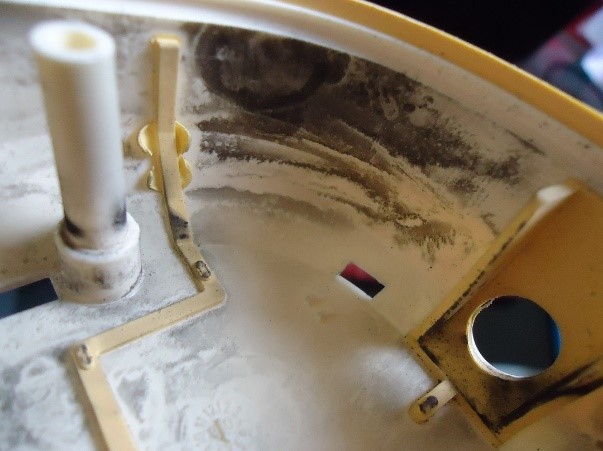
Open system breast pumps may grow mold over time and cannot be completely sterilized.

The type of pump you use also matters in terms of potential contamination (i.e., when foreign material can pass into the milk). What matters the most is whether a pump uses an “open” or “closed” system. A “closed” system breast pump has a physical barrier between the parts that touch your breastmilk (flanges, bottles, valves), and the tubing and pump motor (called the “backflow protector”). This keeps your milk sectioned off from the body of the pump. The parts that can easily be cleaned and sterilized are separate from the parts that cannot be cleaned and sterilized, like the interior of the pump motor. This is why hospital grade breast pumps are safe for multiple users – because they have this barrier.

The type of pump you use also matters in terms of potential contamination (i.e., when foreign material can pass into the milk). What matters the most is whether a pump uses an “open” or “closed” system. A “closed” system breast pump has a physical barrier between the parts that touch your breastmilk (flanges, bottles, valves), and the tubing and pump motor (called the “backflow protector”). This keeps your milk sectioned off from the body of the pump. The parts that can easily be cleaned and sterilized are separate from the parts that cannot be cleaned and sterilized, like the interior of the pump motor. This is why hospital grade breast pumps are safe for multiple users – because they have this barrier.

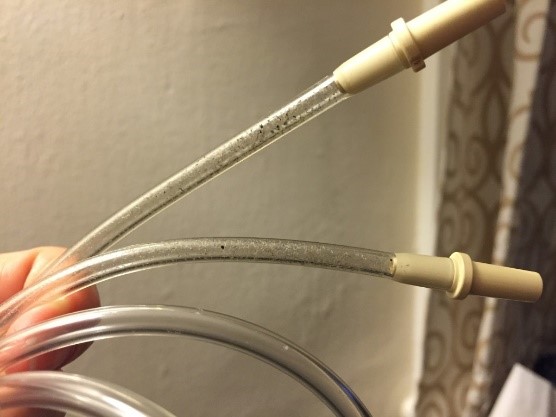
“Open” system breast pumps do not have barriers between the parts that touch your breastmilk and the tubing and pump motor. Because of this, moisture from pumping can enter the tubing and motor. Since mold flourishes in dark, moist places, the open system has a greater risk for mold growth. This means that impossible-to-clean places like the interior of a breast pump motor are very inviting to mold. The most common places to find mold in a breast pump are the tubing, the areas and valves that connect bottles to flanges, and the insides of pumps which have been stored for a long time in a moist basement.

How can I keep mold out of my breast pump and breastmilk?

Prevention of household mold may help prevent mold on your breast pump equipment. Also, a good breast pump should have a protective barrier between the flange (the funnel-shaped part that comes into contact with your breast) and the connected tubing. Pumps without this feature carry extra risk for milk and moisture to get into the tubes and create a breeding ground for mold.

Mold growing in the breast pump tubing.

All breast pump parts that come in contact with breastmilk should be cleaned and fully dried after each use. This includes flanges, bottles, valves and breast shields. You can eliminate possible contaminants by washing them with liquid dishwashing soap and warm water. Rinse each piece thoroughly with hot water for 10-15 seconds. Place the pieces neatly on a clean paper towel or on a clean drying rack and allow them to air dry. A dishwasher with a drying cycle can also be used. Avoid using cloth towels to dry your pump parts because they can carry germs and bacteria that are harmful to your breastmilk and your baby.

It is not necessary to clean breast pump tubing unless it comes in contact with breast milk. If you wash your tubing, make sure you hang it to air dry before attaching it to your breast pump. If small water drops (condensation) appear in the tubing after you have pumped, attach the tubes to the pump before you attach your flanges/bottles and turn the pump on for a few minutes until the tubing is dry.

What if I find mold in my breast milk?

At MotherToBaby UR Medicine, we have developed an algorithm (set of rules) to help people manage breastmilk that is potentially contaminated. It is meant to be used in hospitals for sick children, but can be useful for you and your health care provider. Most full-term, healthy, and older infants do not need the precautions outlined below. If you find foreign material in your breastmilk or pump parts, contact your baby’s pediatrician to get advice on what to do.

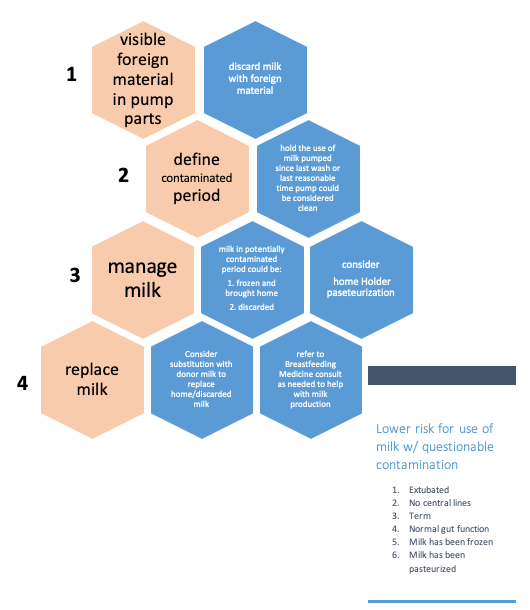
If your baby is sick or premature, consider sharing the information below with your baby’s provider if you find mold in your breastmilk or pump parts. It is meant to be followed in order from step 1, which includes discarding any milk with foreign material in it (like mold.) Step 2 can help to determine when any other expressed milk may have been affected. For instance, if you know you washed your pump 4 days ago and found the material today, any milk you pumped in the past 4 days could have been contaminated. Contaminated milk could be frozen, which is likely to kill most bacteria and many fungi, or it could be pasteurized using home pasteurization (Step 3). You also need to think about what should be fed to your baby in the meantime: do you have older, stored milk? Do you need donor milk? If you need to use formula, should it be “hypoallergenic?” (Step 4). These are good conversations to have with your baby’s doctor. If you don’t have enough breastmilk, some communities will have breastfeeding medicine specialty providers or lactation consultants who can help mothers with milk supply concerns. You can search for these providers online by clicking here.

Algorithm for decision-making when pump parts are found to contain foreign material (potential bacteria or fungus). The box at the lower right reminds providers which babies are at lowest risk from drinking milk that has any foreign material in it.

Last, we want to leave you with words of encouragement because we know breastfeeding isn’t easy. It’s downright hard for most. Having that said, please know that resources like MotherToBaby are here for you and just by reading this blog, you’re taking steps to ensure your milk is pumped and stored safely. You’re doing a great job and we can be certain your baby appreciates all you do.

Rogelio Perez D’Gregorio, MD, MS is an Assistant Director of MotherToBaby UR Medicine and Assistant Professor of Obstetrics and Gynecology at the University of Rochester.

Other blog contributions were made by:

Casey Rosen-Carole, MD, MPH, MSEd, FABM, IBCLC is Medical Director of Lactation Services and Programs, Assistant Professor of Pediatrics and OBGYN, and a Consultant for the Lactation Study Center and MotherToBaby URMedicine

Ruth A Lawrence, MD, DD (Hon) FABM, FAAP is Distinguished Alumna Professor Pediatrics and Obstetrics/Gynecology, Northumberland Trust Chair in Pediatrics, UR School of Medicine and Dentistry. Co-Director of the Finger Lakes Children’s Environmental Health Center.

REFERENCES:

Ameda. Is there mold in your breast pump equipment?

Centers or Disease Control and Prevention. Facts about Stachybotrys chartarum and Other Molds.

Eglash A, Liliana Simon L, et al. (2017). ABM Clinical Protocol #8: Human Milk Storage Information for Home Use for Full-Term Infants, Revised 2017. Breastfeed Med.;12(7):390-395.

FDA. U.S. Food and Drugs Administration. Breast pumps.

Hygela Health. Closed System Breast Pumps vs. Open System Breast Pumps.

Jennai L. Moms ABC. How to clean breast pup tubing mold.

La Leche League International. Pumping Milk.

Labiner-Wolfe J, Sara B. Fein SB, Katherine R. Shealy KR, et al. (2008). Prevalence of Breast Milk Expression and Associated Factors. Pediatrics 2008;122:S63–S68.

Magoha H, Kimanya M, De Meulenaer B, et al. (2014). Association between aflatoxin M1 exposure through breast milk and growth impairment in infants from Northern Tanzania. World Mycotoxin Journal. 7(3):277-284.

Spectra. Mould in your Breast Pump Tubing?

Stöppler MC. What is mold?

Walker M. (2012). Pumps and pumping protocols. Clinics in Human Lactation 10. Hale Publishing L.P.