
Radiation in Pregnancy Graphic

Developed in partnership with the Health Physics Society, this Radiation in Pregnancy infographic provides an overview of common sources of radiation and whether they might be a concern during pregnancy. It illustrates types of radiation pregnant women may encounter, from natural sources such as food and water to everyday household items like microwaves and Wi-Fi, as well as medical imaging exams including x-rays and CT scans. The infographic also addresses higher levels of exposure that can occur at certain workplaces, during some medical treatments, or because of accidents.

This resource is designed to help pregnant women recognize potential sources of radiation in daily life, distinguish between concerning and non-concerning radiation exposures, and encourage discussion with healthcare providers about risks and precautions. By providing clear information, this guide helps reduce unnecessary worry or confusion about radiation during pregnancy.

If you have further questions about radiation exposures in pregnancy, please contact MotherToBaby for a personalized risk assessment.
Radiation in Pregnancy Graphic

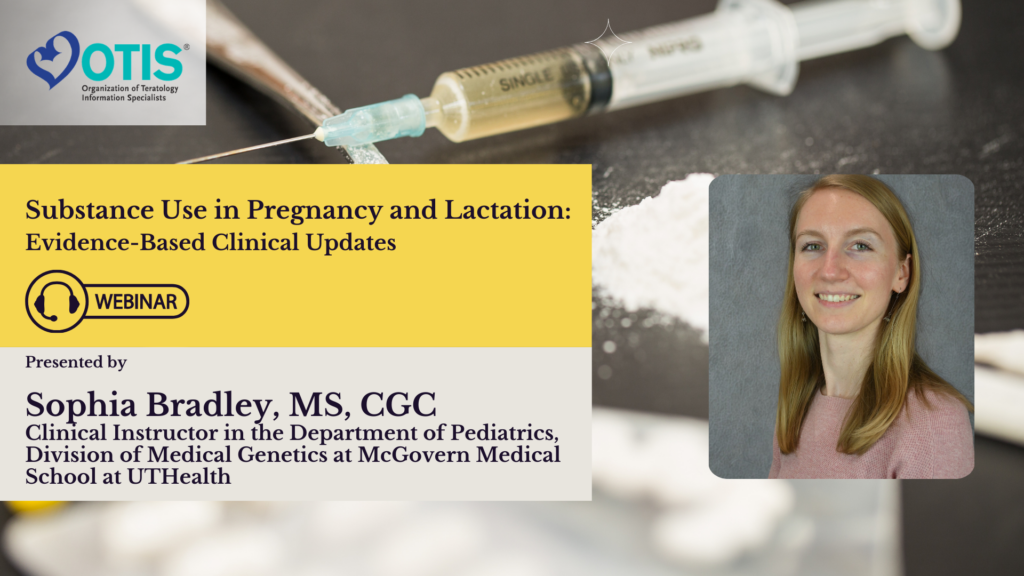
Substance use during pregnancy and breastfeeding raises many questions for both healthcare providers and families. In this webinar, genetic counselor Sophia Bradley, MS, CGC, provides an evidence-based overview of the latest research on exposures to alcohol and drugs during pregnancy and lactation.

The presentation reviews current data on potential risks, outcomes, and clinical considerations when counseling patients about substance use during pregnancy and breastfeeding. Designed for newborn care specialists and healthcare professionals, this session highlights key insights to support informed, evidence-based conversations with patients.

Sophia Bradley is a certified genetic counselor and Clinical Instructor in the Department of Pediatrics, Division of Medical Genetics at McGovern Medical School at UTHealth. She also serves as a teratogen information specialist with MotherToBaby, where she provides exposure counseling, presents educational seminars, and contributes to the development of public health resources.


Radiation in Pregnancy Graphic

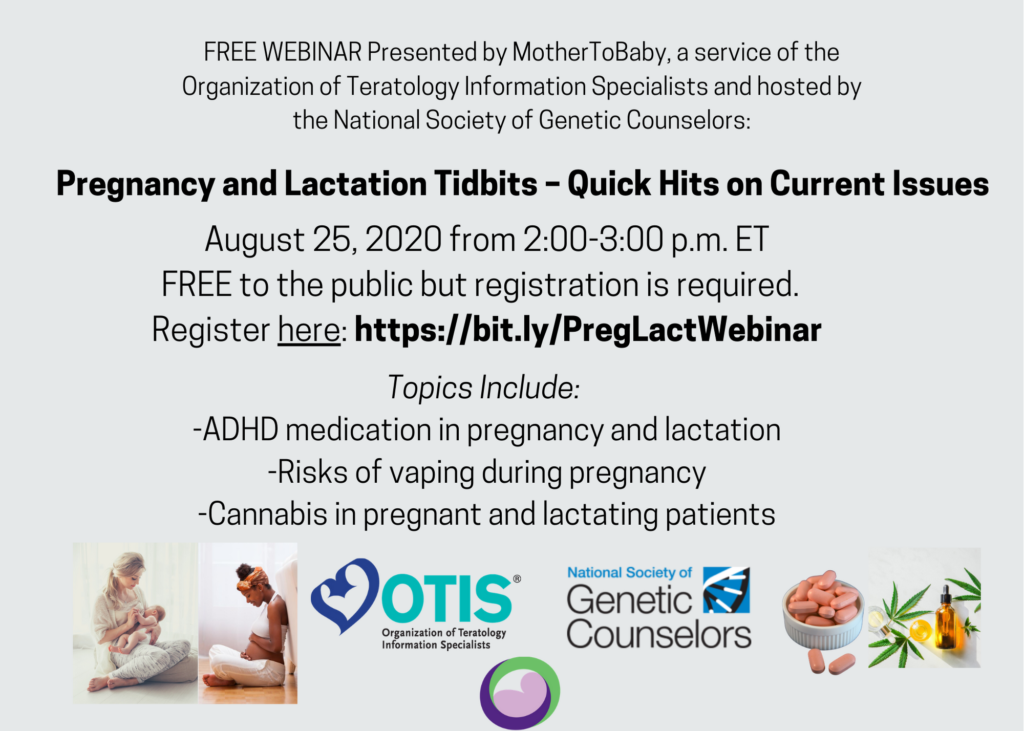
Access our free presentation for healthcare professionals on current issues from ADHD medications, the risks of vaping, and cannabis use during pregnancy and lactation. Filmed on August 25, 2020, a link to the recording can be found here.


Radiation in Pregnancy Graphic

SALT LAKE CITY, UT – A webinar aimed at educating the public, as well as health care providers, about alcohol, tobacco and other drugs of abuse (ATOD) and their effects during pregnancy is now available for free viewing.

Julia Robertson, CPM, and Alfred Romeo, RN, PhD of MotherToBaby Utah, also known as the Pregnancy Risk Line, hosted the webinar. MotherToBaby Utah is supported by the Utah Department of Health.

Topics include a discussion on the increasing public health concerns with drug dependence, fetal embryology, birth defects associated with ATOD, educational activities to reduce ATOD use and resources for women and health care providers.

View the webinar here:


Radiation in Pregnancy Graphic

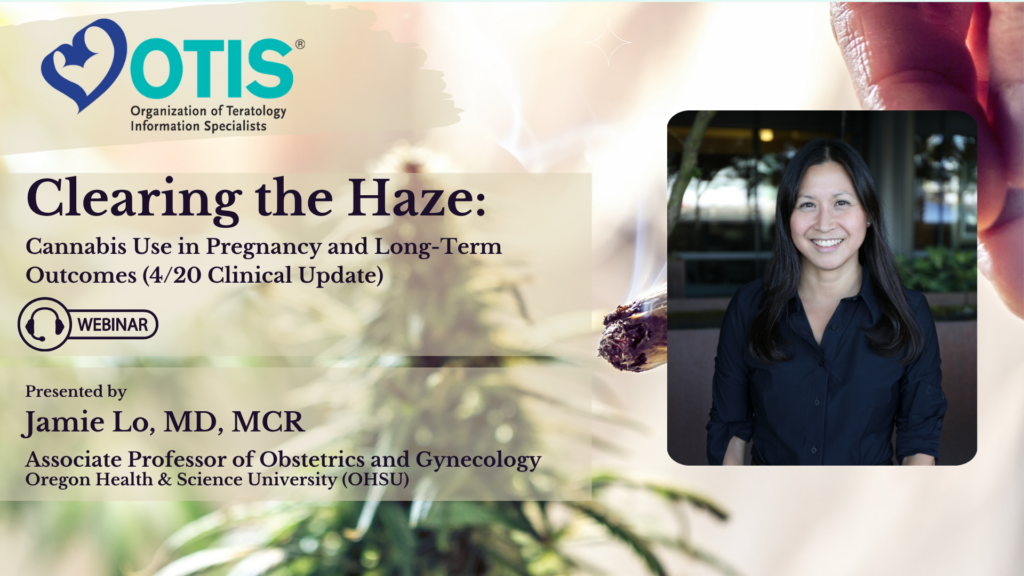
Cannabis use during pregnancy is increasingly common, and healthcare providers are often asked to counsel patients on potential risks and long-term effects. In this webinar, Dr. Jamie Lo, MD, MCR, provides an evidence-based overview of the latest research on prenatal cannabis exposure.

The presentation reviews current data on pregnancy outcomes, neurodevelopment, and potential long-term child health effects associated with cannabis use in pregnancy. Designed for healthcare professionals, this session highlights emerging research and offers practical guidance to support informed, evidence-based patient counseling in a rapidly evolving landscape.

Dr. Jamie Lo is an Associate Professor of Obstetrics and Gynecology at Oregon Health & Science University. She is a physician scientist, board-certified in Maternal-Fetal Medicine, and clinically cares for patients with high-risk pregnancies. Her research focuses primarily on the impact of prenatal environmental exposures, especially substance use, on pregnancy, placental, and offspring health.