More than Scratching the Surface: Psoriasis During Pregnancy and Breastfeeding
Disclaimer: This page houses important information and resources pertaining to psoriasis during pregnancy and while breastfeeding, including links to our evidence-based Fact Sheets. However, the resources here should not replace the care and advice of a medical professional.
Psoriasis is a skin condition in which skin cells grow faster than expected. This can leave dry, thick patches on the skin. Psoriasis is a chronic (long-term) disease that is thought to be caused by a problem with the immune system; it is not contagious so you cannot catch it from another person. It tends to go through cycles, flaring for a few weeks or months and then going into remission for a while. More than 50% of people with psoriasis are women and most are diagnosed before the age of 40 – which means a lot of people will be living with this disease when they are pregnant or breastfeeding.
It isn’t clear if psoriasis can increase the change of pregnancy complications like miscarriage, preeclampsia (a pregnancy-related condition characterized by a dangerous rise in blood pressure and problems with kidney function), or preterm birth. The chance for pregnancy complications may depend on whether the symptoms of psoriasis are mild or severe. Some medications used to treat psoriasis might be concerning during pregnancy or breastfeeding, while others appear to be okay to take. Be sure to talk to your healthcare provider about all of your pregnancy and breastfeeding questions.
Yes, it’s possible to treat psoriasis while pregnant or breastfeeding. A [person] must avoid some treatments because they can harm [their] baby. Others can be prescribed.
If you’re pregnant and have psoriasis, please consider enrolling into our observational study to give people better answers about how psoriasis and its management can affect a pregnancy and a developing baby. You will not be asked to take or change any medications, and you can participate from the comfort of your home
What You Need to Know About COVID-19 and COVID-19 Vaccines
Disclaimer: This page houses important COVID-19 information. Resources pertain to COVID-19 and COVID-19 vaccines during pregnancy and while breastfeeding, including links to our evidence-based Fact Sheets. However, the resources here should not replace the care and advice of a medical professional.
COVID-19 is a respiratory illness caused by the SARS-CoV-2 virus. Studies show that women who are pregnant and get COVID-19 have a higher chance of becoming very sick than women who are not pregnant. Having a COVID-19 infection in pregnancy also increases the chances of certain pregnancy complications. Major medical organizations recommend that women who are planning pregnancy, currently pregnant, recently pregnant, and/or breastfeeding stay up to date with the latest COVID-19 vaccine. Studies that have included thousands of women who were vaccinated during pregnancy do not find a higher chance of miscarriage, birth defects, or pregnancy complications. Lactation studies have found that the vaccine does not cause problems for breastfeeding infants. Staying up to date with COVID-19 vaccines is the best way to protect yourself against COVID-19.
Join Our COVID-19 Study
MotherToBaby is currently conducting a study looking at Paxlovid used to treat COVID-19 in pregnancy. If you’re pregnant, have or had a known COVID-19 infection during pregnancy, and you are or were being treated with Paxlovid, please consider enrolling into our observational study to give parents-to-be better answers about COVID-19 and the medications used to treat it during pregnancy. You will not be asked to take or change any medications, and you can participate from the comfort of your home. For more information, download our study flyer for participants (English & Spanish) or for healthcare providers.
Treating infections during pregnancy and breastfeeding
Disclaimer: This page houses important information and resources pertaining to the use of antibiotics during pregnancy and while breastfeeding, including links to our evidence-based Fact Sheets. However, the resources here should not replace the care and advice of a medical professional.
From strep throat to pneumonia, a urinary tract infection to a sinus infection, an infected cut to certain sexually transmitted infections, there are many reasons why you might need to take an antibiotic over the course of your life. But if it happens when you’re pregnant or breastfeeding, you might have questions about whether or how an antibiotic medication that you need to take could affect your baby.
“Approximately one in four women will be prescribed an antibiotic during pregnancy, accounting for nearly 80% of prescription medications in pregnant women.”
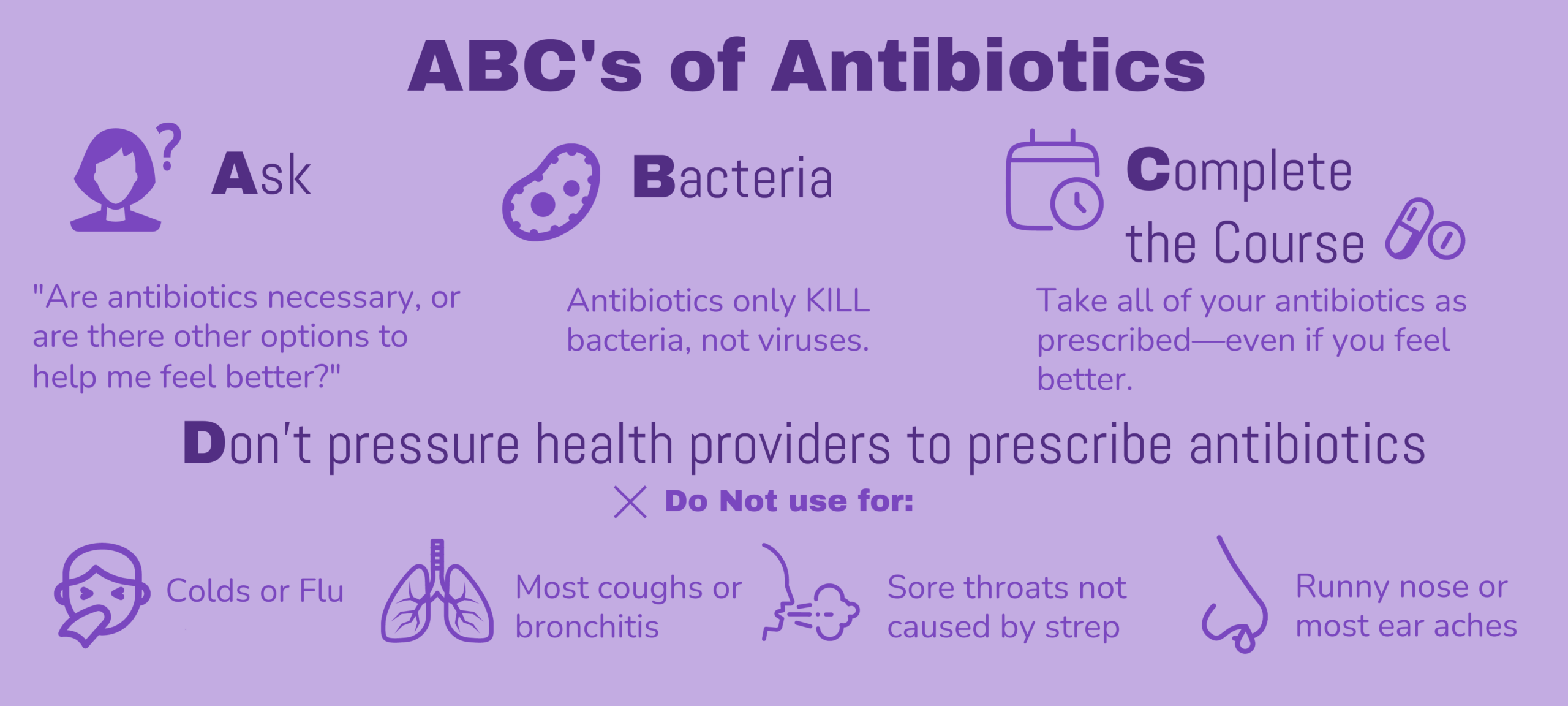
Antibiotics are only used to treat bacterial infections, like those described above; they are not used to treat viral infections (like influenza or the common cold) or fungal infections (like a yeast infection). The antibiotic your healthcare provider prescribes will depend on the type of bacterial infection you have.
Most antibiotics have not been found to negatively affect pregnancy or a developing baby, though some are generally avoided during pregnancy. Importantly, if you are taking a course of antibiotics when you discover that you are pregnant, do NOT stop taking the antibiotic without first discussing it with your healthcare provider. Many untreated infections are associated with significant pregnancy complications, including preterm birth and miscarriage; thus, adequately treating your infection is important for both your health and the health of your baby. In addition, stopping a course of antibiotics mid-treatment increases the chance that the bacteria will develop resistance to antibiotic medications. Always talk to your healthcare provider before you stop taking any prescribed medications.
Many commonly prescribed antibiotics – though not all of them – are compatible with breastfeeding. Studies conducted with breastfeeding women who are taking antibiotics have found that small amounts of the medication can be found in breast milk. However, these amounts are much lower than the dose the mom is taking and are generally thought to not be harmful to the infant’s health. Breastfed infants of moms who are taking antibiotics should be monitored for symptoms such as diarrhea, thrush (a yeast infection in the mouth), and diaper rash. If you are a breastfeeding parent with an infection that requires antibiotic treatment, make sure your healthcare provider knows you are currently breastfeeding so they can choose a medication that will both treat your infection and maximize your baby’s well-being.
Talk with your healthcare provider if you have any questions or concerns about taking antibiotics during pregnancy or while breastfeeding. Our experts are also available by phone, text, email, and chat to answer any questions you may have. You can also visit our library of resources below.
Why the Tdap vaccine is one you don’t want to miss when you’re pregnant
Disclaimer: This page houses important information and resources pertaining to tetanus, diphtheria, and pertussis (Tdap) and the Tdap vaccine during pregnancy and while breastfeeding, including links to our evidence-based Fact Sheets. However, the resources here should not replace the care and advice of a medical professional.
Tetanus, diphtheria, and pertussis (Tdap) are three different infections caused by bacteria. All three can be prevented by a single vaccine, called the Tdap vaccine. While the vaccine is the same, the illnesses themselves are not identical.
Tetanus
The bacteria that cause tetanus can be found in the environment and often enter the human body through open wounds. If you’ve ever stepped on a rusty nail, chances are you have been given a tetanus shot! Although tetanus is not a common illness, it can be serious and requires immediate treatment. Often, the first symptom of tetanus is spasms of the jaw muscles, also called “lockjaw.” Other symptoms can include fever, headaches, difficulty swallowing, and muscle pain and stiffness. Left untreated, tetanus can lead to very serious health complications and even death.
Diptheria
Diphtheria is a contagious disease that is most often spread by coughing and sneezing. The most common and serious type of diphtheria is the respiratory form of the disease, which infects the nose and throat (the upper respiratory tract). The most recognized symptom of respiratory diphtheria is the appearance of a “pseudo-membrane” in the nose and throat (a thick, gray coating of dead tissue that can make it hard to breathe and swallow). Diphtheria can kill healthy tissue in the respiratory system, which can cause the build-up of this pseudo-membrane. Other symptoms of diphtheria include fever, sore throat, and swollen neck glands. Like tetanus, untreated respiratory diphtheria can lead to very serious health complications and even death.
Pertussis
Finally, pertussis is a contagious disease that can easily spread from person-to-person through coughing and sneezing. At first, pertussis infection can look like a common cold, with symptoms like a mild cough, fever, and congestion. But within 1-2 weeks, those symptoms can escalate to coughing fits that get worse over time. In fact, pertussis is often referred to as “whooping cough” because of the “whoop” noise that can be heard when a person gasps for air after a coughing fit. These coughing fits can be so severe that they can cause breathing difficulties, vomiting, and even rib fractures.
Pertussis can be particularly deadly for newborns and infants under 1 year of age. This age group has the greatest risk of getting whooping cough and having severe complications from it. In addition, while coughing is a common symptom in older children and adults who get pertussis, babies might not cough at all. Their primary symptom may be difficulty breathing, including life-threatening pauses in breathing (apnea) that may cause them to turn blue (cyanosis). The severe nature of pertussis infection for newborns and infants is the reason why all leading medical organizations and public health agencies recommend that women receive the Tdap vaccine during each pregnancy – keep reading for more information about this critical vaccine!
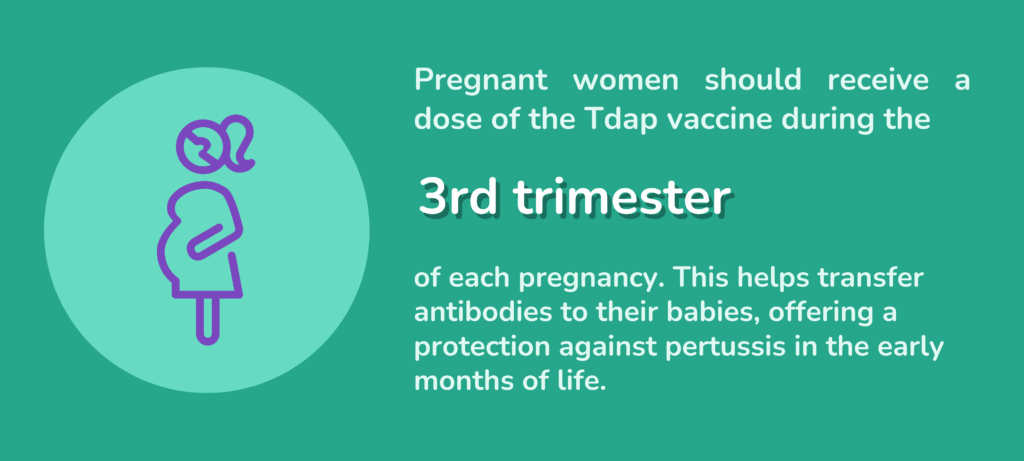
All pregnant women should get a Tdap shot between 27 and 36 weeks of pregnancy, as early in that window as possible. The Tdap shot is a safe and effective way to protect you and your baby from serious illness and complications of pertussis.
The Tdap vaccine is an immunization that protect adults and children over the age of 7 from all three of the bacterial illnesses described above: tetanus, diphtheria, and pertussis. It is also recommended that pregnant women receive a Tdap vaccine early in the 3rd trimester of every pregnancy. Why? Babies cannot receive the infant version of this vaccine (called the DTaP vaccine) until they are 2 months old. This leaves them highly vulnerable to pertussis during the first 8 weeks of life. Pertussis can be a very serious – and sometimes deadly – illness for babies. When a pregnant woman gets the Tdap vaccine at the recommended time in pregnancy, their immune system creates protective antibodies that can be shared with the baby before birth. These antibodies can then provide the baby with short-term, early protection against pertussis.
When breastfeeding, receiving the Tdap vaccine can protect you from getting tetanus, diphtheria and pertussis. Remember, diphtheria and pertussis are contagious and can spread through coughing and sneezing. Being vaccinated against these diseases will help prevent you from getting them and passing them on to your baby during the naturally close contact you have while breastfeeding and caring for an infant. The Tdap vaccine is also recommended for all other adults who will be caring for the infant.
Talk with your healthcare provider about the Tdap vaccine and all other recommended vaccines during pregnancy and while breastfeeding. Be sure to bring up any questions or concerns you may have, so they can be addressed.
Join Our Tdap Vaccine Study
Have you got (or are you planning to get) the Tdap vaccine during pregnancy? Join our study to share real-world insights on the BOOSTRIX Tdap vaccine Please note that we will not ask you to receive the Tdap vaccine as part of the study; we are solely interested ingathering data from those who have already chosen to receive the Tdap vaccine during the third trimester of pregnancy.
How AS and its Treatment May Affect Pregnancy and Breastfeeding
Disclaimer: This page houses important information and resources pertaining to Ankylosing Spondylitis during pregnancy and while breastfeeding, including links to our evidence-based Fact Sheets. However, the resources here should not replace the care and advice of a medical professional.
Ankylosing spondylitis (AS) is a kind of arthritis that mostly affects the spine. The spinal joints (or vertebrae) become inflamed, which can lead to severe, chronic pain. It severe cases, it can also lead to new bone formation in the spine that results in sections of the spine becoming fused or stuck in one position. Other joints can also become involved with AS, including the shoulders, hips, ribs, and small joints located in hands and feet. Symptoms of AS can include swelling, stiffness, and pain. Some medications used to treat AS are known to cause birth defects or problems with breastfeeding, but others have not been associated with concern.
Patients with axial spondyloarthritis frequently have active disease at some stage of pregnancy. Hence, many people find it more helpful to plan ahead and talk to their doctor about these issues prior to getting pregnant. We recommend working closely with your physicians to determine the best course of treatment while pregnant.
If you’re pregnant and have ankylosing spondylitis or spondyloarthritis, please consider enrolling in our observational study to help provide better answers about how chronic inflammatory conditions and their management may affect pregnancy and a developing baby. You will not be asked to take or change any medications, and you can participate from the comfort of your home.