The Pain of Pregnancy: Can Massage or Acupuncture Safely Help?

By Bethany Kotlar, MPH, Teratogen Information Specialist, MotherToBaby Georgia

Anyone who has been pregnant knows it’s no walk in the park. From the intense nausea, vomiting, and strange cravings of the first trimester, to all the aches and pains of the third trimester, carrying a baby can feel like a marathon! It’s no wonder pregnant women look high and low for any form of relief. Two questions we are asked frequently here at MotherToBaby are-“Can I get a massage?” and “Is acupuncture safe during pregnancy?”

Want a massage? Here’s the rub…

At 38 weeks pregnant, my feet hurt, my back hurt, sometimes it felt like even my hair hurt! All I wanted was someone to knead all my aches and pains away. I wanted a massage, so being a MotherToBaby information specialist, I set out to research massage during pregnancy. On the plus side, studies have shown that massage can benefit pregnant women. Massage during pregnancy not only helps with those aches and pains, it has also been shown to decrease stress, help ease symptoms of depression, and increase feelings of wellbeing. Sounds pretty good, right?

So, should you run out and book that massage right this second? Not too fast – there are a couple of things to keep in mind. The safety of massage in the first trimester hasn’t been studied well. Because of this, some massage therapists and medical professionals recommend avoiding massage during the first three months of pregnancy. If you do decide to get a massage in the first trimester, it’s better to choose a massage that doesn’t use heat (like a hot towel or hot stones), especially around the stomach area or lower back. This is because overheating during pregnancy can increase the risk of birth defects. See our fact sheet on hyperthermia for more information: https://mothertobaby.org/fact-sheets/hyperthermia-pregnancy/.

When getting a massage at any point in pregnancy, choose a massage therapist who is trained to work with pregnant women. These therapists will know to avoid pressure in certain areas and will also know which places can get especially sore when you’re carrying a baby. It’s also best to avoid massages that apply a lot of pressure, like deep tissue massages, since these haven’t been well studied. Finally, make sure your therapist knows whether you have any allergies to certain oils and that they are using products that are not known to increase risk during pregnancy.

If you’re getting a massage in late pregnancy, the massage therapist may offer to apply pressure to certain points on your body that are thought to bring on labor. Studies have not shown that this actually induces labor, but to be on the safe side it’s better to wait until you are at least 39 weeks pregnant to try.

What about acupuncture? A few points…

Acupuncture is a technique in which a trained practitioner inserts very small needles into certain points of the body. Stimulating these points is thought to help with pain, indigestion, infertility, and much more. Acupuncture is usually recommended to pregnant women to help with nausea and vomiting, and to relieve pain.

The available studies do not show an increased risk of birth defects or other pregnancy problems when pregnant women use acupuncture. The most common risk with acupuncture is to feel a little pain when the needles are placed. While the risk from acupuncture is low, studies also haven’t shown that acupuncture necessarily helps with nausea, vomiting, or pain during pregnancy.

If you do decide to get acupuncture during pregnancy, be sure to find a trained practitioner. You may want to find a practitioner with experience working with pregnant women as well. Make sure your practitioner is not re-using needles from other clients as this may increase the risk of certain infections. Like massage, there are a few acupuncture points that are thought to bring on labor. Studies haven’t shown that this will bring baby earlier, but it’s best to avoid these points unless you are at least 39 weeks pregnant.

As with any treatment, it’s best to talk to your healthcare provider before starting. Remember, we’re here to help too! If you have any questions about massage, acupuncture, or any other exposure during pregnancy, you can contact an expert at MotherToBaby by calling 866-626-6847, texting 855-999-3525, or by live chat or email at https://mothertobaby.org//a>.

Bethany Kotlar, MPH, is a teratology information specialist with MotherToBaby Georgia. She holds a Masters in Public Health specializing in Maternal and Child Health, and is a Certified Childbirth Educator. She enjoys exercising, traveling and Netflix.

About MotherToBaby

MotherToBaby is a service of the Organization of Teratology Information Specialists (OTIS), suggested resources by many agencies including the Centers for Disease Control and Prevention (CDC). If you have questions about exposures during pregnancy and breastfeeding, please call MotherToBaby toll-FREE at 866-626-6847 or try out MotherToBaby’s new text information service by texting questions to (855) 999-3525. You can also visit MotherToBaby.org to browse a library of fact sheets about dozens of viruses, medications, vaccines, alcohol, diseases, or other exposures during pregnancy and breastfeeding or connect with all of our resources by downloading the new MotherToBaby free app, available on Android and iOS markets.

The Pain of Pregnancy: Can Massage or Acupuncture Safely Help?

By Pat Olney, MS, CGC, Pregnancy Risk Specialist, MotherToBaby Georgia

One day in early June I received a frantic call from a woman who had first called Georgia’s Poison Control Center worried about the agent used to treat her varicose veins. She thought that she did the right thing by postponing her treatment until after she gave birth, but now was concerned about breastfeeding her newborn. The medical director at poison control, who is one of our advisory board members, gave her the correct information: “Call Pat Olney at MotherToBaby!”

The caller’s vascular surgeon advised her to pump her breast milk over the next 24-48 hours, and discard it; otherwise known as pump and dump. The first thing she did before calling poison control was surf the Internet for answers. She began feeling guilty about having had the procedure. She lamented, “Why didn’t I wait until after my baby was done nursing!”

First, I needed to learn a little bit about varicose veins. Varicose veins are more common in women than men, and women may first develop varicose veins during pregnancy. Pregnancy puts an added burden on the veins as the amount of blood flowing through the veins increases. Veins in the legs are already working against gravity, and pressure from the increased blood volume can cause veins to swell and bulge near the surface of the skin. They tend to get worse with each subsequent pregnancy, as women get older, or if a woman is overweight. Varicose veins can be very painful. Typically, the problem tends to improve after delivery. For our caller, the pain and discomfort continued and she decided to seek treatment.

The agent used for her varicose vein treatment was sodium tetradecyl sulfate (STS). I consulted my brand new 2014 edition of Dr. Thomas Hale’s manual of lactational pharmacology, “Medications & Mother’s Milk.” Dr. Hale’s book is used all over the world, and he is recognized as an expert in this highly specialized field. STS, a sclerosing agent, is injected into the affected vein. Dr. Hale describes this agent: “…an anionic surfactant which causes local inflammation, and thrombus formation, thereby occluding and eventually obliterating the affected vein.” He goes on to say “severe reactions such as anaphylactic shock, pulmonary embolism have been reported, although rare.”

Sounds terrible, doesn’t it? I said to myself…no wonder this woman called poison control!

Dr. Hale developed the following lactation risk categories:
L1 Compatible: drug has been taken by a large number of breastfeeding women without any observed increase in adverse effects in the infant; controlled studies fail to demonstrate a risk to the infant, or the product is not orally bioavailable in an infant

L2 Probably compatible: drug has been studied in a limited number of breastfeeding women without an increase in adverse effects in the infant, and/or the evidence of a demonstrated risk is remote

L3 Probably compatible: there are no controlled studies in breastfeeding women; however, the risk of untoward effects to breastfed infant is possible, or controlled studies show only minimal non-threatening adverse effects; drugs should be given only if potential benefit justifies potential risk to infant; new medications that have no published data are automatically categorized in this category, regardless of how safe they may be

L4 Possibly hazardous: positive evidence of risk to breastfed infant or to breast milk production; benefits of use may be acceptable despite the risk to infant; e.g. if the drug is needed in a life-threatening situation or a serious disease for which safer drugs cannot be used or are ineffective

L5 Hazardous: studies in breastfeeding mothers have demonstrated significant and documented risk to the infant based on human experience, or is a medication that has a high risk of causing significant damage to infant; drug is contraindicated in women breastfeeding an infant

Did the vascular surgeon give our caller the correct information?

Sodium tetradecyl sulfate falls into lactation category L3. There are no studies done in nursing women, and there is no data on its transfer into human milk. Dr. Hale goes on and states, “This product could be hazardous if introduced in the infant through breast milk. Therefore, extreme caution is recommended with its use in a lactating mother.”

Since there are no published studies, and no data, our caller was given the correct advice: pump and dump. Fortunately, her baby was already taking an occasional bottle, so she thought the baby would easily switch back to breastfeeding.

Sometimes the advice given to lactating mothers is not so straightforward. As summarized in a clinical report published by the American Academy of Pediatrics (AAP), “Many breastfeeding women are wrongly advised to stop taking necessary medications or to discontinue nursing because of potential harmful effects on their infants. Not all drugs are present in clinically significant amounts in human milk or pose a risk to the infant. Certain classes of drugs can be problematic, either because of accumulation in breast milk or due to their effects on the nursing infant or mother.”

When counseling a woman who has chosen to give her baby the best start in life, it’s important to get the facts, even if evidence-based information is lacking.

Questions? For your FREE personalized risk assessment, call MotherToBaby toll-FREE (866) 626-6847. MotherToBaby is a service of the international non-profit Organization of Teratology Information Specialists (OTIS), a society that supports and contributes to worldwide initiatives for teratology education and research. MotherToBaby affiliates and OTIS are suggested resources by many agencies, including the Centers for Disease Control and Prevention (CDC), and are dedicated to providing evidence-based information to mothers, health care professionals, and the general public about medications and other exposures during pregnancy and while breastfeeding. Learn more at MotherToBaby.org.

Pat Olney


Patricia Olney, MS, is a certified genetic counselor and pregnancy risk specialist at MotherToBaby Georgia, Emory University. She received her masters degree at the University of California, Berkeley and has practiced genetic counseling for more than 25 years. MotherToBaby GA is funded by the Georgia Department of Behavioral Health and Developmental Disabilities.

Reference:
The American Academy of Pediatrics (AAP) August 2013 “The Transfer of Drugs and Therapeutics Into Human Breast Milk: An Update on Selected Topics.”


The Pain of Pregnancy: Can Massage or Acupuncture Safely Help?

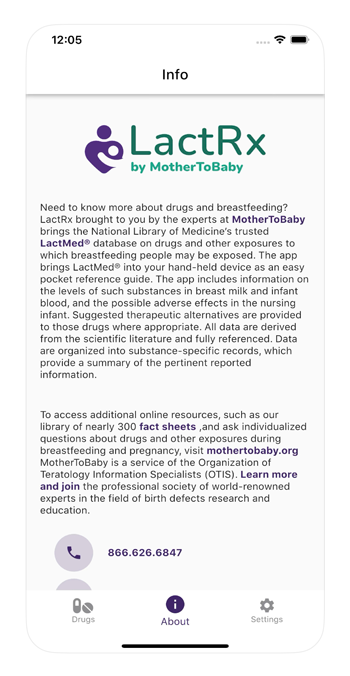
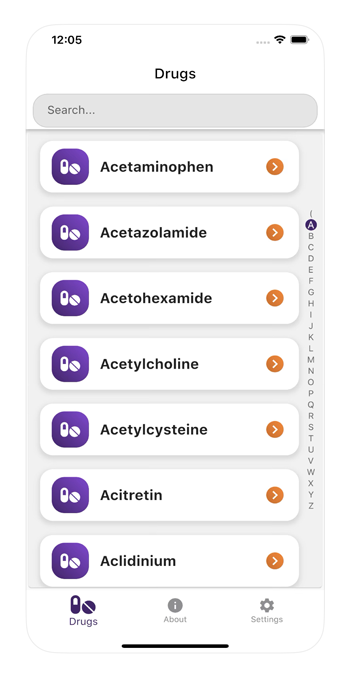
Bringing Breastfeeding Professionals Access to LactMed for Exposure Information On-the-Go

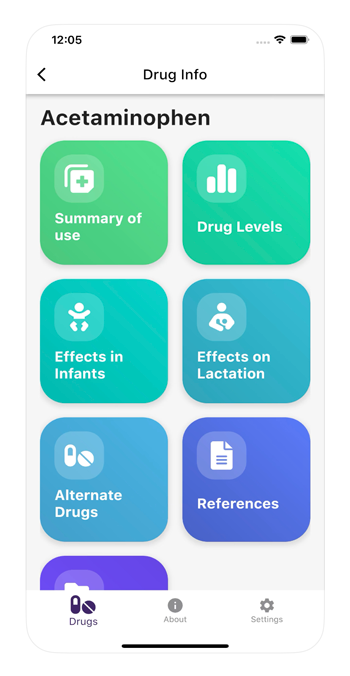
LactRx by MotherToBaby is a free app providing current information on the use of medications, vaccines, diagnostic agents & drugs of misuse during breastfeeding. The LactRx app provides easy access to the LactMed database, a resource from the National Library of Medicine (NLM). The LactRx app provides access to the LactMed database, which has information on the use of medications, vaccines, diagnostic agents & drugs of abuse during breastfeeding that is updated monthly.

Download the LactRx App

iPhone

Android

History of LactRx App Development

In 2019 the NLM announced that the LactMed app was being discontinued. The announcement prompted a discussion between Phil Anderson, PharmD, FASHP, UC San Diego clinical professor and author of LactMed and Christina Chambers, PhD, MPH, MotherToBaby Past President and Mommy’s Milk: Human Milk Biorepository Program Director, about MotherToBaby sponsoring a new app for LactMed. “This was a hugely popular resource with millions of hits,” said Chambers.  Because of this, she saw it as an opportunity for MotherToBaby to help build and host a new app with all of the LactMed information.

In October of 2021, the idea was brought to the leadership of the Organization of Teratology Information Specialists (OTIS), the professional non-profit that provides the MotherToBaby no-cost service. Development commenced and LactRx was born.

“The NLM made the decision to continue supporting web access to LactMed, and to discontinue support for its app. However, in Dr. Anderson’s experience, the app was a very popular and a user-friendly mode of access to the data,” explained Chambers. “In collaboration with NLM, MotherToBaby was given permission to create the LactRx app and, thus, to expand ease of access to this critical information for providers and the public worldwide.”

LactRx by MotherToBaby was launched in 2022 to bring lactation professionals on-the-go access to exposure information that they can count on. This resource is an extension of MotherToBaby’s free services which includes access to information specialists on breastfeeding and pregnancy exposures by phone, text, email, and live chat.

Additional Information

Information presented in the LactRx app is not intended to be a substitute for professional judgment. Users should consult personal healthcare providers for breastfeeding advice related to their particular situation.

MotherToBaby also works closely with the NLM to contribute bilingual (English/Spanish) evidence-based fact sheets regarding medications, vaccines, diseases, herbal supplements, occupational exposures and more during pregnancy and breastfeeding.

MotherToBaby traditionally provides information on exposures before and during a pregnancy as well as breastfeeding through its no-cost helpline 866-626-6847, texting service 855-999-3525 and website MotherToBaby.org, where the public can live chat or e-mail an expert.


The Pain of Pregnancy: Can Massage or Acupuncture Safely Help?

By Beth Conover, APRN, CGC MotherToBaby Nebraska, UNMC

“There are so many risks to the baby if I go for dental work, right?” “What about x-rays?” “I don’t like going to the dentist anyway, so I’ll probably just wait until my baby is born. That should be fine, right?” Worries, excuses, we’ve heard it all at MotherToBaby when it comes to dental procedures during pregnancy. We often receive questions from women wondering whether dental care is safe. In short, the answer is….yes! What better time to talk about the reasons why it’s ok than during June – typically the month the American Dental Association dubs as “Oral Health Month.”

Routine dental care is low risk, and most emergency procedures can be done as well.
Good oral health improves your overall health, and increases your chances of a good pregnancy outcome. However, when you are scheduling a dental appointment and are pregnant (or trying to get pregnant), let the office know so that they can be prepared to make decisions about which procedures are safe for your baby. In some cases, you or your dentist may want to wait until after delivery for elective (non-necessary) procedures.

Here are some commonly asked questions we get from pregnant women:

  • When I brush my teeth, my gums have started to bleed. Is this normal? What should I do?

Bleeding gums is a common problem during pregnancy. Pregnant women have hormonal changes that can increase their chances of getting gum problems such as gingivitis (puffy and tender red gums that bleed easily). Your dentist will want to monitor this so that it does not progress to a more serious gum disease. Periodontal disease is a bacterial infection of the gums and jaw bones that support the teeth, and can increase your chances of having a smaller baby, delivering early, and having other pregnancy complications. Dentists recommend that you floss daily, and get your teeth cleaned on a regular basis during pregnancy (consider having it done more frequently, if you are having pregnancy gingivitis).

  • It seems like pregnancy is causing me to get more cavities in my teeth…am I right?

Pregnancy can contribute to women having more cavities. This is in part due to changes in diet such as frequent snacks including sugary foods. To prevent cavities, eat a healthy diet and brush your teeth after eating sweets. In addition, if you have morning sickness, the acid from your stomach can affect your tooth enamel and make cavities more likely. Rinse your mouth with water or mouthwash after morning sickness episodes. If your toothpaste is making your morning sickness worse, ask your dentist for the name of a bland-tasting toothpaste.

  • What if I need to get a cavity filled or a tooth pulled? Can I have a local anesthetic?

Agents like lidocaine which are injected into your gums are low risk for your baby. In one study, researchers compared pregnant women who received lidocaine injections as part of dental treatment with women who did not, and found no significant increase in risk for miscarriage, prematurity, or birth defects. If you need a pain medication, your dentist will take into account where you are in your pregnancy so as to make a choice that is safest for your baby.

  • Are dental x-rays safe in pregnancy?

You may choose to have routine X-rays done prior to pregnancy, or to delay them until after you deliver – talk to your dentist about the best options for you. However, if you have a dental emergency and need to have them done, don’t hesitate. Advances in technology have made dental X-rays safer, and they do not involve as much radiation or may not involve radiation at all. Your dental office will cover your neck and abdomen with a lead apron, which lessens the exposure to your baby even more.

  • What else can I do to ensure dental health?

Schedule a visit to your dentist before you are pregnant. Get teeth cleaned, gums examined, and any dental issues addressed prior to pregnancy.

Brush your teeth at least twice a day and floss once a day. This helps reduce plaque, the sticky film that covers your teeth and can make gums inflamed and increase your risk for periodontal disease.

I hope I’ve given you a few good tips to chew on – Your teeth and baby will thank you. Have a healthy pregnancy!

Beth Conover, APRN, CGC, is a genetic counselor and pediatric nurse practitioner. She established the Nebraska Teratogen Information Service in 1986, also known as MotherToBaby Nebraska. She was also a founding board member of the Organization of Teratology Information Specialists (OTIS). In her clinical practice, Beth sees patients in Pharmacogenetics Clinic and Genetics Clinic at the University of Nebraska Medical Center. Beth has provided consultation to the FDA and CDC.

About MotherToBaby
MotherToBaby is a service of the Organization of Teratology Information Specialists (OTIS), suggested resources by many agencies including the Centers for Disease Control and Prevention (CDC). If you have questions about exposures during pregnancy and breastfeeding, please call MotherToBaby toll-FREE at 866-626-6847 or try out MotherToBaby’s new text information service by texting questions to (855) 999-3525. You can also visit MotherToBaby.org to browse a library of fact sheets about dozens of viruses, medications, vaccines, alcohol, diseases, or other exposures during pregnancy and breastfeeding or connect with all of our resources by downloading the new MotherToBaby free app, available on Android and iOS markets.

The Pain of Pregnancy: Can Massage or Acupuncture Safely Help?

A couple of weeks ago, a friend of mine who is in her second trimester of pregnancy, called me in a panic. Due to her recent medical history, it was recommended that she get an MRI in addition to her yearly mammogram as a way to screen for breast cancer. She, like many women who have the same question, was relieved and grateful to get this information. She then asked, “do women get diagnosed with cancer in pregnancy? Can they be treated?”

What We Know about Cancer in Pregnancy

Yes, cancer occurs in about one in a thousand pregnancies every year. The most commonly diagnosed cancers in pregnancy are breast, cervical, Hodgkin’s disease, malignant melanoma, and leukemias. It can be tricky to diagnose cancer during pregnancy because common cancer symptoms such as fatigue, changes in the breasts, bloating, headaches, rectal bleeding, blotchy skin, and achy joints can also be symptoms of pregnancy.

Diagnosis

Cancer can be diagnosed in different ways, including physical exams, biopsies, blood tests, ultrasounds and pap smears – all of which are used in pregnancy. But what about other tests?

  • X-rays can be used to diagnose cancer during pregnancy. The level of radiation used during an x-ray is too low to cause any known harm to the developing baby. When possible, women can use a lead shield that covers the abdomen during x-rays.
  • Computed tomography (CT or CAT) scans of the head or chest do not directly expose the developing baby to radiation. CT scans of the abdomen or pelvis can be done in pregnancy if absolutely necessary.
  • Magnetic resonance imaging (MRI) does not use radiation and can be used in pregnancy.

Once diagnosed, the next thing to consider are various treatment options. Cancer can be successfully treated during pregnancy, but there are some important things to think about such as the size and location of the tumor, if the cancer has spread to other body parts, how far along you are in the pregnancy, and any other health conditions you may have.

  • Many medications used for cancer treatment (chemotherapeutic agents) are usually not given in the first trimester of pregnancy, because that’s when a lot of the baby’s development is happening. However, it’s possible to use them in the second or third trimesters. This can vary based on many factors, including the medication itself.
  • Surgical procedures (including using anesthesia) can usually be done during pregnancy.
  • For treatments such as radiation, hormone therapy, and targeted therapies, it’s often suggested to wait until after the baby is born.
  • Depending on the exact treatments and medications, breastfeeding may or may not be recommended.

Thankfully, my friend’s MRI is normal at this time. She was reminded to watch for any changes in her breasts and keeping an eye on any symptoms. Remember, whether you are pregnant or not, it’s always best to report any concerns to your healthcare provider as soon as possible. This way you can be properly evaluated, and treated if necessary, because most of the time a healthier mom leads to a healthier baby.