Kesimpta® (ofatumumab) (US PATIENTS ONLY)

We’re Collecting Info on Kesimpta® When Taken in Pregnancy

MotherToBaby is currently enrolling participants into an observational study examining the use of Kesimpta® (ofatumumab) when taken within 5 1/2 months before or during pregnancy. Our studies are strictly observational, which means we will never ask you to take any new medicines, experimental drugs or to change any part of your healthcare routine. If you enroll, you’ll simply be followed by our team through the remainder of your pregnancy, and your baby will be followed for a period of time after birth. Eligible moms-to-be who enroll in the study may receive up to $250 to compensate them for the time they spend completing study activities.

Our goal is to provide parents and their health providers with the evidence-based information that they need to make more informed healthcare decisions during pregnancy. To do that, we need your help. If you have multiple sclerosis and have taken Kesimpta® (ofatumumab) at any point in your current pregnancy, or shortly prior to pregnancy, you may qualify for this important study.

Questions?

To connect with our research team, please contact us at

Phone | 877.311.8972
Email | mothertobaby@health.ucsd.edu

We’re open Monday – Thursday from 7am – 7pm and Friday 7am – 6pm Pacific, excluding public holidays.

You can also visit our Frequently Asked Questions to learn more about participating in our studies.


How Our Studies Work

MotherToBaby Computer Icon

Parent-To-Be Enrolls in Study 

MotherToBaby File Icon

We Gather Info about the Pregnancy 

MotherToBaby Insights Icon

Discoveries & Insights Gained 

What’s Involved?

Our Kesimpta® (ofatumumab) study includes:
• 1-3 phone interviews during your pregnancy and at least 1 interview after you have your baby.
• Your permission to obtain a copy of your medical records from your healthcare provider for your pregnancy and for your child through 1 year of age.
• An opportunity to receive a specialized, non-invasive exam of your baby with a study doctor
• An online neurodevelopmental assessment that can also provide insight into the child’s development at approximately 12 months of age

Thank You for Participating: Compensation for Moms Who Take Part

We know your time is valuable. To thank you for the time you’ll be spending on study activities, you will receive $50 for each activity listed below.

Celebrated Study Milestones – Up to $250 in total compensation!

  • $50 for completing our enrollment interview and returning the signed form to release your pregnancy-related medical records to the study
  • $50 for completing the phone interview that will take place around the 20-week mark of your pregnancy
  • $50 for completing the phone interview that will take place around the 32-week mark of your pregnancy
  • $50 for completing the phone interview that will take place after the end of your pregnancy and returning the signed form to release to the study the medical records related to the outcome of your pregnancy
  • $50 for completing the child development questionnaire (the Ages and Stages Questionnaire) and returning the signed form to release your child’s pediatric medical records to the study

✔ You will be compensated at the time each study activity is completed

✔ There’s no penalty if you choose not to complete every study activity

✔ Participation in our study never changes your med

All the information we request will be kept confidential. Your privacy is important to us. We comply with strict regulations
and laws set forth by state and federal agencies as well as the Institutional Review Board (IRB) at the University of
California, San Diego, who oversees and monitors our research. Since we ask for your permission to obtain medical
records, we will also give you detailed information on how this data will be used and how we will protect your privacy.


MotherToBaby Pregnancy Women Intro Block

What is a MotherToBaby Pregnancy Study?

MotherToBaby Pregnancy Studies is a research program seeking to understand how certain medications, vaccines, or health conditions may affect pregnancy. Our research will help people who are pregnant and/or breastfeeding and health providers make informed treatment decisions. All of our studies are observational: we will never ask someone to take or change any aspect of their current health routine.

Who Leads MotherToBaby Pregnancy Studies?

Christina Chambers, PhD, MPH is the lead investigator for MotherToBaby Pregnancy Studies, which are coordinated by UC San Diego’s Center for Better Beginnings. She is a world‐renowned perinatal epidemiologist and a Professor of Pediatrics and Family and Preventive Medicine at the UC San Diego. Her interests are in the areas of birth defects and other pregnancy outcomes, with a special focus on exposures that can cause birth defects.

“Every person deserves to know if their health conditions or the medication they need to take could affect their baby during pregnancy. We are committed to bringing you better information for healthier outcomes.”

– Christina Chambers, PhD, MPH


If you are interested in joining the study, please submit your interest below. Our research team will contact you to see if you qualify. Your information is confidential.


If you are a health professional, please fill out the Refer a Patient form and we will contact your patient to see if they qualify. Your information is confidential.
Kesimpta® (ofatumumab) (US PATIENTS ONLY)

We’re Collecting Info on Adbry® When Taken in Pregnancy

MotherToBaby is currently enrolling participants into an observational study examining the use of Adbry® (tralokinumab-ldrm) when taken during pregnancy. Our research is by observation only—we will not ask you to take or change any medications. If you join our Adbry® study, our team will simply collect some information about your pregnancy and your baby’s development for a period of time after birth. 

“Help us improve the ability for pregnant people and their healthcare providers to make more informed treatment decisions by joining our Adbry® & Pregnancy Study.”

— Christina Chambers, PhD, MPH, Lead Investigator, MotherToBaby Pregnancy Studies

Our study includes:

  • 1-3 phone interviews during your pregnancy and at least 1 interview after you have your baby.

  • Your permission to obtain a copy of your and your baby’s medical records from your healthcare providers.

  • An opportunity to receive a specialized, non-invasive exam of your baby with a study doctor.
  • A neurodevelopmental assessment that can also provide insight into the child’s development at approximately 4 months and 12 months of age

If you have moderate-to-severe eczema (atopic dermatitis) and have taken Adbry® (tralokinumab-ldrm) at any point in your current pregnancy or 3 months prior to pregnancy, you may qualify for this important study. Will you take the next step and help us learn more about the use of Adbry® (tralokinumab-ldrm) during pregnancy?


Kesimpta® (ofatumumab) (US PATIENTS ONLY)

Help Us Understand the Possible Effects of Benlysta® in Pregnancy

Many people need to take medication during pregnancy to appropriately manage a chronic health condition. In some cases, avoiding or stopping medication use during pregnancy may be more harmful than taking medication. Yet fewer than 10% of medications have enough information to determine their safety for use in pregnancy — this is where you come in!

MotherToBaby is currently enrolling pregnant women in a study examining the use of Benlysta® (belimumab) to treat systemic lupus erythematosus (or SLE, a type of lupus) or active lupus nephritis (lupus-related kidney inflammation) during pregnancy.

Are you currently pregnant? Did you take Benlysta® at any point in your current pregnancy? If you answered “yes” to both of these questions, then you have the opportunity to help us learn more about Benlysta®.

“There is a huge need to generate more data for all of the drugs that people who are pregnant need to take.”

— Christina Chambers, PhD, MPH, Lead Investigator, MotherToBaby Pregnancy Studies

Will you take the next step and become our partner? Make an impact on the health of future families today by joining our Benlysta® & Pregnancy Study!


Kesimpta® (ofatumumab) (US PATIENTS ONLY)

When you think medication or vaccine safety, you think clinical drug trials. Right?! Clinical drug trials are research studies designed to gather information to determine whether a new medication or vaccine is safe and effective in people.

However, what most people don’t know is that pregnant women are excluded from these studies when a new drug is being developed. Essentially, this means that once a medication is approved by the US Food & Drug Administration (FDA), it’s prescribed to patients (including those who are or could become pregnant) with little to no information on the safety of the drug if used during pregnancy. Currently, less than 10% of medications approved by the FDA have enough information to determine their risk when used in pregnancy! To address this gap, the FDA may require observational studies, called pregnancy exposure registries, to be conducted on newly approved medications or vaccines to determine safety in pregnancy.

What are pregnancy exposure registries?

Pregnancy exposure registries are observational studies that collect health information on exposure to medical products such as drugs and vaccines during pregnancy. “Observational” means that study participants are never asked to take a new medication or to change any existing medications. After enrolling in the study they are simply followed by researchers through the remainder of their pregnancy, often by completing interviews or surveys or by allowing the researchers to access their medical records.

Why are pregnancy exposure registries important?

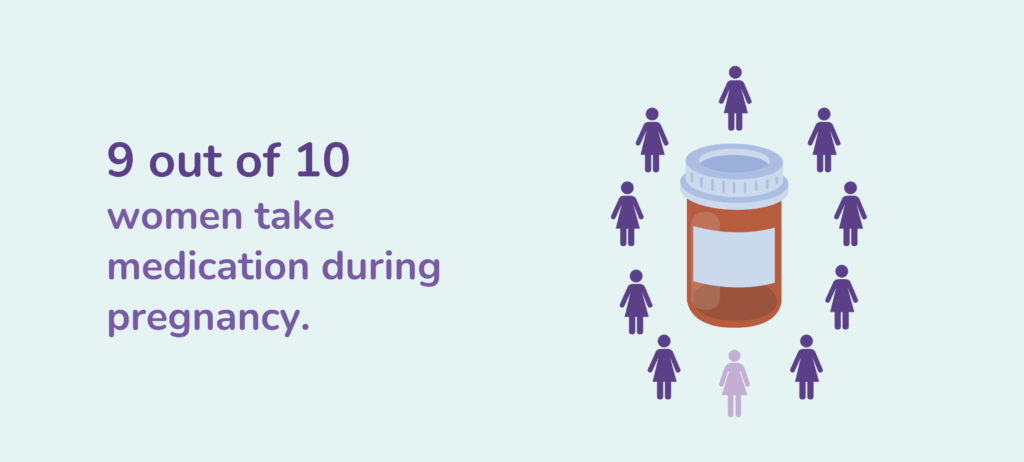
Pregnant women represent an important segment of the population, with over 6 million pregnancies occurring per year the U.S. alone. Additionally, studies have shown that 9 out of 10 women take medication during pregnancy – these women deserve to know if the medications they are taking will have any effect on their pregnancy, and pregnancy exposure registries are how we gather this information.

This information is used by pharmaceutical companies when listing safety information on drug labels. It is also helpful for healthcare providers to determine treatment plans for their pregnant patients. In many cases, pregnancy exposure registries have provided reassurance – and in some cases have raised red flags – on whether a medication is safe to take during pregnancy.

Why not just stop taking medications before you become pregnant?

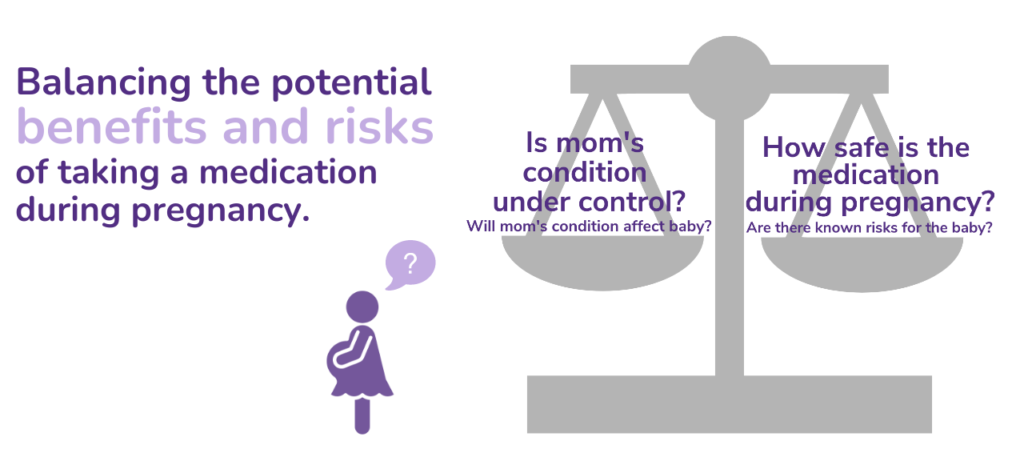
It’s a common misconception that quitting a medication during pregnancy will be safer for the mom and her baby. In fact, for many chronic health conditions (such as asthma or seizure disorders), it’s safer for both mom and baby if the condition is well-managed. Some pregnant women may also experience acute conditions (like an infection) or develop complications during pregnancy that require medication. Physicians and pregnant women have the difficult task of balancing the risks and effects of an unmanaged condition during pregnancy versus the potential risks and benefits of starting or continuing to take a medication during pregnancy. Having enough information about the safety of the medication when used in pregnancy would make this task a whole lot easier.

And let’s not forget: nearly half of all pregnancies in the U.S. may be unintended, which means that women may be exposing their pregnancy to a medication without realizing it because they weren’t planning the pregnancy and won’t know they are pregnant until they miss their first menstrual period.

How are registries organized/structured?

It’s worth repeating: Pregnancy registries are strictly observational. Researchers will follow participants throughout their pregnancy and sometimes after the child has been born regardless of the woman’s healthcare routine.

Researchers collect data about the pregnancy from the woman and/or (with the woman’s permission) from her medical records. The type of data collected, communications and length of participation vary from one registry to another, so it’s important you find out all the details about the study before you join.

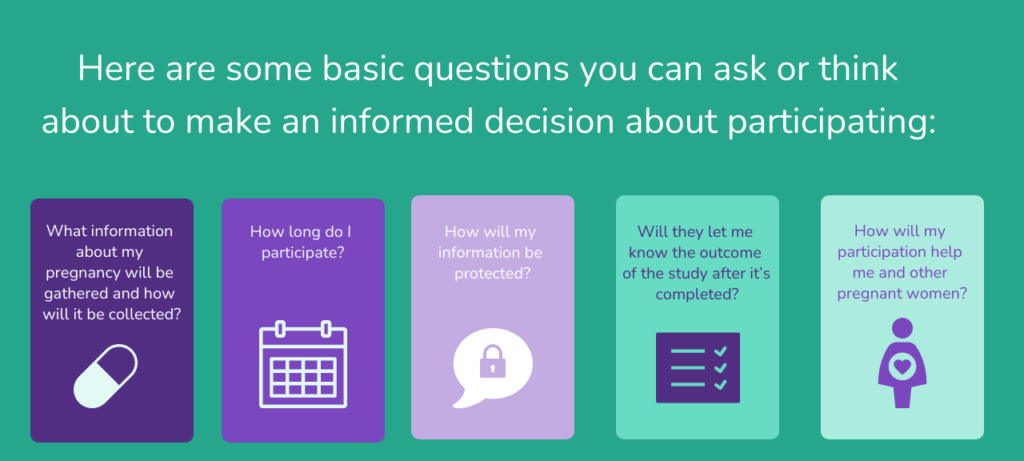
Here are some basic questions you can ask or think about to make an informed decision about participating:

  • What information about my pregnancy will be gathered and how will it be collected?
  • How long do I participate?
  • How will my information be protected?
  • Will they let me know the outcome of the study after it’s completed?
  • How will my participation help me and other pregnant women?

Who participates?

Pregnancy registries are generally designed to compare pregnant women who have been exposed to the medication/vaccine of interest to those who have not been exposed. Depending on the registry, participants can include women who:

  • Have taken a specific medication or vaccine during a current or recent pregnancy.
  • Are pregnant and have not taken the medication being studied, but have the same health condition being treated by the medication being studied.
  • Are pregnant, have not taken the medication being studied, and do not have the same health condition being studied.

Where can I find a registry to join?

There are a variety of organizations that run pregnancy registries. A great place to start is by asking your healthcare provider. You can also look on the US FDA Pregnancy Registry site.

What makes MotherToBaby pregnancy registries different?

Here at MotherToBaby, we run several pregnancy exposure registries, called MotherToBaby Pregnancy Studies. Our studies are unique in a few different ways:

  • Participants have access to our trained experts to answer questions on any exposures during pregnancy and breastfeeding – all at no cost to you.
  • Some of our studies offer a free in-home examination of your infant and a consultation with an  expert pediatric specialist who can answer any questions you might have about your child’s growth and development.
  • When you enroll in a study that includes free developmental follow-up for your child, you’ll receive reports after each screening, which will provide you with information about how your child is developing relative to other children his/her age.

Interested in learning more about what it’s like to participate in our studies? Meet Mariah, a study participant and maternal health advocate mom of 4. She shares her experience here.

If you or someone you know is interested in joining one of our pregnancy studies, we’d be happy to talk you through the process and answer any questions you may have.

You can also browse through our ongoing studies here.


Kesimpta® (ofatumumab) (US PATIENTS ONLY)

Help Us Better Understand the Possible Effects of Ilumya® in Pregnancy

Many people need to take medication during pregnancy to appropriately manage a chronic health condition. In some cases, avoiding or stopping medication use during pregnancy may be more harmful than taking medication. Yet fewer than 10% of medications have enough information to determine their safety for use in pregnancy — this is where you come in!

MotherToBaby is currently enrolling people who are pregnant in a study examining the use of Ilumya® (tildrakizumab-asmn) to treat psoriasis during pregnancy.

Are you currently pregnant? Did you take Ilumya® at any point in your current pregnancy? If you answered “yes” to both of these questions, then you have the opportunity to help us learn more about Ilumya® use in pregnancy.

Will you take the step and become our partner? Make an impact on the health of future families today by joining our Ilumya® & Pregnancy Study!