Ep. 73: Chlorine, Sunscreen, Mosquitos and Pregnancy

Kirstie Perrotta, MPH, and Angela Messer, MS, join host Chris Stallman, CGC in this special “summer grab bag” of topics related to common summer activities during pregnancy and breastfeeding. Our guest experts talk about everything from chlorine and sunscreen to Zika. 

Kirstie Perrotta, MPH, is an information specialist at MotherToBaby California, where she provides counseling by phone and chat. She received her Masters in Public Health (MPH) from the University of San Francisco, and has worked in the field of reproductive health for over 9 years. Kirstie currently serves as a member of the MotherToBaby Emerging Issues Task Force (EITF). Her interests include vaccines, infectious disease, and mental health during pregnancy.

Angela Messer, MS, is an information specialist with MotherToBaby California. She earned her undergraduate degree in psychology from Chapman University and her graduate degree from Kansas State University in academic advising/counseling. Angela has been with MotherToBaby since 2009, with experience in both research and counseling. She appreciates the opportunity to speak with people who are pregnant and/or breastfeeding and healthcare professionals regarding exposures and medications, and holds a special interest in stress and anxiety in pregnancy and breastfeeding.


Ep. 73: Chlorine, Sunscreen, Mosquitos and Pregnancy

MotherToBaby Launches Unique ‘Text Counseling’ for Reliable Info About Exposure Risks to Baby

BRENTWOOD, TN – As the world prepares to recognize Fetal Alcohol Spectrum Disorders (FASD) Awareness Day on September 9th, MotherToBaby, a service of the international non-profit Organization of Teratology Information Specialists (OTIS), launches a way for expectant moms to have free expert information about the risks of alcohol and other exposures to baby at their fingertips – via text.

“The risks to baby of being exposed to things like alcohol, drugs or medications during a woman’s pregnancy or breastfeeding can really vary depending on mom’s metabolism, timing of the exposure, and whole host of other factors,” said Lori Wolfe, MS, a certified genetic counselor and director of MotherToBaby’s North Texas affiliate. “Mom really needs the latest information tailored to her particular circumstance in order to make informed decisions, along with her health care provider, about her and baby’s health. We’re now offering that research-based info in the most convenient way possible,” she added.

Expecting moms will simply need to text their questions in English or Spanish to 855-999-3525 to be connected to a bilingual specialist in the field of teratology – the study of exposures that cause birth defects. Standard text messaging rates may apply depending on an individual’s phone plan. Those who do use the new texting service are encouraged to check with their carrier first.

“When someone goes searching the internet, it can be a scary place that often highlights worst-case scenarios only,” explained Al Romeo, RN, PhD and teratogen information specialist at MotherToBaby’s Utah affiliate. “We’re not the internet. We’re registered nurses, genetic counselors and teratogen information specialists on the other end of your cell phone answering texts with the most up-to-date evidence you often can’t find online.”

MotherToBaby, which consists of 14 services housed at universities, hospitals and government institutions across the country, provides free, evidence-based, personalized risk assessments, education and counseling regarding the effects of exposures like prescription and over-the-counter drugs, alcohol, smoking, illicit substances, vaccines, beauty products, herbal supplements, chemicals and more during pregnancy and while breastfeeding. In addition to the new text counseling component, the public can be connected with a bilingual MotherToBaby expert by calling toll-free 1-866-626-6847. The MotherToBaby website also houses a library of fact sheets located at www.MotherToBaby.org.

More than 100,000 women and their health care providers seek information about birth defects prevention from MotherToBaby every year. MotherToBaby has been able to launch new outreach efforts to reach underserved populations, including new communication technologies, through a cooperative agreement with the U.S. Health Resources and Services Administration.

About FASD Awareness Day

FASD Awareness Day has been recognized on the ninth day of the ninth month since 1999 as a reminder for women to abstain from drinking alcohol during the nine months of pregnancy. As many as 1 out of every 100 babies are estimated to be affected by prenatal alcohol exposure, which can result in a range of neurobehavioral disabilities. FASD awareness events also traditionally take place across the nation all month long each September.

# # #
Media Contact: Nicole Chavez, 619-368-3259, nchavez@MotherToBaby.org. Interviews in Spanish can also be arranged.


Ep. 73: Chlorine, Sunscreen, Mosquitos and Pregnancy

You may have heard recently that the Food and Drug Administration (FDA) has banned Federal Food, Drug, and Cosmetic Act (FD&C) Red No. 3. In this blog, we will review details about the ban, including why it was enacted, and the timeline for removing FD&C Red No. 3 from products. Our goal is to equip you with information to help make informed decisions. Be sure to check back, as we’ll continue updating this post with the latest developments.

All food dyes, called color additives, must be approved for use by the FDA before manufacturers can use them. Color additives can be synthetic (lab made) or naturally derived from plants, animals and minerals. Manufacturers submit information about safety and manufacturing to the FDA in order to receive approval.

What is Red No. 3?

FD&C Red No. 3., also found on food labels as Red 3 or Red No. 3, is a synthetic food dye that gives foods and drinks a bright, cherry-red color.  Red No. 3 can be found in some cake icing, candies, and other food items. Red No. 3 is also used in some oral medications and supplements.

Red No. 3 is a complicated formula for those of us not in the food manufacturing business. Specifically, the FDA reports that the color additive FD&C No. 3 is monohydrate of 9-6-hydroxy-2,4,5,7-tetraiodo-3H-xanthen-3-one, disodium salt, with smaller amounts of lower imdinated fluoresceins.

Why is Red No. 3 being banned?

Red No. 3 food dye is being banned because studies found that at high doses, the dye caused cancer in male laboratory rats. Studies in other animals or in humans did not show an increased chance for cancer.

The way that the food dye causes cancer in laboratory rats involves a mechanism not present in humans, so it is not known if this could also be a risk for humans.

Has Red No. 3 been associated with birth defects or problems with breastfeeding?

Studies have not been done to research this.

When is the ban taking effect?

On January. 15, 2025, the FDA announced that Red No. 3 will be banned from all products, including medications and foods. However, this ban allows manufacturers time to phase out the use of Red No. 3. Manufacturers who use Red No. 3 in food will have until January  15, 2027 to remove it from their products. Manufacturers of oral medications and supplements will have until January 18, 2028 to remove it.

Is FD&C Red No. 3 used in cosmetics or topical medications?

Red No. 3 has not been allowed in cosmetics, or topical medications, by the FDA since at least 1990.

How can I confirm if my food has Red No. 3?

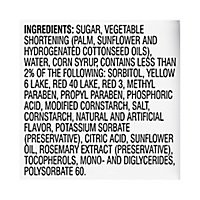
To learn if your food has Red No. 3, look at nutrition facts on the product’s label. The nutrition facts label lists calories and serving size, as well as other information. Below the nutrition facts, you will find an ingredients list. Ingredients are listed in order of those found in highest amounts to those found in smallest amounts in the product. For example, if the first ingredient is water, this means that most of the product is water, and each ingredient listed after that is found in the product in smaller amounts.

Here is a sample of a products’ ingredients. Red No.3 is listed as less than 2% of the product.

You can learn more from the FDA announcement here: FDA Consumer Announcement

FDA Red No 3

FDA Red No 3 composition

FDA Color Additives for Consumers


Ep. 73: Chlorine, Sunscreen, Mosquitos and Pregnancy

By Beth Kiernan, MPH, Interviewer & Teratogen Information Specialist, MotherToBaby

“When my RA started flaring 6 or 7 weeks postpartum, I got to the point that I could barely lift my own baby….We need more research on medications used in pregnancy as well as during breastfeeding!”

I want you to meet Mariah, a participant in our MotherToBaby Rheumatoid Arthritis Study. I chatted with Mariah to learn about her experience being pregnant with a chronic medical condition and to find out what motivated her to participate in our study. As a Baby Blog reader, you are probably aware that MotherToBaby provides information on exposures during pregnancy and breastfeeding. What you might not know is that we also conduct observational research on certain heath conditions and their treatments, with the goal of providing moms like Mariah (and like you!) with better information about health and medications in pregnancy. This month’s Baby Blog focuses on the role of research at MotherToBaby and puts a spotlight on those who make our program possible: the women who decide to share their pregnancy experience with us.

BETH: Mariah, thank you so much for talking with me about pregnancy research and your involvement with MotherToBaby! As an advocate for moms with rheumatoid arthritis (RA) and the creator of the popular blog, Mamas Facing Forward, you are inspiring women with chronic illness across the globe who are or want to become pregnant.

MARIAH: I’m so glad to be here and to talk more about pregnancy research! Since being diagnosed with RA, I’ve taken an interest in medical research–both personally and professionally. It’s been interesting to see my RA treatment options expand dramatically between my first pregnancy and my third, which were only about six years apart.

BETH: In general, the medical community knows little about the effects of taking most medications in pregnancy, because pregnant women are often not included in studies that determine the safety of new medicines. What initially interested you about MotherToBaby Pregnancy Studies?

MARIAH: Medication use during pregnancy needs to be studied because of the potential risks for the developing baby! Professionally, I cover developing research for Rheumatology Network so I have a good understanding of the different types and stages of medical research. But even with this background, when I first joined MotherToBaby’s study, I didn’t understand what “observational research” meant. My biggest concern was: Would I have to take a study drug–or change my usual treatment in any way?

BETH: This is the most common question–or confusion–that I hear from women! How would you describe what observational research is and what would you say is the difference between a clinical trial and observational studies, like MotherToBaby’s pregnancy registries?

MARIAH: I’ve learned that observational means the study “observes” what a participant does, but doesn’t advise or require a treatment course or change. There is no tested drug or placebo like in a clinical trial. A pregnancy registry is a study that collects health and medication information from pregnant women and their newborns, and then compares outcomes to unexposed women and their babies. While in the study, I made my own treatment decisions with my doctor, which is logical since she knows my health history best. But because MotherToBaby provides evidence-based information about medications in pregnancy, you also helped me learn more about my medications and specific pregnancy data, which then guided the conversations I had with my doctor before pregnancy and during the flare I had at about 23 weeks.

BETH: I’m glad that we were able to help you during this flare! So what ultimately motivated you to join a MotherToBaby Pregnancy Study?

MARIAH: I’ve actually participated in two research studies through MotherToBaby, and my main motivation was due to the lack of information on medications during pregnancy. At the beginning of my second pregnancy, I wasn’t taking any medications to control my RA and I ended up flaring very badly—to the point where I was having difficulty caring for myself and my then almost two-year-old son. Though I know oftentimes TNF inhibitors are discontinued in the third trimester (call MotherToBaby to find out why!), my rheumatologist and I made the decision to use one so we re-started Enbrel near the end of my second trimester and continued through the remainder of my pregnancy. After making such a difficult decision, I called MotherToBaby right away to enroll in the study because I wanted future moms to have the benefit of my data when it came time for them to make a similar difficult decision.

While planning to become pregnant again, my rheumatologist, perinatologist, and I decided to switch me from Rituxan to Cimzia prior to conception, and decided that I would remain on Cimzia through my entire pregnancy and while nursing. I joined the Cimzia & Pregnancy Study as soon as I found out I was pregnant with my third baby. I’m still involved, in fact, my third baby just turned one and we just got a birthday card in the mail from MotherToBaby! I think it’s fantastic to have such a caring group of researchers committed to providing better information for pregnant women living with chronic illnesses.

BETH: Did you have any initial hesitations about joining a MotherToBaby study?

MARIAH: At first, I wondered if study participation would take too much time. I had a toddler at home, I worked, and I was pregnant again. I found out that typically a woman spends about two hours total in phone interviews in the first year, and then just ten minutes per year by phone if enrolled in a multi-year study.

My husband was concerned about privacy. I asked how my personal information would be safeguarded, and who would have access to my medical records. I asked if the study collected my insurance information or social security number–it does not.  Results will be published but without revealing my identity. The studies are coordinated out of the University of California San Diego, and their Human Research Protections Program oversees the privacy and security protocols, so there is an extra layer of oversight and protection. Also, pharmaceutical companies are required to sponsor this research but they don’t have access to my personal data, and all research is done independently.

Women may feel wary about the idea of participating in research during pregnancy. What has made me feel even more secure is that doctors familiar with MotherToBaby have recommended joining your studies. The studies are not experimental so I didn’t find any likely risk, nor is there any cost to me. So this, coupled with the research benefiting other moms like me, made me feel like it was something that I could support pretty easily.

BETH: What was the process of enrolling like for you?

MARIAH: I answered questions about my health history, prenatal test results, some demographic info, and then made a list of exposures during the pregnancy, such as prescription and over-the-counter medications, caffeine, illnesses and other environmental exposures.

BETH: I know you’ve mentioned the main reason for your enrollment was due to the lack of information about medications during pregnancy. Can you tell us more about how you and your healthcare team navigated your treatment options during pregnancy?

MARIAH: As I mentioned before, my treatment options changed dramatically between my first and third pregnancies. During my first, I spoke to my obstetrician and rheumatologist about my RA medications. I didn’t do much research on my own at the time (there were fewer online resources, blogs, and social media connections then too!) but rather I trusted the information being given to me by my doctors. My obstetrician knew almost nothing about RA treatments and deferred completely to my rheumatologist. Based on the data available at the time, I used nothing but prednisone during that pregnancy.

When my RA started flaring 6 or 7 weeks postpartum, I got to the point that I could barely lift my own baby. At three months, I made the heartbreaking decision to wean my son so that I could re-start Enbrel, because at the time my rheumatologist did not think there was enough data available for it to be safe enough to breastfeed while taking that medication. I did manage to find one blog at the time where a mom talked about making the decision to use Enbrel while nursing, but as much as I personally wanted to continue breastfeeding I couldn’t find adequate information to make me comfortable with the idea.

BETH: I’m so sorry to hear about your struggle breastfeeding. Unfortunately, this experience is very common. We also provide information to moms about breastfeeding exposures, and many of our research participants also provide a sample of breastmilk to Mommy’s Milk so we can learn more about medications and breastfeeding.

MARIAH:  Yes, we need more research on medications used in pregnancy as well as during breastfeeding! So jump forward to two years later during my second pregnancy, my rheumatologist and I decided that the data had improved enough–and that the uncontrolled inflammation I was experiencing was a greater risk to me and my baby than the potential risk of the Enbrel. I used Enbrel during the end of that pregnancy and through three months of breastfeeding. Though I must say that I made this decision under a fair amount of duress because I was feeling very, very poorly at the time. I assumed I would manage my second pregnancy the same way I managed my first, so when I started flaring badly I did not have a treatment plan in place. This was another situation where I more or less trusted my rheumatologist’s advice. Unfortunately, Enbrel lost its effect for me after my second pregnancy and I weaned my second son at three months as well, and began to search for another treatment option.

For my third pregnancy, I consulted my rheumatologist and a perinatologist prior to trying to conceive. I also did a lot more of my own research. I looked to what MotherToBaby had to say about the medications we were considering and found some research studies to read. I was lucky to have doctors who also did their research. My perinatologist didn’t know much about Cimzia so she researched it before meeting with me. She shared her research with me and explained how the molecular structure of Cimzia was missing the part that is responsible for crossing the placenta, making it one of the better options for use during pregnancy.

BETH: Wow! That is a lot to navigate –for you and your healthcare providers. As you have shown us, every pregnancy and treatment plan is different! What is one thing you would like pregnant women or moms dealing with a chronic illness to learn from your experience?

MARIAH: When it comes to considering the use of medications during pregnancy, public opinion tends to push the idea that a woman ought to “sacrifice” herself for the sake of her baby during a pregnancy, so it can be difficult for many women to dodge that pressure and to consider medication at all while pregnant. MotherToBaby can help illuminate both the potential benefits and potential challenges of taking a drug while pregnant or breastfeeding. I’m glad to talk about these issues, and recommend paths to women that may make their decisions easier!

BETH: Thank you so much for talking with us today and for sharing your experience, Mariah. I think many women will be interested in hearing how you navigated pregnancy and motherhood while living with a chronic illness. So many women grapple with medication questions during pregnancy, and whether they decide to participate in our studies or not, we are glad you are here to help them through it on your blog and as an RA patient advocate. Any last words about pregnancy & research?

MARIAH: I recommend you ALL THE TIME – and have benefited firsthand from the research studies!

If you are pregnant and interested in participating in a study, contact MotherToBaby to see if you qualify! We enroll pregnant women taking certain medications or living with chronic health conditions like rheumatoid arthritis, psoriasis, psoriatic arthritis, ankylosing spondylitis, Crohn’s and ulcerative colitis, multiple sclerosis, asthma, high cholesterol, and eczema. We also enroll women without any of these conditions or medication exposures. You can view a list of all our ongoing studies here: https://mothertobaby.org/ongoing-studies. We look forward to speaking with you!

Beth Kiernan, MPH, is a Teratogen Information Specialist with MotherToBaby Pregnancy Studies, a series of observational research studies about medications and health conditions during pregnancy. The studies are conducted by the non-profit Organization of Teratology Information Specialists (OTIS). Beth is based at the University of California San Diego, and is a married mother of four children.

About MotherToBaby

MotherToBaby is a service of the Organization of Teratology Information Specialists (OTIS), and a suggested resource by many agencies including the Centers for Disease Control and Prevention (CDC). If you have questions about exposures during pregnancy and breastfeeding, please call MotherToBaby toll-FREE at 866-626-6847 or try out MotherToBaby’s new text information service by texting questions to (855) 999-3525. You can also visit MotherToBaby.org to browse a library of fact sheets about dozens of viruses, medications, vaccines, alcohol, diseases, or other exposures during pregnancy and breastfeeding or connect with all of our resources by downloading the new MotherToBaby free app, available on Android and iOS markets.



Ep. 73: Chlorine, Sunscreen, Mosquitos and Pregnancy

Katie recently reached out to us; she told us that she has lupus and has been taking hydroxychloroquine for years to successfully manage her lupus symptoms. Her concern? “I just found out I am pregnant and my rheumatologist was not sure if I can continue taking hydroxychloroquine during pregnancy. I am worried for my baby but I am also worried about stopping my lupus medication since it helps my symptoms so much. I haven’t had a flare in over a year! I can suffer through the flares if I have to, but I don’t want to harm my baby. I don’t know what to do.’

Katie’s concerns about how to balance the management of her chronic health condition against her baby’s health during pregnancy are not uncommon. Generally, the healthier a woman is during pregnancy, the better it is for both them and their baby. When taking medication during pregnancy, the risks and benefits of taking or not taking the medication should be carefully considered. More specifically, could the untreated condition cause more problems than taking the medication?

What is lupus and how could it affect a pregnancy?

Lupus, also known as systemic lupus erythematosus (SLE), is an autoimmune disease that affects many different parts of the body. The symptoms are variable; however, the kidneys, joints, and skin are commonly affected.  It is very important for both the health of the pregnancy as well as the health of the woman who is pregnant to achieve optimal control of lupus and maintain that control without flares (relapses in symptoms) throughout the pregnancy. For those who are planning a pregnancy, it is generally advised that at least 6 months without flares reduces the chances of pregnancy-related problems.

Lupus, especially if not well controlled, can cause serious health complications for both the woman who is pregnant as well as the baby. These complications include nephritis (inflammation of the kidneys that causes difficulty filtering waste from the body) and blood conditions such as anemia (a condition in which you don’t have enough healthy red blood cells to carry adequate amounts of oxygen to your body’s tissues) and thrombocytopenia (a condition in which the blood does not clot as fast as it should, which can cause excess blood loss). Inflammation in the lungs, heart, or brain can also occur and cause serious health problems.

People who have lupus also have a higher chance to develop high blood pressure during pregnancy and preeclampsia (a pregnancy-related condition that has several symptoms including a dangerous rise in blood pressure). People with lupus, most often the ones who develop high blood pressure or other health problems, may also have a higher chance of having a baby with poor growth which can lead to late miscarriage and preterm delivery (delivery before week 37).

Rare complications for the baby may include being born with symptoms of lupus (called neonatal lupus erythematosus (NLE)). These may be temporary and often disappear by six months of age. NLE is mostly seen in children when the pregnant woman has anti-SSA and anti-SSB antibodies. The most serious complication of neonatal lupus is a heart rhythm problem called congenital heart block which can often be detected on ultrasound and may lead to health complications and death. If these antibodies are present, additional ultrasounds for the heart may be recommended.

Katie was surprised. ‘I thought if I stopped my medications my flares would be painful and uncomfortable, but I never thought it could seriously affect my health or the health of my baby. Can you tell me more what is known about taking my lupus medication during pregnancy?’

So what do we know about lupus medications and pregnancy?

Many medications used to treat lupus are not thought to increase risks to a pregnancy over background chances that all pregnant individuals have. Medications work differently for different people. It is very important to talk with your healthcare providers before making any changes to how you take your medication. It is important to consider (with help of a rheumatologist) which medication works best to treat you. Regarding Katie’s question, the Society of Maternal Fetal Medicine (SMFM) recommends continuing the use of hydroxychloroquine during pregnancy. This recommendation is based on studies which did NOT show an increased risk for pregnancy related problems when hydroxychloroquine is used. Additionally, the studies showed a lower chance of lupus related problems during pregnancy when hydroxychloroquine is used.

There are many other medications such as steroids and biologics that lower the body’s immune system (immunosuppressants) that can also be considered for use during pregnancy.  However, certain medications for lupus are not recommended for use during pregnancy because they can increase the chance for birth defects and other pregnancy-related problems. SMFM recommends that methotrexate should be stopped 1-3 months before pregnancy and mycophenolate mofetil/mycophenolic acid should be stopped at least 6 weeks before attempting pregnancy. NSAIDs (non-steroidal anti-inflammatory drugs), such as ibuprofen, high dose aspirin, etc. are not recommended for use during pregnancy.

For information on specific medications make sure you talk with your healthcare provider or contact MotherToBaby and see our medication fact sheets at https://mothertobaby.org/fact-sheets/ . It is very important to talk with your healthcare providers before making any changes to how you take your medication. 

Katie summarized the information she was given very well, ‘It seems like making sure my lupus is well controlled will set both me and my baby up for the highest chance of being healthy. I feel much more comfortable continuing my medication knowing that with my own health, I am helping my baby to be healthy as well. I will talk with my healthcare providers to plan for monitoring both me and the pregnancy. Is there anything else I should know?’

Other info to know about lupus and pregnancy

It’s not uncommon for new medications to be developed for the treatment of lupus. If there is one thing that these new medications have in common, it’s that they very rarely have adequate, real-world data that describes whether the medication is safe to take during pregnancy. Pregnancy registries are the types of studies that give us this information, which is what allows us to provide risk assessments to people like Katie. That’s why we suggest to any pregnant woman with lupus that they consider joining the pregnancy registry for the medication(s) they are taking if one exists. The U.S. Food and Drug Administration (FDA) maintains a list of ongoing pregnancy registry studies on their website. If you’re planning a pregnancy or are already pregnant, now is a great time to find out more about the benefits of joining a lupus pregnancy study.

Women who are pregnant and have lupus will require some additional monitoring during pregnancy. They should be followed by their rheumatologist to make sure their symptoms are well controlled. Additional monitoring during pregnancy such as blood pressure checks, additional lab tests and additional ultrasounds may be recommended. Make sure you talk with your healthcare provider to discuss the management plan for your pregnancy.

Katie returned to MotherToBaby a few weeks later and told us she has been working together with her rheumatologist as well as her obstetric team including a high-risk pregnancy provider (also called Maternal Fetal Medicine (MFM) specialist) to make sure both her and her baby are as healthy as they possibly can be. ‘I felt empowered by being informed, having all my healthcare providers in my corner and knowing that by taking care of myself, I am taking care of my baby too. Thank you, MotherToBaby!’.

For more information about lupus and pregnancy, including links to lupus-related MotherToBaby Fact Sheets, visit our lupus resources page at https://mothertobaby.org/pregnancy-breastfeeding-exposures/lupus/. You can also contact one of our information specialists for a no-cost risk assessment by visiting https://mothertobaby.org/contact/.

If you are pregnant and taking belimumab (Benlysta®) to treat SLE or lupus nephritis, please consider enrolling into our observational study. This study will give women with lupus better answers about how lupus and its management can affect a pregnancy and a developing baby. You will not be asked to take or change any medications, and you can participate from the comfort of your home.