Respiratory Virus Risks and Current Vaccine Recommendations for People who are Pregnant

In this presentation, Kirstie Perrotta, MPH, from UC San Diego and MotherToBaby California, reviews the risks of respiratory viruses such as COVID-19 and flu during pregnancy, including potential impacts such as miscarriage, birth defects, and pregnancy complications. She also covers the latest data and recommendations for COVID-19, flu, Tdap, and RSV vaccines during pregnancy.

The webinar also covers the latest data and clinical guidance on vaccination during pregnancy, including COVID-19, influenza (flu), Tdap, and RSV vaccines. Attendees will learn how current recommendations are designed to protect both pregnant individuals and their infants, and how to communicate these benefits effectively to patients. Practical insights will be provided on integrating vaccine counseling into routine prenatal care, addressing patient concerns, and promoting informed decision-making.

By the end of this session, participants will leave with a better understanding of the benefits of vaccination for both mom and baby. They will also be able to clearly explain the 2024–2025 vaccine recommendations during pregnancy, supporting evidence-based clinical practice and improving maternal and infant health outcomes.

Continuing Education (CE) credits are available for ACNM members and non-members who view this session via the ACNM Online Learning Center.


Respiratory Virus Risks and Current Vaccine Recommendations for People who are Pregnant

By Kristen Hutchinson Spytek, National CMV Foundation President

C-M-V. Three letters that keep me up at night and shake me to the core. Three letters that have managed to routinely shatter my expectations, body slam my optimism, expose my vulnerability, alter my perspective and even now, force me to recalibrate daily. My daughter, Evelyn Grace, was born on March 12, 2013 at 36 weeks with congenital cytomegalovirus. Or CMV.

Evelyn was my first pregnancy; I was thirty-one years old. My husband and I had been married for five years, and together since college, and we were ready. Emotionally, fiscally and socially ready.

The beginning of my pregnancy was largely uneventful. My husband and I talked with anticipation about the future, shared names we liked, vetoed ones we didn’t, and spent many evenings dreaming about who he or she would become. We agreed that most importantly, we wanted to raise a kind, compassionate human being that positively contributed to society. Easy right? I met with my OB at all required appointments, avoided all of the “things” like sushi, soft cheese, alcohol, etc., and at the mid-point anatomy scan, my husband and I were ready to learn whether we were expecting a boy or a girl. We wanted the tech to write it down in an envelope so we could open it together, privately, when we were ready.

After 45 minutes, the Maternal-Fetal Medicine specialist came into the room and started explaining something about an echogenic bowel. What? My heart rate accelerated and I held my breath. His lips were moving but I literally could not decipher the words. What did this mean? Should we be concerned? Is this a genetic issue? Will my baby be ok? The truth was, it could be something, or it could be nothing.

My pregnancy progressed and after several tests and consultations with specialists in pediatric cardiology, pediatric neurology, genetic counseling, and social work, we still did not have a realistic view of what we were dealing with. We were terrified. We remained hopeful for a healthy baby but the remainder of our pregnancy was clouded with fear of the unknown.

My daughter was breech and after five weeks of extensive monitoring of both me and the baby, my maternal fetal medicine physician made the call to move up my C-section due to low amniotic fluid. My husband and I practically skipped to the hospital that Tuesday afternoon. We couldn’t wait to hold our baby girl in our arms.

The surgery was fast and cold and clinical. I snuck a peak at Evelyn, all three beautiful pounds and 14 ounces, before they whisked her off to the NICU. But even then I did not have a real sense for the gravity of the situation. It was not until the neonatologist uttered the letters “CMV” did I truly realize the weight. Even though I understood very little about CMV, I knew that Evelyn was going to have special considerations. We were devastated for our daughter. The hopes and dreams we had shared for her, and the things we once believed to be big issues or milestones, now seemed trivial and small in comparison. We were in mourning for our “atypical” daughter and for what we wished we had known that may have potentially improved her prognosis. What should we have done differently? What questions should we have asked?

I experienced a primary (first-time) infection, likely during my first or second trimester. Evelyn (pictured right) was severely affected by CMV, receiving weekly early intervention services and private sessions in occupational, physical and speech therapies, in addition to countless specialist appointments. She couldn’t do much independently but she had a smile that lit up the room, a laugh that was beyond infectious, and a determination that continues to motivate every cell in my being. She gave my husband and I twenty-one months of unconditional, unequivocal love. Tragically, we lost Evelyn in December 2014 due to complications from a surgery, three weeks before our son, Jack, was born. It was an impossible time. I don’t remember much from the weeks that followed but at some point, my adrenaline kicked in while my heart exploded in my chest, and through my tears, I knew my daughter’s journey was going to help change the outcome for future babies. Her legacy will positively contribute to society.
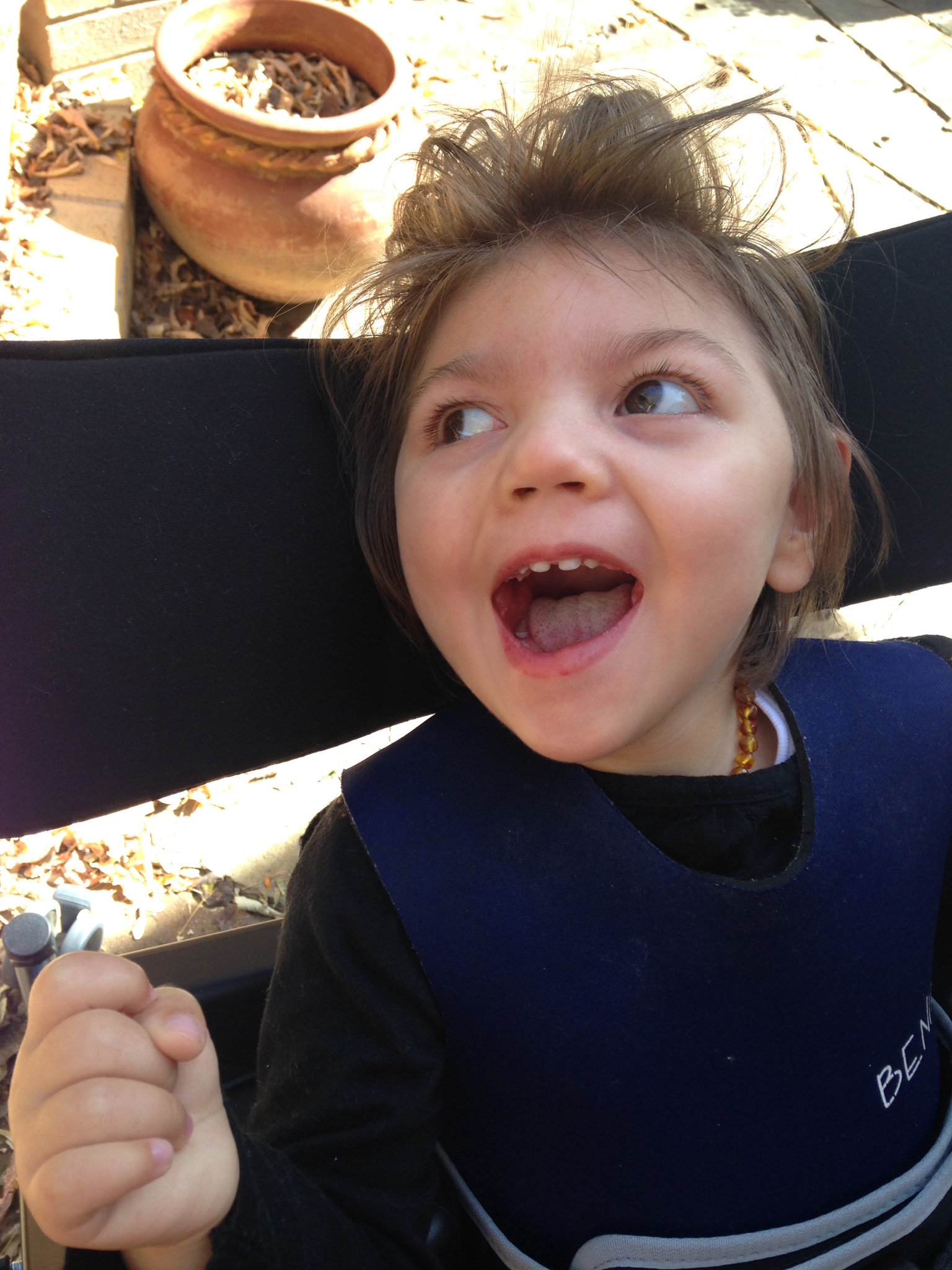
There is an overwhelming amount of scary information bombarding pregnant women every single day. Information overload is real, yet simple dialogue between a patient and her caregiver (e.g. midwife, doula, OB, maternal fetal medicine specialist, primary care physician, etc.) is extremely important and sometimes, it’s the patient who has to lead the conversation. I only wish I had known more or had time to effectively plan before Evelyn arrived. I felt overwhelmed and ill-prepared.

Only 9% of women have heard about CMV according to a 2016 HealthStyles™ Survey, yet it’s more common than Down Syndrome, Fetal Alcohol Syndrome, Fifth Disease, Spina Bifida, Sudden Infant Death Syndrome (SIDS), and Toxoplasmosis. Absorb that for a minute. It is an often symptomless virus, or may present as a cold or flu, and only causes harm when a pregnant woman passes it through the placenta to the baby in utero (or in a person with a weakened immune system). More than half of the adult population has been infected with CMV before the age of 40, and once it’s in a person’s body, it stays there for life.

How do we successfully educate pregnant women about the risks associated with this virus, if hardly anyone has heard about it?

My best advice is to take control of your health! Have you ever been infected with CMV? If you’re thinking about becoming pregnant, ask your doctor for an IgG vs. IgM antibody test to understand if you’ve had CMV in the past, and whether or not you currently have an active infection. Already pregnant? No worries, ask for it anyway. It’s a simple blood test and is covered by most insurances. Professionals’ advice and recommendations will vary depending on the results and where you are in your pregnancy.

June is CMV Awareness Month. Our mission is to educate women of childbearing age about congenital CMV, with the goal of eliminating congenital CMV for the next generation. Whether you’re pregnant with your first or you’ve been down this road a few times, know this:

  • CMV is common. Congenital CMV is the most common viral infection that infants are born with in the United States — totaling 30,000+ babies each year, with 5,000+ suffering from permanent disabilities.
  • CMV is serious. Congenital CMV is the leading cause of non-genetic childhood hearing loss. Complications from congenital CMV results in up to 400 deaths yearly.
  • CMV is preventable. Pregnant women who have toddlers, or work with young children, are at the highest risk of acquiring CMV. The virus is typically spread through urine, blood, mucus, tears, semen or saliva, and there are simple behavior modifications that will help reduce this risk:
    • Do not share food, utensils, drinks or straws
    • Avoid contact with saliva when kissing a child
    • Do not put a child’s pacifier or toothbrush in your mouth
    • Wash your hands thoroughly, especially after changing a diaper

Please take a deep breath, practice the above prevention methods, and report any sign of illness to your midwife or doctor. If you are screened for CMV while pregnant, and the result is a positive active infection, your medical professional can do an amniocentesis to see if congenital CMV has spread through the placenta to the unborn baby. And if it has, interventions and therapies may be recommended.

CMV. Know Your Risk. Protect Your Family.
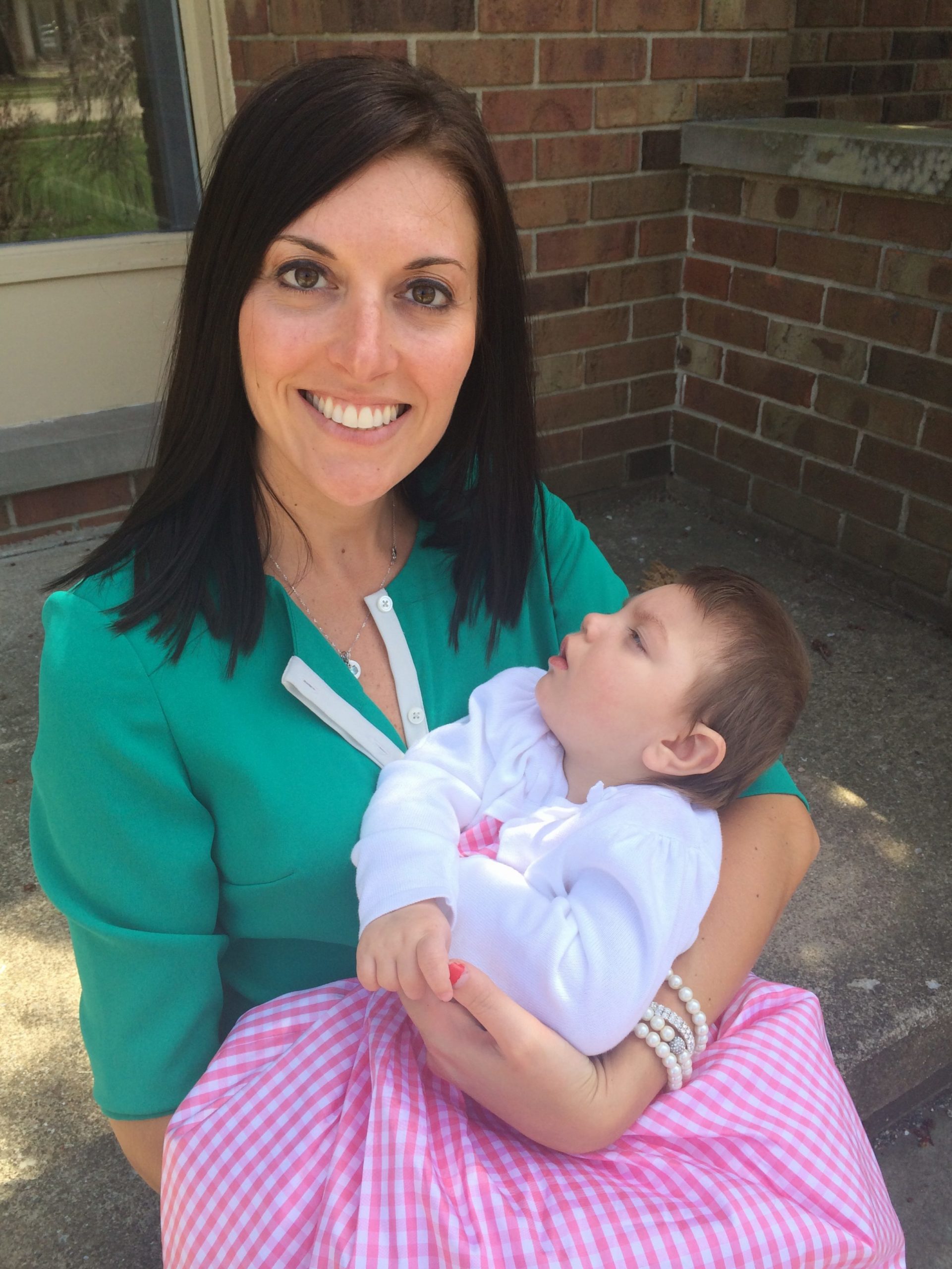
Kristen Hutchinson Spytek is the President of the National CMV Foundation. She has an M.A. in Global Marketing Communications & Advertising from Emerson College and a B.A. in Communication Studies from the University of Michigan. Kristen resides in Tampa, FL with her husband John, and sons Jack (2) and Thomas (4 mo).”

The National CMV Foundation is a non-profit organization dedicated to promoting awareness, providing access to resources and sharing prevention information to eliminate congenital CMV. Learn more at www.nationalcmv.org.


Respiratory Virus Risks and Current Vaccine Recommendations for People who are Pregnant

By Dr. Sarah Običan, OBGYN, MotherToBaby

It’s noon. I just ran into my academic office to call back a few patients in between a packed schedule. I just spent my morning seeing 17 patients and gauging by my afternoon schedule, the day was not going to get much easier. I was new at my job as an OBGYN having joined the academic practice where I completed my residency. It was a busy practice, but I loved my job and I loved my patients. As I sat in my chair, I finally felt my feet again and realized they were hurting, but before I could kick off my heels, my cell phone rang. It was my IVF doctor.

By this time, my husband and I had been dealing with infertility for over a year and had decided to have tests done by one of my medical partners. She phoned to give me results of my testing…. As it turns out a hormone, called anti-mullerian, was low. It may have been in part a cause to our inability to conceive naturally. I could not muster a response to her. Instead – silence. A whole minute must have passed, after which all I said to my doctor was “I must be one of the 10%.”

I was not alone.
According to a CDC survey from 2006 – 2010, more than ten percent of couples trying to conceive have infertility. It’s a medical problem that impacts entire families, marriages and your work. The journey is long, time intensive, costly, emotionally heavy with so much joy and pain all wrapped up into a six week treatment cycle. It’s not for the faint of heart.

Since the first IVF conceived child was born in 1978, things have changed. In fact, even in the 3 year period and 11 cycles I went through in my own life things have changed. We are learning so much about new technologies and improving outcomes. We’re able to offer patients better risk assessments and counseling today.

Is IVF safe?
All things considered, assisted reproductive technologies (ART) are safe and the studies are proving it. Multiple studies have supported that IVF does not increase your risk of breast cancer or cancer overall. However, pregnancy conceived by ART are at increased risk of multiples, including monochorionic twins (when twins share the same placenta). These types of twins do carry increased risk of birth defects, preterm labor and delivery.
On average, women necessitating these medical interventions tend to be older and may have additional medical issues, all which impact the pregnancy.

For the baby, while we do know any risk of birth defects is low, some studies do show a small increased risk of overall birth defects, specifically heart defects, in IVF-conceived children, including a 2012 Australian study that looked at more than 6000 children conceived by using ART. It’s hard to completely understand if the risk is due to the interventions itself or due to any underlying issues the higher-risk patients being studied carry.

The formation of a baby’s heart is an exceptionally complex biological process. Because of this, it’s not surprising that, of all birth defects, heart defects tend to be most common. Similarly, the infertile population and those who undergo ART have an increased risk of having a baby with a heart defect, specifically defects affecting the ventricular and atrial septum, as well as a complex birth defect called Tetralogy of Fallot. All women with an ART conceived pregnancy should have a detailed ultrasound between 18-22 weeks to evaluate fetal anatomy and a fetal echocardiogram to evaluate for heart defects. Folic acid supplementation is also important.

Drawbacks to the studies
Despite 60,000 infants being born in the U.S. using ART, the vast majority of studies investigating the associated risk with ART have studied a population which conceived and delivered outside of the U.S. Other limitations of the early studies include looking at relatively small numbers of patients. As a doctor, I hope more studies will be conducted examining U.S. pregnancies involving ART since we have such a diverse population. Studying IVF among our differing ethnicities, age and socioeconomic backgrounds will help doctors make even better recommendations to the couples trying exhaustively to start their families.

For now, just breathe…
I did. Chin up, support system intact, I kept forging ahead. With each failed IVF attempt along the way, my heart may have broken a little, but, at least the absolute risk of heart defects in the potential pregnancy remained small. Three years of trying and my son finally arrived. My heart is now full.

Sarah Obican MD

Sarah G. Obican, MD, is an OBGYN, Maternal Fetal Medicine specialist at the University of South Florida. She currently serves on MotherToBaby’s Board of Directors. She’s also a councilmember of MotherToBaby’s sister society, the Teratology Society.

MotherToBaby is a service of the international Organization of Teratology Information Specialists (OTIS), a suggested resource by many agencies including the Centers for Disease Control and Prevention (CDC). If you have questions about alcohol, medications, vaccines, diseases, or other exposures, call MotherToBaby toll-FREE at 866-626-6847 or try out MotherToBaby’s new text counseling service by texting questions to (855) 999-3525. You can also visit MotherToBaby.org to browse a library of fact sheets.

References:

http://www.cdc.gov/nchs/fastats/infertility.htm

Davies MJ, Moore VM, Willson KJ, Van Essen P, Priest K, Scott H, Haan EA, Chan A. Reproductive technologies and the risk of birth defects. N Engl J Med. 2012 May 10;366(19):1803-13.

Olson CK1, Keppler-Noreuil KM, Romitti PA, Budelier WT, Ryan G, Sparks AE, Van Voorhis BJ.
In vitro fertilization is associated with an increase in major birth defects. Fertil Steril. 2005 Nov;84(5):1308-15.

Hansen M1, Kurinczuk JJ, Milne E, de Klerk N, Bower C. Assisted reproductive technology and birth defects: a systematic review and meta-analysis. Hum Reprod Update. 2013 Jul-Aug;19(4):330-53.

Kelley-Quon LI, Tseng CH, Janzen C, Shew SB. Congenital malformations associated with assisted reproductive technology: a California statewide analysis. J Pediatr Surg. 2013 Jun;48(6):1218-24.


Respiratory Virus Risks and Current Vaccine Recommendations for People who are Pregnant

MotherToBaby Exhibiting Schedule

MotherToBaby experts exhibit and present at many national and international scientific events throughout the year, both in-person and virtually depending on the meeting format. Below is a list of upcoming meetings at which you can connect with a member of our team and learn more about our information services and pregnancy studies.

Crohn’s and Colitis Congress: January 22 – 24, 2026

Society of Maternal-Fetal Medicine (SMFM) 2026 Pregnancy Meeting: February 8 – 13, 2026

American Academy of Allergy Asthma & Immunology (AAAAI)/ WAO Joint Congress: February 27 – March 2, 2026

American Academy of Dermatology (AAD) Annual Meeting: March 27 – 31, 2026

American Academy of Neurology (AAN): April 18 – 22, 2026

Global Spondyloarthritis Summit – Spondylitis Association of America (SAA): May 1 – 2, 2026

DDW: May 2 – 5, 2026

CMSC: May 27 – 29, 2026

Society of Dermatology Physician Associates (SDPA): June 10 – 14, 2026

Revolutionizing AD: June 17 – 19, 2026

Skin of Color Update (SOCU): October 9 – 11, 2026

American College of Gastroenterology (ACG): October 9 – 14, 2026

International Childbirth Education Association (ICEA): October 16 – 18, 2026

American Academy of Rheumatology (ACR): November 6 – 11, 2026

Symposium on Hidradenitis Suppurativa Advances (SHSA): November 6 – 8, 2026


Respiratory Virus Risks and Current Vaccine Recommendations for People who are Pregnant

PBS – As many parents struggle with decisions about whether or not they should vaccinate their children, diseases that were once nearly eradicated in many parts of the world are making a comeback. Why is whooping cough now an epidemic? Measles and mumps are back with a fury as well. NOVA’s “Vaccines- Calling the Shots” gives a historical background about vaccines and the threats the once nearly-extinct diseases are posing in today’s society.

Watch the documentary here:

Many pregnant mothers contact MotherToBaby because they are concerned about the risks of flu vaccination to their unborn child. Studies have shown that prenatal exposure to some vaccines, such as the flu shot, is not associated with negative outcome. In fact, diseases like the flu can carry a much greater risk to the mother and her developing fetus than the vaccine that prevents the infection. It is important for mothers and other adults who come in contact with children to be vaccinated against the flu.

If you have questions about specific vaccines during pregnancy or breastfeeding call MotherToBaby toll-FREE at 866-626-6847. You can also browse our Fact Sheets, which cover several common vaccines and their risks during pregnancy/breastfeeding here.

MotherToBaby is recommended by many agencies including the Centers for Disease Control and Prevention (CDC).