Erythromycin

This sheet is about exposure to erythromycin during pregnancy and while breastfeeding. This information is based on available published literature. It should not take the place of medical care and advice from your healthcare provider.

What is erythromycin?

Erythromycin is an antibiotic. It can be taken by mouth (orally) to treat infections, particularly those of the skin, upper respiratory tract, and pelvis. It can also be used in topical forms (on the skin) for treatment of skin conditions and eye infections. Some brand names for erythromycin include Eryc®, Emgel®, Erygel®, and E-mycin®.

Sometimes when women find out they are pregnant, they think about changing how they take their medication, or stopping their medication altogether. However, it is important to talk with your healthcare providers before making any changes to how you take this medication. Your healthcare providers can talk with you about the benefits of treating your condition and the risks of untreated illness during pregnancy.

I take erythromycin. Can it make it harder for me to get pregnant?

Studies have not been done to see if taking erythromycin can make it harder to get pregnant.

Does taking erythromycin increase the chance for miscarriage?

Miscarriage is common and can occur in any pregnancy. It is not known if erythromycin increases the chance for miscarriage. However, studies that have looked at erythromycin and the chance for birth defects have not reported a higher rate of miscarriage.

Does taking erythromycin increase the chance of birth defects? 

Every pregnancy starts out with a 3-5% chance of having a birth defect. This is called the background risk. Most studies have not found an increased chance of birth defects with the use of erythromycin. There are a few studies that have suggested that using erythromycin in the first trimester might be associated with a small increased chance of heart defects and pyloric stenosis (a narrowing of the opening from the stomach to the small intestines). These results were not confirmed in other studies. Based on current studies, including a study that combined and analyzed the data from all the smaller studies, it is considered unlikely that using erythromycin significantly increases the chance for birth defects, such as heart defects or pyloric stenosis.

Does taking erythromycin in pregnancy increase the chance of other pregnancy-related problems?

It is not known if erythromycin can cause other pregnancy-related problems, such as preterm delivery (birth before week 37) or low birth weight (weighing less than 5 pounds, 8 ounces [2500 grams] at birth). Most studies have not shown an increased chance for other pregnancy-related problems when erythromycin is used later in pregnancy. Depending on the condition being treated, use of erythromycin might improve pregnancy outcomes such as gestational age at delivery and birth weight.

Does taking erythromycin in pregnancy affect future behavior or learning for the child? 

It is not known if erythromycin increases the chance for behavior or learning issues for the child. One study followed children up to age 11 years who were exposed to erythromycin during pregnancy. The study reported that being exposed to erythromycin during pregnancy being did not make the children more likely to need special assistance in school.

Breastfeeding while taking erythromycin:

Erythromycin gets into breastmilk in small amounts and has also been given directly to infants when needed. Therefore, short-term use of erythromycin is generally considered compatible with breastfeeding.

In one study, a higher chance of pyloric stenosis was seen in infants of women who were prescribed erythromycin at the time of delivery or within 90 days after delivery. While it was reported that the women who were breastfeeding were prescribed the medication, it is not known if they actually took the medication. Other available studies did not find an association between using erythromycin while breastfeeding and a higher chance for pyloric stenosis in the infant.

As with any antibiotic, if you suspect the baby has any symptoms such as diarrhea, diaper rash, or thrush (yeast infection in mouth) contact the baby’s healthcare provider. Be sure to talk to your healthcare provider about all of your breastfeeding questions.

If a man takes erythromycin, could it affect fertility or increase the chance of birth defects?

Studies have not been done to see if erythromycin could affect a man’s fertility (ability to get a woman pregnant) or increase the chance of birth defects above the background risk. In general, exposures that men have are unlikely to increase the risks to a pregnancy. For more information, please see the MotherToBaby fact sheet Paternal Exposures at https://mothertobaby.org/fact-sheets/paternal-exposures-pregnancy/.

Please click here for references.


Erythromycin

This sheet reviews working around ionizing radiation, particularly working with or near X-ray machines. This information is based on available published literature. It should not take the place of medical care and advice from your healthcare provider.

What is ionizing radiation?

Radiation waves are usually invisible (can’t be seen) and have no weight nor odor.

Radiation is grouped into 2 categories: 1) non-ionizing and 2) ionizing.

  1. Non-ionizing radiation has lower energy than ionizing radiation. Non-ionizing radiation does not carry enough energy to produce ions (molecules or atoms that are charged). Sources of non-ionizing radiation include light bulbs, computers, Wi-Fi routers, cell phones, Bluetooth devices, FM radio, GPS, airport body scanning units, and broadcast television.
  2. Ionizing radiation refers to X-rays, gamma rays, and some of the higher ultraviolet electromagnetic spectrum. X-rays are used in diagnostic imaging and in therapeutics. Gamma radiation is used in therapeutics as well. Ionizing radiation can have enough energy to produce ions.

How is radiation measured?

The amount of radiation absorbed by the body is called the ‘effective dose’. The international unit of measurement for effective dose is the milli-sievert (mSv), and in the United States you may also read or hear about milli-rem (mrem).

However, radiation is also measured in other ways, such roentgen, joule, gray, or rad. Therefore, the information below is included to help convert between different types of measurements, if needed. In general:

1 milli-sievert (mSV) is about the same as 0.1 rems. 1 seivert (Sv) is about 100 rems.

1 rad is about the same as 1 rem.

1 gray (Gy) is around the same as 100 rads. 1 Gy is around the same as 1 sievert.

It is also important to remember that we are surrounded by ionizing radiation every day. Ionizing radiation is in our soil, water, and air. These sources of radiation are called background radiation. Most people are exposed to about 3 milli-sieverts (mSv) of background radiation every year (300 mrem). During pregnancy, a fetus is exposed to around 1 mSV of background radiation (about 100 mrem).

What work settings might have ionizing radiation?

Ionizing radiation can be found in some work settings, such as: healthcare facilities, research institutions, air travel (pilot, flight attendant), baggage X-ray screening, construction, nuclear reactors and nuclear support facilities, the transportation industry, and nuclear weapon production facilities, to name a few.

In a medical work setting, ionizing radiation can be produced by X-ray machines, CT machines, and radiation therapy machines (for example: assisting in fluoroscopy procedures and working in nuclear cath labs). Exposure to ionizing radiation could also occur with the use of radioactive isotopes (radionuclides). This fact sheet will focus on working around X-ray machines.

X-rays / X-ray Machines:

X-ray machines are not radioactive, which means they are not giving off radiation when not in use. X-ray machines are designed to make radiation, and the radiation is controlled by the person who runs the machine (turned on and off by the press of a button or the flip of a switch).

X-rays travel in straight lines. When X-rays hit an object, most of the energy waves will travel straight into the object. However, some of the energy waves will bounce off and can travel in any direction – this is called “scatter”. X-rays will lose energy as they travel through an object. Since an X-ray is just energy, when the energy is gone so is the X-ray. This is called “attenuation”.

How do I know if I work in an area with radiation?

Areas with possible radiation are required to post a sign similar to what you see here.

The sign will distinguish between:
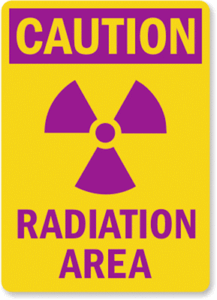
1) Radiation areas (area where the body could receive a dose of more than 5 millirems in an hour, or more than 100 millirem in 5 consecutive days);

2) High radiation areas (area where a body could be exposed to more than 100 millirems in one hour); or

3) An airborne radioactivity area (an area where a person can be exposed to higher than permissible amounts of airborne radioactive material).

In addition, areas that store certain amounts of radioactive materials must also display signs that will state: “Caution, Radioactive Materials”.

How are workplace ionizing radiation doses measured?

To measure a person’s workplace exposures, the employer should give workers personnel monitoring equipment, which might include: film badges, pocket chambers, pocket dosimeters, or film rings. The workplace Health and Safety officer or Radiation Safety officer tracks the results and reports as required.

What are the occupational limits for ionizing radiation in the workplace?

There are occupational limits for both non-pregnant and pregnant workers who could be exposed to ionizing radiation at their workplace. When a worker becomes pregnant and informs her employer, the ionizing radiation exposure limit is reduced for the protection of the embryo/fetus. The worker that tells her employer about the pregnancy is called a “declared worker”.

Most workplaces will have a Radiation Safety Officer who can keep staff up to date on current workplace limits for their job. In general, the occupational limit for ionizing radiation exposure to the whole body is 5 rems (5 rads, 50 mSv) per year. There are also regulations for specific parts of the body, as measured over a calendar quarter (3 months).

Some regulation agencies have established limits for an embryo or fetus. Some of these agencies recommend that a fetus should not receive more than 500 millirems (500 millirads, 0.5 rads, 0.5 rem, 5 mSv) over the course of the entire pregnancy. Some agencies may have different guidelines. Looking at 1 gestational month (1 month during a pregnancy), the recommendation by some regulating agencies is that exposure should not be more than 0.5 mSv (50 millirem, 0.05 rem, 50 millirads, 0.05 rads) in any one month of the pregnancy.

If the worker belongs to a professional medical organization, union or other organization, it may be beneficial to consult with them also to learn about protections that might be in place for the pregnant worker.

I work around ionizing radiation. Can it make it harder for me to get pregnant?

Remaining within the occupational limit for ionizing radiation of 5 rems (5 rads, 50 mSv) per year is not expected to make it harder for a woman to become pregnant.

Does working around ionizing radiation increase the chance for miscarriage?

Miscarriage is common and can occur in any pregnancy for many different reasons. Remaining within the occupational limit for ionizing radiation of 50 mSv (5,000 mrem, 5 rad) per year would not be expected to increase the chance of miscarriage. Radiation doses greater than 50 mSv in the first 2 weeks of the pregnancy, before the egg implants into the uterus, might increase the chance for miscarriage.

Does working around ionizing radiation increase the chance of birth defects?

Birth defects can happen in any pregnancy for different reasons. Out of all babies born each year, about 3 out of 100 (3%) will have a birth defect. We look at research studies to try to understand if an exposure might increase the chance of birth defects in a pregnancy.

In most cases of radiation exposure, the actual dose received by the embryo/fetus is less than the dose received by the woman who is pregnant. This is because some of the dose is absorbed by the body before reaching the inside of the uterus (where the fetus is developing).

Ionizing radiation exposure of less than of 50 mSv (5,000 mrem, 5 rad) has not been associated with an increased chance for birth defects over the background risk. It has been estimated that a woman would need about 125 unshielded pelvic X-rays for a fetus to be exposed to 50 mSv of radiation.

Does working around ionizing radiation increase the chance of other pregnancy problems?

Exposure to high doses (around 250 mSv or more (around 25,000 mrem or more) of radiation could be harmful to a pregnancy. These high dose exposures have been associated with small head size and poor growth. Some studies have looked at whether prenatal exposure to X-rays could increase the chance of cancer in children, but risks are unclear. If there is a cancer risk from prenatal X-ray exposure, it would be small. It is not known if working around ionizing radiation can cause other pregnancy related problems, such as preterm delivery (birth before week 37).

Does working around ionizing radiation in pregnancy affect future behavior or learning for the child?

Remaining within the occupational limits for both pregnant and non-pregnant workers would not be expected to have long-term effects for a pregnancy. Exposure to high doses (more than 500 mSv or 50,000 mrem) of radiation could be harmful to a pregnancy and has been associated with learning difficulties and intellectual disabilities. In addition, exposure to more than 100 mSV (10,000 mrem) of radiation between the 8th week and the 15th week of pregnancy might be associated with learning difficulties and intellectual disability.

Breastfeeding while working with X-rays:

X-rays are present only during the time that an image is being taken and leave no radiation or radioactivity in the body or in milk. Diagnostic X-rays have no effect on the breastmilk at the time of a procedure, and would not be expected to affect milk production. Be sure to talk to your healthcare provider about all your breastfeeding questions.

If a man works around ionizing radiation, can it make it harder to get a woman pregnant or increase the chance of birth defects?

Several studies have not found an association between low-level occupational radiation exposure to sperm and birth defects or childhood cancer in future children. It is possible that higher radiation exposure to the testes (more than 100 mSV or 10,000 mrems) could cause a temporary reduction in sperm count. As doses go higher, around 3,000 mSV or higher (around 300,000 mrems or higher), permanent sterility could occur in men). It would be rare to be exposed to ionizing radiation at these doses.

In general, exposures that men have are unlikely to increase risks to a pregnancy. For general information, please see the MotherToBaby fact sheet Paternal Exposures at https://mothertobaby.org/fact-sheets/paternal-exposures-pregnancy/.

What can workers do to reduce exposure to ionizing radiation?

Follow the Safe Work Practices outlined for your job by your radiation safety officer or industrial hygienist.

Below are some general tips:

  • Keep the time of exposure as short as possible.
  • Maximize your distance from the source of exposure.
  • Shield yourself from the source of exposure by:
    • Using appropriate personal protective equipment (such as lead gloves and aprons);
    • Standing the appropriate distance from the machine, or be out of the room or behind the appropriate shielding walls; and
    • Not standing in a direct line from a machine’s beam source.
  • Wear the personal radiation monitoring badge (dosimeter) as supplied by your employer.
  • Check to see if equipment is inspected as required; including machines and protective gear, such as lead aprons.
  • Store lead aprons properly by hanging on an approved hanger (do not fold or crease).
  • In extreme situations in which you cannot avoid being in the room while X-rays are being taken, use a mobile shield or wear a protective apron that has the appropriate thickness as outlined by your Radiation Safety Officer. Make sure the apron can wrap around the body and has full coverage of the abdomen. In addition, use lead goggles, gloves and shields.

For other workplace exposures, MotherToBaby has a general fact sheet on ways to reduce potential exposures to chemicals at https://mothertobaby.org/fact-sheets/reproductive-hazards-workplace/. Your worksite is required to provide the proper personal protection for all parts of your job. Be certain to use them, even when not pregnant.

Where can I look for more information? / What agencies regulate radiation?

Listed below are some agencies involved in monitoring or regulating radiation.

  • Canadian Nuclear Safety Commission
  • The Centers for Disease Control and Prevention (CDC)
  • Conference of Radiation Control Program Directors (CRCPD)
  • Environmental Protection Agency (EPA)
  • Federal Aviation Administration, Office of Aerospace Medicine, Civil Aerospace Medical Institute
  • Health Physics Society
  • International Commission of Radiological Protection (ICRP)
  • International Commission on Radiation Units and Measurements (ICRU)
  • National Council on Radiation Protection and Measurements (NCRP)
  • National Institute for Occupational Safety and Health (NIOSH)
  • Occupational Safety and Health Administration (OSHA)
  • Radiation Safety Institute of Canada
  • US Department of Energy (DOE)

Please click here for references.


Erythromycin

This sheet is about exposure to insect repellents in pregnancy and while breastfeeding. This information is based on available published literature. It should not take the place of medical care and advice from your healthcare provider.

What are insect repellents?

Insect repellents are lotions, sprays, or oils that are put on skin or clothing to lower the chance of bites from mosquitoes, flies, ticks, and spiders (“insects”). Insects can carry serious diseases such as malaria, dengue, West Nile virus, Zika virus, and others. Having these diseases during pregnancy can be harmful to a developing baby. The U.S. Centers for Disease Control and Prevention (CDC), the American College of Obstetricians and Gynecologists (ACOG), and other major health organizations recommend the use of insect repellents in women who are pregnant or breastfeeding to protect against insect bites that spread the diseases.

How good are insect repellents at protecting from insect bites?

Some insect repellents are better than others at preventing bites and protecting against diseases. The Environmental Protection Agency (EPA) and the CDC recommend the following ingredients for protection against bites:

  • DEET (N,N-diethyl-meta-toluamide) works against mosquitoes and ticks. A 15-30% preparation provides 6-12 hours of protection (lower concentrations may only provide 2 hours of protection). For more information, see the MotherToBaby fact sheet on DEET at https://mothertobaby.org/fact-sheets/deet-nn-ethyl-m-toluamide-pregnancy/.
  • Picaridin protects against flying insects, ticks, and chiggers. A 10-20% preparation provides 6-12 hours of protection and appears to be at least as effective against mosquitoes as DEET at similar concentrations.
  • IR3535 (3-[N-Butyl-N-acetyl]-aminopropionic acid, ethyl ester) may work against midges and biting flies. It is available in concentrations of 7.5% and 20%. Concentrations that are 10% or higher have also been found to be effective against mosquito bites for several hours. Two studies found that the 7.5% concentration provided limited protection.
  • PMD (p-Menthane-3,8-diol) is the lab-made form of an ingredient in oil of lemon eucalyptus. This may work best against mosquitoes, ticks, flies, gnats, and biting midges. A 30% preparation of PMD may protect against some insects for about 6 hours.
  • 2-undecanone is found in plants such as rue (Ruta graveolens), bananas, cloves, and ginger. A lab-made 8% preparation may provide protection against mosquitoes for 3-5 hours.

Natural insect repellents that are not on the EPA approved insect repellent list might not work to protect against insect bites. These repellents can include citronella candles, wristbands, or skin moisturizers, and oils of geraniol, cedar, peppermint, soybean, lemongrass, or rosemary. They are not recommended for use in areas where there is a chance of disease carried by insects. One study suggests citronella diffusers with approved insect repellent ingredients might be more effective than citronella candles alone.

What is the best way for me to use insect repellents?

  • Use insect repellents only when needed.
  • Read and follow the directions on the label.
  • Apply repellents only to exposed skin or clothing, not to skin that is under clothing.
  • Do not apply repellents to cuts or irritated skin.
  • Do not apply spray repellants in an enclosed area to minimize breathing in the spray.
  • To apply repellent to your face, spray it into your hands and then carefully apply a small amount to the face. Avoid getting the repellent in the eyes and mouth.
  • If you are also using sunscreen, apply the sunscreen first and then the insect repellent.
  • Wash hands thoroughly with soap and water after applying insect repellent, to reduce the chance of getting any into your mouth.
  • Wash the repellants off your skin and clothes with soap and water when you are no longer exposed to insects.

I use insect repellents. Can it make it harder for me to get pregnant?

Studies have not been done to see if insect repellents, when used as directed, may make it harder to get pregnant.

Does using insect repellents increase the chance for miscarriage?

Miscarriage is common and can occur in any pregnancy for many different reasons. Studies have not been done to see if insect repellents, when used as directed, increase the chance for miscarriage.

Does using insect repellents increase the chance of birth defects?

Birth defects can happen in any pregnancy for different reasons. Out of all babies born each year, about 3 out of 100 (3%) will have a birth defect. Based on a limited number of studies, when used as directed, insect repellants are not expected to increase the chance of birth defects.

  • DEET: Less than 10% of the total amount of DEET applied on skin enters the bloodstream. One study suggested that hypospadias (a birth defect where the opening of the penis is on the underside rather than the tip) was more common in male infants who were exposed to DEET early in pregnancy. This study did not prove that insect repellents cause this birth defect. Most studies do not find that using DEET increases the chance of birth defects.
  • Picaridin, PMD, IR3535, and 2-undecanone have not been studied in human pregnancy. However, when used as directed, only low amounts of these ingredients are expected to be absorbed through the skin into the bloodstream.
  • Natural plant oils such as soybean, lemongrass, citronella, peppermint, lavender, geranium, or geraniol have not been studied in human pregnancy.

Does using insect repellents in pregnancy increase the chance of other pregnancy related problems?

Based on limited studies, when used as directed, insect repellants do not appear to increase the chance for pregnancy-related problems such as preterm delivery (birth before week 37) or low birth weight (weighing less than 5 pounds, 8 ounces [2500 grams] at birth).

Does using insect repellents in pregnancy affect future behavior or learning for a child?

Based on 1 limited study, use of insect repellants did not show an increased chance for developmental problems for children at 1 year of age. Studies have not been done to see if using insect repellents can cause behavior or learning issues for the child after one year of age.

Breastfeeding while using insect repellents:

Diseases spread by insects can have serious health effects on people. There is little data on the use of insect repellents during breastfeeding, but it is important to consider the benefit of using them to prevent illness. When applying insect repellents during breastfeeding, follow the same instructions as during pregnancy. Do not apply insect repellents to the nipple area to keep the nursing child from getting any repellent in the mouth. If you are using DEET and suspect the baby has any symptoms, contact the child’s healthcare provider Be sure to talk with your healthcare provider about all your breastfeeding questions.

If a man uses an insect repellent, could it affect fertility or increase the chance of birth defects?

Studies have not been done to see if using insect repellents could affect a man’s fertility (ability to get a woman pregnant) or increase the chance of birth defects. In general, exposures that men have are unlikely to increase the risks to a pregnancy. For more information, please see the MotherToBaby fact sheet Paternal Exposures at https://mothertobaby.org/fact-sheets/paternal-exposures-pregnancy/.

Please click here for references.


Erythromycin

This sheet is about having group A strep infections in pregnancy or while breastfeeding. This information is based on available published literature. It should not take the place of medical care and advice from your healthcare provider.

What are group A strep infections?

Group A strep infections are caused by bacteria called group A Streptococcus. Group A strep infections can range from mild to severe. Mild infections include impetigo (infection of the skin causing red sores with yellow crust), scarlet fever (bright red rash on the body with a sore throat and a high fever), and strep throat (infection of the throat and tonsils). Serious infections include cellulitis (infection of the skin that can lead to infection in the bloodstream), necrotizing fasciitis (necrosis (death) of skin tissue), and streptococcal toxic shock syndrome (blood infection that causes fever and chills and leads to organ failure).

All group A strep infections can cause rheumatic fever (a disease that can develop when strep throat or scarlet fever is not properly treated with antibiotics) and kidney damage.

Women who are pregnant have a higher chance of experiencing severe group A strep infections. It is important to seek care as soon as possible if you think you have a group A strep infection. A healthcare provider can order group A strep testing for you.

How do you get a group A strep infection?

Group A strep bacteria are very contagious. The bacteria spread from person to person through touch or when they are breathed in. People can be infected with group A strep bacteria without feeling sick or knowing they’re infected.

I have a group A strep infection. Can it make it harder for me to get pregnant?

Studies have not been done to see if having a group A strep infection can make it harder to get pregnant.

Does having a group A strep infection increase the chance of miscarriage?

Miscarriage is common and can occur in any pregnancy for many different reasons. It is not known if group A strep infections increase the chance of miscarriage. Two studies of less than 100 women reported an increased chance of miscarriage in people who a have a group A strep infection in pregnancy. There was little information in the study reports on how severe their illness was or what symptoms they were having. As there can be many causes of miscarriage, it is hard to know if the infection or other factors are the cause of a miscarriage.

Does having a group A strep infection increase the chance of birth defects?

Birth defects can happen in any pregnancy for different reasons. Out of all babies born each year, about 3 out of 100 (3%) will have a birth defect. We look at research studies to try to understand if an exposure, like group A strep infection, might increase the chance of birth defects in a pregnancy. Studies have not been done to see if having a group A strep infection increases the chance of birth defects.

Fever is a possible symptom of some group A strep infections. A high fever in the first trimester can increase the chance of certain birth defects. Acetaminophen has been recommended as an option to reduce fever in pregnancy. If you have a group A strep infection and develop a fever, talk with your healthcare provider about the best way to treat your fever. For more information about fever and pregnancy, see the MotherToBaby fact sheet about fever/hyperthermia at https://mothertobaby.org/fact-sheets/hyperthermia-pregnancy/ and a fact sheet on acetaminophen here: https://mothertobaby.org/fact-sheets/acetaminophen-pregnancy/.

Does having a group A strep infection increase the chance of other pregnancy-related problems?

Studies have not been done to see if having a group A strep infection can increase the chance of preterm delivery (birth before week 37) or low birth weight (weighing less than 5 pounds, 8 ounces [2500 grams] at birth). Two studies of less than 100 women reported an increased chance of stillbirth in people who had a group A strep infection in pregnancy. This is not enough information to draw a conclusion about group A strep infection and the chance of stillbirth.

Group A strep infections that happen near or during labor can lead to serious disease. An infant who has a group A strep infection can develop streptococcal toxic shock syndrome (serious medical condition where bacteria get into the blood and leads to organ failure).

Can group A strep infections be passed to the fetus during pregnancy or at the time of delivery?

There have been no reports of group A strep infections being passed to the fetus during pregnancy. However, newborns can get group A strep infections at delivery or soon after delivery if they are exposed to group A strep bacteria. If you have been diagnosed with group A strep, talk with your healthcare provider and baby’s pediatrician to be sure your baby gets the care they need.

Does having a group A infection in pregnancy affect future behavior or learning for the child?

It is not known if exposure to a group A strep infection in pregnancy can affect future behavior or learning for the child. One study did not find any changes in learning or behavior in children 0 to 5 years old whose mother had a group A infection while pregnant.

Breastfeeding while I have a group A strep infection:

Group A strep bacteria pass into breast milk. There is no information on what effect, if any, group A strep bacteria in breast milk might have on a breastfed infant. Women with group A strep infections may feel too sick to breastfeed and may have a lower milk supply than normal. Your healthcare provider might recommend that you continue to express milk when possible. There are no specific recommendations about breastfeeding when infected with group A strep.

While sick, it is important to try to protect your baby from getting sick. Wash your hands with soap and water before holding your baby. Avoid coughing or sneezing on the baby. Cover your mouth/nose with a tissue when you cough or sneeze, then throw away the tissue and wash your hands. While you are ill, you may want to consider having someone who is not sick help you care for your baby. Be sure to talk to your healthcare provider about all your breastfeeding questions.

If a man has a group A strep infection, can it affect fertility or increase the chance of birth defects?

Studies have not been done to see if a group A strep infection could affect a man’s fertility (ability to get a woman pregnant) or increase the chance of birth defects. In general, exposures that men have are unlikely to increase risks to a pregnancy. For more information, please see the MotherToBaby fact sheet Paternal Exposures at https://mothertobaby.org/fact-sheets/paternal-exposures-pregnancy/.

Please click here for references.


Erythromycin

This sheet is about exposure to respiratory syncytial virus (RSV) in pregnancy or while breastfeeding. This information is based on published research studies. It should not take the place of medical care and advice from your healthcare provider. 

What is respiratory syncytial virus (RSV)? 

Respiratory syncytial virus (called RSV) is a common respiratory virus that usually causes mild, cold-like symptoms. Babies, older adults, and people with a weakened immune system have a higher chance of getting severe symptoms. Severe symptoms can include lower respiratory disease and pneumonia. People with severe symptoms might need to be treated in a hospital. It is not known if pregnant women have a higher chance of developing severe symptoms. 

In most regions of the United States, RSV season generally starts during fall and peaks in the winter. However, the timing and severity of RSV seasons can be different from year to year and in different areas of the United States. 

Is RSV contagious? How does the virus spread? 

RSV spreads easily from person to person when someone who is infected with the virus coughs or sneezes. RSV can also be spread through direct contact with people who are sick (shaking hands or kissing) or touching surfaces that have the virus on them. Close contact with young children, such as in daycare settings, is a common way to become infected with RSV. 

People infected with RSV usually show symptoms within 4 to 6 days after getting infected, but some people might not have symptoms (asymptomatic). People with RSV may be contagious 1 or 2 days before symptoms start, and most people are contagious for 3 to 8 days after symptoms start. However, some infants, and people with weakened immune systems, can still spread the virus for up to 4 weeks after they stop showing symptoms.  

I have an RSV infection. Can it make it harder for me to get pregnant?  

Studies have not been done to see if having an RSV infection could make it harder to get pregnant. 

Does having RSV increase the chance of miscarriage?  

Miscarriage is common and can occur in any pregnancy for many different reasons. One study reported that RSV was more common among women who had a miscarriage compared to women who did not have a miscarriage. However, other reports do not suggest a higher chance of miscarriage. As there can be many causes of miscarriage, it is hard to know if the infection, medication, or other factors are the cause of a miscarriage.  

Does having RSV increase the chance of birth defects?  

Birth defects can happen in any pregnancy for different reasons. Out of all babies born each year, about 3 out of 100 (3%) will have a birth defect. We look at research studies to try to understand if an exposure, like RSV, might increase the chance of birth defects in a pregnancy. RSV infection in pregnancy is not well-studied. However, RSV is not expected to increase the chance of birth defects. 

Would having RSV increase the chance of other pregnancy-related problems?  

In reports of RSV in pregnancy, pregnancy complications such as preterm delivery (birth before week 37) or low birth weight (weighing less than 5 pounds, 8 ounces [2500 grams] at birth) were not common. In reports when a pregnancy complication was reported, many of those women also had another medical condition or infection. 

If I have RSV during my pregnancy, can the infection pass to the fetus? 

Studies have suggested that it is possible to pass an RSV infection to the fetus across the placenta. One small study reported that newborns born to women who had RSV during the third trimester could have some breathing problems related to RSV. 

Does having RSV in pregnancy affect future behavior or learning for the child?    

It is not known if RSV infection in pregnancy can affect future behavior or learning for the child.  

How can I protect myself and my pregnancy? 

The Centers for Disease Control and Prevention (CDC) recommend women who are pregnant get a single dose of the RSV vaccine during weeks 32 through 36 of pregnancy if they have not received an RSV vaccine in previous pregnancies. MotherToBaby has a fact sheet on the RSV vaccine at: https://mothertobaby.org/fact-sheets/respiratory-syncytial-virus-rsv-vaccine-abrysvo/ 

In addition to getting the RSV vaccine, be sure that you and others around you are doing the following to help prevent spread of viruses: 

  • Wash your hands with soap and water often or use an alcohol-based hand sanitizer if soap and water are not available.  
  • Cover your nose and mouth when you cough or sneeze and ask those around you to do the same. 
  • Do not touch your eyes, nose, or mouth. 
  • Try to avoid close contact with people who are sick. 
  • Do not share drinking glasses or eating utensils with others. 
  • Clean touched surfaces such as doorknobs, toys, and mobile devices.  

Breastfeeding while I have RSV: 

Women are encouraged to keep breastfeeding even if they have RSV. Breast milk from someone who has RSV or had it during pregnancy might contain protective antibodies. This can help lower the baby’s risk of getting RSV or having severe symptoms. Be sure to talk to your healthcare provider about all your breastfeeding questions.  

While sick, it is important to try to protect the baby from the virus. Wash hands with soap and water before holding your baby. Avoid coughing or sneezing on your baby. Cover your mouth/nose with a tissue when you cough or sneeze, then throw away the tissue and wash your hands. 

If a man has RSV, can it make it affect fertility or increase the chance of birth defects?   

Studies have not been done to see if RSV could affect male fertility (ability to get a woman pregnant) or increase the chance of birth defects. Close contact may not be recommended when you have RSV to try to avoid passing RSV to your partner. For more general information on paternal exposures, please see the MotherToBaby fact sheet at https://mothertobaby.org/fact-sheets/paternal-exposures-pregnancy/.  

Please click here for references.