Frequently Asked Questions About Lead During Pregnancy & Breastfeeding
Frequently Asked Questions About Lead During Pregnancy & Breastfeeding
What is lead and where is it found?
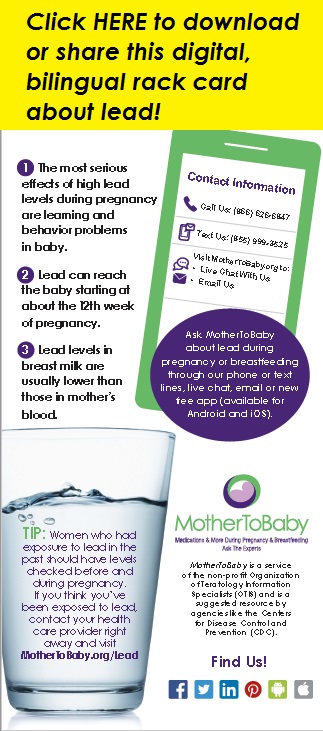
Lead is a heavy metal. It can be found in many places such as cosmetics, children’s & costume jewelry, old paint, gasoline, and in many types of hobbies and industry. Read more
What effects could lead have on my baby?
High levels of lead during pregnancy can cause miscarriage and stillbirth. Other pregnancy problems such as low birth weight and premature delivery can also occur. Read more
Is there concern about lead if I am breastfeeding?
Lead levels in breast milk are usually lower than levels in mother’s blood. Lead may also be found in infant formulas. Read more
Is it a problem if the father of the baby is exposed to lead?
Lead in the body can reach the sperm. High levels of lead may cause changes in the shape, size, number and movement of the sperm. Read more
For more frequently-asked questions and answers, please watch the videos above featuring MotherToBaby experts or visit our Lead Fact Sheet here. Disponible en español aquí
Free Webinar for Health Care Providers:
In January 2017, MotherToBaby teamed up with the Pediatric Health Specialty Units (PEHSU) and the National Society of Genetic Counselors (NSGC) to provide the latest research surrounding lead exposure through a webinar. To view the recorded webinar,click here.
Frequently Asked Questions About Lead During Pregnancy & Breastfeeding
MotherToBaby Launches Unique ‘Text Counseling’ for Reliable Info About Exposure Risks to Baby
BRENTWOOD, TN – As the world prepares to recognize Fetal Alcohol Spectrum Disorders (FASD) Awareness Day on September 9th, MotherToBaby, a service of the international non-profit Organization of Teratology Information Specialists (OTIS), launches a way for expectant moms to have free expert information about the risks of alcohol and other exposures to baby at their fingertips – via text.
“The risks to baby of being exposed to things like alcohol, drugs or medications during a woman’s pregnancy or breastfeeding can really vary depending on mom’s metabolism, timing of the exposure, and whole host of other factors,” said Lori Wolfe, MS, a certified genetic counselor and director of MotherToBaby’s North Texas affiliate. “Mom really needs the latest information tailored to her particular circumstance in order to make informed decisions, along with her health care provider, about her and baby’s health. We’re now offering that research-based info in the most convenient way possible,” she added.
Expecting moms will simply need to text their questions in English or Spanish to 855-999-3525 to be connected to a bilingual specialist in the field of teratology – the study of exposures that cause birth defects. Standard text messaging rates may apply depending on an individual’s phone plan. Those who do use the new texting service are encouraged to check with their carrier first.
“When someone goes searching the internet, it can be a scary place that often highlights worst-case scenarios only,” explained Al Romeo, RN, PhD and teratogen information specialist at MotherToBaby’s Utah affiliate. “We’re not the internet. We’re registered nurses, genetic counselors and teratogen information specialists on the other end of your cell phone answering texts with the most up-to-date evidence you often can’t find online.”
MotherToBaby, which consists of 14 services housed at universities, hospitals and government institutions across the country, provides free, evidence-based, personalized risk assessments, education and counseling regarding the effects of exposures like prescription and over-the-counter drugs, alcohol, smoking, illicit substances, vaccines, beauty products, herbal supplements, chemicals and more during pregnancy and while breastfeeding. In addition to the new text counseling component, the public can be connected with a bilingual MotherToBaby expert by calling toll-free 1-866-626-6847. The MotherToBaby website also houses a library of fact sheets located at www.MotherToBaby.org.
More than 100,000 women and their health care providers seek information about birth defects prevention from MotherToBaby every year. MotherToBaby has been able to launch new outreach efforts to reach underserved populations, including new communication technologies, through a cooperative agreement with the U.S. Health Resources and Services Administration.
About FASD Awareness Day
FASD Awareness Day has been recognized on the ninth day of the ninth month since 1999 as a reminder for women to abstain from drinking alcohol during the nine months of pregnancy. As many as 1 out of every 100 babies are estimated to be affected by prenatal alcohol exposure, which can result in a range of neurobehavioral disabilities. FASD awareness events also traditionally take place across the nation all month long each September.
# # # Media Contact: Nicole Chavez, 619-368-3259, nchavez@MotherToBaby.org. Interviews in Spanish can also be arranged.
Frequently Asked Questions About Lead During Pregnancy & Breastfeeding
Kirstie Perrotta, MPH, and Angela Messer, MS, join host Chris Stallman, CGC in this special “summer grab bag” of topics related to common summer activities during pregnancy and breastfeeding. Our guest experts talk about everything from chlorine and sunscreen to Zika.
Kirstie Perrotta, MPH, is an information specialist at MotherToBaby California, where she provides counseling by phone and chat. She received her Masters in Public Health (MPH) from the University of San Francisco, and has worked in the field of reproductive health for over 9 years. Kirstie currently serves as a member of the MotherToBaby Emerging Issues Task Force (EITF). Her interests include vaccines, infectious disease, and mental health during pregnancy.
Angela Messer, MS, is an information specialist with MotherToBaby California. She earned her undergraduate degree in psychology from Chapman University and her graduate degree from Kansas State University in academic advising/counseling. Angela has been with MotherToBaby since 2009, with experience in both research and counseling. She appreciates the opportunity to speak with people who are pregnant and/or breastfeeding and healthcare professionals regarding exposures and medications, and holds a special interest in stress and anxiety in pregnancy and breastfeeding.
Frequently Asked Questions About Lead During Pregnancy & Breastfeeding
You may have heard recently that the Food and Drug Administration (FDA) has banned Federal Food, Drug, and Cosmetic Act (FD&C) Red No. 3. In this blog, we will review details about the ban, including why it was enacted, and the timeline for removing FD&C Red No. 3 from products. Our goal is to equip you with information to help make informed decisions. Be sure to check back, as we’ll continue updating this post with the latest developments.
All food dyes, called color additives, must be approved for use by the FDA before manufacturers can use them. Color additives can be synthetic (lab made) or naturally derived from plants, animals and minerals. Manufacturers submit information about safety and manufacturing to the FDA in order to receive approval.
What is Red No. 3?
FD&C Red No. 3., also found on food labels as Red 3 or Red No. 3, is a synthetic food dye that gives foods and drinks a bright, cherry-red color. Red No. 3 can be found in some cake icing, candies, and other food items. Red No. 3 is also used in some oral medications and supplements.
Red No. 3 is a complicated formula for those of us not in the food manufacturing business. Specifically, the FDA reports that the color additive FD&C No. 3 is monohydrate of 9-6-hydroxy-2,4,5,7-tetraiodo-3H-xanthen-3-one, disodium salt, with smaller amounts of lower imdinated fluoresceins.
Why is Red No. 3 being banned?
Red No. 3 food dye is being banned because studies found that at high doses, the dye caused cancer in male laboratory rats. Studies in other animals or in humans did not show an increased chance for cancer.
The way that the food dye causes cancer in laboratory rats involves a mechanism not present in humans, so it is not known if this could also be a risk for humans.
Has Red No. 3 been associated with birth defects or problems with breastfeeding?
Studies have not been done to research this.
When is the ban taking effect?
On January. 15, 2025, the FDA announced that Red No. 3 will be banned from all products, including medications and foods. However, this ban allows manufacturers time to phase out the use of Red No. 3. Manufacturers who use Red No. 3 in food will have until January 15, 2027 to remove it from their products. Manufacturers of oral medications and supplements will have until January 18, 2028 to remove it.
Is FD&C Red No. 3 used in cosmetics or topical medications?
Red No. 3 has not been allowed in cosmetics, or topical medications, by the FDA since at least 1990.
How can I confirm if my food has Red No. 3?
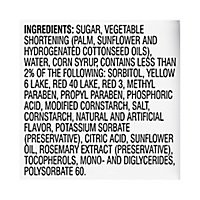
To learn if your food has Red No. 3, look at nutrition facts on the product’s label. The nutrition facts label lists calories and serving size, as well as other information. Below the nutrition facts, you will find an ingredients list. Ingredients are listed in order of those found in highest amounts to those found in smallest amounts in the product. For example, if the first ingredient is water, this means that most of the product is water, and each ingredient listed after that is found in the product in smaller amounts.
Here is a sample of a products’ ingredients. Red No.3 is listed as less than 2% of the product.
You can learn more from the FDA announcement here: FDA Consumer Announcement
Frequently Asked Questions About Lead During Pregnancy & Breastfeeding
I recently received a phone call from Molly. Molly told me that she had just found out that she was pregnant; this was a surprise, but a welcome one. However, Molly confessed that she smokes a pack of cigarettes per day and her doctor recommends that she quit smoking since cigarettes can present a number of hazards for her pregnancy and baby. Molly’s friend told her that e-cigarettes were safe in pregnancy and would help Molly with her efforts to reduce use of traditional cigarettes. Molly wanted to be sure. “Don’t both cigarettes and e-cigarettes both contain nicotine,” she asked?
What are e-cigarettes?
‘E-cigarettes’ is short for electronic nicotine delivery system, sometimes also referred to as vapes, e-hookah, or other slang names. E-cigarettes utilize a device that heats up nicotine-containing fluid from a cartridge, which can then be inhaled as a vapor. Using an e-cigarette does have the potential to avoid some of the hazardous compounds found in traditional cigarettes such as tar and cadmium. However, e-cigarettes are a relatively new product and not very well regulated. Some e-cigarette fluids contain a lot of nicotine while others very little. They often have other substances added to them including preservatives and flavorings. Many of these agents have not been studied regarding their safety in pregnant women.
All of this makes it difficult to draw accurate conclusions about what risk e-cigarettes might present to a pregnant woman and her baby. What we do know is that traditional cigarettes and nicotine (the chemical which is in both tobacco and e-cigarettes) do present a risk for a wide number of issues including birth defects (cleft lip and palate), miscarriage, and poor growth in the developing baby. In addition, substituting e-cigarettes for traditional cigarettes is not a proven way to quit smoking, and in some cases, people continue to smoke conventional cigarettes as well as e-cigarettes which makes the exposure to the baby even larger. Scientists are still learning about this, and most public health agencies recommend behavioral approaches as the safest strategy for pregnant women who are trying to quit smoking.
Molly is smart to ask about the safety of e-cigarettes before she uses them. She also shows how much she cares about herself and her baby by trying to decrease smoking as much as possible! I suggested she speak with her healthcare provider about strategies for quitting. I also told her about free services like the CDC’s Smoker’s Quitline (1-800-784-8669).

 Frequently Asked Questions About Lead During Pregnancy & Breastfeeding