A Main Course Of Knowledge With A Side Of Support, Please! 3 Tips That Help My Patients Prevent Birth Defects

By Lori Wolfe, Certified Genetic Counselor and Teratogen Information Specialist, MotherToBaby North Texas
It’s pretty much a fact – ALL pregnant women worry…about what they eat, what they do, what they breathe. Basically, they worry about everything. That’s simply because every expectant mother wants to do the very best she can for her developing baby. As a genetic counselor who runs the North Texas affiliate of MotherToBaby, I get calls every day from pregnant woman who want to know what to do and what not to do in order to have the best chance of having a heathy baby without birth defects.

Recently I was having lunch with my friend, Amber, who is expecting her first babies…Yes… plural! In seven short months, she’ll become the mother of twins! As a first time mom-to-be, Amber is always full of questions when we get together. Nothing like having a friend who is an expert in the pregnancy exposure field, right?! “Lori, is it true that since I eat lots of dark green veggies, and breads and cereals, that my babies will not have spina bifida? I remember hearing something about how good folic acid is for developing babies. Is that true?” asked Amber. “Yes!” I enthusiastically replied. “Having enough folic acid in the first two months of your pregnancy is very important to help prevent birth defects in your developing babies. In fact, studies have shown that if you are getting at least 400 mcg of folic acid during your early pregnancy through the foods you eat, as well as your prenatal vitamin, then your babies have up to a 70% less chance of having a spinal cord defect such as spina bifida.” The look on her face was priceless…pure shock! “70%? Really?! Wow, I had no idea it could be so effective,” Amber answered. “Yes, I have been taking a daily prenatal vitamin since before I became pregnant. I am always careful to take one every day. So what else can I do to help my babies be born without birth defects?”

Let me break it down for all of the “Ambers” out there. What’s thought to be the most common preventable cause of mental retardation in a baby? The answer – drinking alcohol during pregnancy. “And what is so crazy is that women do not need to drink alcohol when they are trying to become pregnant, and definitely not once they have a confirmed pregnancy,” I explained. About one in every 100 babies born in America is affected by prenatal alcohol exposure and it is totally preventable by simply avoiding alcohol during pregnancy. “Amazing!” replied Amber. “I never realized so many kids were affected by their moms’ drinking alcohol during pregnancy. That is sad. But I am good on this count as I have not had any alcohol at all during the last few months,” Amber said.

“So is there anything else I can or can’t eat or drink, or something else I can avoid that could make a difference in my babies not having birth defects?” she went on to say. “You are about eight weeks pregnant now, right Amber?” I asked her. “Yes. I am now about eight and one half weeks. Why?” she asked. “Well, another thing we worry about is hyperthermia,” I told her. “Hyperthermia means increasing your internal or core body temperature up to 102 degrees Fahrenheit or more. When you become that hot, the baby inside of you becomes hot too. When the baby’s temperature becomes too hot, especially in weeks five and six of a pregnancy, there is an increased chance that the spinal cord will not close, and your baby can be born with an open spinal cord defect like spina bifida. So we always caution pregnant women not to sit in hot tubs that are heated over 100 degrees, or to be careful to watch their temperature if they become ill with a fever during early pregnancy,” I said.
“All of this is really good to know,” Amber answered, as we wrapped up lunch. “I’m lucky I have you as a friend!”

I love making sure women have someone to turn to for answers when they have questions about exposures while pregnant or breastfeeding. In fact, during March when the world will commemorate the first-ever World Birth Defects Awareness Day, my lunch with Amber serves as a great reminder that my colleagues and I are there for all pregnant and breastfeeding women across North America.
If you have a question during pregnancy and breastfeeding about something you ate, drank or medication you took, call MotherToBaby at 866-626-6847. I may not be able to meet you for lunch, but a main course of free expertise over the phone, followed by a huge helping of cutting edge research to support that expertise, will certainly be exactly what you ordered in your search for answers. And who knows? Your kids might even thank you for having such an appetite for knowledge one day!

loriwolfe
Lori Wolfe is a board certified Genetic Counselor and the Director of MotherToBaby’s North Texas affiliate. MotherToBaby aims to educate women about medications and more during pregnancy and breastfeeding. Along with answering women’s and health professionals’ questions regarding exposures during pregnancy/breastfeeding via MotherToBaby’s toll-free number and by email, Wolfe also teaches at the University of North Texas, provides educational talks regarding pregnancy health in community clinics and high schools, and counsels adoptive parents.
MotherToBaby is a service of the international non-profit Organization of Teratology Information Specialists (OTIS), a suggested resource by many agencies includingthe Centers for Disease Control and Prevention (CDC). If you have questions about vaccines, medications or other exposures, call MotherToBaby toll-FREE at 866-626-6847 or visit MotherToBaby.org to browse a library of fact sheets and find your nearest affiliate
A Main Course Of Knowledge With A Side Of Support, Please! 3 Tips That Help My Patients Prevent Birth Defects

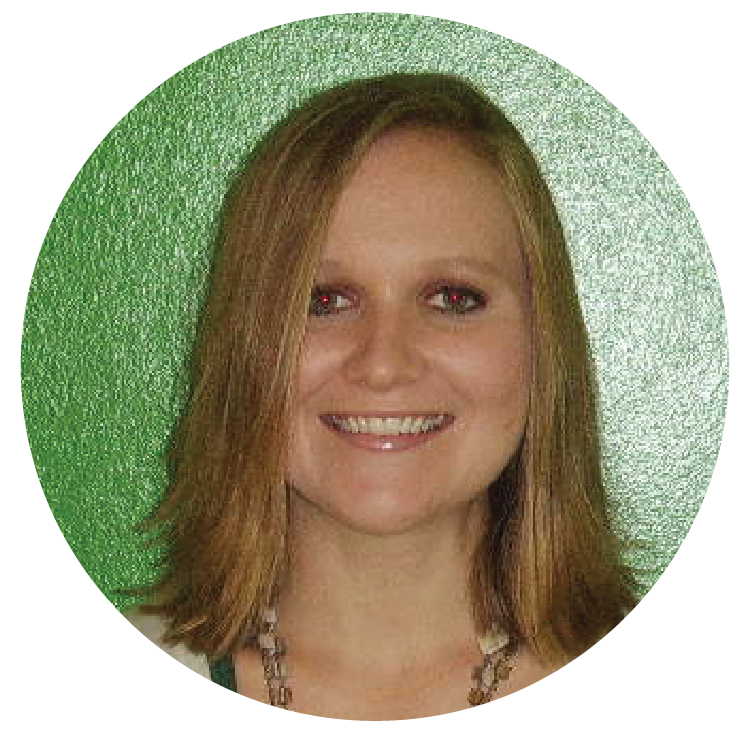
By Jennifer Lemons, MS, CGC, MotherToBaby Texas TIPS

It was the longest 3 minutes of her life. As she opened her eyes to glance at the test, her heart stopped. She couldn’t breathe. Frantically, she tore open the instructions that came with the test to confirm what she already knew. She was pregnant. She laid her head on the bathroom stall, tears threatening to fall. It was then that the bell rang, signaling the end of lunch. It was time to go to class. But all she could think was, “I’m only 16…”

May is National Teen Pregnancy Prevention Month, a good time to focus on the specific challenges a young, pregnant mother may face. Teen pregnancy raises a myriad of emotions and thoughts from the most practical of, “How am I going to finish school?” or “What will my parents think?” to the more profound, “Should I even keep it?” or “Could I have harmed the baby somehow?”

When trying to answer these questions, it should come as no surprise that teens are at a high risk for receiving misinformation from many sources, i.e. the internet, friends and media. As a certified genetic counselor at MotherToBaby, this concerns me greatly – for mom’s sake, as well as baby’s. When somehow that mom-to-be lands on the other end of my phone line, in my office or on the other end of an email, I am relieved. She’s found a trustworthy resource available for pregnant teens to help them answer these important, and potentially life-changing, questions.

MotherToBaby, a service of the nonprofit Organization of Teratology Information Specialists (OTIS), provides the most up-to-date, evidence-based information to mothers, healthcare professionals, and the general public about potentially harmful exposures, like alcohol, drugs and medications, during pregnancy and while breastfeeding. Each question that MotherToBaby receives is researched by a professional like me. From questions about bug repellant to illegal drug use, MotherToBaby has seen it all! So, what are some of the most common questions I get from young moms?

ALCOHOL. “Can I drink any alcohol at all during my pregnancy?” No amount of alcohol is safe during pregnancy. However, babies exposed to large amounts of alcohol at one time (i.e. binge drinking) and/or frequently throughout a pregnancy may be at risk for Fetal Alcohol Spectrum Disorder (FASD). Babies with FASD may have one or more of the following: birth defects, intellectual disabilities, learning disorders and/or behavioral problems.

CIGARETTES. “Why can’t I smoke cigarettes while I am pregnant?” There are over 4,000 chemicals and toxins in cigarette smoke. Several of these can cross the placenta and decrease the amount of oxygen and nutrients available to baby. Studies on heavy smoking (smoking 15 or more cigarettes per day) during pregnancy have shown an increased risk of oral clefts in newborns, as well as a higher chance for preterm delivery, low-birth weight or miscarriage. Long-term effects have included a higher risk for childhood asthma, bronchitis, and respiratory infections, as well as ADHD. It’s never too late to quit smoking – even reducing the number of cigarettes smoked per day will help!

MARIJUANA. “I’ve heard it is OK to smoke marijuana during pregnancy. Is this true?” There is conflicting information available about the effects of marijuana on a pregnancy. While some recent studies have shown that it has not been associated with an increased risk for birth defects or complications, there is not enough data available to say this with 100% confidence. Additionally, cognitive and behavioral problems have been seen more often in children whose mothers were “heavy” marijuana users (used marijuana one or more times per day). Again, the evidence is not conclusive and some studies report conflicting results. Plus, smoking is smoking, so heavy marijuana use during pregnancy can be associated with many of the same problems as heavy cigarette use.

METHAMPHETAMINES. “I’ve used methamphetamines in the past. Is this OK to use now and then while I am pregnant?” Methamphetamines (meth) should not be used at any point during pregnancy. Meth use has been associated with an increased risk of miscarriage or preterm delivery. Meth use later in pregnancy has also been associated with babies experiencing withdrawal symptoms after being born. Currently, there is not enough data to know whether meth use during pregnancy increases the risk of birth defects, although heavy use of meth during pregnancy may increase the risk for learning problems.

There’s no doubt the road ahead will be filled with many more questions for a young parent, but I’d like to think receiving a reliable personalized risk assessment about exposures during pregnancy and breastfeeding will be the start of an important support system she builds for herself.

MTB_Head Shots-10


Jennifer Lemons, MS, is a certified genetic counselor and clinical instructor in the Department of Pediatrics, Division of Genetics at the University of Texas Medical School. In addition to providing teratogen counseling for MotherToBaby TexasTIPS, she provides genetic counseling services at the Gulf States Hemophilia and Thrombophilia Center in Houston. Special thanks to Meagan Giles, a 2nd year genetic counseling student with the University of Texas Genetic Counseling Program, who also contributed information to this blog.

MotherToBaby is a service of the international Organization of Teratology Information Specialists (OTIS), a suggested resource by many agencies including the Centers for Disease Control and Prevention (CDC). If you have questions about viruses, alcohol, medications, vaccines, diseases, or other exposures, call MotherToBaby toll-FREE at 866-626-6847 or try out MotherToBaby’s new text counseling service by texting questions to (855) 999-3525. You can also visit MotherToBaby.org to browse a library of fact sheets, email an expert or chat live.


A Main Course Of Knowledge With A Side Of Support, Please! 3 Tips That Help My Patients Prevent Birth Defects

Impact of MotherToBaby

Each year, MotherToBaby makes a difference in maternal and infant health by providing evidence-information to mothers, families and the public about the benefits and risks of exposures.  In 2023, MotherToBaby answered over 36,000 exposure questions through phone, text, email or chat.  Your generosity ensures that we can continue to provide our confidential services free of charge.  

Learn more about the impact we made educating the public on the benefits and risks of exposures during pregnancy and lactation to improve maternal and child health.

Providing You with Reliable Exposure Information During Pregnancy and Breastfeeding

MotherToBaby Exposure Information Service

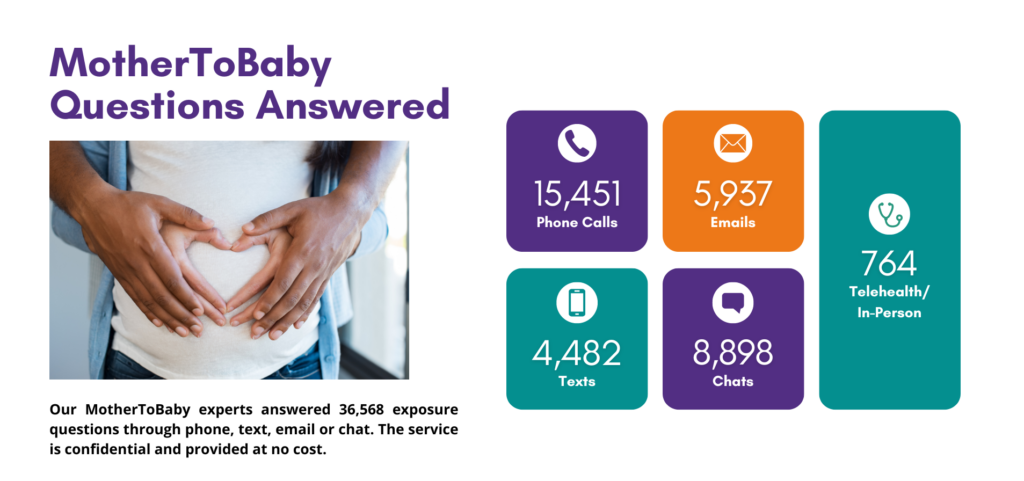
Our MotherToBaby experts answered 36,568 exposure questions through phone, text, email or chat. The service is confidential and provided at no cost.

MotherToBaby Pregnancy Studies

MotherToBaby Pregnancy Studies is a research program seeking to understand how certain medications, vaccines, or health conditions may affect pregnancy. MotherToBaby Pregnancy Studies research coordinated by UC San Diego’s Center for Better Beginnings has been instrumental in identifying previously unrecognized exposures that can be harmful to pregnancy, as well as ruling out substantial risk for other medications and vaccines. Opportunities to join a study are available to residents of the United States, the U.S. territories, and Canada. MotherToBaby Pregnancy Studies has over 20 years of experience observing people who are pregnant and birth outcomes. Our goal is to provide parents and their health providers with the evidence-based information that they need to make more informed healthcare decisions during pregnancy for the health of the person who is pregnant and their pregnancy. 

National Library of Medicine

MotherToBaby is a contributor to the prestigious Library of Medicine (NLM) with more than 250 of bilingual evidence-based Fact Sheets. For more than 200 years, the NLM has been a partner for biological discovery, clinical care decision-making and healthcare choices for everyday living. MotherToBaby’s Fact Sheets contain frequently asked questions and answers on pregnancy and breastfeeding exposure is accessible throughout the United States through the government’s free libraries, public institutions, and databases.

Lact Rx

LactRx by MotherToBaby is a free app providing current information on the use of medications, vaccines, diagnostic agents, and drugs of misuse during breastfeeding. The app has been downloaded over 6,700 times with 13,238 engaged sessions.

Financial Information

In accordance with the Financial Accounting Standards Board (FASB) guidelines and Internal Revenue Service (IRS) guidance, MotherToBaby allocates a portion of our fundraising costs to program services. As a nonprofit organization that’s exempt from federal taxation, we ensure our donors’ money is spent as efficiently and effectively as possible. To learn more or to report any improprieties, please call MotherToBaby at 615.649.3082.


A Main Course Of Knowledge With A Side Of Support, Please! 3 Tips That Help My Patients Prevent Birth Defects

Our Research is Advancing Pregnancy Outcomes

Little is known about the effects of taking most medications in pregnancy because people who are pregnant and/or breastfeeding are currently excluded from clinical trials that occur when a drug is being developed. This means that once a medication is approved by the U.S. Food & Drug Administration (FDA), it starts being prescribed to patients – including those of reproductive potential – with little to no information about the safety of the drug if used during pregnancy. MotherToBaby engages in research efforts to fill these critical information gaps and to enhance our understanding of whether and how medication and vaccine exposures may affect pregnancy and infant outcomes.

Medication use in pregnancy is common. According to the U.S. Centers for Disease Control and Prevention (CDC), about 9 in 10 people take a least one medicine during pregnancy and 7 in 10 take a least one prescription medication. Yet fewer than 10% of medications have enough information to determine potential infant risks.

We are proud to contribute to the field of teratology by examining pregnancy outcomes with robust cohort analysis though our in-house research program, MotherToBaby Pregnancy Studies. These studies are a series of observational registries that track pregnancy and infant outcomes in people who take a particular medication or receive a certain vaccine during their pregnancy. After the study participants give birth, our research team compares the health of their babies to those who did not take the medication/vaccine to determine if the medication/vaccine exposure increases the chance for adverse pregnancy outcomes. Our findings provide much-needed information on the safety of medication and vaccine use in pregnancy. This information found in our publications can then be used by people and their health providers to make more informed treatment decisions during pregnancy.

View a complete list of research publications from our MotherToBaby Pregnancy Studies by visiting the OTIS/MotherToBaby MyBibliography list.

Pregnancy Studies

Our observational research studies investigate medicine safety in pregnancy. Research fueled by parents, for parents!


A Main Course Of Knowledge With A Side Of Support, Please! 3 Tips That Help My Patients Prevent Birth Defects

LactRx is sponsored by MotherToBaby, the Leading Resource on Exposures during Pregnancy and Breastfeeding

BRENTWOOD, TN – The non-profit Organization of Teratology Information Specialists (OTIS), through its public-facing service known as MotherToBaby, launches LactRx, a free app providing current information on the use of medications, vaccines, diagnostic agents & drugs of misuse during breastfeeding. The LactRx app provides easy access to the LactMed database, a resource from the National Library of Medicine (NLM).

In 2019 the NLM announced that the LactMed app was being discontinued. The announcement prompted a discussion between Phil Anderson, PharmD, FASHP, UC San Diego clinical professor and author of LactMed and Christina Chambers, PhD, MPH, MotherToBaby Past President and Mommy’s Milk: Human Milk Biorepository Program Director, about MotherToBaby sponsoring a new app for LactMed. “This was a hugely popular resource with millions of hits,” said Chambers.  Because of this, she saw it as an opportunity for MotherToBaby to help build and host a new app with all of the LactMed information.

In October of 2021, the idea was brought to the leadership of the Organization of Teratology Information Specialists (OTIS), the professional non-profit that provides the MotherToBaby no-cost service. Development commenced and LactRx was born.

“The NLM made the decision to continue supporting web access to LactMed, and to discontinue support for its app. However, in Dr. Anderson’s experience, the app was a very popular and a user-friendly mode of access to the data,” explained Chambers. “In collaboration with NLM, MotherToBaby was given permission to create the LactRx app and, thus, to expand ease of access to this critical information for providers and the public worldwide.”

To download LactRx, please click:

iPhone

Android

Information presented in the LactRx app is not intended to be a substitute for professional judgment. Users should consult personal healthcare providers for breastfeeding advice related to their particular situation.

MotherToBaby also works closely with the NLM to contribute bilingual (English/Spanish) evidence-based fact sheets regarding medications, vaccines, diseases, herbal supplements, occupational exposures and more during pregnancy and breastfeeding.

MotherToBaby traditionally provides information on exposures before and during a pregnancy as well as breastfeeding through its no-cost helpline 866-626-6847, texting service 855-999-3525 and website www.MotherToBaby.org, where the public can live chat or e-mail an expert.

More about OTIS and MotherToBaby

The Organization of Teratology Information Specialists (OTIS) is a professional scientific society made up of individuals engaged in assessing and evaluating risks to pregnancy and breastfeeding from environmental exposures. Members include, but are not limited to, specialists in the fields of obstetrics and gynecology, pediatrics, genetics, dysmorphology, perinatal epidemiology, teratology, behavioral teratology, pharmacy, genetic counseling, nursing, midwifery, maternal and child health, public health, and includes experts that provide MotherToBaby services and researchers that conduct MotherToBaby Pregnancy Studies. MotherToBaby is a suggested resource by many federal agencies including the Centers for Disease Control and Prevention (CDC). MotherToBaby is supported by the Health Resources and Services Administration (HRSA) of the U.S. Department of Health and Human Services (HHS) as part of an award totaling $6,000,000 with zero percentage financed with non-governmental sources. The contents of this release are those of the author(s) and do not necessarily represent the official views of, nor an endorsement, by HRSA, HHS or the U.S. Government. To learn more about MotherToBaby and OTIS, please visit www.MotherToBaby.org.  

Media Contact: Nicole Chavez, 619-368-3259, nchavez@mothertobaby.org