Cannabis

Why the High Isn’t Worth it if Pregnant or Breastfeeding

Disclaimer: This page houses important information and resources pertaining to cannabis in pregnancy and while breastfeeding, including links to our evidence-based Fact Sheets. However, the resources here should not replace the care and advice of a medical professional.

Many moms may not want to hear this, but medical experts agree: cannabis (commonly known as marijuana, weed, or pot, among many other terms) should be avoided if you are pregnant or breastfeeding. Cannabis use during pregnancy has been linked to an increased risk for some pregnancy complications, such as preterm birth and having a low birth weight baby. Babies that are born prematurely or with low birth weight can have higher rates of learning problems or other disabilities. In addition, chemicals in cannabis (in particular, tetrahydrocannabinol or THC, which is the primary component of marijuana that produces a “high”) cross the placenta and reach the baby, and there is some concern that this exposure could cause long-term learning or behavior problems.

“When cannabis (marijuana) is smoked or eaten, the chemicals reach the fetus by crossing the placenta. Research is limited on the harms of marijuana use during pregnancy. But there are possible risks of marijuana use, including babies that are smaller at birth and stillbirth. The American College of Obstetricians and Gynecologists recommends that pregnant women not use marijuana.”

American College of Obstetricians and Gynecologists Committee Opinion No. 722

THC can also be passed to a baby through breast milk. THC is stored in fat and is slowly released over time, meaning a baby could still be exposed even after mom stops using cannabis. A study led by our own Dr. Christina Chambers found that THC may be present in a mom’s breast milk up to 6 days after last use. Because a baby’s brain continues to develop during the time that they are being breastfed, experts worry about the possible effects this exposure may have on a nursing infant when a mother uses cannabis during breastfeeding.

Reference: American College of Obstetricians and Gynecologists (ACOG) and Business Insider

Please see our library of resources below on cannabis exposure during pregnancy and breastfeeding.

External Resources

Partners


Cannabis

This sheet is about exposure to marijuana in pregnancy and while breastfeeding. This information is based on published research studies. It should not take the place of medical care and advice from your healthcare provider.

What is marijuana?

Marijuana is a mix of dried leaves, seeds, stems, and flowers from the Cannabis sativa or Cannabis indica plant. Some other names for marijuana are pot, weed, and cannabis. The main active chemical in marijuana is delta-9-tetrahydrocannabinol (THC), which is what gives a “high” feeling. Some of the ways people use marijuana or THC include smoking or vaping (inhalation), eating or drinking products (ingestion) that contain marijuana or THC (edibles), and applying products that contain marijuana or THC to the skin (topical use).

In addition to THC, another active chemical in marijuana is cannabidiol (CBD). CBD is sold in many kinds of products, such as coffees, chocolates, supplements, tinctures, cosmetics, lotions, suppositories, and bath salts. CBD products labeled as “THC free” might still contain a measurable amount of THC.

The American Academy of Pediatrics (AAP) recommends that women who are pregnant or breastfeeding avoid using marijuana. The American College of Obstetricians and Gynecologists (ACOG) advises that women who are planning pregnancy, currently pregnant, or breastfeeding avoid using marijuana. The U.S. Food and Drug Administration (FDA) advises against using CBD, THC, and marijuana in any form during pregnancy or while breastfeeding.

I use marijuana, but I would like to stop before getting pregnant. How long does the drug stay in my body?

The time it takes the body to metabolize (to process) drugs is not the same for everyone. In healthy non-pregnant adults, it takes up to 14 days, on average, for most of the THC to be gone from the body. However, the way marijuana is used (inhaled, ingested, used topically), how often it is used, and how much is used can affect how long the THC and other active chemicals in marijuana stay in the body.

I use marijuana. Can it make it harder for me to get pregnant?

It is not known if marijuana can make it harder to get pregnant. Some studies suggest that regular use of marijuana might affect the menstrual cycle (a woman’s period or ovulation (release of an egg from the ovaries)), which could make it harder to get pregnant.

Does using marijuana increase the chance of miscarriage?

Miscarriage is common and can occur in any pregnancy for many different reasons. It is not known if using marijuana can increase the chance of miscarriage. One study found a higher chance of miscarriage among women who used marijuana. Other studies have not found a higher chance of miscarriage.

Does using marijuana increase the chance of birth defects?

Birth defects can happen in any pregnancy for different reasons. Out of all babies born each year, about 3 out of 100 (3%) will have a birth defect. We look at research studies to try to understand if an exposure, like marijuana, might increase the chance of birth defects in a pregnancy.

Some studies have suggested that using marijuana during pregnancy increases the chance of birth defects, including heart defects, genital defects, defects of the central nervous system (CNS) (brain and spinal cord), and intestinal defects such as gastroschisis (a hole in the belly wall where the intestines can poke out through the skin). Other studies have not found a higher chance of birth defects in pregnancies exposed to marijuana. It is difficult for researchers to confirm how much and how often a person uses marijuana in pregnancy, and how much THC or other chemicals they are exposed to in the products they use, or if they are also using other substances. These limitations make it hard to know if marijuana can increase the chance of birth defects.

Does using marijuana in pregnancy increase the chance of other pregnancy-related problems?

Some studies have suggested a higher chance of pregnancy-related problems such as preterm delivery (birth before week 37), low birth weight (weighing less than 5 pounds, 8 ounces [2500 grams] at birth), small length, small head size, and stillbirth among women who smoke marijuana regularly. Some of these studies suggest that the more a woman uses marijuana during pregnancy, the higher the chance of these complications. The difficulties with studying marijuana use during pregnancy make it hard to know if these complications are caused by the marijuana use, the use of other substances that can increase these risks (such as cigarettes), or other factors.

Some studies have suggested that prenatal use of marijuana increases the chance of health problems for the woman during pregnancy such as high blood pressure, problems with the placenta, and effects on pregnancy weight gain. The studies were not able to look at some other important factors that could have increased the chances of these outcomes, such as problems in previous pregnancies, other underlying health conditions, and the use of some other substances. This makes it hard to know if the marijuana, other factors, or a combination of factors might be the cause of these pregnancy problems.

If I use marijuana throughout my entire pregnancy, will it cause withdrawal symptoms in my baby after birth?

There are reports of temporary symptoms, such as jitteriness and irritability, in newborns who were exposed to marijuana during pregnancy. There are also reports of babies who did not have these symptoms. It is important that your healthcare providers know if you are using marijuana so that if symptoms occur your baby can get the care that is best for them.

Does using marijuana in pregnancy affect future behavior or learning for the child? 

Studies have shown that prenatal exposure to marijuana can change how the brain develops, but it is not clear if or how these changes affect learning or behavior later in life. Some studies of children and/or adolescents who were exposed to marijuana during pregnancy report more problems with executive function (such as the ability to plan, focus, remember, and multi-task) and problems doing well in school. In some studies, exposed children and/or adolescents are reported to have more impulsive, hyperactive, aggressive, or disruptive behavior and/or to be more likely to experience depression, anxiety, and substance use. Some of these issues have been reported more often in children of “heavy” marijuana users (users who reported smoking one or more marijuana cigarettes per day) than in children of less frequent marijuana users. The difficulties with studying marijuana use during pregnancy make it hard to know if these issues in children and adolescents are caused by the marijuana use, other factors, or a combination of factors. Other studies have not found increased behavior or learning issues in children or adolescents with prenatal exposure to marijuana.

What screenings or tests are available to see if my pregnancy has birth defects or other issues?

Prenatal ultrasounds can be used to screen for some birth defects, such as defects of the heart, genitals, CNS, and intestines. Ultrasound can also be used to watch the growth of the pregnancy. Talk with your healthcare provider about any prenatal screenings or testing that are available to you. There are no tests available during pregnancy that can tell how much effect there could be on future behavior or learning.

Breastfeeding while using marijuana:

THC passes into breastmilk. The amount of time THC stays in the milk can range from 6 days to 6 weeks. Some studies on the use of marijuana in breastfeeding suggest a delay in motor development (learning to crawl and walk on time) in the child. Other studies have not proven clear health concerns for a child exposed to marijuana through breast milk.

Use of marijuana might affect levels of prolactin (a hormone that helps the body make milk). Low prolactin levels could reduce the amount of milk produced. Using marijuana might also change the quality of breast milk, including the amounts of nutrients such as fat and protein.

Professional organizations including AAP, ACOG, and FDA advise that women who are breastfeeding avoid using marijuana. Be sure to talk to your healthcare provider about all your breastfeeding questions.

If a man uses marijuana, could it affect fertility or increase the chance of birth defects?

Marijuana use can affect the number, size, shape, and movement of sperm. These changes in the sperm might affect a man’s fertility (ability to get a woman pregnant). In general, exposures that fathers or sperm donors have are unlikely to increase risks to a pregnancy. For more information, please see the MotherToBaby fact sheet Paternal Exposures at https://mothertobaby.org/fact-sheets/paternal-exposures-pregnancy/.

Please click here for references.


Cannabis

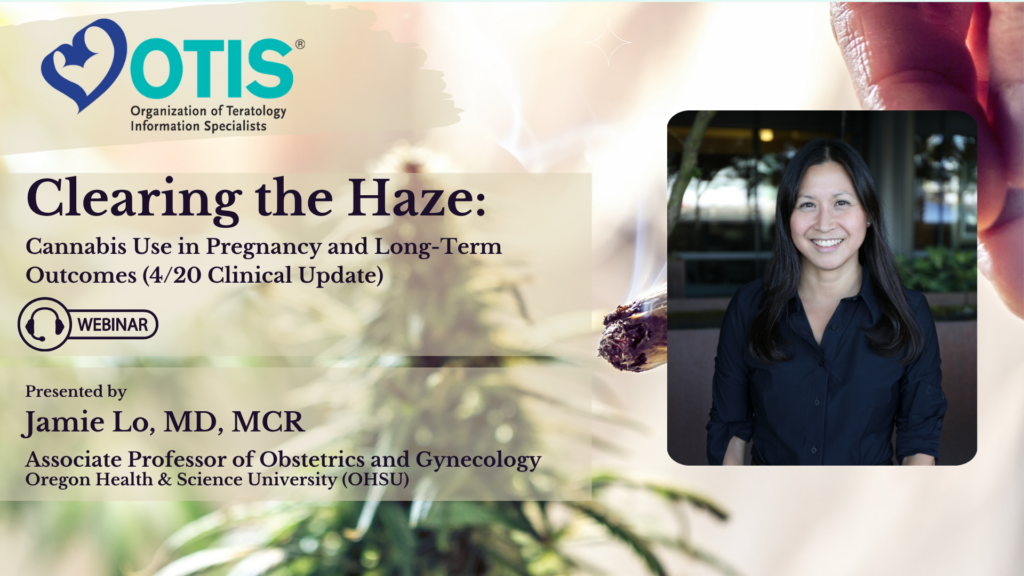
Cannabis use during pregnancy is increasingly common, and healthcare providers are often asked to counsel patients on potential risks and long-term effects. In this webinar, Dr. Jamie Lo, MD, MCR, provides an evidence-based overview of the latest research on prenatal cannabis exposure.

The presentation reviews current data on pregnancy outcomes, neurodevelopment, and potential long-term child health effects associated with cannabis use in pregnancy. Designed for healthcare professionals, this session highlights emerging research and offers practical guidance to support informed, evidence-based patient counseling in a rapidly evolving landscape.

Dr. Jamie Lo is an Associate Professor of Obstetrics and Gynecology at Oregon Health & Science University. She is a physician scientist, board-certified in Maternal-Fetal Medicine, and clinically cares for patients with high-risk pregnancies. Her research focuses primarily on the impact of prenatal environmental exposures, especially substance use, on pregnancy, placental, and offspring health.


Cannabis

By Sonia Alvarado, MotherToBaby California Teratogen Information Specialist

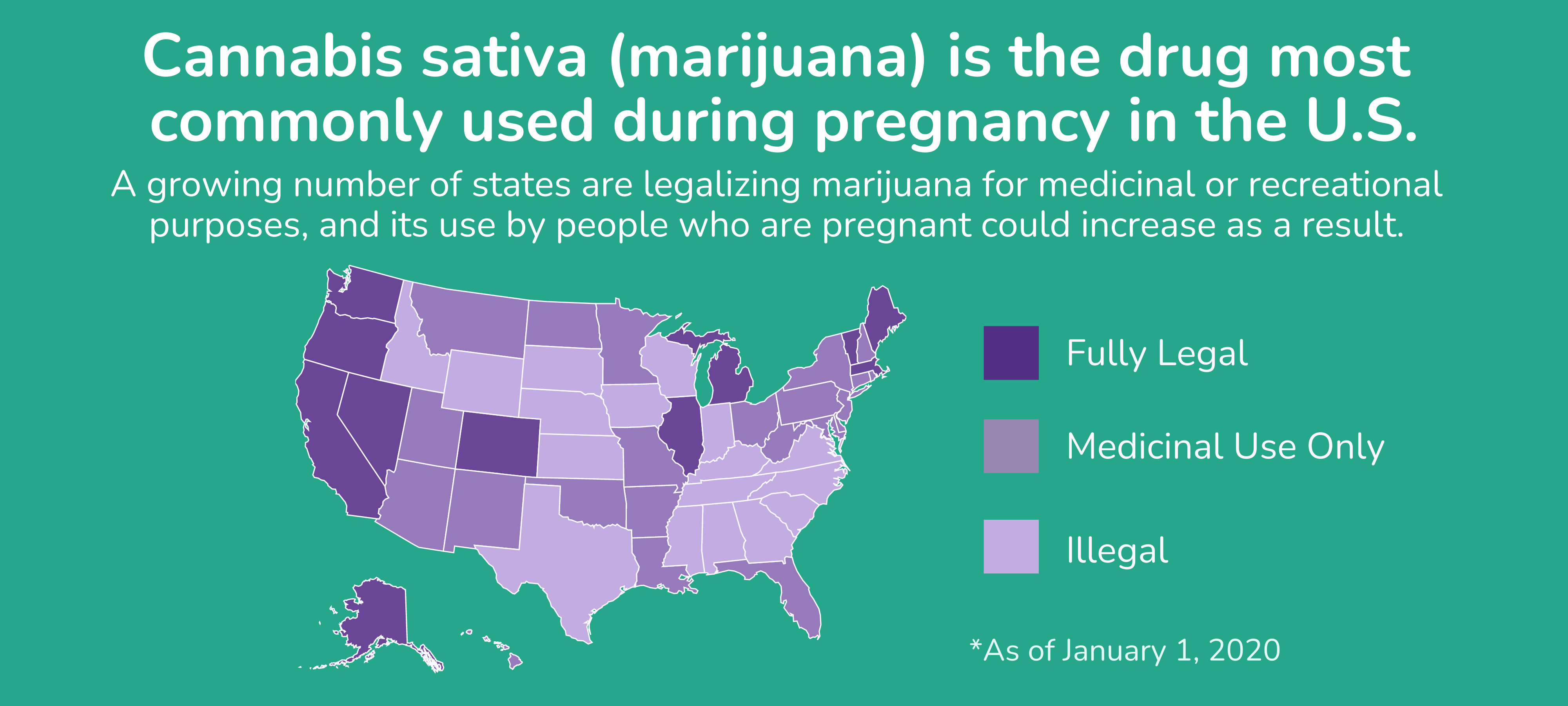
I wrote a blog about marijuana and pregnancy three years ago and it’s become the most visited blog on the MotherToBaby website. No surprise, considering that marijuana is an even hotter topic today than it was previously! Three years ago, two states had laws allowing recreational use. Now, 29 states allow medicinal use, recreational use or both (with limits on amounts varying from state to state). I was recently asked to revisit this topic and to provide an update on what we know about marijuana use during pregnancy and breastfeeding.

In this blog article, I use the terms marijuana, cannabis or pot interchangeably, as do most people.

At this time, there is no FDA approved indication for cannabis use as a medical treatment. The FDA gives approval to drugs only when the manufacturers of those drugs have gone through all of the required testing, have met the standards for safety, and have shown that it works when treating specifically named conditions. Marijuana has not met these standards. However, there are two FDA-approved drugs that contain man-made (synthetic) forms of marijuana. These medications, dronabinol and nabilone, are used to treat nausea caused by cancer medications. Neither one has been studied in human pregnancy, so we do not know how safe they are if taken during pregnancy.

The use of marijuana by pregnant women, either unintentionally before they know that they are pregnant or intentional use after pregnancy recognition, continues to increase. One survey suggests that marijuana is the leading recreational drug that pregnant women report using. The National Survey of Drug Use and Health reported that 3.85% of pregnant women reported using marijuana in the past month in 2014, compared with 2.37% in 2002. Other self-report studies indicate the number may be 5-8%. Our information service also receives many questions from pregnant and breastfeeding women who want to continue to use marijuana. Because of increasing legalization, the reported increased use and the need for answers from the public and health care providers, MotherToBaby has set aside sections of its June 2017 professional meeting in Denver, Colorado to bring experts together to discuss the latest research.

What do pregnant women, doctors and teratogen specialists, like myself, want to know about cannabis use during pregnancy?

  • We know that the developing baby is exposed to drugs, medications, infections and chemicals in the mother’s blood. Pregnant women, their health care providers and researchers want to know the differences in the amounts of the drug that reach the blood when cannabis products are used topically, when they are ingested and when they are smoked.
  • We also want to know the risks associated with each type of exposure and the doses that are associated with the risk. For example, what is the difference in risk if a pregnant woman smokes pot once a day (a hit or two or more) vs. smoking pot once a week (one hit or two)? What about if she ingests the drug? What is the difference in risk to her developing baby?

It used to be that teratogen specialists like me were mostly concerned about the risk for birth defects, such as cleft lip and palate, or heart defects. However, now we know that for some drugs, the risks are not specific just to the baby’s structure, such as development of limbs. Instead, some drugs, like alcohol, affect development of the baby’s brain and therefore the effects on the child’s learning and behavior might not be noticed until much later. We need studies that follow children exposed prenatally to marijuana, in all its forms and at a range of doses, so that we can better inform pregnant women if their babies have risks for learning or mental health problems.

What the Available Studies Do Show
The few studies that have focused on birth defects like heart defects or cleft lip and palate have not found a specific pattern of birth defects linked with marijuana when it is smoked. This does not mean that we know for sure that the drug does not ever cause birth defects. What it could mean is that the risk may be small or there is an increased risk only at higher doses or more frequent use. Larger and better studies are needed to determine if there is or is not an increased risk. We do not know for sure yet, and studies are continuing.

Many of the studies have continued to report a higher risk for low birth weight babies, preterm delivery, babies that are small for gestational age and higher rates of admission to intensive care nurseries for babies born to women who smoke marijuana during pregnancy. All of these complications are important and associated with serious health risks for the newborn baby. They could require a longer hospital stay, medical treatment and in some cases, could result in life-long disability. Prematurity, regardless of the cause, is associated with a higher risk for apnea, bleeding in the brain, lung problems (breathing problems), intestinal problems, a higher risk for infections and other problems. Studies continue to look at the issue of complications from smoking pot during pregnancy.

THC and Baby’s Brain
Another issue that is very important is the risk of learning and mental health problems from prenatal exposure to cannabis. As many people know, the primary psychoactive component of cannabis is Δ9-tetrahydrocannabinol or THC. This part of the plant produces the “high” when it binds to cannabinoid receptors in the brain. In the field of psychiatry, for some time it has been reported that smoking pot is linked to psychosis or schizophrenia. This type of research has generated questions about the risk to the unborn baby’s brain from exposure to the drug. Because the brain of the baby continues to grow after birth, there is also concern about what can happen if the baby is exposed to THC through breastmilk. This is part of the important research that will be presented at the MotherToBaby/OTIS conference in Denver this month. We look forward to hearing what the researchers have been learning about cannabis in pregnancy and lactation. Let’s just say I have a strong feeling that after this meeting and as we get more and more up-to-date, evidence-based information for our readers, marijuana blog #3 will be right around the corner!

Sonia Alvarado is a bilingual (Spanish/English) Senior Teratogen Information Specialist at MotherToBaby’s California affiliate. MotherToBaby aims to educate women about medications and more during pregnancy and breastfeeding. Along with answering women’s and health professionals’ questions regarding exposures during pregnancy/breastfeeding via MotherToBaby’s toll-free helpline, email and private chat counseling service, Alvarado has provided educational talks regarding pregnancy health in community clinics and high schools over the past decade.

MotherToBaby is a service of the Organization of Teratology Information Specialists (OTIS), suggested resources by many agencies including the Centers for Disease Control and Prevention (CDC). If you have questions about exposures during pregnancy and breastfeeding, please call MotherToBaby toll-FREE at 866-626-6847 or try out MotherToBaby’s new text information service by texting questions to (855) 999-3525. You can also visit MotherToBaby.org to browse a library of fact sheets about dozens of viruses, medications, vaccines, alcohol, diseases, or other exposures during pregnancy and breastfeeding or connect with all of our resources by downloading the new MotherToBaby free app, available on Android and iOS markets.


Cannabis

Multi-lingual health educational materials on exposures during pregnancy and breastfeeding

MotherToBaby is proud to offer a variety of free resources in multiple languages to help you stay informed about exposures during pregnancy and breastfeeding. We are the nation’s most trusted source of evidence-based information based on evidence. We provide important resources on medications, health conditions, chemicals, and other exposures for families and healthcare professionals. Our goal is to make sure expecting and new mothers have reliable information, so they can make good choices for their health and their babies’ health.

Our resources are available not only on our bilingual (English and Spanish) website but also in several other languages. We know how important it is for all mothers to have clear and accurate information, no matter what language they speak.

Below is a list of our materials in different languages. These resources are easy to read and cover some of the most common questions about exposures during pregnancy and breastfeeding, such as:

  1. Cannabis/Marijuana: Information about the effects of cannabis use during pregnancy and breastfeeding.
  2. Vaccines: Information on preventable diseases and getting vaccines during pregnancy and breastfeeding.
  3. Mental Health: Information about mental health and treatments during pregnancy and breastfeeding.

To learn more about our program, you can check out the MotherToBaby Rack Card. This card provides detailed information about our exposure information counseling service and observational pregnancy studies. It’s a great starting point to understand the full range of services and support we offer.

All the resources listed below are available for free download. If you prefer a printed version of any material, you can request one while supplies last by contacting us at MTBorder@health.ucsd.edu.

Besides these multi-lingual resources, we also have additional print and digital materials in English and Spanish on our Request Materials page.

We are dedicated to providing high-quality information to help mothers and families during this important time. By offering materials in many languages, we aim to reach and support even more people. Thank you for choosing MotherToBaby for trusted information on exposures during pregnancy and breastfeeding. We are here to help you make informed decisions for a healthy pregnancy and beyond. Please explore the resources below and contact us if you need more help or have any questions.

MotherToBaby Rack Card


Spanish flag (Spanish) | View | Download PDF


United States flag  (English) | View | Download PDF


Arabic flag  (Arabic) | View | Download PDF


Pashto flag (Pashto) | View | Download PDF


Somali flag (Somali) | View | Download PDF


Thank you for becoming our partner in pregnancy and breastfeeding health. Please let us know how we can better serve and educate your community at experts@mothertobaby.org.