Rheumatology

Managing Rheumatoid Conditions During Pregnancy & Lactation

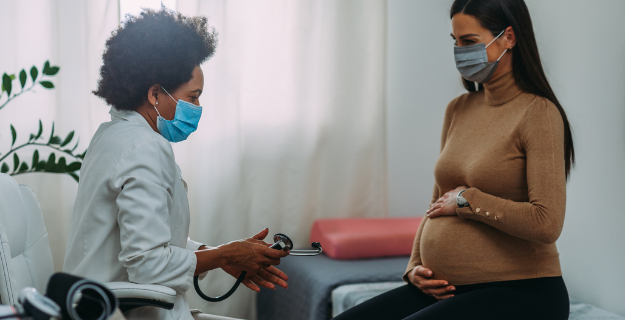
MotherToBaby supports rheumatologists in managing rheumatoid diseases during pregnancy and while breastfeeding. We understand the challenges that you face when deciding on treatment courses when your patient is pregnant or breastfeeding. Care of people who are pregnant and lactating with serious conditions like rheumatoid arthritis (RA), spondyloarthritis, or lupus is further complicated by the physiological changes of pregnancy that may alter symptoms, severity, or treatment needs. Our resources will help you weigh the risks and benefits to both your patient who is pregnant and their baby as you determine a treatment plan that maximizes disease management and minimizes maternal and fetal/infant risk. 

We are also dedicated to furthering the information and understanding of medication safety in pregnancy through our observational MotherToBaby Pregnancy Studies. We are proud to lead more than half of all Food and Drug Administration (FDA)-mandated pregnancy registries conducted in the U.S., including studies on RA, JIA, psoriatic arthritis, and ankylosing spondylitis treatments. MotherToBaby Pregnancy Studies are rigorously designed cohort studies that aim to provide critically needed product safety information – and your patient referrals make all the difference. With your referral, you are helping us generate data that will lead to improved product safety information in pregnancy, thereby providing you and your patients with the evidence you need to make more informed treatment decisions.

As treatment for rheumatic diseases improves, more [people] with these illnesses are willing and able to start a family. This adds complexity to our treatment of young [people] with lupus, rheumatoid arthritis, and other diseases. We must now address contraception, pregnancy planning, and medication risks early with our patients in order to optimize pregnancy success.

Mitchell et al., 2010

Explore how we can help you and your pregnant and breastfeeding patients by providing no-cost exposure risk assessments, patient education materials, observational studies to monitor pregnancy outcomes, and more.

Exposure Information

We provide no-cost, evidence-based info on exposures during pregnancy or breastfeeding by phone, text, email, and chat.

Request Materials

We offer free patient education materials and provider resources for our information service and pregnancy studies.

LactRx App

Download our LactRx app for on-the-go access to the Library of Medicine’s LactMed database for current information on rheumatology medications as well as other drugs and vaccinations to which breastfeeding mothers may be exposed.

Partners


Rheumatology

Results from the Vedolizumab MotherToBaby Pregnancy Study

What the Study Found About Vedolizumab Use During Pregnancy.

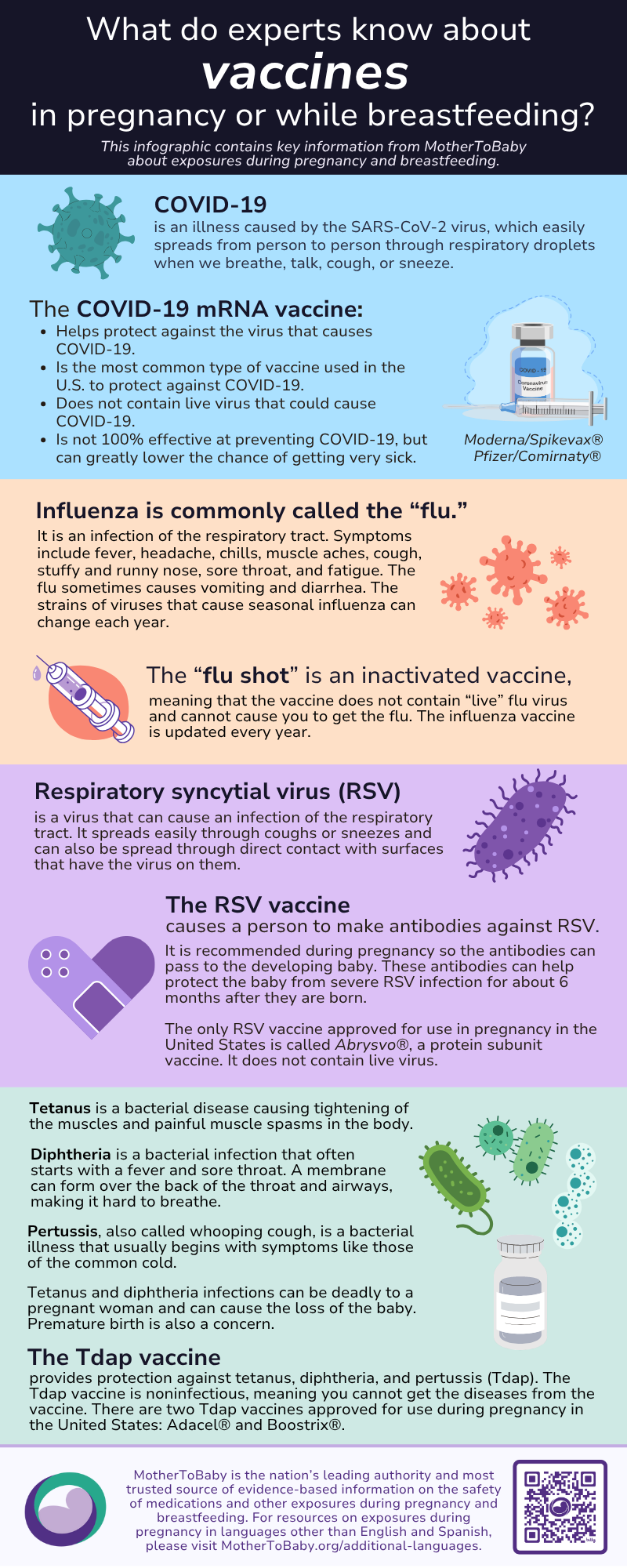
COVID-19, Flu & RSV Vaccines

Have questions about protecting yourself from COVID-19, the flu, and RSV during pregnancy in this season? Our information specialists are here to help women and their providers navigate cold and flu season.

Visit Our Exposure Hubs

Exposures may impact your developing baby. Browse our most popular topics on the effects of medications, maternal health, substances, and other exposures. Our Exposure Resource Hubs will help you know if it is a concern for your baby.

Access Our Fact Sheets

Our quick and easy-to-read Fact Sheets answer frequently asked questions about 300+ maternal health conditions, medications, and other exposures during pregnancy and breastfeeding.

Discover Our Pregnancy Studies

Our observational studies examine the effects of medications and health conditions during pregnancy. Moms can help improve product safety information and shape the future of healthcare. The information we collect will help women and their healthcare providers make informed treatment decisions during pregnancy. With greater knowledge of the benefits and risks of medications, our community can thrive. Join the movement of moms helping other moms — discover how you can help today!

COVID-19 Updates

Our MotherToBaby experts have issued updates to our educational resources on COVID-19 during pregnancy and breastfeeding. Quickly find the essential information that you need.

What Can MotherToBaby Offer You?

Baby Blog News & Updates

Pregnancy Due Date Calculator

Find out your estimated due date by entering the first day of your last menstrual period and your average cycle length. Did You Know? Only 1 in 20 babies are born on their actual due date. A normal pregnancy often lasts between 38 to 42 weeks, which keeps most parents guessing right up until labor starts!


Rheumatology

Multi-lingual health educational materials on exposures during pregnancy and breastfeeding

MotherToBaby is proud to offer a variety of free resources in multiple languages to help you stay informed about exposures during pregnancy and breastfeeding. We are the nation’s most trusted source of evidence-based information based on evidence. We provide important resources on medications, health conditions, chemicals, and other exposures for families and healthcare professionals. Our goal is to make sure expecting and new mothers have reliable information, so they can make good choices for their health and their babies’ health.

Our resources are available not only on our bilingual (English and Spanish) website but also in several other languages. We know how important it is for all mothers to have clear and accurate information, no matter what language they speak.

Below is a list of our materials in different languages. These resources are easy to read and cover some of the most common questions about exposures during pregnancy and breastfeeding, such as:

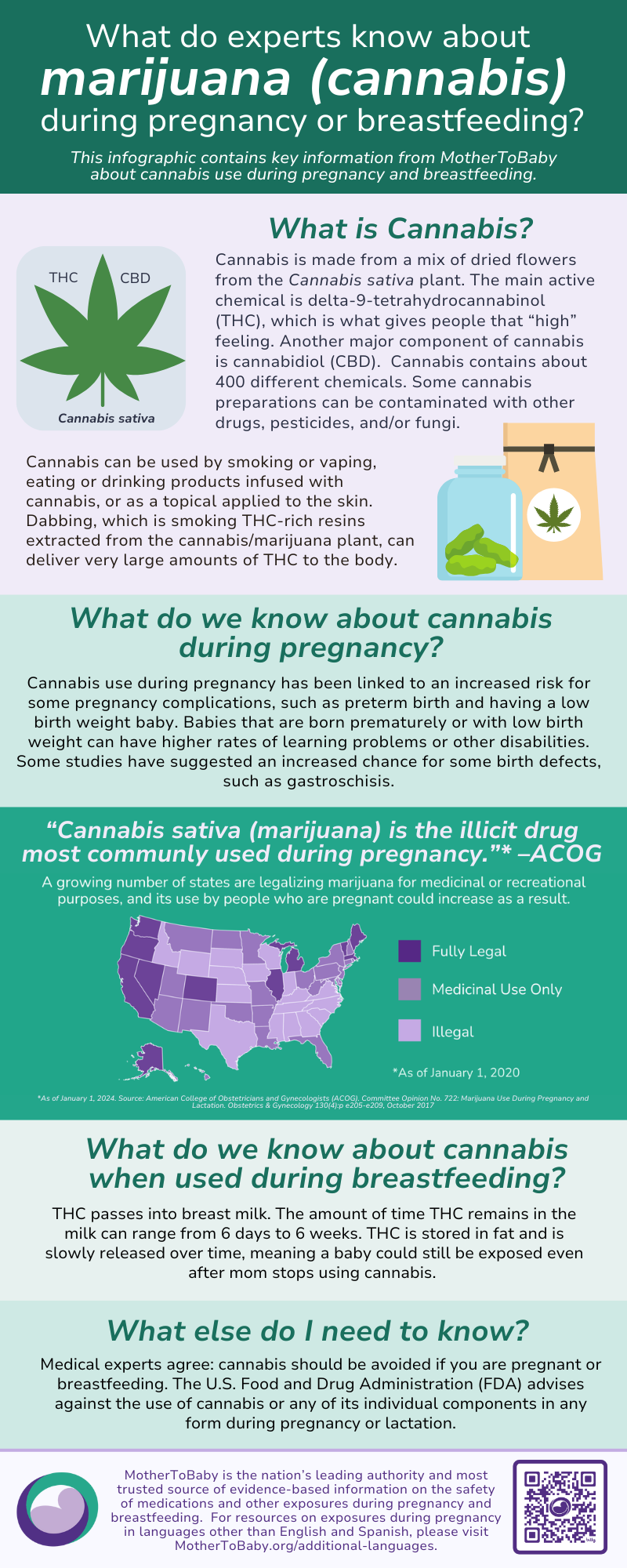
  1. Cannabis/Marijuana: Information about the effects of cannabis use during pregnancy and breastfeeding.
  2. Vaccines: Information on preventable diseases and getting vaccines during pregnancy and breastfeeding.
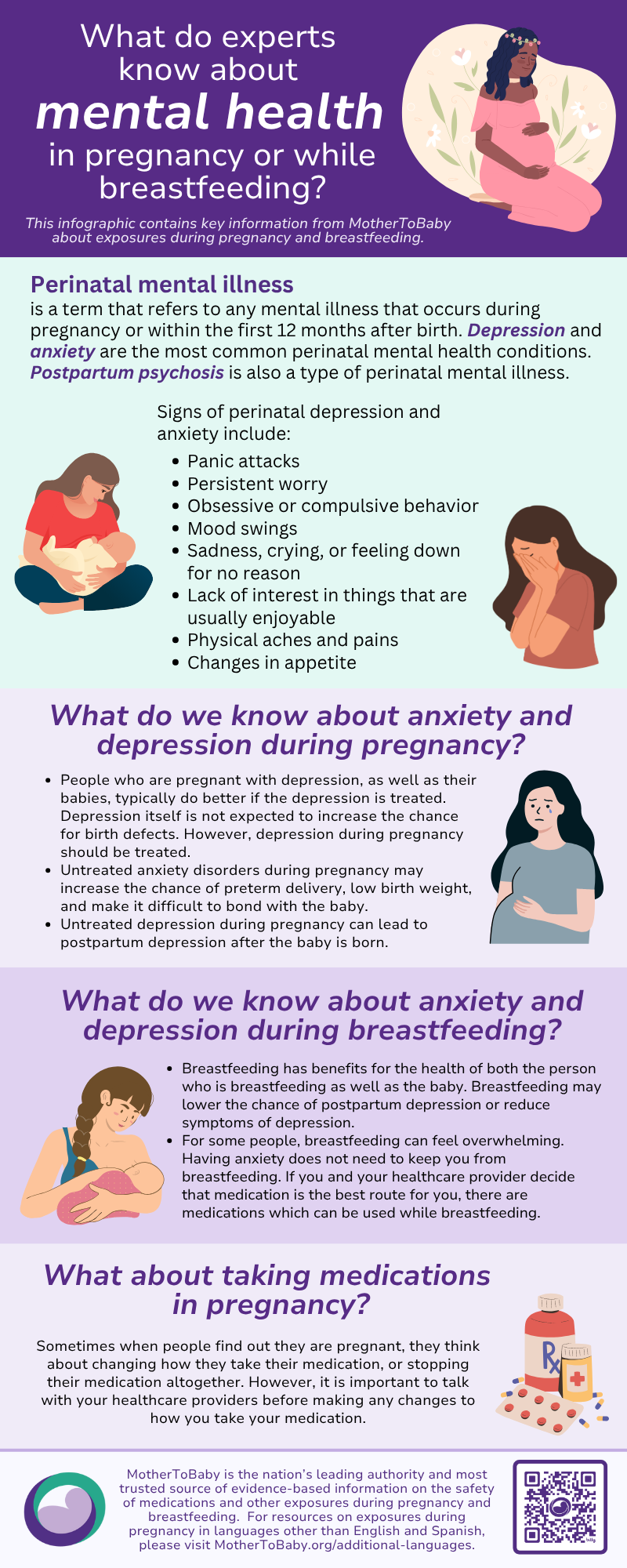
  3. Mental Health: Information about mental health and treatments during pregnancy and breastfeeding.

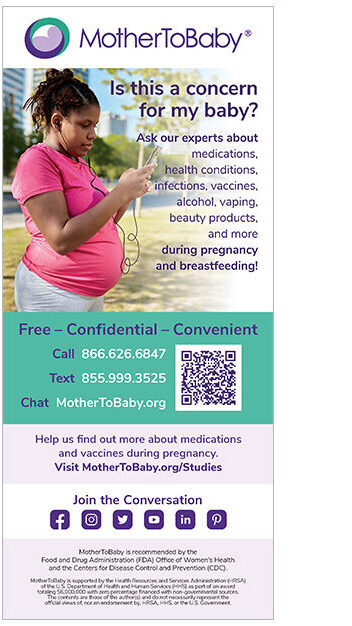
To learn more about our program, you can check out the MotherToBaby Rack Card. This card provides detailed information about our exposure information counseling service and observational pregnancy studies. It’s a great starting point to understand the full range of services and support we offer.

All the resources listed below are available for free download. If you prefer a printed version of any material, you can request one while supplies last by contacting us at MTBorder@health.ucsd.edu.

Besides these multi-lingual resources, we also have additional print and digital materials in English and Spanish on our Request Materials page.

We are dedicated to providing high-quality information to help mothers and families during this important time. By offering materials in many languages, we aim to reach and support even more people. Thank you for choosing MotherToBaby for trusted information on exposures during pregnancy and breastfeeding. We are here to help you make informed decisions for a healthy pregnancy and beyond. Please explore the resources below and contact us if you need more help or have any questions.

MotherToBaby Rack Card


Spanish flag (Spanish) | View | Download PDF


United States flag  (English) | View | Download PDF


Arabic flag  (Arabic) | View | Download PDF


Pashto flag (Pashto) | View | Download PDF


Somali flag (Somali) | View | Download PDF


Thank you for becoming our partner in pregnancy and breastfeeding health. Please let us know how we can better serve and educate your community at experts@mothertobaby.org.


Rheumatology

By Lori Wolfe, Certified Genetic Counselor and Teratogen Information Specialist, MotherToBaby North Texas
It’s pretty much a fact – ALL pregnant women worry…about what they eat, what they do, what they breathe. Basically, they worry about everything. That’s simply because every expectant mother wants to do the very best she can for her developing baby. As a genetic counselor who runs the North Texas affiliate of MotherToBaby, I get calls every day from pregnant woman who want to know what to do and what not to do in order to have the best chance of having a heathy baby without birth defects.

Recently I was having lunch with my friend, Amber, who is expecting her first babies…Yes… plural! In seven short months, she’ll become the mother of twins! As a first time mom-to-be, Amber is always full of questions when we get together. Nothing like having a friend who is an expert in the pregnancy exposure field, right?! “Lori, is it true that since I eat lots of dark green veggies, and breads and cereals, that my babies will not have spina bifida? I remember hearing something about how good folic acid is for developing babies. Is that true?” asked Amber. “Yes!” I enthusiastically replied. “Having enough folic acid in the first two months of your pregnancy is very important to help prevent birth defects in your developing babies. In fact, studies have shown that if you are getting at least 400 mcg of folic acid during your early pregnancy through the foods you eat, as well as your prenatal vitamin, then your babies have up to a 70% less chance of having a spinal cord defect such as spina bifida.” The look on her face was priceless…pure shock! “70%? Really?! Wow, I had no idea it could be so effective,” Amber answered. “Yes, I have been taking a daily prenatal vitamin since before I became pregnant. I am always careful to take one every day. So what else can I do to help my babies be born without birth defects?”

Let me break it down for all of the “Ambers” out there. What’s thought to be the most common preventable cause of mental retardation in a baby? The answer – drinking alcohol during pregnancy. “And what is so crazy is that women do not need to drink alcohol when they are trying to become pregnant, and definitely not once they have a confirmed pregnancy,” I explained. About one in every 100 babies born in America is affected by prenatal alcohol exposure and it is totally preventable by simply avoiding alcohol during pregnancy. “Amazing!” replied Amber. “I never realized so many kids were affected by their moms’ drinking alcohol during pregnancy. That is sad. But I am good on this count as I have not had any alcohol at all during the last few months,” Amber said.

“So is there anything else I can or can’t eat or drink, or something else I can avoid that could make a difference in my babies not having birth defects?” she went on to say. “You are about eight weeks pregnant now, right Amber?” I asked her. “Yes. I am now about eight and one half weeks. Why?” she asked. “Well, another thing we worry about is hyperthermia,” I told her. “Hyperthermia means increasing your internal or core body temperature up to 102 degrees Fahrenheit or more. When you become that hot, the baby inside of you becomes hot too. When the baby’s temperature becomes too hot, especially in weeks five and six of a pregnancy, there is an increased chance that the spinal cord will not close, and your baby can be born with an open spinal cord defect like spina bifida. So we always caution pregnant women not to sit in hot tubs that are heated over 100 degrees, or to be careful to watch their temperature if they become ill with a fever during early pregnancy,” I said.
“All of this is really good to know,” Amber answered, as we wrapped up lunch. “I’m lucky I have you as a friend!”

I love making sure women have someone to turn to for answers when they have questions about exposures while pregnant or breastfeeding. In fact, during March when the world will commemorate the first-ever World Birth Defects Awareness Day, my lunch with Amber serves as a great reminder that my colleagues and I are there for all pregnant and breastfeeding women across North America.
If you have a question during pregnancy and breastfeeding about something you ate, drank or medication you took, call MotherToBaby at 866-626-6847. I may not be able to meet you for lunch, but a main course of free expertise over the phone, followed by a huge helping of cutting edge research to support that expertise, will certainly be exactly what you ordered in your search for answers. And who knows? Your kids might even thank you for having such an appetite for knowledge one day!

loriwolfe
Lori Wolfe is a board certified Genetic Counselor and the Director of MotherToBaby’s North Texas affiliate. MotherToBaby aims to educate women about medications and more during pregnancy and breastfeeding. Along with answering women’s and health professionals’ questions regarding exposures during pregnancy/breastfeeding via MotherToBaby’s toll-free number and by email, Wolfe also teaches at the University of North Texas, provides educational talks regarding pregnancy health in community clinics and high schools, and counsels adoptive parents.
MotherToBaby is a service of the international non-profit Organization of Teratology Information Specialists (OTIS), a suggested resource by many agencies includingthe Centers for Disease Control and Prevention (CDC). If you have questions about vaccines, medications or other exposures, call MotherToBaby toll-FREE at 866-626-6847 or visit MotherToBaby.org to browse a library of fact sheets and find your nearest affiliate


Rheumatology

By Jennifer Lemons, MS, CGC, MotherToBaby Texas TIPS

It was the longest 3 minutes of her life. As she opened her eyes to glance at the test, her heart stopped. She couldn’t breathe. Frantically, she tore open the instructions that came with the test to confirm what she already knew. She was pregnant. She laid her head on the bathroom stall, tears threatening to fall. It was then that the bell rang, signaling the end of lunch. It was time to go to class. But all she could think was, “I’m only 16…”

May is National Teen Pregnancy Prevention Month, a good time to focus on the specific challenges a young, pregnant mother may face. Teen pregnancy raises a myriad of emotions and thoughts from the most practical of, “How am I going to finish school?” or “What will my parents think?” to the more profound, “Should I even keep it?” or “Could I have harmed the baby somehow?”

When trying to answer these questions, it should come as no surprise that teens are at a high risk for receiving misinformation from many sources, i.e. the internet, friends and media. As a certified genetic counselor at MotherToBaby, this concerns me greatly – for mom’s sake, as well as baby’s. When somehow that mom-to-be lands on the other end of my phone line, in my office or on the other end of an email, I am relieved. She’s found a trustworthy resource available for pregnant teens to help them answer these important, and potentially life-changing, questions.

MotherToBaby, a service of the nonprofit Organization of Teratology Information Specialists (OTIS), provides the most up-to-date, evidence-based information to mothers, healthcare professionals, and the general public about potentially harmful exposures, like alcohol, drugs and medications, during pregnancy and while breastfeeding. Each question that MotherToBaby receives is researched by a professional like me. From questions about bug repellant to illegal drug use, MotherToBaby has seen it all! So, what are some of the most common questions I get from young moms?

ALCOHOL. “Can I drink any alcohol at all during my pregnancy?” No amount of alcohol is safe during pregnancy. However, babies exposed to large amounts of alcohol at one time (i.e. binge drinking) and/or frequently throughout a pregnancy may be at risk for Fetal Alcohol Spectrum Disorder (FASD). Babies with FASD may have one or more of the following: birth defects, intellectual disabilities, learning disorders and/or behavioral problems.

CIGARETTES. “Why can’t I smoke cigarettes while I am pregnant?” There are over 4,000 chemicals and toxins in cigarette smoke. Several of these can cross the placenta and decrease the amount of oxygen and nutrients available to baby. Studies on heavy smoking (smoking 15 or more cigarettes per day) during pregnancy have shown an increased risk of oral clefts in newborns, as well as a higher chance for preterm delivery, low-birth weight or miscarriage. Long-term effects have included a higher risk for childhood asthma, bronchitis, and respiratory infections, as well as ADHD. It’s never too late to quit smoking – even reducing the number of cigarettes smoked per day will help!

MARIJUANA. “I’ve heard it is OK to smoke marijuana during pregnancy. Is this true?” There is conflicting information available about the effects of marijuana on a pregnancy. While some recent studies have shown that it has not been associated with an increased risk for birth defects or complications, there is not enough data available to say this with 100% confidence. Additionally, cognitive and behavioral problems have been seen more often in children whose mothers were “heavy” marijuana users (used marijuana one or more times per day). Again, the evidence is not conclusive and some studies report conflicting results. Plus, smoking is smoking, so heavy marijuana use during pregnancy can be associated with many of the same problems as heavy cigarette use.

METHAMPHETAMINES. “I’ve used methamphetamines in the past. Is this OK to use now and then while I am pregnant?” Methamphetamines (meth) should not be used at any point during pregnancy. Meth use has been associated with an increased risk of miscarriage or preterm delivery. Meth use later in pregnancy has also been associated with babies experiencing withdrawal symptoms after being born. Currently, there is not enough data to know whether meth use during pregnancy increases the risk of birth defects, although heavy use of meth during pregnancy may increase the risk for learning problems.

There’s no doubt the road ahead will be filled with many more questions for a young parent, but I’d like to think receiving a reliable personalized risk assessment about exposures during pregnancy and breastfeeding will be the start of an important support system she builds for herself.

MTB_Head Shots-10


Jennifer Lemons, MS, is a certified genetic counselor and clinical instructor in the Department of Pediatrics, Division of Genetics at the University of Texas Medical School. In addition to providing teratogen counseling for MotherToBaby TexasTIPS, she provides genetic counseling services at the Gulf States Hemophilia and Thrombophilia Center in Houston. Special thanks to Meagan Giles, a 2nd year genetic counseling student with the University of Texas Genetic Counseling Program, who also contributed information to this blog.

MotherToBaby is a service of the international Organization of Teratology Information Specialists (OTIS), a suggested resource by many agencies including the Centers for Disease Control and Prevention (CDC). If you have questions about viruses, alcohol, medications, vaccines, diseases, or other exposures, call MotherToBaby toll-FREE at 866-626-6847 or try out MotherToBaby’s new text counseling service by texting questions to (855) 999-3525. You can also visit MotherToBaby.org to browse a library of fact sheets, email an expert or chat live.