Leading Authority in Birth Defects Research and Prevention Launches Podcast for Moms

The MotherToBaby Podcast Is A New ‘Must-Have’ Resource for Pregnant and Breastfeeding Moms

BRENTWOOD, TN – From herbal supplements in pregnancy to marijuana in breastfeeding, “no topic is off-limits,” describes Chris Stallman, a certified genetic counselor and host of the new MotherToBaby Podcast launching May 8, just ahead of Mother’s Day. The episode series will be available on iTunes and podcatcher services everywhere and promises to deliver evidence-based information about exposures during pregnancy and breastfeeding in a relatable format – from one mom to another.

Stallman, a mother of three including a toddler, takes calls on the show from the general public about exposures, like essential oils and medications for mental health disorders, during pregnancy, breastfeeding, pre-pregnancy and adoption. Stallman, as well as the various guest experts joining her on each episode, are teratogen information specialists – trained professionals in understanding and communicating environmental risks that may be associated with birth defects, adverse pregnancy outcomes and/or effects on the nursing infant. “I’ve been there with three pregnancies and tons of questions, so we want those who call in to our show to feel welcome,” explained Stallman. “We provide a judgment-free zone where callers will not only feel comfortable asking anything about a particular exposure during pregnancy or breastfeeding, but they’ll have the opportunity to get answers directly from experts actively involved in the research surrounding that particular topic,” explained Stallman.

The MotherToBaby Podcast is the latest platform provided by the Organization of Teratology Information Specialists (OTIS), the scientific non-profit society behind MotherToBaby’s no-cost services. MotherToBaby has been able to embark on new outreach efforts to reach underserved populations and launch new communication initiatives, such as The MotherToBaby Podcast through a cooperative agreement with the U.S. Health Resources and Services Administration, as well as through the generous donations made by the public. The four-episode launch beginning May 8th will focus on:

  1. Essential Oils and Herbal Supplements
  2. Beauty Products
  3. Marijuana
  4. Maternal Mental Health

The new podcast can easily be found on iTunes, Google Play, Spotify, Stitcher and podcatcher services everywhere by searching “MotherToBaby.” Listeners can be alerted to new episodes by subscribing to the series.

The MotherToBaby Podcast has also been selected to be part of the Parents on Demand (POD) Network, which has a free app available on iOS and Android. The POD Network is a collection of podcasts with content specifically created for parents and families. “The shows on our network help guide families through the various stages of life,” said Sunny Gault, Founder and Network Director. “The addition of The MotherToBaby Podcast is the perfect must-have resource for anyone looking for evidence-based information on exposures during pregnancy, while planning a pregnancy or while breastfeeding.”

More about OTIS and MotherToBaby

The Organization of Teratology Information Specialists (OTIS) is a professional scientific society made up of individuals engaged in assessing and evaluating risks to pregnancy and breastfeeding from environmental exposures. Members include, but are not limited to, specialists in the fields of: obstetrics and gynecology, pediatrics, genetics, dysmorphology, perinatal epidemiology, teratology, behavioral teratology, pharmacy, genetic counseling, nursing, midwifery, maternal and child health, public health, and includes experts that provide MotherToBaby services and researchers that conduct MotherToBaby Pregnancy Studies. MotherToBaby is a suggested resource by many federal agencies including the Centers for Disease Control and Prevention (CDC). To be connected with a MotherToBaby expert, please call (866) 626-6847, text questions to (855) 999-3525 (standard messaging rates might apply, check with your carrier) or visit www.MotherToBaby.org.

# # #

Media Contact: Nicole Chavez, 619-368-3259, nchavez@MotherToBaby.org.


Leading Authority in Birth Defects Research and Prevention Launches Podcast for Moms

Managing Rheumatoid Conditions During Pregnancy & Lactation

MotherToBaby supports rheumatologists in managing rheumatoid diseases during pregnancy and while breastfeeding. We understand the challenges that you face when deciding on treatment courses when your patient is pregnant or breastfeeding. Care of people who are pregnant and lactating with serious conditions like rheumatoid arthritis (RA), spondyloarthritis, or lupus is further complicated by the physiological changes of pregnancy that may alter symptoms, severity, or treatment needs. Our resources will help you weigh the risks and benefits to both your patient who is pregnant and their baby as you determine a treatment plan that maximizes disease management and minimizes maternal and fetal/infant risk. 

We are also dedicated to furthering the information and understanding of medication safety in pregnancy through our observational MotherToBaby Pregnancy Studies. We are proud to lead more than half of all Food and Drug Administration (FDA)-mandated pregnancy registries conducted in the U.S., including studies on RA, JIA, psoriatic arthritis, and ankylosing spondylitis treatments. MotherToBaby Pregnancy Studies are rigorously designed cohort studies that aim to provide critically needed product safety information – and your patient referrals make all the difference. With your referral, you are helping us generate data that will lead to improved product safety information in pregnancy, thereby providing you and your patients with the evidence you need to make more informed treatment decisions.

As treatment for rheumatic diseases improves, more [people] with these illnesses are willing and able to start a family. This adds complexity to our treatment of young [people] with lupus, rheumatoid arthritis, and other diseases. We must now address contraception, pregnancy planning, and medication risks early with our patients in order to optimize pregnancy success.

Mitchell et al., 2010

Explore how we can help you and your pregnant and breastfeeding patients by providing no-cost exposure risk assessments, patient education materials, observational studies to monitor pregnancy outcomes, and more.

Exposure Information

We provide no-cost, evidence-based info on exposures during pregnancy or breastfeeding by phone, text, email, and chat.

Request Materials

We offer free patient education materials and provider resources for our information service and pregnancy studies.

LactRx App

Download our LactRx app for on-the-go access to the Library of Medicine’s LactMed database for current information on rheumatology medications as well as other drugs and vaccinations to which breastfeeding mothers may be exposed.

Partners


Leading Authority in Birth Defects Research and Prevention Launches Podcast for Moms

Results from the Vedolizumab MotherToBaby Pregnancy Study

What the Study Found About Vedolizumab Use During Pregnancy.

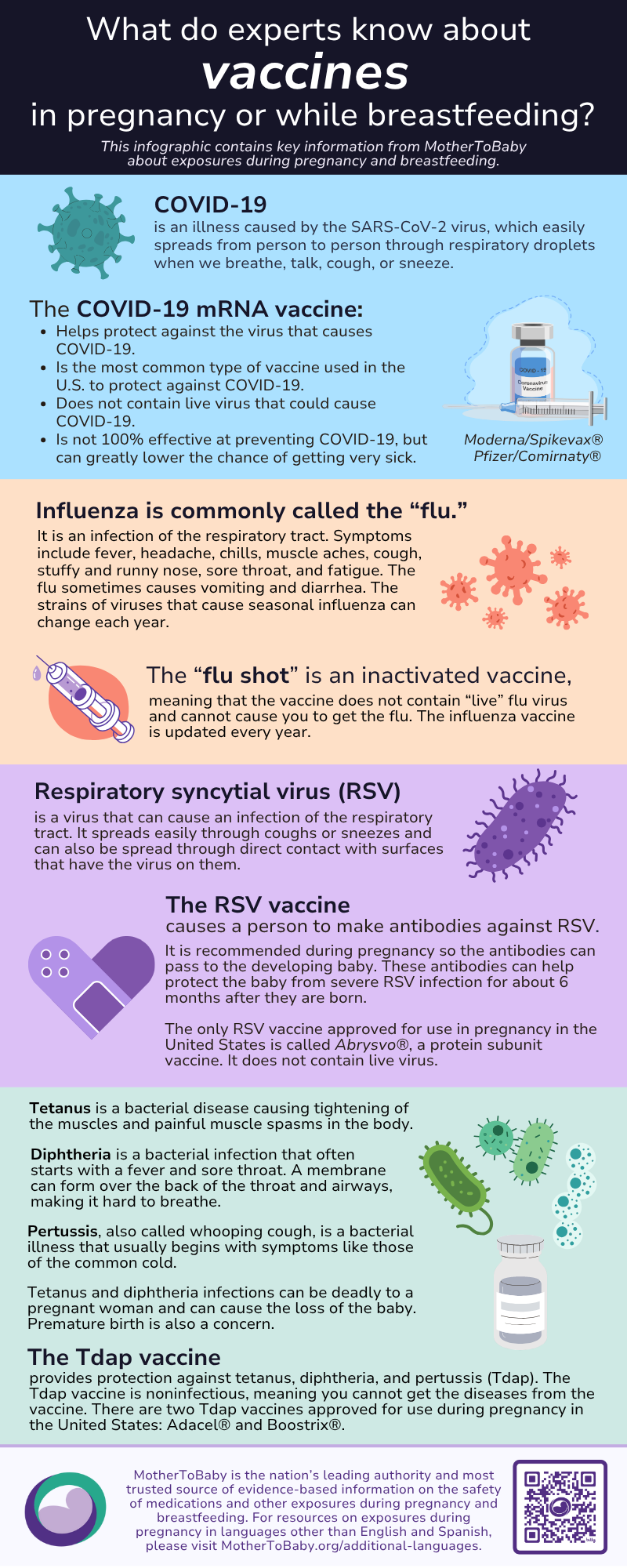
COVID-19, Flu & RSV Vaccines

Have questions about protecting yourself from COVID-19, the flu, and RSV during pregnancy in this season? Our information specialists are here to help women and their providers navigate cold and flu season.

Visit Our Exposure Hubs

Exposures may impact your developing baby. Browse our most popular topics on the effects of medications, maternal health, substances, and other exposures. Our Exposure Resource Hubs will help you know if it is a concern for your baby.

Access Our Fact Sheets

Our quick and easy-to-read Fact Sheets answer frequently asked questions about 300+ maternal health conditions, medications, and other exposures during pregnancy and breastfeeding.

Discover Our Pregnancy Studies

Our observational studies examine the effects of medications and health conditions during pregnancy. Moms can help improve product safety information and shape the future of healthcare. The information we collect will help women and their healthcare providers make informed treatment decisions during pregnancy. With greater knowledge of the benefits and risks of medications, our community can thrive. Join the movement of moms helping other moms — discover how you can help today!

COVID-19 Updates

Our MotherToBaby experts have issued updates to our educational resources on COVID-19 during pregnancy and breastfeeding. Quickly find the essential information that you need.

What Can MotherToBaby Offer You?

Baby Blog News & Updates

Pregnancy Due Date Calculator

Find out your estimated due date by entering the first day of your last menstrual period and your average cycle length. Did You Know? Only 1 in 20 babies are born on their actual due date. A normal pregnancy often lasts between 38 to 42 weeks, which keeps most parents guessing right up until labor starts!


Leading Authority in Birth Defects Research and Prevention Launches Podcast for Moms

Multi-lingual health educational materials on exposures during pregnancy and breastfeeding

MotherToBaby is proud to offer a variety of free resources in multiple languages to help you stay informed about exposures during pregnancy and breastfeeding. We are the nation’s most trusted source of evidence-based information based on evidence. We provide important resources on medications, health conditions, chemicals, and other exposures for families and healthcare professionals. Our goal is to make sure expecting and new mothers have reliable information, so they can make good choices for their health and their babies’ health.

Our resources are available not only on our bilingual (English and Spanish) website but also in several other languages. We know how important it is for all mothers to have clear and accurate information, no matter what language they speak.

Below is a list of our materials in different languages. These resources are easy to read and cover some of the most common questions about exposures during pregnancy and breastfeeding, such as:

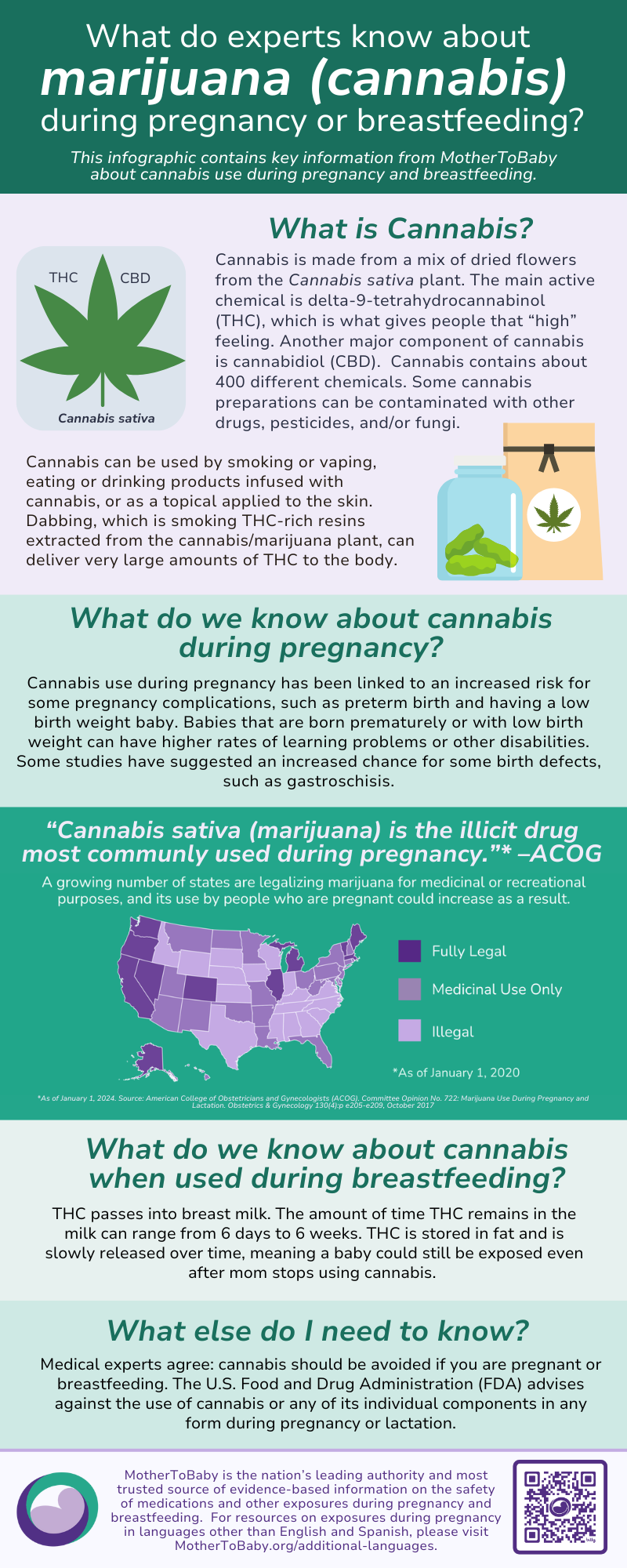
  1. Cannabis/Marijuana: Information about the effects of cannabis use during pregnancy and breastfeeding.
  2. Vaccines: Information on preventable diseases and getting vaccines during pregnancy and breastfeeding.
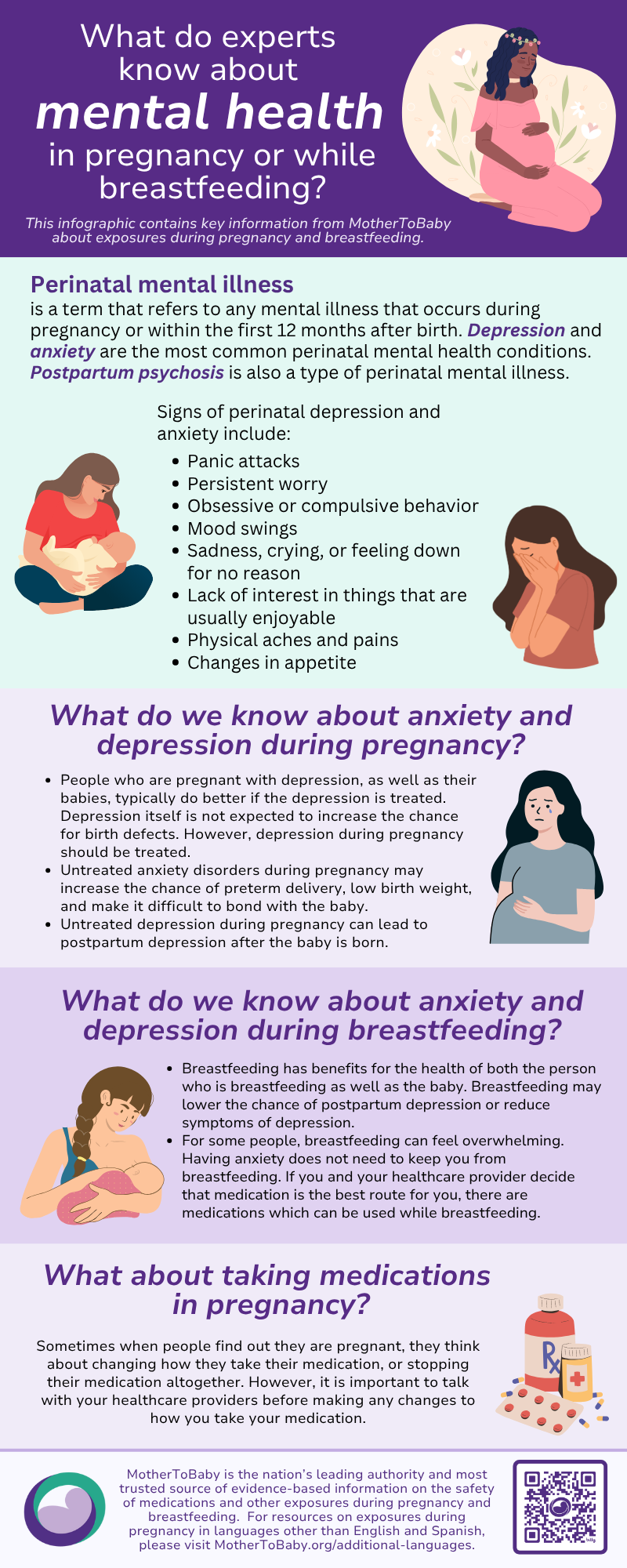
  3. Mental Health: Information about mental health and treatments during pregnancy and breastfeeding.

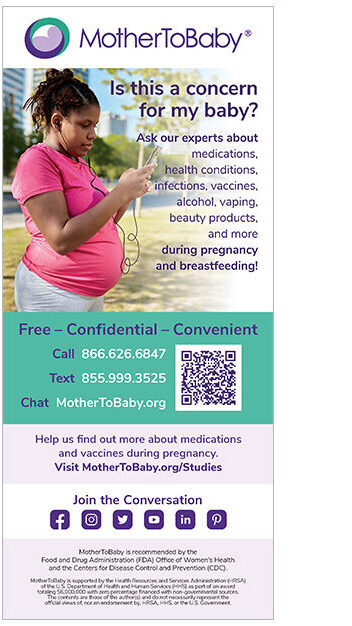
To learn more about our program, you can check out the MotherToBaby Rack Card. This card provides detailed information about our exposure information counseling service and observational pregnancy studies. It’s a great starting point to understand the full range of services and support we offer.

All the resources listed below are available for free download. If you prefer a printed version of any material, you can request one while supplies last by contacting us at MTBorder@health.ucsd.edu.

Besides these multi-lingual resources, we also have additional print and digital materials in English and Spanish on our Request Materials page.

We are dedicated to providing high-quality information to help mothers and families during this important time. By offering materials in many languages, we aim to reach and support even more people. Thank you for choosing MotherToBaby for trusted information on exposures during pregnancy and breastfeeding. We are here to help you make informed decisions for a healthy pregnancy and beyond. Please explore the resources below and contact us if you need more help or have any questions.

MotherToBaby Rack Card


Spanish flag (Spanish) | View | Download PDF


United States flag  (English) | View | Download PDF


Arabic flag  (Arabic) | View | Download PDF


Pashto flag (Pashto) | View | Download PDF


Somali flag (Somali) | View | Download PDF


Thank you for becoming our partner in pregnancy and breastfeeding health. Please let us know how we can better serve and educate your community at experts@mothertobaby.org.


Leading Authority in Birth Defects Research and Prevention Launches Podcast for Moms

By Kirstie Perrotta, MPH, MotherToBaby California

Cara and her husband Mark were contacting MotherToBaby for the first time. “Our adoption counselor just called – we have been matched with a potential birth mom this morning and she’s due next Friday!” Cara blurted out excitedly. “The counselor said you would be able to tell us about the baby’s exposure to heroin and Klonopin. I don’t know how much she used, or when she stopped. We need to make a decision today.”

As a Teratogen Information Specialist, I often receive calls from parents who are in all stages of the adoption process. The adoption journey can be an emotional rollercoaster, as Cara was experiencing. Here at MotherToBaby, we’re happy to help and it’s not uncommon for us to hear from potential parents who need to make a quick decision. We always let the prospective parents know that it’s important to learn about any exposures that may have happened during the birth mom’s pregnancy to best understand what a future with this child might look like. Bottom line: We want adoptive parents to feel as prepared and informed as possible.

So, what should a potential adoptive mom or dad ask about when making this important decision?

Alcohol

When asking about prenatal exposures, be sure to ask about alcohol use. Alcohol can be one of the most worrisome and scary exposures. That’s because when a woman drinks alcohol while pregnant, it has the ability to affect the baby’s brain, which is developing throughout the entire pregnancy.

Children exposed to alcohol during pregnancy are at risk for something called fetal alcohol spectrum disorders (FASD). FASD is a spectrum of disorders ranging from very severe effects (such as low IQ and small head) to more minor effects (such as attention issues and poor judgment). While FASD is a lifelong diagnosis, we know that early interventions have the potential to significantly improve outcomes for these children. If you notice that your child is starting to struggle in school, or having behavior issues, will you have the time and resources to get them the extra help they may need? It’s a question you want to ask yourself as you consider adopting a child that might have special needs. Finding a specialist in your community that is familiar with treating FASD is a great place to start if you find yourself in this situation.

Recreational Drugs

Heroin, cocaine, marijuana, and methamphetamine are exposures that we unfortunately hear about all too often. While some women continue to abuse drugs up until delivery, other birth moms are motivated to quit when they learn they are pregnant. The most important information you can try to gather about this type of exposure is HOW MUCH and HOW OFTEN did the birth mom use the drug. Was it a one-time occurrence early in pregnancy, or an addiction she struggled with the entire nine months? These details can help the specialist you speak with best assess the situation. Using these types of recreational drugs during pregnancy can increase the risk for birth defects, pregnancy complications, and learning problems. See MotherToBaby’s fact sheets for more information.

Methadone and Buprenorphine

Methadone and buprenorphine are two prescription medications that are commonly used to treat addiction to opioids such as heroin, codeine, and hydrocodone. Methadone works by changing how the brain and nervous system respond to pain. It also lessens the painful symptoms of opioid withdrawal and blocks the euphoric effects of opioid drugs. To get methadone, a person has to visit a clinic every day. Buprenorphine works a bit differently and is called a “partial agonist.” This means that it partially creates a feeling of euphoria, but to a lesser degree than a narcotic like heroin. Buprenorphine is available by prescription only.

For many women, there are benefits to staying on a maintenance therapy like methadone or buprenorphine during pregnancy. Most importantly, it helps prevent relapse for women who have a history of abusing opioids. We also know that the women are getting a controlled dose of the medication every day from a healthcare provider. Lastly, women who remain on methadone or buprenorphine throughout pregnancy are less likely to have some of the health issues that traditional drug users may experience, such as a risk for infectious disease (like hepatitis C or HIV) from sharing dirty needles.

While these medications are generally preferred over continued drug abuse, there are still some risks associated with their use during pregnancy. If the birth mom you are considering reports exposure to methadone or buprenorphine, please contact us directly to learn more.

Cigarette Smoking

Cigarette smoking often goes hand in hand with alcohol and drug use. Again, knowing how much and how often the birth mom was smoking is the most helpful information you can have. Many times when a woman finds out she is pregnant she is able to either stop smoking completely, or cut down to just a few cigarettes per day, greatly reducing any possible risks to the baby.

Many studies have associated heavy cigarette smoking during pregnancy with an increased risk for preterm birth (delivery before 37 weeks). A baby born too early has a higher chance for health problems and may need to stay in the neonatal intensive care unit (NICU). If the birth mom you are considering is a heavy cigarette smoker, it’s important to think about how you would handle a baby that may need to spend some extra time in the hospital. For some moms and dads who are matched with a baby in a different state, this may present some logistical challenges. A couple of questions to ask yourself: will you be able to temporarily relocate to the city where the baby is born, and spend some extra time there if the baby does requires a longer hospital stay of a few weeks or more?

Prescription Medication

If a birth mom is taking a prescription medication, the most important thing to try to find out is whether she is taking it as directed, or possibly abusing it. There are many medical conditions that need to be managed during pregnancy – asthma, anxiety, depression, diabetes, and nausea to name just a few. If the birth mom is taking the medication as directed, there’s a good chance we have studies looking at typical use of the medication during pregnancy, and any possible risks to the baby may be small. If a woman is abusing the medication there is likely not as much data, so we have less understanding of how the pregnancy may be affected.

Genetic Predisposition

It’s also important to consider the reason a birth mom needs to take a specific medication. If the woman is prescribed a bipolar medication, for example, her medical history should be something to think about. Many health conditions have a genetic component, meaning that the baby you may adopt has the potential to inherit this condition. If the child does develop a genetic condition like bipolar disorder or schizophrenia, is this something you think that you (and your partner) could take on?

While this question is slightly outside our area of expertise, it’s an important one to consider, and speaking with a genetic counselor to better understand any potential risk is a good idea.

Prenatal Care

Getting early and regular prenatal care improves the chances of a healthy pregnancy. Women who see a doctor or midwife routinely may be more motivated to stop unhealthy behaviors (such as drug use and cigarette smoking) and start healthy behaviors (like taking a daily prenatal vitamin with folic acid). Women who have access to prenatal care are also less likely to experience pregnancy complications caused by health conditions they might have (such as high blood pressure and diabetes).

While this information may not be readily available to you, there are certain situations where we know that the birth mom is more likely to be receiving prenatal care: women who are in jail or women who are in rehabilitation programs.

Ultrasounds are another aspect of prenatal care that can be helpful to know about. Typically, during a normal healthy pregnancy, women will receive what is called a fetal anatomy scan right around 20 weeks. This is a detailed ultrasound that is taking a look at all of baby’s organs (heart, kidneys, bladder, sex organs, brain, etc.) to make sure they developed properly. Measurements will also be taken to make sure the baby is growing as expected. While ultrasounds are not 100% diagnostic (meaning they can’t pick up every possible problem) a normal ultrasound does provide some reassurance. Ultrasounds are especially helpful if the birth mom was using a drug or medication that is associated with a higher risk for birth defects.

Has the Baby Already Been Born?

If the baby has already been born when you get the call, we have a lot more information to work with! First off, we know whether the baby was born early and we know the baby’s weight. If baby was born full term (after 37 weeks) and at a healthy weight, the likelihood of them having to stay in the NICU is much lower. A physical exam can also help rule out any major birth defects.

Lastly, we can look for something called neonatal abstinence syndrome (commonly called withdrawal). Withdrawal is an issue that can occur in some babies exposed to drugs like heroin or methamphetamine, or prescription medications like antidepressants or methadone later in pregnancy. While the specifics can vary depending on the exposure, symptoms typically develop soon after birth and in some cases can last for weeks. If a baby experiences withdrawal, they may need to spend some time in the NICU getting medication and extra care.

Making an Informed Choice

Wow, that sure is a lot to think about, right? The purpose of this blog is not to overwhelm you, but to inform you! We know first-hand that many adoptive moms and dads-to-be are provided with very few details about the birth mom and her possible exposures. We want to arm you with the questions to ask! In many cases you can gather some of the information discussed above from conversations with the adoption agency or the birth mom, medical records, or once the baby is born. The more information you have to share with experts like us, the better, so ask as many questions as you can! After all, this is one of the biggest decisions you will make in life, and it’s important to be as informed as possible.

After spending some time learning about the effects of heroin and Klonopin, Cara and Mark felt that they had a good understanding of the potential issues associated with these exposures, and decided to move forward with the adoption. The good news for this couple (and all adoptive parents-to-be!) is that multiple studies have shown that babies that are raised in loving and stable adoptive homes do much better than children that remain with a birth mom who is continuing to abuse drugs or alcohol. Cara called back three months later to thank us for all the information we had provided. She shared that her baby boy was home and thriving, and they were so happy to have made an informed decision.

As you move forward in the adoption process, don’t forget that Teratogen Information Specialists at MotherToBaby are available to review any specific adoptive scenarios you are presented with, at no cost to you. Don’t hesitate to give us a call at 866-626-6847 or chat with an expert today to get your questions answered!