Members Area

Announcements

Wondering About The HRSA Cooperative Agreement?

Keep up with exciting grant activities here.

Postpartum Support International (PSI): 20% off PSI Membership with the discount code OTISPARTNER

Committee Chairs:

Have a funding request that you would like to submit to the Board of Directors for consideration? Please complete the Project Funding Application form here.

Important Documents for all OTIS Members:

Shared Presentations

Pain Management in Pregnancy and Delivery Webinar

37th Annual Education Meeting Presentations

35th Annual Education Meeting Presentations

34th Annual Education Meeting Presentations

View presentations from the 33rd Annual Education Meeting, which was held virtually June 28 – July 1, 2021! Click Here

From Sarah G. Običan, MD: “MotherToBabyFL wanted to thank OTIS for the opportunity apply and receive funding to engage our own community here in Florida. As part of the project, we plan to use these videos individually for our patients in our clinics. So many MTB members have been a tremendous help in both choosing topics and with messaging, so as promised, I wanted to share the video content so that you can use it for your own marketing and outreach in your communities. Thank you again and stay safe!


Members Area

Tanya called in on a Monday morning. “I’m getting married in a few months and we want to start trying to get pregnant right away. What should I be doing now to have the best chance of a healthy baby?”

Preconception health and pregnancy planning present a terrific opportunity to assess a wide range of factors that can give your baby the best start. This blog will outline the things to consider, as I relayed to Tanya:

Your Personal Health

Are you generally healthy? If you already get headaches or have acid reflux, know that pregnancy can make these more frequent. Ask your doctor if the way you treat these common conditions should change once you are pregnant. Ask about your current exercise routine and if you need to alter it during pregnancy. Get checked for sexually transmitted infections because some may not show symptoms. Also discuss your medications – some should be stopped before you start trying to conceive, such as Valproic acid, leflunomide (e.g. Arava®), teriflunomide (Aubagio®), methotrexate, and isotretinoin (e.g. Accutane®) to name just a few. For others, you’ll want to weigh the risks vs. the benefits with your health provider before you conceive. Talk with your doctors now to make a plan.

Caffeine

Do you drink caffeinated coffee, tea, or soda? What about energy drinks, protein powders, or Kombucha? MotherToBaby’s fact sheet on caffeine may put your mind at ease and encourage you to think about all your beverage options.

Body Weight

Is your weight a concern? One of the best things you can do before conception is to get to a healthy weight. Women who are overweight or obese have increased risks for miscarriage, birth defects, gestational diabetes, high blood pressure and preeclampsia, and unplanned cesarean birth. Now is a good time to meet with a nutritionist or go on a sensible diet to get to a healthy weight in anticipation of pregnancy. Once you are pregnant, continue to watch what you eat but don’t try to lose weight. Weight gain is inevitable during pregnancy but guidelines from the American College of Obstetricians and Gynecologists (or ACOG, the leading professional society for OB/GYNs) advise women to gain anywhere from 11-40 pounds, depending on your pre-pregnancy weight. It’s a myth that you need to “eat for two,” so don’t set yourself up for postpartum weight gain by eating more than you should. After delivery of an average 7-8 lb. baby, you may lose 2 lbs. in amniotic fluid, 1.5 lbs. of placenta, 5-7 lbs. in blood volume, and 2 lbs. as the uterus returns to its normal size. That could still leave you with 10 pounds of excess weight, or more if you gained more weight during the pregnancy. Some women never take off those extra pounds, and their weight creeps up with successive pregnancies and age, which can lead to pregnancy complications and chronic health problems later on. See our exercise fact sheet for more information.

Chronic Health Conditions

Do you have chronic health conditions like diabetes, high blood pressure, migraines, asthma, high cholesterol, heart conditions, varicose veins, or anemia? Do you have an autoimmune disease like Crohn’s or ulcerative colitis, lupus, rheumatoid arthritis, ankylosing spondylitis, multiple sclerosis, psoriasis or psoriatic arthritis? Meet with your obstetrician for a “preconception” appointment to discuss how a pregnancy might impact your health, and how your health might affect a future pregnancy. Your specialist can provide an important opinion too. A maternal-fetal medicine specialist (MFM) is a doctor who specializes in high-risk pregnancies, and consulting with a MFM once you are pregnant could help you learn how to optimize your and your baby’s health.

Mental Health

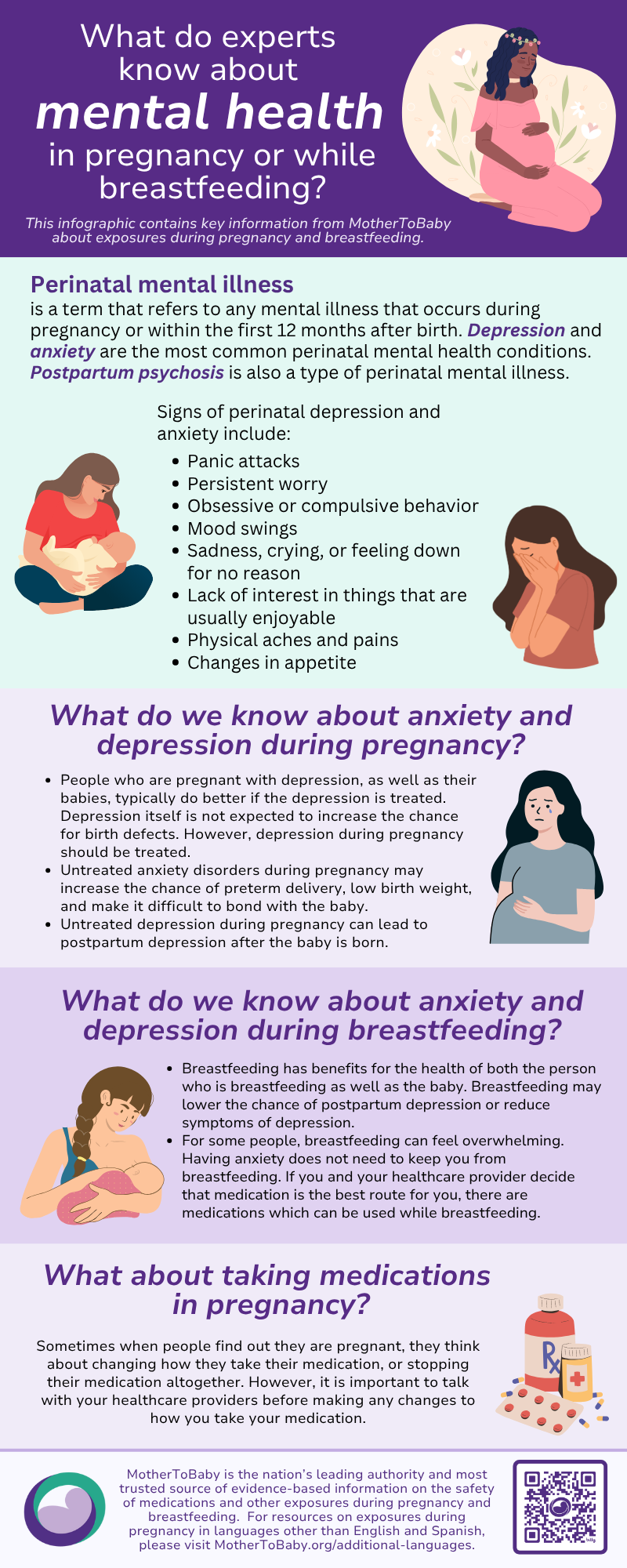
What about your mental health? If you have a history of anxiety or depression, ADHD or other conditions, ask your psychiatrist and OB about treatment, and don’t make changes before you do. Many medications can be continued during pregnancy and while breastfeeding. In fact, mental health is incredibly important – for example, when a woman doesn’t treat her mood disorder or inadequately treats it, some studies suggest risks for miscarriage, premature birth, low birth weight, and preeclampsia. Talk therapy is vitally important too. And if you struggle with mental health concerns during the pregnancy, you are at risk for postpartum depression. Let’s face it – pregnancy and caring for a new baby is stressful, so now is the time to marshal your helpers – friends, relatives, therapists and doctors – to ensure you have enough support. Your obstetrician should ask about mental health but if not, speak up. Your doctor can be your ally here, helping you get treatment and addressing concerns related to pregnancy and postpartum mental health. And MotherToBaby can give you an overview of the research related to any prescriptions you might choose to take.

Dental Health

Have you seen a dentist lately? Oral health can impact a pregnancy, meaning that if you have swollen or bleeding gums, a toothache or an infection, it can increase risks to the pregnancy. If you need to have a dental x-ray, take antibiotics, or have local anesthesia for a dental procedure, these are generally acceptable during pregnancy, but best to complete before you get pregnant. Contact MotherToBaby for more details.

Your Workplace

Where do you work? MotherToBaby can give you information to minimize exposures in a veterinarian office, dry cleaners, salon, laboratory/hospital, imaging center, pest control service, or other business. Your occupational safety department can recommend personal protective equipment (PPE) and tell you about ventilation that may be in place to ensure workplace safety. Safety data sheets (SDS) give an overview of chemicals used in industry and are available online or at work.

Food Safety

Read up on food safety and learn how to minimize your exposure to foods that have commonly been associated with foodborne illness such as E. coli or listeria. Get in the habit of washing your fresh fruits and vegetables well. Check out other blogs on our website too.

Vitamins and Supplements

Have you started taking a prenatal vitamin? Are you getting enough folic acid? ACOG recommends that women take at least 400 mcg of folic acid before getting pregnant and at least 600-800 mcg/day once they are pregnant. This can help prevent birth defects of the brain and spinal cord. Call MotherToBaby if you want to learn the recommended daily intake for specific vitamins or minerals. In general, taking more than what is recommended is not advisable – we haven’t studied how mega-doses of vitamins may impact a pregnancy. Other supplements beyond taking a prenatal vitamin are not advisable either – the Food & Drug Administration (FDA) doesn’t supervise their manufacturing plants and past surveys have shown some supplements actually contain contaminants. Furthermore, we’ve seen instances where the label didn’t match the contents of the bottle and could cause ill effects. Pregnant and breastfeeding women should avoid herbal supplements unless specifically recommended by your doctor.

Alcohol, Cannabis, and Tobacco

Do you smoke cigarettes? Do you use cannabis for medicinal or recreational purposes? Do you drink alcohol? Recent research has demonstrated that marijuana use very early in pregnancy causes changes in brain development, which could result in behavioral or learning challenges we see later in the child’s life. Cigarettes increase risks for pregnancy loss, among other things. And alcohol is known to cause a variety of birth defects known as fetal alcohol spectrum disorder (FASD). We don’t believe that there is a “safe” amount of alcohol which when consumed doesn’t cause issues for a developing child. Now is the time to quit smoking, drinking, and using cannabis – your baby will be heathier for it. MotherToBaby can provide resources, or check with your doctor.

Vaccinations

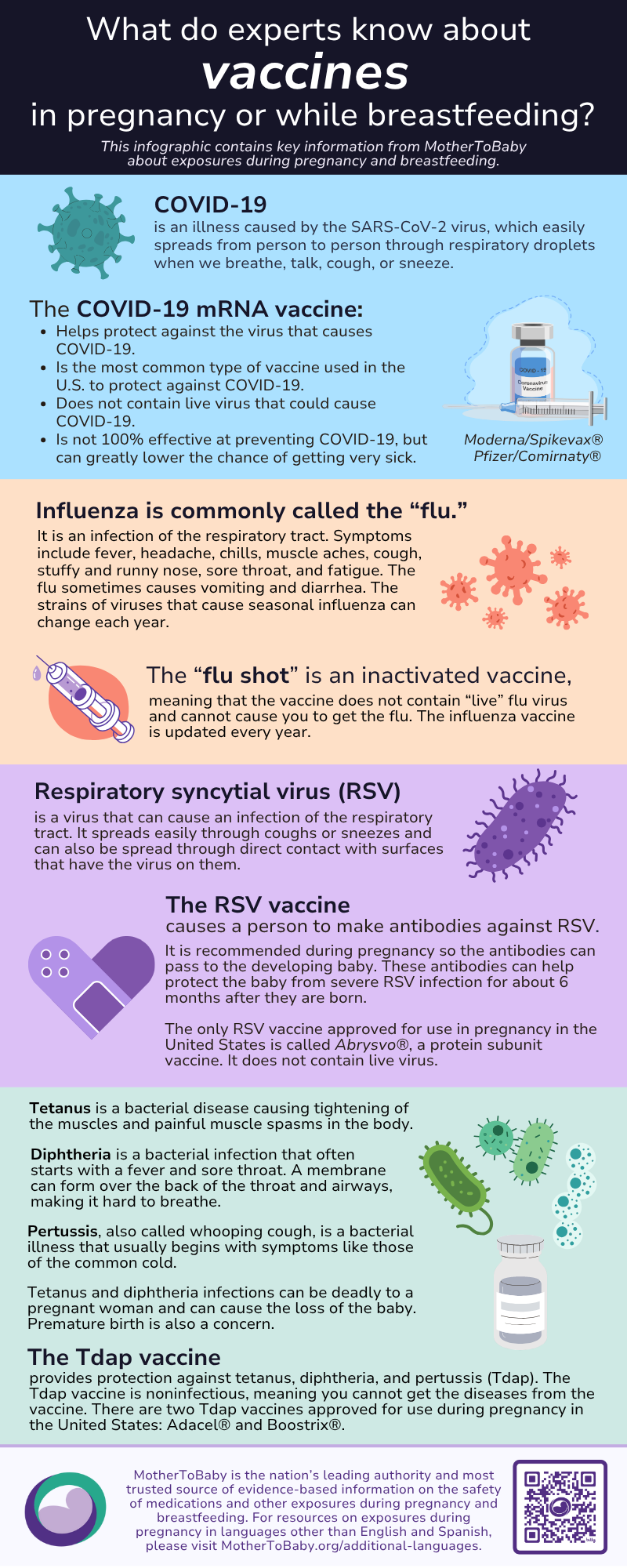
Are you up to date on all your vaccines? Did you get a flu shot this past season? You don’t want a vaccine-preventable illness to have an impact on your pregnancy. Flu infection can increase risks for more severe symptoms, longer-lasting illness, pregnancy loss and premature delivery, which can have a lifelong impact on your baby. Flu vaccine helps prevent infection. Another benefit to vaccinating during pregnancy? Studies show the protection extends to your baby, and gives them a little extra immunity from birth until they can receive vaccines. Also good to know: some vaccines can be given and are recommended during pregnancy, like a flu shot or TDAP, but others are best given before you conceive to avoid a small risk of spreading the illness to the fetus (e.g. the measles, mumps, and rubella (MMR) vaccine, as well as the Varicella (chicken pox) vaccine) – so try to get these done at least a month before trying to conceive. Check your medical records to see the last time you received any of these vaccinations. If you don’t know if you were previously vaccinated, your doctor can draw blood to check if you have immunity.

Your Pets

Do you have a cat? There is some concern in pregnancy about an infection called toxoplasmosis, which is caused by a parasite that can be found in cat feces. Read our blog for more info on what you can do to prevent this infection if you have a fur baby at home.

Other Illnesses

Do your upcoming travel plans involve travel to a warm tropical place? Check out our Zika fact sheet to learn more before you book nonrefundable tickets. In general, women will want to wait to try to conceive for eight weeks from the time of your return home; the wait time is three months if your male partner travels with you. COVID-19 is also spreading around the globe and our fact sheet can give you the latest information on whether and how it could affect a pregnancy.

Finally, your obstetrician or primary care doctor would be glad to see you for a Preconception consultation. Make an appointment to discuss your personal history and health. It’s a great way to get you and your baby off to the best start.


Members Area

Access our free presentation for healthcare professionals on current issues from ADHD medications, the risks of vaping, and cannabis use during pregnancy and lactation. Filmed on August 25, 2020, a link to the recording can be found here.


Members Area

Thank you for your interest in working together. MotherToBaby offers various ways to collaborate with and highlight our partner organizations. Please complete the form for consideration of partnership opportunities with MotherToBaby. Not all options are guaranteed, and final decisions will be at MotherToBaby’s discretion. After completing this form, you will be contacted by the MotherToBaby Strategic Partnerships.


Members Area

By Sonia Alvarado, Senior Teratogen Information Specialist, MotherToBaby CA

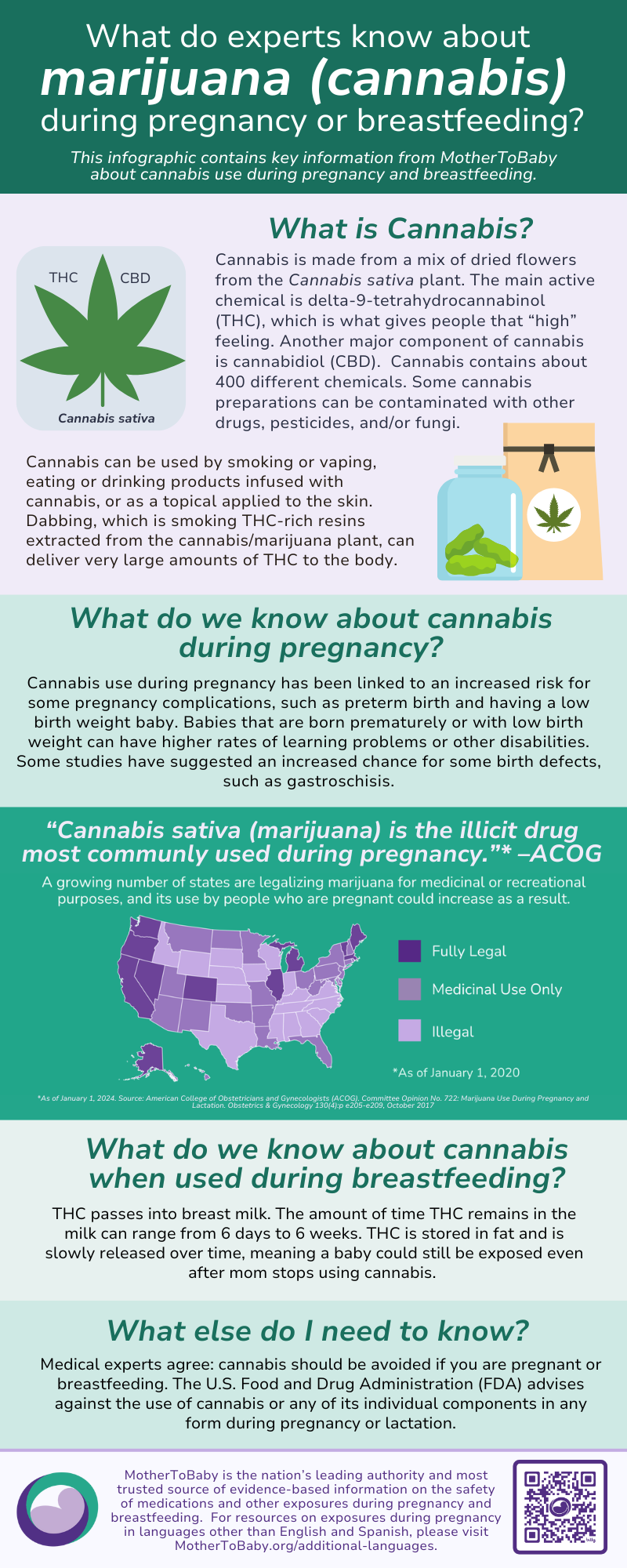
Unless you don’t own a television and never listen to the radio, you know that marijuana has been in the news a lot lately and for marijuana users who have had to smoke in illegally, it appears societal attitudes about pot smoking may be changing. Twenty states have laws legalizing some form of marijuana use. Two states, Colorado and Washington, have legalized its recreational use. In an interview, the NFL Commissioner seemed to leave open the possibility that medicinal use could be considered for NFL players if there was scientific evidence that it was helpful to treat injuries and pain. Even President Obama has said that he doesn’t believe marijuana is any more dangerous than alcohol. Marijuana is currently listed as a Schedule I drug. Other Schedule I drugs include heroin, lysergic acid diethylamide (LSD), 3,4-methylenedioxymethamphetamine (ecstasy).

What The Research Shows Us

According to studies, pregnant women who use illicit substances are more likely to use marijuana compared to other drugs. This is often due to the belief that marijuana is less harmful to the developing embryo and fetus, compared to other drugs such as cocaine or heroin.

Marijuana is Cannabis. The delta-9-tetrahydrocannabinol (THC) in the Cannabis plant produces the psychoactive effect or “high.” Marijuana can be smoked in a joint, inhaled through a bong or vaporizer, eaten in food and teas/beverages, used in tinctures, and topical balms. Smoking and ingestion exposes the user to THC, producing the high. When smoked in a joint, the user is exposed to carbon monoxide from the burning of the leaf as well as tar, which can stay behind in the lungs.

Marijuana use during pregnancy has been studied since the 1960’s. Like all studies, there are weaknesses that have been pointed out. For example, asking women about past drug use may not be the most accurate way to make a connection between the dose of the drug and the adverse effects because the women may have forgotten. Also asking women to volunteer information about drug use, which they may fear disclosing even in a confidential setting, may make it difficult to know how frequently pregnant women use drugs overall. Still, a number of experts have reviewed hundreds of reports in humans and animals. At least to this point, the studies do not support an association between marijuana smoking and birth defects. One large study of 12,825 interviews done after delivery, did not find a statistical association between marijuana use and birth defects.

However, the studies also show that marijuana is not risk free. Studies have reported associations between marijuana smoking and growth restriction and lower birth weight, particularly in women who keep smoking through delivery or late in pregnancy. An Australian study of almost 420,000 live births reported a higher risk for neonatal intensive care admission for newborns exposed prenatally to pot. Also, there are reports of abnormal responses or behaviors in the newborn period and this suggests a toxicity or withdrawal. The symptoms include exaggerated and prolonged startle reflexes (sleep cycle disturbances with high-pitched crying.) In a Brazilian study, exposed newborns were “more irritable and less responsive to calming, cried more during the examination, and exhibited more jitteriness and startles than the non-exposed neonates.” Pregnant women who smoke daily and/or through delivery, have a higher risk for complications in their pregnancy compared to women who quit in the first trimester.

Researchers have attempted to assess the long-term effects of prenatal marijuana exposure. Studies of 3, 10 and 14-year old prenatally exposed children suggest that the prenatal exposure to high doses of marijuana may make it harder for children to learn and may affect their emotions (increased aggression) and increase depression symptoms. Studies are needed to assess which prenatally exposed children are most at risk. Its important to note that the children in these studies often have had prenatal exposure to other drugs as well, struggles with poverty and other life challenges, making it difficult to know that the findings are due to a single drug exposure.

So Where Does Marijuana Rank Compared To Other Drugs?

Alcohol: Specific to use during pregnancy, marijuana is not alcohol. Alcohol is still the drug with the highest risk and the widest range of birth defects, including physical, mental and behavioral. Alcohol is a drug with the highest use throughout the world, easy legal access, and social acceptance.

Cocaine: Cocaine, by comparison, is associated with a small risk for birth defects, and a higher risk for admission to newborn intensive care for withdrawal and toxicity. Additionally, cocaine is associated with prenatal growth retardation, lower birth weight, shorter length, and smaller head circumference. Studies suggest the effects on height extend into childhood.

Heroin: Heroin has not been associated with an increased risk for birth defects, however, is associated with a higher risk for withdrawal and admission to newborn intensive care and sudden infant death syndrome.

Bottomline: Snuff Out Smoking It

Clearly, marijuana use in pregnancy is not preferable, nor less risky, compared to most other drugs when a side-by-side comparison is made. Changing societal attitudes doesn’t change the fact that the developing embryo (and fetus) is dependent on the mother for oxygen, nutrients and a balance of hormones, chemicals and other substances to grow normally. Disrupting the normal fetal environment, through the introduction of marijuana or other recreational drugs, puts the pregnancy at risk in the short-term and possibly the long term as well.

Sonia

Sonia Alvarado is a bilingual (Spanish/English) Senior Teratogen Information Specialist with MotherToBaby California, a non-profit that aims to educate women about medications and more during pregnancy and breastfeeding. Along with answering women’s and health professionals’ questions regarding exposures during pregnancy/breastfeeding via MotherToBaby’s toll-free hotline, email and private chat counseling service, she’s provided educational talks regarding pregnancy health in community clinics and high schools over the past decade.

MotherToBaby is a service of the international Organization of Teratology Information Specialists (OTIS), a suggested resource by many agencies including the Centers for Disease Control and Prevention (CDC). If you have questions about beauty products, medications or other exposures, call MotherToBaby toll-FREE at 866-626-6847 or visit MotherToBaby.org to browse a library of fact sheets and find your nearest affiliate.