Talking openly about STDs, pregnancy, and breastfeeding
Disclaimer: This page houses important information and resources pertaining to sexually transmitted infections during pregnancy and while breastfeeding, including links to our evidence-based Fact Sheets. However, the resources here should not replace the care and advice of a medical professional.
Nearly 1 out of every 2 women will experience a sexually transmitted infection (STI) at some point in their life. For those impacted by an STI while they are pregnant, planning a pregnancy, or breastfeeding, there are some special considerations. STIs (also called sexually transmitted diseases, or STDs) can be harmful for both mom and baby. STIs can also be tricky – many have no symptoms or may only cause mild symptoms, so it’s possible to have an infection and not even know it. If left untreated, STIs can cause or lead to significant health issues, such as infertility, pregnancy complications, organ damage, and certain types of cancer. Getting tested and treated for any STIs is thus critical for both your health and the health of your baby.
“Pregnancy does not provide women or their babies protection against STIs. Therefore, pregnant people should ask their doctors to test for STIs, as part of their routine care. This is important to prevent serious health complications.
— Centers for Disease Control and Prevention
During pregnancy, certain types of STIs (including HIV and syphilis) cross the placenta and infect the baby in the womb. Other STIs (like chlamydia, genital herpes, gonorrhea, and hepatitis B) can infect the baby during delivery, as the baby passes through the birth canal. How an STI affects the baby during and after pregnancy varies based on the infection. For example, syphilis infection during pregnancy can result in premature birth, low birth weight, or even stillbirth; after delivery, a newborn infected with syphilis (called congenital syphilis) could have an enlarged liver and/or spleen, problems with their bones or teeth, or brain and nerve problems like blindness or deafness. Similarly, gonorrhea infection can cause miscarriage and premature birth during pregnancy, and after delivery it can cause eye problems that lead to blindness in the infant.
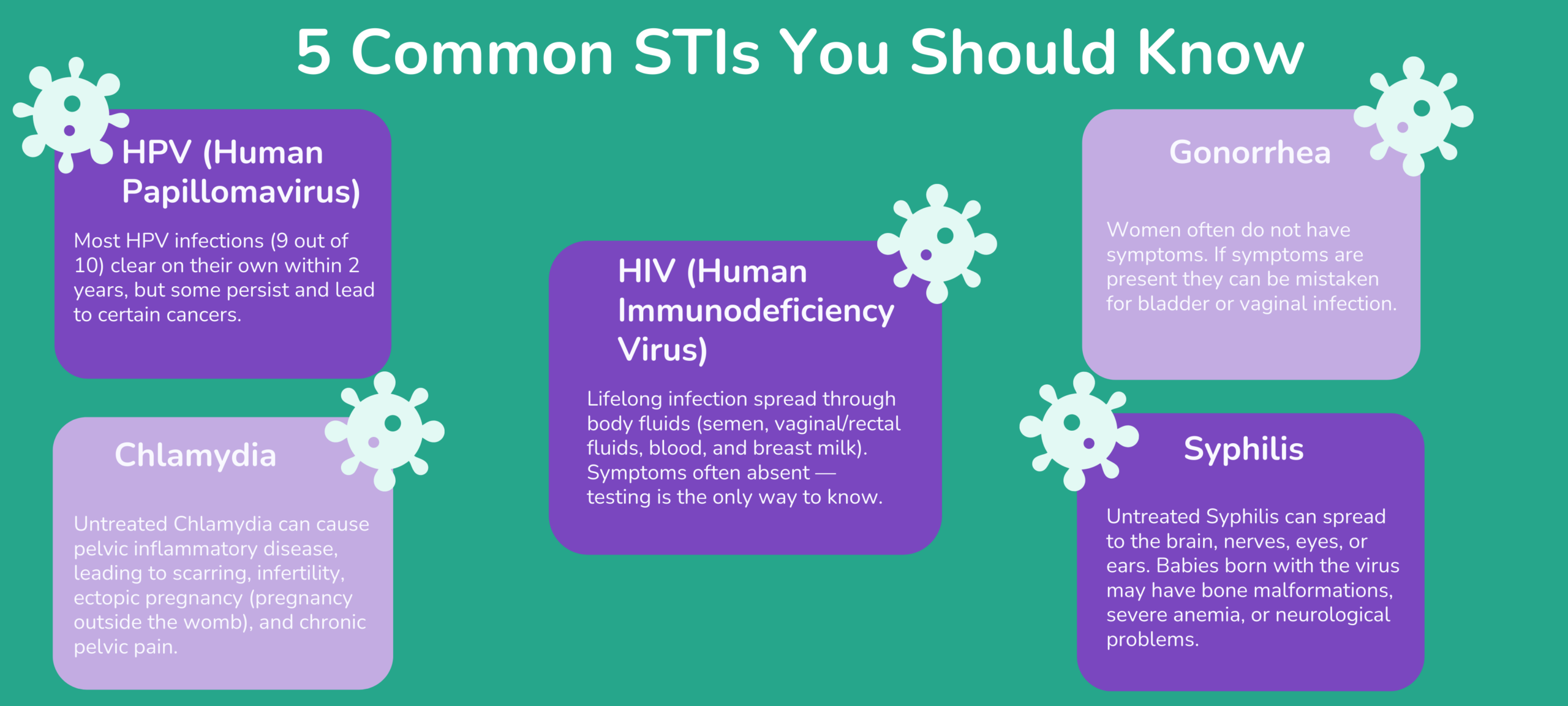
Reference: CDC Sexually Transmitted Infection
For breastfeeding women, the story is a little different. HIV is the only STI that is detectable in human milk. However, there are medications available that can keep people with HIV healthy if they are taken as prescribed. These medications suppress (or lower) the amount of virus in the body, which significantly reduces the risk of transmitting the virus to a breastfed infant. People with HIV who want to breastfeed should talk with their healthcare provider about the risks and benefits of breastfeeding relative to their health. Aside from HIV, women with an STI that causes open sores on the body (such as syphilis) can breastfeed as long as the baby or the breast pump equipment do not touch a sore.
We know STIs can be an uncomfortable topic, but for you health and the health of your baby it’s worth pushing through any discomfort and talking with your healthcare provider. Our experts are also available to answer any questions you may have about STIs and how they — or the medications used to treat them — could affect your pregnancy or your breastfed baby. You can also visit our library of resources below.
Related Fact Sheets
- Acyclovir (Zovirax®) | Valacyclovir (Valtrex®)
- Amoxicillin and Clavulanic Acid
- Ciprofloxacin (Cipro®)
- Clindamycin
- Erythromycin
- Hepatitis A
- Herpes Zoster (Shingles)
- Human papillomavirus (HPV) Vaccine
- MDMA (Molly, Ecstasy)
- Metronidazole (Flagyl®)
- Mpox (formerly known as Monkeypox)
- Mpox/Smallpox Vaccine (JYNNEOS™)
- Paternal Exposures
- Penicillin G
- Syphilis
- Toxoplasmosis
- Zika Virus
Related Baby Blogs
External Resources
- American Academy of Pediatrics: Breastfeeding for People with HIV: AAP Policy Explained
- American College of Obstetricians and Gynecologists: Chlamydia, Gonorrhea, and Syphilis
- American College of Obstetricians and Gynecologists: HIV and Pregnancy
- Centers for Disease Control and Prevention: About STIs During Pregnancy
- Centers for Disease Control and Prevention: HIV and Breastfeeding
- March of Dimes: HIV and Pregnancy
- March of Dimes: Sexually Transmitted Infections
- National Institutes of Health, Child Health and Human Development: Why are sexually transmitted diseases (STDs) and sexually transmitted infections (STIs) of particular concern for pregnant women?
- National Institutes of Health, Office of AIDS Research: Preventing Perinatal Transmission of HIV
- Society for Maternal-Fetal Medicine: STIs During Pregnancy
- Society for Maternal-Fetal Medicine: Syphilis in Pregnancy
- U.S. Department of Health and Human Services, Office on Women’s Health: Sexually Transmitted Infections, Pregnancy, and Breastfeeding
- U.S. Department of Health and Human Services: Preventing Perinatal Transmission of HIV
Partners
- Patient Education Genius
- Society for Birth Defects Research & Prevention
- Society for Maternal Fetal Medicine (SMFM)
Stay in Touch
Our e-Newsletter brings you the latest information, news, and resources from the experts at MotherToBaby.
Join a Study
Expecting parents deserve better information about medication use in pregnancy and breastfeeding – and you can help by participating in a study.
Ask Our Experts
Call, text, chat, or email for a free personalized risk assessment on exposures in pregnancy and breastfeeding.